
智研保

Search documents
锚定国家重大战略 积极践行“金融为民”
Jin Rong Shi Bao· 2026-01-21 01:45
Core Viewpoint - The insurance industry in China has strengthened its role in financial services, focusing on disaster prevention, rural revitalization, and inclusive protection, thereby enhancing its function as an economic stabilizer and social stabilizer [1] Group 1: Disaster Prevention and Mitigation - In 2025, natural disasters affected 67.03 million people, resulting in 763 deaths or missing persons, with direct economic losses amounting to 241.62 billion yuan [2] - The insurance industry has established an integrated disaster prevention and mitigation system, adhering to principles of prompt and reasonable compensation [2] - China Pacific Insurance led the establishment of a catastrophe insurance community, providing risk coverage for 74.52 million households, with claims amounting to 200 million yuan [2] Group 2: Support for National Strategies - The insurance sector has provided significant risk protection for key areas, including food security, with claims exceeding 13.3 billion yuan for crops [4] - In the green transition, the insurance industry has supported carbon neutrality goals, with over 900 million green insurance claims processed [4] - Insurance services have extended to high-end and intelligent sectors, with claims exceeding 11.6 billion yuan for technology-related activities [5] Group 3: Inclusive Financial Protection - The insurance industry has expanded its coverage for vulnerable groups, with over 15.17 million elderly clients receiving claims exceeding 11.3 billion yuan [6] - New citizens, including delivery workers and ride-hailing drivers, received over 2.2 billion yuan in claims for employment protection [7] - Inclusive insurance programs have reached over 34 million people, with claims exceeding 1.14 billion yuan [7]
钱投哪、养老如何更有保障?解码广东保险业2025新定位
Nan Fang Du Shi Bao· 2026-01-08 01:09
Core Insights - Guangdong's insurance industry has evolved significantly since its revival in 1980, becoming a key pillar of the financial sector alongside banking and securities, and is crucial for supporting the real economy and social welfare [2] - By 2025, the insurance industry in Guangdong is expected to deepen reforms and focus on serving the real economy and social welfare, showcasing a model for national transformation [2] Group 1: Catastrophe Insurance - In the period from January to November 2025, Guangdong's insurance premium income reached 738.96 billion yuan, marking an 8.35% year-on-year increase, positioning it among the top in the nation [3] - The traditional model of catastrophe insurance is shifting from "post-compensation" to a comprehensive risk management approach that includes "pre-warning, in-process control, and post-compensation" [3] - Guangdong has established a multi-layered risk diversification mechanism for catastrophe insurance, balancing public welfare and commercial sustainability through a collaborative model involving market leadership and government support [3][4] Group 2: Long-term Care Insurance - As of October 2025, Guangdong's basic medical insurance enrollment reached approximately 113 million, the highest in the country, providing a solid foundation for promoting long-term care insurance [5] - Guangzhou, as a pilot city for long-term care insurance, has developed a multi-tiered service system, with 2.297 million participants and over 51.8 billion yuan in fund expenditures by June 2025 [7] - The integration of commercial insurance into long-term care services is breaking traditional insurance limitations, extending coverage to care services and enhancing the overall support network for elderly care [7] Group 3: Cross-border Insurance - The Guangdong-Hong Kong-Macao Greater Bay Area's geographical and policy advantages are fostering innovation in the insurance sector, particularly in cross-border vehicle insurance [8][10] - By June 2025, the cross-border vehicle insurance policy has facilitated insurance for 90,300 vehicles from Hong Kong and Macao, while health insurance has served over 150,000 individuals [10] Group 4: Support for Technological Innovation - In 2025, Guangdong's insurance sector provided risk coverage of 31.1 trillion yuan to technology enterprises, reflecting a 76% year-on-year increase, driven by supportive policies in the tech finance sector [11] - Insurance products tailored for specific technological advancements, such as "low-altitude insurance" for eVTOLs and liability insurance for AI systems, are being developed to support innovation [13] Group 5: Investment Trends - Insurance capital is increasingly flowing into diverse sectors, including green energy and elderly care, with significant investments in offshore wind power and community projects [14][16] - By 2025, 17 insurance companies have established nursing homes in Guangdong, with investments exceeding 24 billion yuan in 21 elderly care community projects [16] Group 6: Industry Self-regulation - The Guangdong Insurance Association has introduced a self-regulation charter to combat homogeneous competition and price wars, emphasizing ethical practices and differentiated advantages [17] - The charter aims to maintain industry integrity by prohibiting practices such as excessive commission payments and unethical bidding in government projects [17]

守牢安全底线 护航高质量发展 人保财险各级党组织深入贯彻落实党的二十届四中全会精神
Jin Rong Jie Zi Xun· 2026-01-05 03:37
Core Viewpoint - The 20th Central Committee of the Communist Party of China emphasizes "building a safe China" as a crucial aspect of Chinese-style modernization, guiding the direction for security development in the new era [1] Group 1: Emergency Management and Community Support - The company has implemented an integrated work mechanism of "insurance, prevention, reduction, rescue, and compensation" to enhance its role as an economic stabilizer and social stabilizer [3] - During the first major snowfall of winter 2025, the company's claims specialists provided timely and professional services, receiving positive feedback from clients [3] - The company has mobilized party organizations to activate emergency plans and deploy teams to assist communities during disasters, effectively translating organizational advantages into disaster risk reduction [3][5] Group 2: Innovation and Technology Integration - The company is actively promoting the "Party Building + Innovation" model, establishing technology insurance centers to support local businesses with tailored insurance solutions [10] - A customized insurance plan for a humanoid robot was developed, showcasing the company's commitment to integrating financial tools with technological advancements [8][10] - The company has created a service network that includes a technology insurance center and specialized teams to enhance risk management in the tech sector [10] Group 3: Agricultural and Rural Support - The company has provided over 4.5 billion yuan in risk protection to more than 24,000 farmers and agricultural entities in Xinjiang, equating to nearly 180,000 yuan per household [13] - Innovative insurance products for agricultural sectors, such as tea oil insurance, have been introduced to support rural modernization [13][15] - The company is focused on ensuring food security and enhancing the welfare of rural communities through tailored insurance solutions [13] Group 4: Social Responsibility and Community Engagement - The company has launched initiatives to provide occupational injury insurance for gig economy workers, ensuring that policy benefits reach flexible workers [11] - In Tibet, the company has facilitated public liability insurance for disaster-affected areas, demonstrating its commitment to community welfare [8] - The company emphasizes the importance of integrating party policies with community needs to foster social stability and safety [11][15]

人保财险广东分公司:保险护航科技创新的湾区探索与实践
2 1 Shi Ji Jing Ji Bao Dao· 2025-12-04 22:40
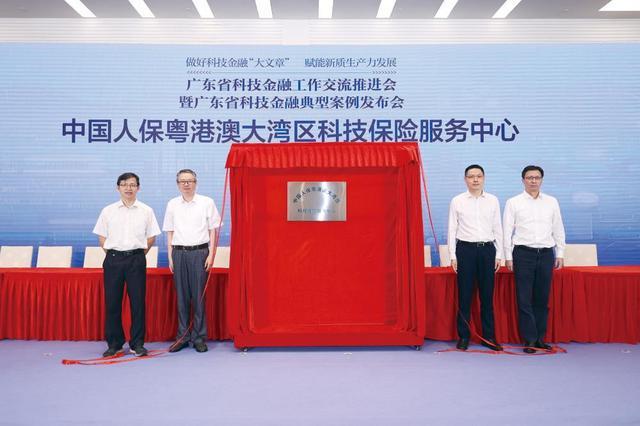
Core Viewpoint - The development of technology insurance is essential for supporting China's technological innovation strategy, requiring both long-term investment and comprehensive risk management [1][4]. Group 1: Policy and Strategic Importance - The central financial work conference has prioritized technology finance, emphasizing the need for a robust technology insurance policy framework to support major technological breakthroughs [1][3]. - The Guangdong branch of PICC recognizes that developing technology insurance is not only a political responsibility but also a strategic choice to seize industrial transformation opportunities [1][4]. Group 2: Product Development and Innovation - PICC Guangdong has established a technology insurance center and set up branches in 12 innovation hubs, focusing on key industries such as electronic information and artificial intelligence [4]. - The company has developed a comprehensive product system combining standardized products with customized solutions to provide tailored risk protection for various stages of innovation [4][6]. Group 3: Achievements and Impact - Since the beginning of 2024, PICC Guangdong has provided risk coverage exceeding 850 billion yuan for various technology activities in the Guangdong-Hong Kong-Macao Greater Bay Area, with a growth rate of over 34% [4]. - The coverage rates for high-tech enterprises and specialized new enterprises have reached 27.93% and 40.16%, respectively, contributing to the deepening of technology finance practices in Guangdong and nationwide [4]. Group 4: Risk Management and Support Services - The company has launched the first "comprehensive insurance for pilot testing" in the province, covering risks from laboratory to pilot testing stages, including public health emergencies and policy changes [6]. - PICC Guangdong has introduced the first "low-altitude aircraft comprehensive insurance" in the country, addressing unique risks associated with new flying vehicles [5]. Group 5: Digital Transformation and Ecosystem Building - The company is embracing digital transformation by developing various risk management platforms, enhancing the technological content of its insurance services [8]. - PICC Guangdong is leading the establishment of a technology insurance service center in the Greater Bay Area, aiming to create a comprehensive service platform that integrates insurance protection, resource matching, and data sharing [10][11].
科技保险发展驶入“快车道”:前三季度保费激增30%,有望迎来历史性机遇
Mei Ri Jing Ji Xin Wen· 2025-11-11 13:30
Core Insights - The development of technology insurance in China is accelerating due to dual drivers of policy and industry, with a significant increase in premium income and a growing demand for risk management solutions [1][11][12] Group 1: Industry Growth and Demand - As of 2024, the insurance industry is expected to provide approximately 9 trillion yuan in technology insurance coverage, reflecting a robust growth trajectory [2] - The number of enterprises insured under patent insurance has increased significantly, with over 28,000 companies covered for more than 110 billion yuan in risk protection from 2011 to 2022 [2] - The number of technology and innovation SMEs in China has surpassed 600,000, highlighting a pressing need for insurance solutions due to high R&D costs and long return cycles [2][12] Group 2: Challenges in Risk Management and Pricing - The primary challenges facing technology insurance include difficulties in risk control and pricing, stemming from the complexity and uniqueness of high-tech industries [2][3] - The lack of historical data and the rapid evolution of risks complicate the development of accurate pricing models for technology insurance [3][11] Group 3: Policy Support and Implementation - Recent policies aim to enhance the technology insurance framework, including the expansion of coverage for first-of-its-kind technology equipment and the introduction of innovative compensation mechanisms [5][6] - Local governments, such as those in Shenzhen and Shanghai, are actively implementing plans to support technology insurance in emerging sectors like artificial intelligence and digital economy [6][7] Group 4: Innovative Insurance Products - New insurance products are emerging to fill gaps in coverage, such as the "Drug Research Insurance" for pharmaceutical R&D and "Smart Research Insurance" for AI and robotics [8][9] - These products address specific risks associated with innovation, providing comprehensive coverage throughout the R&D process [8][9] Group 5: Future Outlook - The technology insurance sector is expected to see further growth driven by policy support and the increasing pace of technological innovation, with a projected 30% year-on-year increase in premium income by the end of 2025 [11][12] - The integration of digital tools and collaborative insurance models is anticipated to enhance risk management capabilities and support the development of cutting-edge technologies [11][12]
科技保险驶入快车道:前三季度保费激增30%,全周期保障体系加速成型
Mei Ri Jing Ji Xin Wen· 2025-11-10 12:57
Core Insights - The development of technology insurance in China is accelerating due to dual drivers of policy and industry, with a significant increase in demand for risk protection in the context of deep integration of technological and industrial innovation [1][12] - By the third quarter of 2025, technology insurance premium income in China is expected to grow by 30% year-on-year, significantly outpacing the industry average, indicating a comprehensive upgrade of traditional risk management systems [1][12] - The insurance sector is facing challenges in pricing and risk assessment, which are major constraints on product innovation, particularly in high-tech industries [2][3] Policy and Industry Dynamics - As of now, over 600,000 technology and innovation-oriented SMEs have been cultivated in China, with more than 140,000 specialized and innovative SMEs, highlighting the urgent need for risk protection [1][2] - The Chinese government has introduced new policies to establish a comprehensive insurance system covering the entire lifecycle of technology enterprises, addressing core pain points such as pricing and risk assessment [1][6] - Local governments, such as those in Shenzhen and Shanghai, are actively implementing plans to enhance insurance coverage for emerging sectors like low-altitude economy and digital economy [6][7] Product Innovation and Challenges - The technology insurance market has seen significant growth, with approximately 9 trillion yuan in coverage provided by the insurance industry by the end of 2024, particularly in patent insurance [2] - The lack of historical data and the unique nature of technological innovations pose significant challenges for accurate risk assessment and pricing in technology insurance [3][11] - New insurance products are emerging, such as comprehensive insurance for drug research and development, which addresses the high costs and risks associated with innovative drug development [9][10] Future Outlook - The insurance sector is expected to see a surge in innovative risk protection products as policies continue to support the technology insurance landscape [12] - The introduction of collaborative insurance models and digital risk management tools is anticipated to enhance the role of technology insurance in supporting core technological advancements and self-reliance in technology [12]
