
拉布布潮玩

Search documents
世界正在加速重新认识中国
Xin Lang Cai Jing· 2026-02-10 20:03
Group 1 - The article highlights a significant shift in global perceptions of China, moving from a singular understanding to a more nuanced and objective recognition of the country [1][3][4] - There is an increasing trend of foreign leaders and citizens engaging with China, indicating a growing interest in experiencing Chinese culture and lifestyle [1][3][7] - The narrative around China is evolving, with many countries recognizing China's economic resilience and contributions to global growth, countering negative portrayals in some Western media [9][10][13] Group 2 - China's economic performance during the "14th Five-Year Plan" period has been notable, with GDP surpassing 130 trillion yuan and contributing approximately 30% to global economic growth [9][10] - Despite external pressures, China's economy is characterized by strong resilience and adaptability, leading to a shift in perception among foreign nations regarding economic opportunities [10][13] - The article emphasizes China's role as a major global market and its increasing importance as an export destination for many countries, with retail sales surpassing those of the United States [15][16] Group 3 - The article discusses China's commitment to high-quality development and openness, which contrasts with the protectionist tendencies of some Western nations [6][10] - China's technological advancements and innovations are gaining international recognition, with foreign visitors experiencing the benefits of these developments firsthand [11][12] - The narrative of "China as a threat" is being challenged as more countries acknowledge the positive aspects of China's growth and its contributions to global stability [4][7][16]


泡泡玛特20260129
2026-01-30 03:11
Summary of the Conference Call for Pop Mart Company Overview - **Company**: Pop Mart - **Industry**: Toy and Entertainment Key Points and Arguments Competitive Advantages - Pop Mart has established a unique dynamic barrier through aesthetic culture and top-tier artist resources, which are difficult to replicate [2][3] - The founder's aesthetic vision and deep connections with top artists are crucial to the company's success [2] - The company has successfully extended its reach into various top-tier circles across industries, occupying a significant position in the minds of key consumers, creating a competitive edge that is hard for other brands to match [2] Operational Mechanisms - Pop Mart has institutionalized its operational mechanisms across various aspects, including IP and brand management, product and content development, marketing and operations, store and amusement park management, and new product launches, forming deep operational barriers [2][3] Market Demand and Trends - Demand for trendy toys is driven by demographic changes, shifts in mass media, and consumer psychological needs, with the Kidult subculture becoming particularly prominent during economic downturns [2][6] - Current global systemic anxiety has extended the demand stickiness and lifecycle of trendy toys [2][6] Growth Strategy - The company plans to expand its retail footprint with approximately 600 new stores domestically and over 400 internationally, supported by IP licensing and cross-industry collaborations [2][10] - Product diversification and premiumization strategies are in place to increase average transaction value, with some products priced close to 20,000 RMB [2][13] Future Revenue Projections - For 2026, Pop Mart expects to achieve revenues between 37.5 billion to 68 billion RMB, with adjusted net profits projected between 12.3 billion to 22.6 billion RMB [7][8] Investment Value - The current stock price is considered to have a high safety margin compared to international giants, with a PE ratio significantly above 10, indicating attractive investment potential [5][8] International Market Development - As of mid-2025, overseas revenue was approximately 5.593 billion RMB, with an estimated overseas membership of about 44 million [12] - The company aims to replicate its domestic success in international markets, leveraging its established operational strategies [12] Product Innovation and Customer Engagement - Pop Mart is innovating through diverse product offerings, including figures, plush toys, and movable dolls, enhancing customer engagement and brand loyalty [13][19] - The company has seen significant growth in its membership base, with over 59 million members in mainland China by mid-2025 [11] Expansion into New Business Areas - The company is diversifying into amusement parks, gaming, and film, with notable collaborations such as the development of a movie with Sony Pictures [2][15][16] Artist Collaboration and Marketing - Pop Mart leverages collaborations with renowned artists and brands to enhance its market presence and consumer recognition [17][20] - The company has established a strong operational mechanism that allows for timely market responses and efficient product launches [19] Valuation Assessment - Based on historical valuation metrics of similar companies, Pop Mart is projected to achieve a market valuation of approximately 500 billion HKD by 2026, maintaining a buy rating [22]

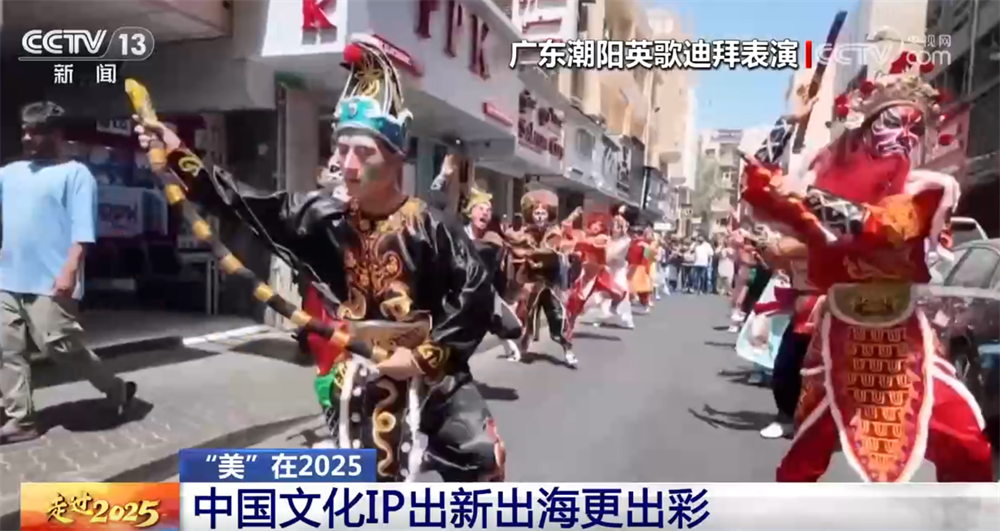
中国文化IP成为全球“顶流”出新、出海又“出彩” 中华文明底蕴“圈粉”世界
Yang Shi Wang· 2025-12-31 09:14
Core Insights - In 2025, Chinese cultural IPs are gaining global recognition, showcasing a more open and diverse image that attracts international audiences [1][2] - The success of Chinese animated films, such as "Ne Zha," which grossed over 15.9 billion RMB, highlights the effective integration of traditional cultural elements with modern storytelling [2] - The rise of Chinese cultural products, including trendy toys, reflects a shift towards emotional and spiritual consumption, creating a global buying frenzy [4] Cultural Impact - A variety of Chinese pop culture products are becoming popular worldwide, fostering a surge in tourism to China as international influencers share their experiences [6] - Tourists are engaging in immersive cultural experiences, such as learning traditional crafts and exploring historical sites, which enhances their understanding of Chinese civilization [6][9] - Visitors express admiration for the blend of modern and traditional elements in Chinese architecture and culture, indicating a strong interest in the country's heritage [9][11]
抓住文化消费增长新机遇
Jing Ji Ri Bao· 2025-10-11 05:53
Core Insights - The strong cultural consumption trend indicates a shift in China's consumption structure from basic survival needs to a focus on quality and experience-driven spending, supported by rising disposable income and improved social security [2][3] Group 1: Cultural Consumption Trends - During the "Golden Week" of 2024, per capita cultural and entertainment spending reached 955 yuan, a 67.8% increase from 2020, outpacing overall consumption growth [1] - Cultural consumption is characterized as "high-income elastic" spending, reflecting a willingness to pay for enriching experiences beyond basic needs [2] Group 2: Economic Impact - Cultural consumption is driving growth in various service industries such as film, performing arts, tourism, and sports, which are typically green, low-carbon, and high value-added sectors [2][3] - The diversification of cultural consumption is providing sustained momentum for expanding overall consumer spending, especially as traditional commodity consumption growth slows [2] Group 3: Innovation and New Business Models - The integration of cultural IP with modern manufacturing is leading to new business models and industries, such as "Guochao" fashion and cultural creative products, enhancing the value chain from manufacturing to creation [3] - Emerging technologies and new business models like membership and subscription services are flourishing due to the vibrant market demand for cultural experiences [3] Group 4: Strategic Significance - Cultural consumption is becoming a direct representation of national cultural soft power, with successful cultural products gaining international recognition and contributing to a modern national image [3] - The growth of cultural consumption signifies a transition towards a high-quality development stage focused on spiritual enrichment, emphasizing the need to leverage cultural resources and enhance cultural experiences [4]