招行金瓜子

Search documents
黄金白银价格剧烈波动,投资者情绪降温银行金条库存充足
Jin Shi Shu Ju· 2026-02-03 01:36
Core Viewpoint - The recent volatility in gold and silver prices has led to a cooling of investor enthusiasm for physical gold, with some banks reporting sufficient inventory levels for gold bars [2][3]. Price Movement - As of February 2, gold prices fell by 6.80% to $4,562 per ounce, while silver prices dropped by 11.46% to $75.49 per ounce [2]. - In January, gold and silver experienced unprecedented price increases, with COMEX gold futures peaking at over $5,600 per ounce, marking a monthly increase of over 29%, and COMEX silver futures reaching over $120 per ounce, with a peak increase of 72% [2]. Investor Sentiment - Following the price drop, investor sentiment shifted, with some choosing to wait rather than invest in physical gold, as evidenced by increased availability of gold bars in banks [3]. - There is a divide in investor attitudes, with some believing prices will continue to decline and opting to hold off on purchases, while others are taking advantage of lower prices to buy more [6]. Market Analysis - The recent price fluctuations are attributed to concerns over the independence of the Federal Reserve following President Trump's nomination of Kevin Warsh as the new chairman, which has led to a rebound in the dollar [3]. - Analysts suggest that while short-term trading risks are present, the long-term outlook for gold remains positive, with expectations of a return to upward trends later in the year [7][8]. Inventory Levels - Various banks have reported changes in inventory levels for gold products, with some previously sold-out items now available for purchase, indicating a shift in demand [5][6]. - The World Gold Council reported that global gold demand is expected to exceed 5,000 tons by 2025, driven primarily by strong physical gold investment demand [6]. Future Outlook - Analysts predict that gold prices may enter a period of weak consolidation after the recent surge, with long-term demand from central banks expected to support prices [8][9]. - The current market dynamics are influenced more by financial attributes and speculative factors rather than traditional fundamentals, making price predictions challenging [9].

部分银行实物金条库存松动,投资情绪降温
Di Yi Cai Jing Zi Xun· 2026-02-02 11:53
Core Viewpoint - The recent significant fluctuations in gold and silver prices have led to a cooling of investor enthusiasm for physical gold, with some investors opting to wait and observe the market [2][3]. Group 1: Price Movements - As of February 2, spot gold has dropped by 6.80% to $4,562 per ounce, while spot silver has decreased by 11.46% to $75.49 per ounce [2]. - In January, gold prices surged, with COMEX gold futures reaching over $5,600 per ounce, marking a monthly increase of over 29%, while COMEX silver futures peaked at $120 per ounce, with a monthly rise of 72% [3]. - On January 30, both gold and silver prices experienced a sharp decline, with COMEX gold futures falling by 8.35% to $4,907.50 per ounce and COMEX silver futures dropping by 25.50% to $85.25 per ounce [3]. Group 2: Investor Behavior - Following the price drop, some investors have chosen to wait rather than invest in physical gold, as evidenced by the availability of gold bars in banks that were previously sold out [2][3]. - Various banks have reported a shift in inventory status, with some gold products now showing sufficient stock, contrasting with the previous high demand [5][6]. Group 3: Market Sentiment - Investor sentiment has become polarized, with some believing that gold prices will continue to decline, while others are taking the opportunity to buy at lower prices [7]. - The World Gold Council reported that global gold demand is expected to exceed 5,000 tons by 2025, driven primarily by strong physical gold investment demand [7]. Group 4: Institutional Insights - Analysts suggest that the recent volatility in gold prices is influenced by market sentiment and speculative factors, making it difficult to predict price movements accurately [9]. - Despite short-term risks, many institutions maintain a positive long-term outlook for gold, with expectations of a return to upward trends later in the year [8].
部分银行实物金条库存松动,投资情绪降温
第一财经· 2026-02-02 11:12
Core Viewpoint - The article discusses the recent volatility in gold and silver prices, highlighting a significant drop in investor enthusiasm for physical gold as prices decline sharply after a historic rise in January [3][4][5]. Price Fluctuations - As of February 2, 2026, spot gold fell by 6.80% to $4,562 per ounce, while spot silver dropped by 11.46% to $75.49 per ounce [3]. - In January, gold prices surged, with COMEX gold futures reaching over $5,600 per ounce, marking a monthly increase of over 29%, while COMEX silver futures peaked at $120 per ounce, with a maximum monthly increase of 72% [4]. Investor Sentiment - Following the price drop, investor sentiment shifted, with some choosing to wait and observe rather than invest in physical gold, leading to increased inventory levels at banks [3][5][6]. - Reports indicate that previously sold-out gold bars are now available for purchase at several banks, indicating a cooling in demand [6][8]. Market Dynamics - The recent price fluctuations are attributed to concerns over the independence of the Federal Reserve following President Trump's nomination of Kevin Walsh as the new chairman, which alleviated fears and led to a rebound in the dollar [5]. - Banks have issued warnings about the risks associated with gold trading, advising clients to assess their risk tolerance and avoid impulsive trading decisions [9]. Long-term Outlook - Despite short-term volatility, analysts remain optimistic about the long-term prospects for gold, with expectations of a return to upward trends later in the year [11][12]. - The World Gold Council reported that global gold demand reached a record high of 5,002 tons in 2025, driven primarily by strong physical gold investment demand [10].
银行买金生变?工行如意金条售罄,招行转为代销
Huan Qiu Wang· 2025-11-05 06:35
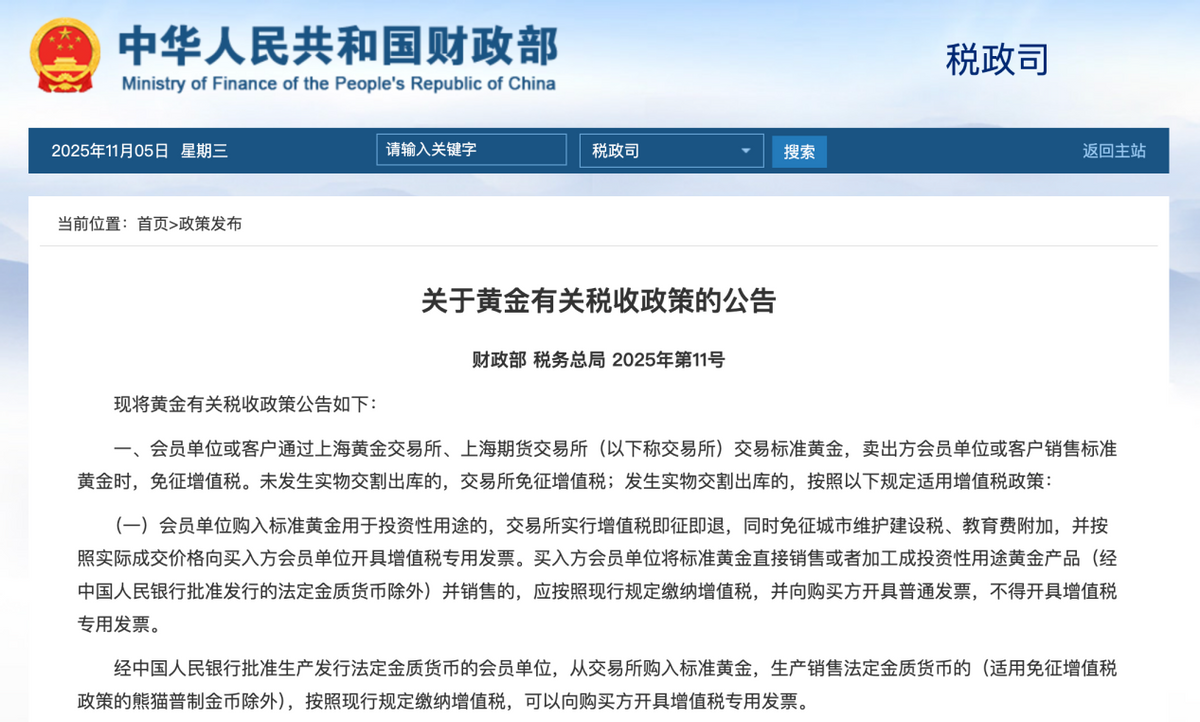
Core Viewpoint - The recent announcement of a new gold tax policy by the Ministry of Finance and the State Taxation Administration is prompting banks to adjust their gold product offerings, transitioning to a purchasing model to better protect consumer interests and adapt to market changes [1][3]. Group 1: Tax Policy Changes - The new tax policy, effective from November 1, 2025, distinguishes between "investment" and "non-investment" uses of gold, aiming to regulate the market and reduce speculative behavior [3][11]. - For investment purposes, a VAT refund will be implemented, while non-investment gold will be exempt from VAT, leading to a clearer tax deduction process for compliant enterprises [3][11]. - The tax burden for non-investment gold enterprises will increase by approximately 7 percentage points due to changes in input tax deduction rules [3][11]. Group 2: Bank Adjustments - Major banks, including China Merchants Bank, have begun to suspend certain gold-related services and products in response to the new tax policy [4][6]. - China Merchants Bank has shifted its gold products to a purchasing model, with invoices issued by suppliers, and currently only offers "non-cash" buyback services for its proprietary gold products [10]. - Following the policy announcement, some banks experienced rapid depletion of gold product inventories, indicating strong consumer demand [6][9]. Group 3: Market Impact - Analysts believe the new tax policy will have a limited impact on gold prices, as the changes primarily affect the tax structure rather than the fundamental supply-demand dynamics [11]. - The policy is expected to clarify the usage of non-investment gold, potentially benefiting the jewelry sector by reducing tax-related uncertainties [11].