支付宝集五福

Search documents
春节红包,是中国人最大的一场资金再分配
虎嗅APP· 2026-02-18 03:38
Group 1 - The core viewpoint of the article is that the Chinese New Year red envelope tradition represents a decentralized, social relationship-driven annual fund redistribution system, with significant economic implications [11][12][13]. - The scale of the red envelope economy is massive, with estimates of funds flowing during the Spring Festival reaching the billion level, involving high-frequency transactions among billions of people [9][10]. - The red envelope system functions as a social accounting mechanism, where the exchange of money between families often results in a net zero settlement, highlighting the intricate social dynamics at play [15][16][18]. Group 2 - WeChat red envelopes are identified as one of the most successful financial product innovations in China over the past decade, significantly altering the mobile payment landscape [24][25]. - The introduction of WeChat red envelopes in 2014 led to a rapid increase in user engagement and payment binding, achieving in two days what Alipay took ten years to accomplish [26][30]. - Recent trends indicate a shift from traditional red envelopes to "blue envelopes," which represent a move from cash transfers to social-driven consumption, marking a transition in WeChat's business model [31][32]. Group 3 - The essence of red envelopes transcends monetary value; they serve as a minimal unit of relationship measurement, confirming social bonds and emotional connections among individuals [34][35][41]. - The cultural significance of red envelopes lies in their ability to express feelings and maintain relationships, which is a fundamental aspect of Chinese social interactions [38][42]. - The article concludes that the true return on investment from the red envelope tradition cannot be quantified in financial terms but is reflected in the emotional satisfaction and social connections fostered during the festivities [49][50].


有多少红包盛况可以重来
Bei Jing Shang Bao· 2026-02-05 16:37
Group 1 - The core competition between major platforms revolves around the integration of red envelopes and AI, with the expectation of replicating past successes being challenging [1][2] - The upcoming Spring Festival serves as a critical moment for AI competition, with significant financial investments expected to create impactful marketing strategies [2][3] - Successful red envelope products are deeply rooted in understanding human nature and creating precise scenarios, but recent years have seen a lack of innovative gameplay [3][4] Group 2 - The effectiveness of AI red envelopes should not be merely about the technology itself or the monetary value, but rather about engaging design that resonates with social and emotional elements of the Spring Festival [3][4] - The historical success of WeChat and Alipay's red envelope strategies highlights the importance of product value beyond just financial incentives [2][3] - The potential for a resurgence of red envelope popularity depends on the robustness of AI capabilities and their ability to deliver meaningful user experiences [4]


【西街观察】有多少红包盛况可以重来
Bei Jing Shang Bao· 2026-02-05 14:56
Core Insights - The competition among major platforms for the Chinese New Year red envelope market is intense, with WeChat and Alipay leading the charge, but replicating past successes is challenging [1][2] - The integration of AI into red envelope strategies is seen as a potential game-changer, yet the platforms have yet to fully grasp how to leverage it effectively against competitors [1][3] Group 1: Market Dynamics - The upcoming Spring Festival serves as a critical juncture for AI competition, with significant financial investments expected from major companies to capture user attention [2] - Historical data shows that while monetary incentives are important, the true value of products lies in their ability to engage users meaningfully [2][3] Group 2: Product Strategy - Successful red envelope products are deeply rooted in understanding human behavior and creating relevant scenarios, rather than merely competing on monetary value [3][4] - AI-driven red envelopes must focus on simplicity, fun, altruism, and emotional resonance to replicate past successes, rather than becoming overly complex or merely a gimmick [3]
互联网大厂打响AI应用入口流量争夺战
Zheng Quan Ri Bao· 2026-02-04 16:33
Core Insights - The core theme of this year's Spring Festival red envelope activities is the deep integration of AI applications by major internet companies, reflecting a shift in competition from traditional traffic acquisition to technology application and ecosystem cultivation [1][4]. Group 1: Red Envelope Activities Overview - The total amount of red envelopes issued by internet giants is approaching 5 billion yuan, with each company's activities closely tied to their respective AI applications [2]. - Tencent's AI assistant, Yuanbao, launched a Spring Festival campaign on February 1, distributing a total of 1 billion yuan in cash red envelopes, aiming to recreate the viral success of WeChat red envelopes from 11 years ago [2][4]. - Alipay's "Collect Five Blessings" activity introduced a new "Health Blessing" this year, expanding the ways users can earn blessings through various offline interactions [2][3]. Group 2: Changes in Marketing Strategies - The characteristics of this year's red envelope marketing are marked by three main aspects: the shift to AI as the primary platform for interaction, the integration of financial services with health scenarios, and a long-term focus on ecosystem cultivation rather than just traffic acquisition [4][5]. - The marketing logic has evolved to create a one-stop conversion process through AI assistants, linking consultation, decision-making, and payment [5]. - The red envelope activities are now more closely associated with the download and usage of AI applications, enhancing user engagement and interaction with AI technologies [3][5]. Group 3: Future Trends in AI Application - The shift in strategy indicates that red envelope activities are moving from a "cash giveaway" model to a focus on promoting AI applications and educating users about their benefits [5]. - AI assistants are becoming the core interface for information distribution and service delivery, marking the beginning of a competitive landscape for AI application entry points among internet giants [5]. - The activities aim to increase the engagement of AI applications, laying a solid foundation for future AI ecosystem development [5].

马化腾10亿vs李彦宏5亿,今年春节红包打AI战
Sou Hu Cai Jing· 2026-01-30 12:18
Core Viewpoint - Tencent and Baidu are launching cash red envelope campaigns to attract users to their AI products, but the effectiveness of this strategy is questionable due to the current immaturity of AI applications and user fatigue with cash incentives [3][4][32]. Group 1: Tencent's Strategy - Tencent's chairman, Ma Huateng, announced a cash giveaway of 1 billion yuan for its AI application "Yuanbao" during the Spring Festival, aiming to replicate the success of WeChat's red envelope feature [3][4]. - The "Yuanbao" app saw a significant rise in downloads, ranking first in Huawei's app store and second in Apple's China app store shortly after the announcement [27]. - However, the app's ranking dropped shortly after the initial surge, indicating a lack of sustained user engagement beyond the cash incentive [27][32]. Group 2: Baidu's Approach - Baidu launched a cash red envelope campaign for its AI assistant "Wenxin," offering 500 million yuan in rewards to users engaging with the app [3][31]. - Despite initial success in attracting users, the app struggled to retain them post-campaign, highlighting a lack of strategic direction [15][31]. - Baidu's AI products have not established a strong presence in high-frequency application scenarios, limiting their effectiveness in retaining users [31][32]. Group 3: Market Dynamics and Comparisons - The current AI market is still in a "user education phase," unlike the mobile payment boom where user needs were already established [32]. - The success of WeChat's red envelope was due to its alignment with existing user habits and needs, which is not the case for current AI products [11][32]. - Companies like Douyin have successfully integrated cash incentives with their business models, focusing on user engagement and retention rather than just attracting new users [21][22]. Group 4: Challenges and Future Outlook - The fundamental challenge for both Tencent and Baidu lies in the unclear positioning of their AI products, which do not yet meet specific user needs [28][31]. - The industry must focus on developing unique product capabilities and understanding user requirements rather than relying on cash incentives to drive initial engagement [32]. - The current approach of using cash giveaways may lead to temporary spikes in user numbers but will not foster long-term loyalty or ecosystem growth [24][32].
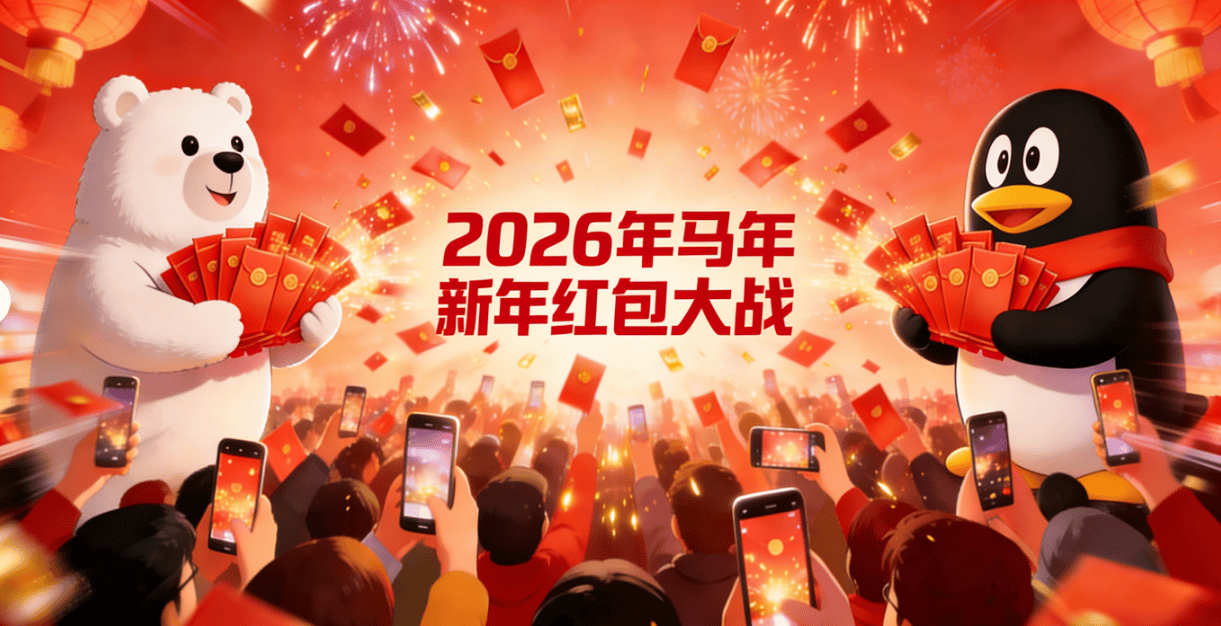
从上春晚到撒15亿,腾讯、宇树们血拼春节档?
36氪· 2026-01-27 10:16
Core Viewpoint - The article discusses the resurgence of the "cash-splashing" marketing strategy during the Spring Festival, highlighting Tencent's announcement of distributing 1 billion yuan in cash red envelopes and Baidu's follow-up with 500 million yuan, indicating a competitive landscape among major internet companies [2][3][4][21]. Group 1: Marketing Strategies - Tencent's CEO, Ma Huateng, emphasized the importance of AI investments while announcing the cash red envelope initiative, aiming to recreate the excitement of the original WeChat red envelope launch in 2015 [3][21]. - Baidu's cash red envelope campaign, which runs from January 26 to March 12, offers users a chance to share in 500 million yuan, showcasing its AI technology as a key selling point [4][23]. - The article notes that the Spring Festival marketing battle has evolved from merely acquiring new users to focusing on building user relationships and delivering value through technology [28][29]. Group 2: Historical Context - The article reflects on the evolution of Spring Festival marketing, starting with Tencent's 5 billion yuan red envelope campaign in 2015, which significantly impacted China's mobile payment landscape [10][25]. - Other companies, such as Alibaba and Baidu, have also engaged in similar campaigns over the years, with Baidu investing 1.9 billion yuan in 2019, resulting in a substantial increase in active users [12][15]. - The shift in marketing strategies is evident as companies move from simple cash giveaways to integrating technology and content into their campaigns, reflecting broader trends in the tech industry [44]. Group 3: Competitive Landscape - The competition for advertising during the Spring Festival has intensified, with companies like ByteDance's Volcano Engine and various robotics firms vying for visibility and engagement [33][34]. - The article highlights that the focus of major companies is shifting from consumer internet to hard technology, indicating a broader industry trend towards value-driven strategies [40]. - The changing landscape of Spring Festival marketing suggests that while the methods may evolve, the underlying goal of capturing user attention and showcasing technological capabilities remains constant [43].