无捆绑机票

Search documents
京东外卖困局:300亿血战,为何给阿里做了嫁衣?
Sou Hu Cai Jing· 2025-11-18 02:12
Core Viewpoint - JD.com's stock has dropped nearly 30% since entering the food delivery market, contrasting with a 20% increase in the A-share Shanghai Composite Index, causing discomfort among investors [2] Financial Performance - JD.com reported Q3 revenue of 299.1 billion yuan, a year-on-year increase of 14.9%, but incurred a significant operating loss of 15.736 billion yuan in new businesses, totaling 31.84 billion yuan in losses for the first three quarters, averaging a daily loss of 116 million yuan [4][7] - The company's new business losses have escalated from 1.327 billion yuan in Q1 to 14.777 billion yuan in Q2, and further to 15.736 billion yuan in Q3, indicating over 30 billion yuan burned in just nine months [7] Strategic Initiatives - JD.com is attempting to leverage its food delivery business to enhance platform activity, but this strategy has not yielded the expected results, as evidenced by stagnant daily order volumes at 25 million since mid-year [5][10] - Despite high-profile efforts from CEO Liu Qiangdong, including personally delivering food, the anticipated boost in user engagement has not materialized [5] Competitive Landscape - Alibaba's aggressive strategy, including a 50 billion yuan subsidy for its food delivery service, has significantly impacted JD.com's market position, capturing a large share of the food delivery market [6][12] - JD.com faces challenges in scaling its delivery network, with only 150,000 full-time riders compared to Alibaba's 4 million active riders, which affects delivery speed and operational flexibility [14] User Engagement and Cross-Selling - JD.com has seen a 40% cross-purchase rate among food delivery customers buying other products, suggesting potential for user engagement, but the conversion of this traffic into retail sales has been disappointing, with product revenue growth slowing from 20.7% to 10.5% [8][10] - The lack of growth in food delivery orders, remaining at "over 25 million" since June, indicates a bottleneck in user acquisition [10] Future Directions - In response to the challenges in the food delivery sector, JD.com is exploring new business avenues, such as the travel sector, with a focus on innovative offerings like "unbundled" flight tickets [16] - However, the travel market is highly competitive, and JD.com must navigate complex pricing and supply chain issues while competing against established players like Ctrip and Meituan [18] Market Outlook - Goldman Sachs predicts that JD.com may incur losses of 26 billion yuan in the coming year due to ongoing subsidy wars, raising questions about whether to continue investing heavily or pivot to a different strategy [19]


2天爆卖2亿!京东旅行再次开售海航“随心飞”,飞趟新疆就回本
Zhong Jin Zai Xian· 2025-08-27 06:34
Core Insights - JD Travel's "Hainan Airlines PLUS Membership Card" offers unlimited flights nationwide for 199 yuan, showcasing high value and strong consumer demand [1][3] - The product achieved over 100 million yuan in sales within 30 minutes and surpassed 200 million yuan in two days, with over 250,000 users purchasing [1][3] - This product marks JD Travel's first collaboration with an airline for a "flexible flight" offering, setting a record for the fastest sales in the industry [3] Product Details - The "Hainan Airlines PLUS Membership Card" has two packages: a 666 yuan/year option for unlimited 199 yuan flights and 20% off business class tickets, and a 2666 yuan/year option for more flexible flight dates and 30% off business class [3] - Both packages include various benefits such as no need to compete for tickets, multiple route options, unlimited flights, free baggage allowance, and applicability for children over 2 years old [3] Market Positioning - JD Travel has been active in the airline industry, introducing a "no-bundled tickets" model that allows consumers to purchase tickets without additional packages, leading to a 200% increase in ticket orders and a 400% rise in new users in Q2 [4] - The success of the "Hainan Airlines PLUS Membership Card" demonstrates JD Travel's value to airline partners and its ability to attract significant consumer interest [4] User Base and Potential - JD has over 800 million high-spending users and partnerships with over 30,000 large enterprises and 8 million SMEs, indicating a strong consumer base with high potential for the travel industry [6] - The overlap between JD's user base and the travel sector presents significant opportunities for growth and collaboration with airlines and travel service providers [6]

京东“0佣金”进军酒旅,天下苦携程垄断久矣
商业洞察· 2025-06-24 09:26
Core Viewpoint - JD.com is officially entering the hotel and travel industry with a "three-year zero commission" policy, aiming to challenge Ctrip's monopoly and disrupt the traditional power dynamics in the sector [3][4][10]. Group 1: JD.com's Expansion Strategy - JD.com is extending its business from e-commerce to local life services, specifically targeting the lucrative hotel and travel market [4][10]. - The company aims to leverage its high-frequency food delivery business as a traffic pool to attract users for its higher-margin hotel and travel services [9][10]. - The hotel and travel industry has a high gross margin of over 70%, but many hotels are struggling to benefit from this due to high commission rates imposed by Online Travel Agencies (OTAs) like Ctrip [12][20]. Group 2: Market Dynamics and Challenges - Ctrip holds a dominant market share of over 56% in the hotel and travel sector, with a net profit margin of 32%, making it one of the most profitable internet companies [9][13][16]. - Despite the overall recovery in tourism, many hotels are experiencing revenue declines, indicating a disparity in profit distribution within the industry [15][20]. - The high commission rates (around 20%) charged by OTAs have led to a situation where hotels are often left with little to no profit, while OTAs reap substantial rewards [20][21]. Group 3: JD.com's Competitive Approach - JD.com's "three-year zero commission" strategy is designed to alleviate the financial burden on hotels and attract them to its platform [31][32]. - The company is focusing on creating a self-built supply chain to reduce costs and ensure profitability for hotel partners, moving away from the traditional distribution model [35][44]. - JD.com is also addressing the issue of price control exerted by OTAs through tools like Ctrip's "price adjustment assistant," which limits hotels' pricing autonomy [28][29]. Group 4: Future Outlook and Industry Impact - JD.com faces significant challenges in breaking the existing dependency of hotels on OTAs, particularly Ctrip, which has established a stronghold in the market [26][38]. - The company aims to foster fair competition in the industry, potentially leading to a shift from a "traffic monopoly" to a "service competition" model [45][46]. - Regulatory changes may also influence the competitive landscape, pushing OTAs to adopt lower commission rates and allow for more pricing autonomy for hotels [41][42].


京东“0佣金”进军酒旅,天下苦携程垄断久矣
Sou Hu Cai Jing· 2025-06-20 06:22
Core Viewpoint - JD.com officially announced its entry into the hotel and travel industry with a "three years zero commission" policy, challenging Ctrip's monopoly and aiming to disrupt the traditional dominance in the sector [3][19]. Group 1: Market Context - The online travel agency (OTA) market in China is projected to grow, with a 17.8% year-on-year increase in transaction volume expected in 2024, reaching 2.07 trillion yuan [8]. - Ctrip, as a leading OTA, reported a net revenue of 53.3 billion yuan in the previous year, a nearly 20% increase, with a net profit of 17.2 billion yuan, reflecting a 72% surge [9]. - Despite the overall growth in tourism, many hotels are experiencing revenue declines, indicating a disparity in profit distribution within the industry [10]. Group 2: Industry Dynamics - The hotel and travel industry has a high gross margin, typically over 70%, but hotels often struggle to capture this value due to high commission rates imposed by OTAs [8][14]. - Ctrip's business model relies heavily on high commission rates, often exceeding 20%, which has led to complaints from hotel operators about being squeezed financially [14][24]. - The competitive landscape is characterized by a few dominant players, with Ctrip holding over 56% market share, making it challenging for new entrants like JD.com to gain traction [10][28]. Group 3: JD.com's Strategy - JD.com's entry is seen as a necessary move to provide competition in a market that has been criticized for its imbalanced profit distribution [7][19]. - The "three years zero commission" strategy is aimed at alleviating the financial burden on hotels and attracting them to the platform [21][24]. - JD.com plans to build a self-sustaining supply chain to reduce reliance on third-party inventory systems and improve profitability for hotel partners [25][32]. Group 4: Challenges Ahead - JD.com faces significant challenges in breaking the existing dependency of hotels on Ctrip, as many have been conditioned to accept high commission rates [20][28]. - The effectiveness of JD.com's strategy will depend on its ability to attract hotel partners and create a competitive environment that encourages fair pricing [30][31]. - The long-term success of JD.com's initiative will require substantial investment in supply chain development and overcoming the entrenched market position of Ctrip [35][36].

京东高薪挖人抢滩酒旅市场,国内OTA战局再添变数
Bei Jing Shang Bao· 2025-06-08 10:31
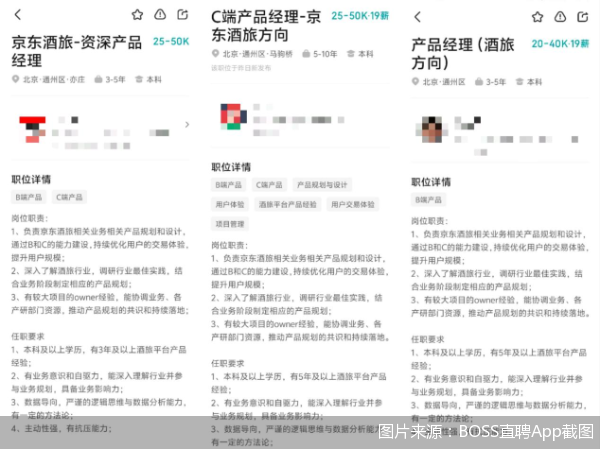
Core Insights - JD.com is aggressively entering the travel and hospitality sector, reportedly offering three times the salary to recruit talent from competitors like Fliggy, Tongcheng, and Ctrip [1][2] - The company has launched a dedicated travel section on its app, featuring categories such as flights, hotels, tickets, and vacation packages [2] - JD.com emphasizes a "no bundling" approach for flight sales, aiming to attract consumers frustrated with additional fees from other online travel agencies (OTAs) [3][9] Recruitment Strategy - JD.com has been actively hiring for various travel-related positions since March, with salaries for product managers ranging from 20,000 to 50,000 yuan [2] - The company is building a comprehensive travel business line, including a dedicated app and mini-programs [2][13] Competitive Positioning - The "no bundling" flight sales strategy is seen as a potential opportunity for JD.com to differentiate itself in a crowded market [9][10] - The company aims to leverage its large user base and existing e-commerce infrastructure to drive growth in the travel sector [8][10] Market Dynamics - The Chinese e-commerce market is becoming saturated, prompting companies like JD.com to explore new categories such as food delivery and travel to sustain growth [7] - The travel market is increasingly viewed as a necessity, making it a strategic area for expansion [7] Challenges and Considerations - JD.com faces significant competition from established players like Ctrip and Meituan, as well as new entrants like Douyin and Xiaohongshu [8][13] - The company needs to establish a strong independent brand for its travel services to overcome existing consumer perceptions tied to its e-commerce identity [13][14] - The complexity of travel services, including pricing algorithms and customer service, requires substantial investment in operational capabilities [13][14]