品牌壁垒

Search documents
国元国际:首予布鲁可“买入”评级 国产拼搭玩具龙头地位稳固
Zhi Tong Cai Jing· 2026-01-29 01:33
Group 1 - The company is rated "Buy" by Guoyuan International, with a target market value of approximately HKD 23.8 billion and a target price of HKD 95.5, indicating a potential upside of 21.1% from the current price [1] - The company has established a deep and efficient multi-channel distribution system, with over 140,000 offline outlets and a rapidly growing dealer network that has penetrated third-tier cities and below, achieving over 80% coverage in these areas [2] - The company is positioned to create industry-leading quality standards and exceptional cost-performance ratios, leveraging advancements in technology and manufacturing processes to offer top-tier craftsmanship and assembly experiences at competitive price points [3] Group 2 - The company's innovative product design, strong IP operation capabilities, and comprehensive distribution network have enabled it to become a leading player in its market segment [1] - The diverse and multi-faceted channel types include national large supermarkets and chains, as well as numerous specialized toy stores, stationery shops, and boutique stores, enhancing brand sales and market reach [2] - The combination of high-quality products and strong brand barriers supports the company's revenue growth, which continues to outpace the industry average [3]
潮尚重构消费|小酒馆赛道洗牌在即 同质化与供应链难题下的破局之路
Bei Jing Shang Bao· 2026-01-21 10:41
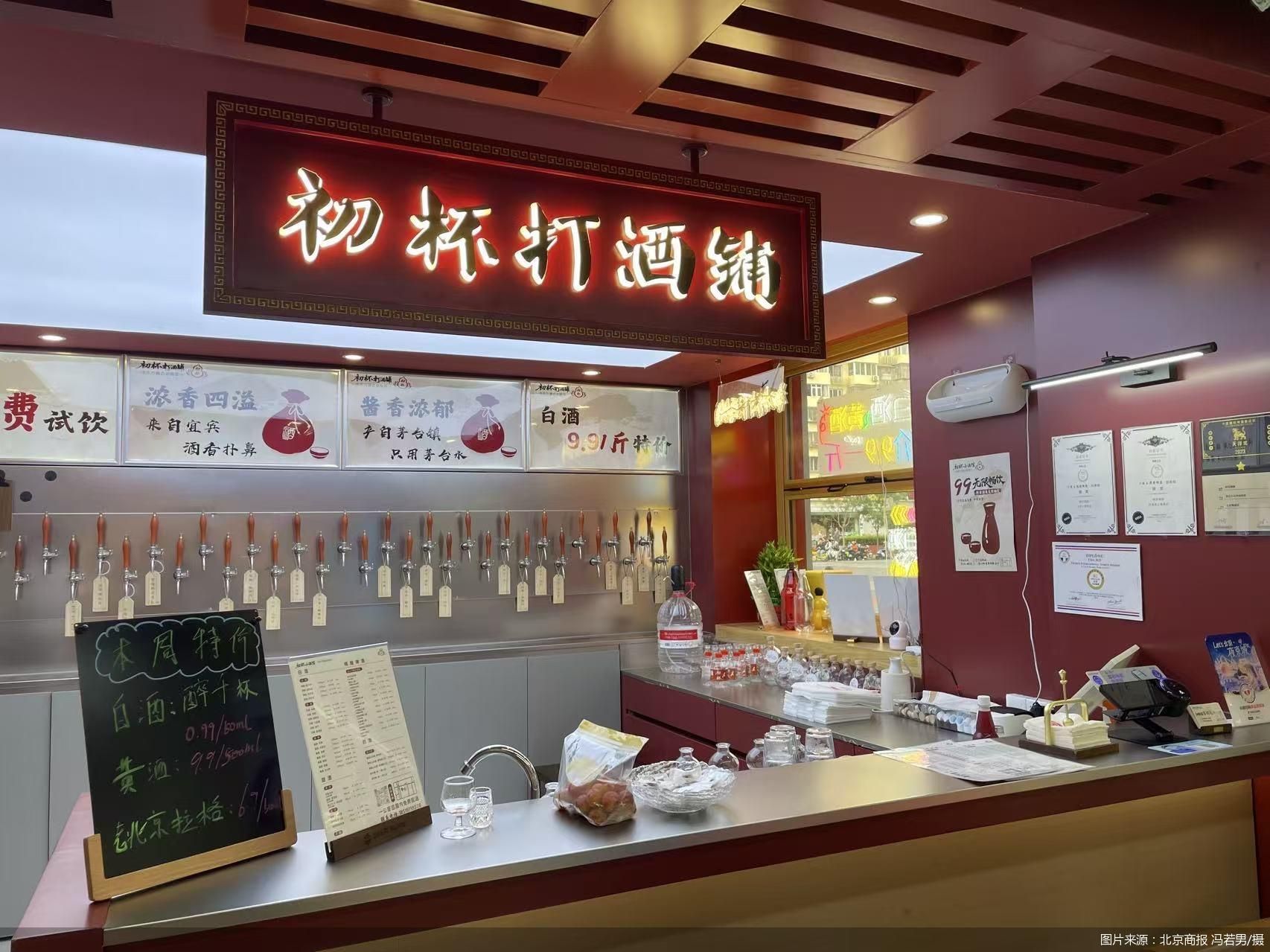
Core Insights - The rise of a new social business model centered around "micro-drunk" experiences in small taverns is emerging as a significant segment within the liquor market, potentially reaching a trillion-level market size [1] - As capital flows into this seemingly expansive market, challenges such as product homogenization and supply chain integrity are becoming bottlenecks for sustainable growth [1] - The ability to integrate exceptional offline experiences, efficient online fulfillment, and unique cultural content will determine which players can attract young consumers and succeed in the competitive landscape [1] Market Trends - The "day coffee, night liquor" model exemplifies a mixed-use tavern approach, addressing consumer demand for diverse social spaces and complex taste experiences [3] - Craft beer bars are creating dedicated spaces for consumers, fostering a sense of identity and community [4] - The emergence of community-focused liquor shops, such as "打酒铺," emphasizes local consumer engagement and high cost-performance ratios, with prices for various liquor types ranging from 2.99 to 39.99 yuan per 50ml [4][5] Consumer Behavior - Young consumers are shifting from traditional drinking cultures to a "micro-drunk" economy, prioritizing personal enjoyment and emotional fulfillment over social expectations [8] - The main drinking scenarios have transitioned from passive business gatherings to active socializing among friends, with a significant online presence reflected in over 100 million views of tavern-related topics on social media by 2025 [8] - Younger consumers are increasingly price-sensitive and willing to pay for atmosphere and experience, leading to a preference for cost-effective liquor options [8] Competitive Landscape - The small tavern sector is entering a phase of homogenization, with many establishments lacking unique branding and consumer loyalty [9] - Future competition will focus on three key areas: scene innovation, product development towards lower alcohol content and health, and cultural integration that resonates with younger consumers [9][10] - Supply chain strength and quality control are critical for sustaining competitive advantage, with successful models relying on specialized knowledge and technology [10] Future Outlook - The integration of online and offline channels is expected to redefine consumer experiences, with a shift towards online instant retail becoming more prominent [11] - The small tavern industry must evolve from merely providing space to creating engaging experiences and community connections to capture market opportunities [12] - Establishing brand barriers through deep content and local culture will be essential for long-term success in the small tavern market [12]

研报掘金丨申万宏源研究:维持贵州茅台“买入”评级,具备中长期投资价值
Ge Long Hui· 2025-12-03 07:16
Core Viewpoint - Guizhou Moutai recently held an extraordinary shareholders' meeting, approving the election of directors, mid-term profit distribution, and share buyback proposals, with a focus on "sustaining high-quality development and creating sustainable value" [1] Group 1: Company Developments - The new chairman, Chen Hua, made his first appearance and engaged with investors on various concerns [1] - General Manager Wang Li and the management team provided detailed explanations on multiple investor queries [1] Group 2: Investment Outlook - The research highlights Moutai's strong brand barrier and substantial channel profits, which create a solid competitive moat [1] - Moutai's business model is noted for its long-term stable profitability, high cash flow quality, and return on equity (ROE), generating sustainable long-term returns [1] - According to Moutai's cash dividend plan for 2024-2026, the annual cash dividend will not be less than 75% of the net profit attributable to shareholders, with an implied dividend yield of 3.6% in 2025, indicating medium to long-term investment value [1] - The company is expected to achieve stable growth during the 14th Five-Year Plan period, with strong certainty in performance [1] - The rating is maintained at "Buy" [1]

奢侈品珠宝:时光淬炼,奢华典
Xinda Securities· 2025-11-27 07:31
Investment Rating - The investment rating for the luxury jewelry industry is "Positive" [2][3] Core Insights - The global personal luxury goods market is projected to reach €364 billion in 2024, showing a slight decline of 1% year-on-year, with the jewelry segment demonstrating strong resilience [3][22] - The luxury jewelry market is increasingly concentrated, with the top five brands holding a market share of 42.6%, indicating a strengthening of the head effect [3][25] - High-net-worth individuals contribute over 20% of sales, showcasing their strong consumption resilience and acting as a stabilizing force in the industry [3][22] - The luxury jewelry sector is characterized by high brand barriers and historical accumulation, with leading brands like Tiffany, Bulgari, Cartier, and Van Cleef & Arpels maintaining significant market influence and premium pricing [3][22] - The rise of the Z generation is driving a shift in consumer preferences towards brand culture, product design, and personalized experiences, providing a solid foundation for the growth of domestic luxury brands in China [3][22] Summary by Sections 1. Evolution of Luxury Goods - Luxury goods emerged as symbols of social stratification, transitioning from exclusive items for the elite to accessible status symbols for a broader audience [13][14] 2. Consumer Motivations for Purchasing Luxury Goods - The primary motivation for purchasing luxury jewelry is the fulfillment of spiritual needs, with social recognition and personal expression being key drivers [32][35] 3. Nature of Luxury Goods - Luxury goods serve as symbols of dreams, with rarity and uniqueness establishing their high-end positioning [3][22] 4. Brand Value Creation in Luxury Jewelry - Leading luxury jewelry brands ensure longevity through deep connections with affluent consumers, continuous innovation, and strict brand management [3][22] 5. Financial Characteristics and Valuation of Luxury Companies - The financial performance of leading luxury brands is significantly higher than that of regional jewelry companies, driven by brand equity and global channel control [3][22] 6. Potential for Domestic Luxury Jewelry Brands in China - China is positioned to nurture its own luxury jewelry brands, supported by economic growth, rising disposable incomes, and cultural confidence [3][22]
日本车没打算退场
3 6 Ke· 2025-10-30 02:45
Core Viewpoint - The Japanese automotive industry is undergoing a significant transformation, driven by the rise of Chinese brands and the shift towards new mobility solutions, with the 2023 Tokyo Motor Show rebranded as the "Japan Mobility Show" reflecting this change [1][4][20]. Industry Transformation - The Japanese automotive sector is transitioning from traditional manufacturing to creating new lifestyles, with a focus on electric vehicles and mobility solutions [1][4]. - The Tokyo Motor Show has shifted its focus to local market needs, showcasing vehicles that may not resonate with international consumers but reflect Japanese consumer preferences [9][22]. Financial Performance - In the first fiscal quarter of 2025, major Japanese automakers reported varying degrees of profit decline, with Toyota's operating profit down 11% and net profit down 37%, while Honda and Nissan experienced both revenue and profit declines [13][15]. - Despite Toyota's strong revenue, the overall financial performance of Japanese automakers indicates a need for adaptation in a rapidly changing market [13][15]. Competitive Landscape - The presence of Chinese electric vehicle manufacturers, such as BYD, has intensified competition, prompting Japanese automakers to innovate and adapt their strategies [7][11]. - Japanese automakers are beginning to incorporate more local elements into their products to better compete in the Chinese market, indicating a shift in strategy [15][20]. Consumer Preferences - Japanese consumers exhibit a strong brand loyalty, which influences their purchasing decisions, contrasting with the more fickle nature of Chinese consumers [24][26]. - The success of Japanese brands in their domestic market is attributed to their deep-rooted brand recognition and customer service, which remains a competitive advantage [24][26]. Future Outlook - The year 2025 is seen as a pivotal point for Japanese automakers, as they must navigate the challenges posed by both domestic and international markets while embracing electric vehicle technology [20][22]. - Collaboration with Chinese partners may become essential for Japanese automakers to leverage local market insights and technological advancements [17][20].




贵州茅台(600519):尊重市场,行稳至远
Shenwan Hongyuan Securities· 2025-10-29 15:29
Investment Rating - The investment rating for Guizhou Moutai is "Buy" (maintained) [1] Core Views - The company reported a total revenue of 130.9 billion yuan for the first three quarters of 2025, a year-on-year increase of 6.32%, and a net profit attributable to shareholders of 64.63 billion yuan, also up 6.25% year-on-year [6] - The report indicates a downward adjustment in profit forecasts for 2025-2027 due to external demand pressures, with projected net profits of 90.47 billion, 95.02 billion, and 101.53 billion yuan respectively for those years [6] - The report emphasizes the strong brand barrier and excellent business model of Moutai, which contribute to its long-term stable profitability and high cash flow quality [6] - The implied dividend yield for 2025 is projected at 3.8%, indicating medium to long-term investment value [6] Financial Data and Profit Forecast - Total revenue projections for 2025-2027 are 183.22 billion, 192.66 billion, and 205.18 billion yuan respectively, with year-on-year growth rates of 5.2%, 5.1%, and 6.5% [5] - The net profit attributable to shareholders for 2025 is estimated at 90.47 billion yuan, with a growth rate of 4.9% [5] - The earnings per share for 2025 is projected to be 72.24 yuan, with a price-to-earnings ratio of 20 [5] - The gross profit margin is expected to remain high at around 91.7% for 2025 [5] Sales Performance - In Q3 2025, the company achieved revenue of 39.04 billion yuan from its liquor business, with Moutai liquor revenue at 34.92 billion yuan, a year-on-year increase of 7.26% [6] - Domestic sales revenue in Q3 2025 was 38.05 billion yuan, up 1.38% year-on-year, while international sales decreased by 21.8% to 1 billion yuan [6] - The net profit margin for Q3 2025 was 50.0%, with a slight year-on-year decrease [6] Cash Flow and Financial Health - The net cash flow from operating activities in Q3 2025 was 25.08 billion yuan, a significant increase of 221.5% year-on-year [6] - The company’s cash flow from sales of goods and services was 43.71 billion yuan, up 2.61% year-on-year [6] - The end of Q3 2025 saw a pre-receivable account balance of 8.72 billion yuan, reflecting a quarter-on-quarter increase [6]
“买了点茅台”,段永平发声,白酒消费仍在探底……
Zheng Quan Shi Bao· 2025-10-13 15:25
Core Viewpoint - The recent purchase of Kweichow Moutai by investor Duan Yongping has sparked market discussions, despite the ongoing weak performance of the liquor sector, particularly high-end liquor, which is still in a bottoming phase [1][3]. Company Analysis - Kweichow Moutai's stock has been declining since its peak in 2021, facing concerns over consumer downgrade, younger generations not drinking liquor, and potential "liquor bans" [3]. - Duan Yongping emphasizes the unique brand value and cultural scarcity of Kweichow Moutai, comparing it to Coca-Cola in the global soft drink market, asserting that its value remains unchanged despite market fluctuations [3]. Industry Overview - The sales performance of the liquor industry remains weak, with a projected overall decline of about 20% during the recent National Day and Mid-Autumn Festival holidays, aligning with pre-holiday expectations [5]. - Recent data indicates that while Kweichow Moutai's wholesale prices increased by 30-50 yuan per bottle, the overall sales still saw a year-on-year decline of approximately 20% [5]. - The high-end liquor segment is experiencing weak recovery, while the mass-market segment is performing better, indicating a significant differentiation in demand across price tiers [5]. - The stock price of Kweichow Moutai has decreased by 5.16% this year, with a current market capitalization of 1.78 trillion yuan [5].
“买了点茅台!”段永平发声!白酒消费仍在探底……
券商中国· 2025-10-13 15:15
Core Viewpoint - The article discusses the ongoing challenges faced by the Chinese liquor industry, particularly high-end liquor represented by Kweichow Moutai, amid weak consumer demand and market fluctuations [1][4]. Group 1: Market Performance - Kweichow Moutai's stock has been on a downward trend this year, with a decline of 5.16%, bringing its market capitalization to 1.78 trillion yuan [5]. - The sales performance during the recent National Day and Mid-Autumn Festival was weak, with an overall expected decline of about 20% compared to previous years [4]. Group 2: Investor Sentiment - Notable investor Duan Yongping expressed confidence in Kweichow Moutai by purchasing shares, indicating a long-term investment perspective, typically suggesting a holding period of at least ten years [2][3]. - Duan Yongping challenges the prevailing pessimism surrounding the liquor market, arguing that the brand's unique value and cultural significance cannot be easily replicated [3]. Group 3: Industry Trends - Recent data shows that while there was a marginal increase in the prices of Kweichow Moutai and Wuliangye before the holiday, overall sales still experienced a year-on-year decline of approximately 20% [4]. - The high-end liquor segment is showing signs of weak recovery, while the mass-market segment is performing better, indicating a divergence in consumer behavior [4].