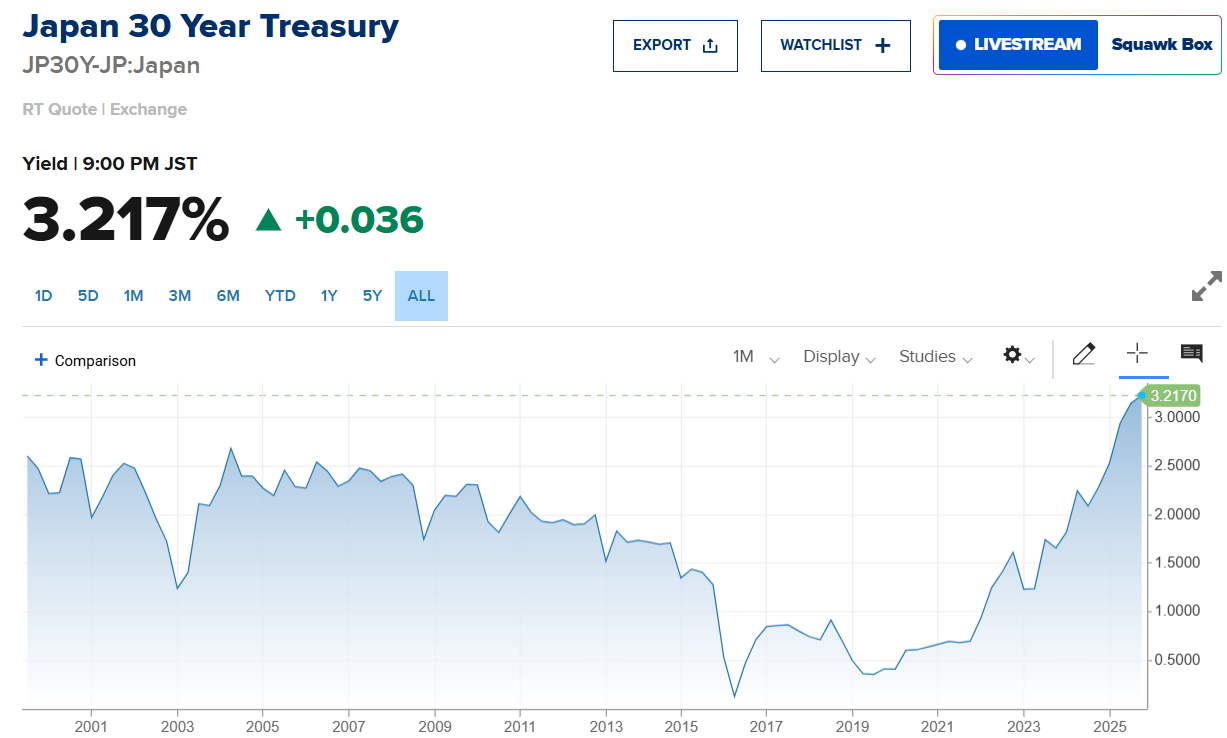
日本超长期政府债券

Search documents
每日机构分析:12月26日
Zhong Guo Jin Rong Xin Xi Wang· 2025-12-26 10:38
Group 1: Asset Environment and Economic Outlook - CITIC Securities predicts that the asset environment in 2026 may exhibit characteristics of marginal liquidity easing and moderate economic recovery, with the 10-year China bond yield expected to fluctuate between 1.5% and 1.8% and the 10-year US Treasury yield maintaining a range of 3.9% to 4.3% [1] - The report anticipates that Brent crude oil will oscillate between $58 and $70 per barrel, while gold prices may continue to be strong, potentially reaching $5,000 per ounce, supported by liquidity easing and geopolitical risks [1] - Copper prices are expected to rise to an average of $12,000 per ton due to supply constraints and electricity demand [1] Group 2: Currency and Foreign Investment - Huatai Securities indicates that the current appreciation of the RMB is likely to enhance foreign investors' interest in RMB-denominated assets, creating a positive cycle for capital inflows and easing financial conditions [2] - The report notes that despite seasonal declines in capital flows and risk appetite towards the end of the year, the strengthening of the RMB will continue to boost the valuation of both onshore and offshore RMB assets [2] Group 3: Silver Market Dynamics - Silver prices have surged nearly 150% this year, driven by strong industrial demand, low global inventories, and its inclusion in key mineral lists [2] - Analysts suggest that silver is breaking away from its traditional role as a "by-product" of gold, with its independent investment logic being re-evaluated by the market [2] - Predictions indicate that silver prices could reach $100 per ounce by 2026, especially if monetary instability increases [2] Group 4: Japanese Economic Indicators - Tokyo's inflation rate has shown a greater-than-expected decline, with the CPI rising 2.3% year-on-year in December, down from 2.8% the previous month, primarily due to easing food price increases and lower energy costs [3] - Despite the slowdown, inflation remains above the Bank of Japan's 2% target, suggesting continued tightening of monetary policy [3] - The Japanese economy is expected to rebound from a contraction in Q3, with forecasts indicating production growth of 1.2% and 1.8% in December and January 2026, respectively [3] Group 5: Japanese Government Bond Issuance - The Japanese Finance Ministry plans to reduce the issuance of ultra-long government bonds to the lowest level in 17 years, cutting nearly 20% from the previous fiscal year to approximately 17.4 trillion yen [4] - The total issuance of Japanese government bonds for the next fiscal year is projected to be 180.7 trillion yen, a decrease of nearly 5% from the current fiscal year [4] Group 6: South Korean Currency Intervention - The South Korean won has strengthened against the US dollar due to verbal interventions and measures from authorities, with the government expressing a firm commitment to alleviate pressure on the currency [4] - Recent measures may lead to a dollar sell-off of up to $23 billion, although there are risks that the outcomes may not meet expectations [4]
日本下一财年超长债发行量拟降至17年低点 因财政忧虑重击债市
Ge Long Hui· 2025-12-26 03:05
Core Viewpoint - The Japanese government plans to issue the least amount of ultra-long-term government bonds in 17 years, reflecting sensitivity to rising bond yields [1] Group 1: Bond Issuance - The Ministry of Finance will reduce the issuance of ultra-long-term government bonds by nearly 20% compared to the previous fiscal year, down to approximately 17.4 trillion yen (about 111.6 billion USD) [1] - The total amount of Japanese government bonds to be issued in the next fiscal year, including ultra-long-term bonds, will be 180.7 trillion yen, a decrease of nearly 5% from the current fiscal year's total, which includes additional budgets [1] Group 2: Market Expectations - There are market expectations that Prime Minister Suga's expansionary fiscal policy will exacerbate Japan's already heavy debt burden, leading to further increases in Japanese government bond yields [1] Group 3: Short-term Bonds - The Ministry of Finance has not increased the issuance of 10-year government bonds but has raised the combined issuance of 2-year and 5-year government bonds by 2.4 trillion yen [1]
【财经分析】超长端日债收益率刷新数十年高位 货币政策转折点衍生债市突变
Xin Hua Cai Jing· 2025-08-22 22:03
Core Viewpoint - The recent surge in Japan's ultra-long government bond yields signals a potential turning point in Japan's monetary policy and a revaluation of the global capital landscape [1][8]. Group 1: Bond Yield Trends - As of August 22, the 20-year government bond yield rose by 3 basis points to 2.671%, the highest level since 1999, while the 30-year yield increased by 3.6 basis points to 3.217%, slightly down from an intraday high of 3.236% [1]. - The steepening of the yield curve is driven by rising inflation expectations and concerns over a shift in monetary policy [4][5]. Group 2: Inflation and Economic Factors - Japan's core CPI rose by 3.1% year-on-year in July, remaining above the Bank of Japan's 2% target for the third consecutive month, indicating persistent inflationary pressure [4]. - The core CPI, excluding fresh food and energy, remains high at 3.4%, suggesting strong domestic demand-driven inflation [4]. Group 3: Market Reactions and Investor Behavior - Market expectations are pricing in further interest rate hikes by the Bank of Japan, with ultra-long bonds being particularly sensitive to interest rate changes [5]. - Foreign investment in long-term Japanese government bonds has decreased significantly, with net purchases in July dropping to 480 billion yen, only one-third of June's level [5]. Group 4: Policy Challenges for the Bank of Japan - The Bank of Japan faces a significant policy dilemma, needing to balance inflation control with fiscal sustainability, as rapid rate hikes could exacerbate fiscal pressures [6][7]. - A recent survey indicated that 63% of economists expect the Bank of Japan to raise rates from 0.5% to 0.75% by the end of the year [6]. Group 5: Global Economic Context - The global bond market's interconnectedness means that fluctuations in Japanese government bonds are influenced by movements in U.S. and European bond markets [5][7]. - The International Monetary Fund has downgraded its global economic growth forecast for 2025 from 3.3% to 2.8%, citing uncertainties from U.S. tariff policies [7].