通胀降温

Search documents
通胀降温,消费回暖:2026年品牌如何承接这波“高频购买”的红利
凯度消费者指数· 2026-03-20 02:02
Core Insights - The market is experiencing a rapid increase in activity, with gold prices soaring and consumer enthusiasm for gold investments rising significantly [1] - The consumer price index (CPI) in February 2026 showed a year-on-year increase of 1.3%, indicating a revival in consumer spending, particularly in essential goods and education [1] Group 1: Consumer Spending Trends - In Q4 2025, the average spending on fast-moving consumer goods (FMCG) increased by 1.0% compared to the same period last year, with a 3.1% growth in average purchase volume and a 2.0% decrease in prices, although the price decline is narrowing [1][3] - The shopping behavior of consumers has shifted towards smaller, more frequent purchases rather than bulk buying, indicating a more dynamic consumer engagement [3] Group 2: Price and Value Dynamics - The overall inflation rate for FMCG is at 0.7%, with a noticeable easing of inflationary trends, suggesting a stabilization in prices [4] - Consumers are increasingly opting for value-driven purchases rather than just cheaper alternatives, reflecting a return to a focus on value [7] Group 3: Brand Strategies - Brands need to adapt to the high-frequency shopping behavior by implementing value-return strategies rather than relying solely on brand perception [8] - Understanding consumer purchasing patterns is crucial for brands to effectively position themselves in the market and optimize their strategies [8] Group 4: Key Questions for Brands - Brands should consider whether their categories are benefiting from high-frequency and high-volume sales [9] - It is essential to evaluate if consumers are gravitating towards cheaper purchasing channels and how to optimize channel strategies accordingly [9] - Brands need to assess the effectiveness of promotions to ensure they drive incremental sales rather than merely depleting existing demand [9] - Evaluating the trend of value alternatives and optimizing product pricing strategies is critical for brands [9]


铅:缺乏驱动,低位震荡
Guo Tai Jun An Qi Huo· 2026-03-12 02:23
1. Report Industry Investment Rating - Not provided in the given content 2. Core View of the Report - The lead market lacks driving forces and is in a low - level oscillation [1] 3. Summary by Relevant Catalogs 3.1 Fundamental Tracking - **Price and Volume Data**: The closing price of the Shanghai lead main contract was 16,680 yuan/ton, up 0.18%; the closing price of the LME lead 3M electronic disk was 1,945 dollars/ton, up 0.75%. The trading volume of the Shanghai lead main contract was 40,968 lots, down 5,562; the trading volume of LME lead was 6,554 lots, up 779. The open interest of the Shanghai lead main contract was 61,083 lots, up 2,926; the open interest of LME lead was 173,848 lots, up 2,245 [1] - **Premium and Discount Data**: The premium of Shanghai 1 lead was - 40 yuan/ton, up 10; the LME CASH - 3M premium was - 47.77 dollars/ton, down 0.03. PB00 - PB01 was - 65 yuan/ton, up 5; the import premium was 90 dollars/ton, unchanged [1] - **Profit and Loss Data**: The spot import profit and loss of lead ingots was - 97.18 yuan/ton, down 44.26; the import profit and loss of Shanghai lead continuous three contracts was 323.85 yuan/ton, up 0.48. The comprehensive profit and loss of recycled lead was - 417 yuan/ton, down 19 [1] - **Inventory Data**: The inventory of Shanghai lead futures was 56,898 tons, up 298; the LME lead inventory was 284,875 tons, unchanged. The LME lead cancelled warrants was 4,600 tons, unchanged [1] 3.2 News - The relatively mild US inflation data and the IEA's record - high release of crude oil reserves failed to boost market sentiment. Trump tried to downplay the threat of mining in the Strait of Hormuz and hinted that the war would end soon, but the market still worried about the Middle East situation [1] - US inflation continued to cool down. The CPI in February increased by 2.4% year - on - year, and the core CPI increased by 2.5% year - on - year, the smallest increase in nearly five years [1] 3.3 Lead Trend Intensity - The lead trend intensity is 0, indicating a neutral view, with the value range being an integer in the [-2, 2] interval [1]
可选消费W07周度趋势解析:通胀降温信号带动海外消费类资产估值修复,美国政界跨党派联手推动信用卡利率上限立法
海通国际· 2026-02-23 10:50
Market Overview - Cooling inflation signals have led to a valuation recovery in overseas consumer assets, with the U.S. bipartisan push for credit card interest rate cap legislation creating uncertainty in the credit card sector[1] - Weekly performance of sectors shows U.S. hotels leading with a 3.1% increase, followed by overseas sportswear at 2.5% and luxury goods at 2.2%[11] Sector Performance - The U.S. hotel sector's strong performance is attributed to Marriott and Hilton, with Marriott's Q4 2025 adjusted EBITDA exceeding market expectations, reaching $5.84 billion to $5.93 billion[6] - Overseas sportswear saw a 2.5% increase, driven by a lower-than-expected January CPI of 2.4%, enhancing Fed rate cut expectations[13] - Luxury goods increased by 2.2%, with Hermès up 4.5% due to better-than-expected FY2025 results, while LVMH fell by 4.1% due to disappointing performance in key segments[8] Consumer Trends - The jewelry sector has shown resilience, with a year-to-date increase of 13.7%, outperforming other sectors[11] - Domestic sportswear increased by 0.3%, with Anta Sports rising 4.6% following the acquisition of a stake in PUMA[13] Challenges - The credit card sector faced a significant decline of 5.5%, influenced by proposed legislation to cap interest rates, which could severely impact profitability[14] - The snack sector dropped by 4.6%, with companies like Three Squirrels experiencing a 6.2% decline due to substantial drops in e-commerce sales across major platforms[14] Valuation Insights - Valuations across various sectors remain below the historical five-year averages, with overseas sportswear expected PE at 30.1x, only 57% of the past average[9] - The luxury sector's expected PE is 26.2x, representing 49% of its historical average, indicating potential for future growth as market conditions stabilize[9]
通胀软着陆遥不可及 高物价让美国民众“压力山大”
Xin Lang Cai Jing· 2026-02-21 08:59
Core Insights - The U.S. Consumer Price Index (CPI) increased by 2.4% year-on-year and 0.2% month-on-month in January, indicating a slowdown in inflation growth, but the cumulative price increase of approximately 25% over the past few years continues to strain the average American's finances [1][3] - The decline in inflation is attributed to a slowdown in rent increases and a drop in used car prices, yet tariffs are causing price increases in furniture, appliances, and clothing [1][3] Group 1 - The slight decrease in inflation is perceived as insignificant by the public, who are more concerned about the overall cost of living and the inability to return to previous price levels [3][5] - Many businesses are absorbing the additional costs from tariffs to maintain market share, rather than passing these costs onto consumers, which has led to a perception that prices are not decreasing [3][5] - Rent increases remain a significant burden for younger generations, with rental prices still rising despite a decrease in the overall year-on-year growth rate [8] Group 2 - The market is increasingly calling for interest rate cuts as inflation approaches the Federal Reserve's 2% target, but concerns about stagnant wage growth and a cooling job market persist [8] - The notion of "soft landing" for inflation does not alleviate the anxiety of many American families facing high living costs, indicating a disconnect between economic indicators and everyday financial realities [8]

听鉴世界 | 通胀软着陆遥不可及 高物价让美国民众“压力山大”
Yang Shi Xin Wen Ke Hu Duan· 2026-02-21 08:22
Group 1 - The core viewpoint of the articles highlights that despite a slight decrease in the Consumer Price Index (CPI) in January, the overall cost of living remains burdensome for ordinary Americans due to a cumulative price increase of approximately 25% over the past few years [1][2][3] - The decline in inflation is attributed to a slowdown in rent increases and a drop in used car prices, but there are still rising costs in furniture, appliances, and clothing due to tariff policies [2][3] - Many individuals express skepticism about the notion of decreasing prices, emphasizing that while the rate of price increase may have slowed, the actual cost of living continues to rise, making it difficult for them to manage their expenses [3] Group 2 - The housing cost remains a significant pain point for younger generations, with rent increases still affecting their financial stability despite a decrease in the year-on-year rent growth rate [3] - As inflation approaches the Federal Reserve's 2% target, there is increasing market demand for interest rate cuts; however, the ongoing high living costs and stagnant wage growth contribute to public anxiety [3]
报告:美国市政债券正在回暖
Xin Lang Cai Jing· 2026-02-17 06:50
Core Insights - Municipal bonds in the U.S. have shown strong performance at the beginning of the new year, with a year-to-date return of 1.6%, outperforming other fixed-income assets such as mortgage-backed securities, investment-grade corporate bonds, U.S. Treasuries, and high-yield bonds [1][2] Group 1 - The market for municipal bonds is currently the best-performing asset class among various fixed-income assets in the U.S. [1] - The recent volatility in the stock market, driven by AI-related fears, has likely increased demand for more defensive assets like municipal bonds [2] - Continued cooling of inflation has also benefited longer-duration asset classes, including municipal bonds [2]
Mhmarkets迈汇:避险情绪与通胀降温驱动金价回升
Xin Lang Cai Jing· 2026-02-16 16:35
Group 1 - International gold prices showed a strong rebound on February 16, following a significant sell-off the previous trading day, driven by renewed geopolitical tensions and the release of the latest U.S. inflation data, which reignited market risk aversion [1][3] - April gold futures rose to approximately $5054.15 per ounce, with the hedge properties of gold in extreme uncertainty environments being a key driver for its price recovery [1][3] - Silver rebounded by 3.3% to $77.73 per ounce after a previous single-day drop of 10%, while platinum also surpassed the $2000 mark, reaching $2081.95 per ounce [1][3] Group 2 - The U.S. Consumer Price Index (CPI) for January increased by 2.4% year-on-year, a slowdown from December's 2.7% and below the market expectation of 2.5%. Core CPI rose by 2.5% year-on-year and 0.3% month-on-month, aligning with market expectations [2][4] - Despite the moderate decline in inflation data, it has not fundamentally altered the Federal Reserve's current policy narrative, as the resilience of the labor market adds uncertainty to the Fed's interest rate path [2][4] - The precious metals market has entered a phase of intense bullish and bearish competition since late January, with gold expected to record weekly gains, while silver may face its third consecutive week of decline [2][4]

STARTRADER外汇:美联储降息预期升温 金银价格同步走高
Sou Hu Cai Jing· 2026-02-14 05:38
Group 1 - The core viewpoint of the articles is that the significant drop in U.S. inflation, as indicated by the January CPI data, has led to heightened expectations for a Federal Reserve interest rate cut, which in turn has positively impacted the global precious metals market [1][3]. - The January CPI data showed a year-on-year increase of 2.4%, lower than the market expectation of 2.5%, marking a decrease of 0.3 percentage points from December 2025's 2.7%, and the lowest inflation rate in recent times [3]. - Following the CPI release, the probability of a Federal Reserve rate cut in June surged from 49.9% to 83%, with the expected rate cut for the year adjusted to approximately 63 basis points, equivalent to 2.5 standard cuts [3]. Group 2 - The rise in gold and silver prices is logically linked to the increased expectations of a rate cut, as lower interest rates reduce the opportunity cost of holding non-yielding assets like gold and silver [4]. - As of February 14, gold was priced at $5040.56 per ounce, up $121.6 (2.47%), while silver was at $77.146 per ounce, up $2.01 (2.68%), reflecting a significant increase in both markets [4]. - The domestic gold and silver markets showed a correlated trend, with some variations in performance; while certain products experienced slight pullbacks, others maintained high prices, indicating a balanced market response to the rate cut expectations [4]. Group 3 - The precious metals market has experienced increased volatility, with instances of sharp price fluctuations, highlighting the market's sensitivity to Federal Reserve policy signals [5]. - Various institutions have differing forecasts for gold and silver prices; some remain bullish, anticipating further price increases post-rate cut, while others caution against potential corrections due to interest rate reversals and profit-taking [5]. - Additional factors influencing gold and silver prices include central banks' continuous accumulation of gold over the past 15 months and rising industrial demand for silver, particularly in the photovoltaic sector, which is contributing to a widening supply-demand gap [5].
startrader:CPI报告落地 华尔街上调美联储年内降息预期至2.5次
Sou Hu Cai Jing· 2026-02-14 05:14
Core Viewpoint - The January CPI report released by the U.S. Bureau of Labor Statistics has triggered volatility in global financial markets, leading Wall Street institutions to adjust their expectations for the Federal Reserve's monetary policy, with a consensus now anticipating a total rate cut of approximately 63 basis points this year, equivalent to about "2.5 rate cuts" [1] Group 1: CPI Data and Market Reactions - The January CPI data shows a cooling trend, with a year-on-year increase of 2.4%, below the market expectation of 2.5%, and down 0.3 percentage points from December 2025's 2.7%, marking the lowest level since May 2025 [3] - The core CPI, excluding food and energy, rose by 2.5% year-on-year, meeting expectations and representing the lowest level since 2021, while the month-on-month increase was 0.3%, indicating a slight rebound but not altering the overall trend of declining inflation [3] - Energy prices significantly contributed to the cooling of inflation, with the energy price index decreasing by 1.5% month-on-month, including a 3.2% drop in gasoline prices, alleviating overall price pressures [3] Group 2: Wall Street's Rate Cut Expectations - Prior to the CPI data release, Wall Street's expectations for rate cuts were conservative, with traders anticipating a total cut of only 58 basis points for the year, and significant disagreement on the timing of cuts [4] - Following the CPI data, expectations surged, with the probability of a June rate cut rising to over 80%, and April's cut probability increasing to 30%, leading to an adjusted total rate cut expectation of 63 basis points [4] - Different Wall Street institutions have varying interpretations of the rate cut path, with Goldman Sachs Asset Management predicting two cuts this year, the first potentially in June, while Pacific Investment Management Company believes two cuts are reasonable based on the encouraging inflation report [4] Group 3: Constraints on Federal Reserve's Decision-Making - Despite rising rate cut expectations, the Federal Reserve's policy decisions face multiple constraints, as both CPI and core CPI remain above the Fed's long-term inflation target of 2%, and strong non-farm payroll data indicates a resilient labor market [5] - The robust performance of the labor market diminishes the necessity for rapid rate cuts, as noted by Nomura Securities, highlighting that the positive response from inflation data is still limited by employment resilience [5] - Following the CPI data release, market reactions included rising U.S. Treasury prices, a declining dollar index, and increased attractiveness of precious metals, indicating a re-pricing of global financial markets around new interest rate expectations [5]
金价银价,大跌后反弹!
Sou Hu Cai Jing· 2026-02-14 04:50
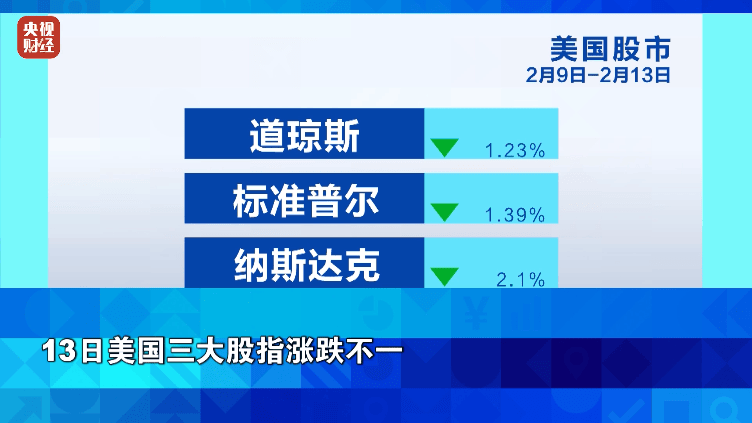
Group 1 - The core viewpoint of the news is that the latest US inflation data for January has exceeded expectations, leading to increased market expectations for a Federal Reserve interest rate cut this year [3][5]. - The US January CPI rose by 2.4% year-on-year, marking the lowest growth rate since May 2025, and lower than the market expectation of 2.5% [5]. - The core CPI for January increased by 2.5% year-on-year, the lowest growth rate since March 2021, which has further bolstered the market's anticipation of a rate cut by the Federal Reserve [5]. Group 2 - In the stock market, the three major US indices showed mixed results, with the Dow Jones rising by 0.10% and the S&P 500 increasing by 0.05%, while the Nasdaq fell by 0.22% [3]. - The performance of precious metals was notable, with gold prices rising by 1.34% and silver prices increasing by 1.4% over the week [12]. - European stock indices displayed varied performance, with the UK FTSE 100 rising by 0.42%, while the French CAC40 index fell by 0.35% and the German DAX index increased by 0.25% [7]. Group 3 - In the oil market, there are indications that OPEC+ is inclined to resume oil production increases starting in April, which is being weighed against the backdrop of US inflation data [9]. - The price of light crude oil for March delivery closed at $62.89 per barrel, up by 0.08%, while Brent crude for April delivery closed at $67.75 per barrel, up by 0.34% [9].