昊铂汽车

Search documents
广汽昊铂埃安BU运营持续深化 1月份销量同比增长63.9%
Zheng Quan Ri Bao Zhi Sheng· 2026-02-01 09:38
Group 1 - Guangzhou Automobile Group Co., Ltd. (GAC Group) achieved a total terminal sales volume of 1.8135 million units in 2025, showing strong resilience with positive growth for three consecutive quarters [1] - The "Panyu Action" initiative is a strategic reform aimed at enhancing the company's competitiveness through deep collaboration across the entire value chain, including R&D, channels, and services [1] - The newly established Haobo Aian Business Unit (BU) reported a sales volume of 23,591 units in January 2026, marking a year-on-year increase of 63.9%, validating the effectiveness of the dual-brand integrated operation [1] Group 2 - The first dealer conference of Haobo Aian BU served as a platform for aligning development directions with partners and boosting dealer confidence amid market uncertainties [2] - Haobo Aian BU emphasizes a "user-centered" philosophy, with the dual-brand positioning of Aian as "National Good Cars" and Haobo as "Elite Vehicles" to achieve market complementarity and collaborative development [2] - As of the end of January, Aian and Haobo completed the integration and upgrade of 254 service outlets across 147 cities, enhancing user experience through shared resources and network sales [2]

汽车业加速整合:广汽两大子品牌整合渠道
第一财经网· 2025-12-18 14:29
Group 1 - GAC Group has initiated a channel integration strategy for its two sub-brands, Aion and Haobo, allowing them to be sold and serviced in the same dealership [1] - Haobo targets the high-end market with vehicle prices ranging from 150,000 to 1,000,000 yuan, while Aion focuses on the mass market with prices between 60,000 and 400,000 yuan [1] - In the past year, Haobo's retail sales reached approximately 15,600 units, while Aion's sales were about 286,000 units [1] Group 2 - The integration will occur in two phases, with the first phase set to announce sales points by January 31, 2026, covering over 30 cities [2] - The second phase aims for complete channel integration by March 31, 2026, establishing over 1,000 sales points and expanding Haobo's service network from 200 to 1,000 locations [2] Group 3 - The automotive industry is witnessing accelerated brand consolidation, with major players like SAIC and Dongfeng integrating their sub-brands to enhance resource efficiency and collaboration [3] - Industry experts indicate that mergers and consolidations are a natural progression as the automotive sector matures, with a shift from hardware to software-driven manufacturing necessitating adjustments in brand strategies [3]
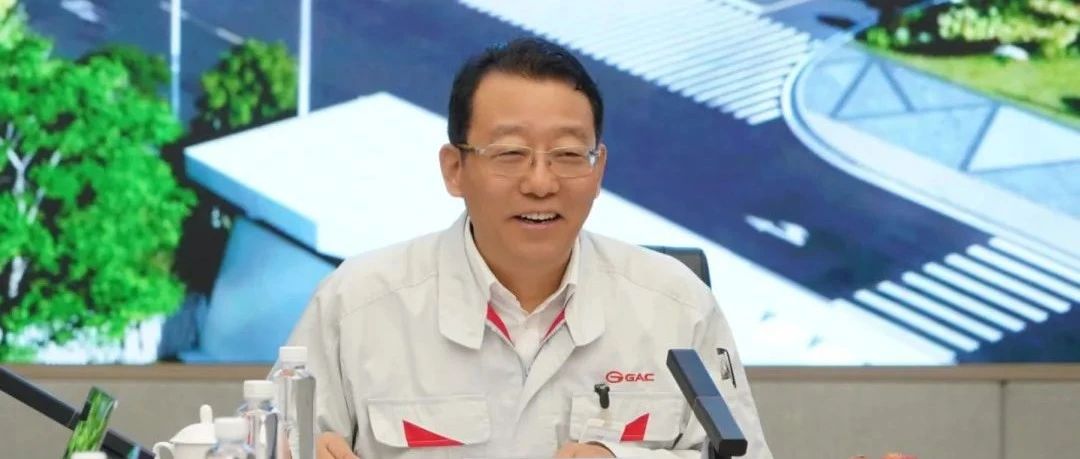
广汽总经理閤先庆:生态合作是应对竞争的必选项
Xin Jing Bao· 2025-11-25 11:51
Core Insights - GAC Group aims to transform into a technology-driven enterprise by implementing a dual-driven strategy of "market + technology" to create a "New GAC" [1][2] - The company acknowledges that its previous performance was subpar due to an engineering mindset that did not align with customer needs [1][2] Transformation Strategy - The first step in the transformation involves shifting the entire R&D system from an engineering mindset to a user-centric approach [2] - GAC has adopted Huawei's Integrated Product Development (IPD) to deeply integrate user needs into the entire product lifecycle, from market insights to delivery [2] - The organizational structure has shifted from a functional model to a matrix structure to enhance end-to-end collaboration [2] Four Engines of Development - GAC has identified "new technology, new products, new services, and new ecosystems" as the four engines to create value for users [3] - Technology is the foundation, focusing on two main directions: new energy technologies, including solid-state batteries, and AI and smart technologies [3] - Product development now emphasizes emotional value, aesthetics, and smart interactions, alongside traditional performance metrics [3] Ecosystem Cooperation - GAC emphasizes that ecological cooperation is essential for meeting customer and market demands and for competitive advantage [4] - The collaboration with Huawei is characterized by deep co-creation rather than a simple supplier relationship, with significant resources allocated to joint R&D efforts [5] Brand Differentiation - GAC's new brand, "Qijing," targets a younger, fashion-conscious market with high-performance demands, differentiating itself from existing brands like Trumpchi and Aion [6] - Trumpchi will continue to focus on both fuel and electric vehicles, while Aion targets young families with electric models [6] - The positioning of each brand is distinct, with Qijing aimed at high-end intelligent electric vehicles, while other brands cater to different customer segments [6]
广汽集团董事长,回应爆雷传闻
新华网财经· 2025-06-21 02:34
Core Viewpoint - GAC Group's Chairman and General Manager, Feng Xingya, addressed recent controversies regarding GAC Aion's employee stock ownership, supplier payment policies, and the development path of independent brands, emphasizing the company's financial stability and strategic direction [1][4]. Employee Stock Ownership - Feng clarified that there is no possibility for GAC Aion executives to withdraw their shares early, as all employees are subject to a five-year lock-up period established during the 2022 mixed reform and employee stock ownership plan [4] - The company is currently not considering an IPO due to unfavorable market conditions, focusing instead on increasing Aion's valuation and exploring diverse exit channels for employees, such as dividends and stock trading [4] Financial Stability - GAC Group's debt-to-asset ratio is projected to be 47.6% in 2024, positioning it as one of the financially healthiest companies in the Chinese automotive industry, distancing itself from rumors of financial distress [4] Supplier Payment Policy - The 60-day payment term for suppliers is a longstanding practice for GAC, not a new commitment, reflecting the company's consistent approach to supply chain cooperation [5] - Feng emphasized the symbiotic relationship between manufacturers and suppliers, stating that the health of suppliers directly impacts product quality [6] Independent Brand Development - GAC's strategy involves a "racehorse mechanism" and strategic tilt towards the new energy sector, with resources allocated to support brands like Aion and Haobo [8] - Aion will focus on the consumer market while developing new brands for the taxi sector, whereas Haobo is positioned as a high-end new energy brand [8] - GAC's advantages include a robust manufacturing system, stability as a state-owned enterprise, market awareness influenced by Lingnan culture, and a comprehensive layout in the new energy supply chain [8] International Expansion - GAC aims to export over 100,000 vehicles in 2024, with a target of 150,000 by 2025, capitalizing on the shift from vehicle exports to overseas production [10] - The company is implementing a cautious expansion strategy with KD production in countries like Nigeria, Thailand, Malaysia, and Indonesia, while accelerating new layouts in Brazil and Egypt [10] Strategic Collaboration with Huawei - GAC's partnership with Huawei is exemplified by the establishment of Huawang Automotive, which is focused on developing a high-end brand targeting the 300,000 yuan market segment, with the first model expected to launch in 2026 [12]