
埃安汽车

Search documents
港股异动 | 广汽集团(02238)跌超5% 全年盈转亏近88亿元 汽车销量同比减少14.06%
智通财经网· 2026-03-30 07:08
Core Viewpoint - GAC Group reported a significant decline in sales and a net loss for the year 2025, marking its first annual loss since being listed [1] Financial Performance - GAC Group's sales revenue for 2025 was 96.542 billion yuan, a year-on-year decrease of 10.43% [1] - The company recorded a net loss attributable to shareholders of 8.784 billion yuan, a shift from profit to loss compared to the previous year [1] Sales Performance - Total vehicle sales for GAC Group in 2025 reached 1.7215 million units, down 14.06% year-on-year [1] - Sales of the self-owned brands, Trumpchi and Aion, fell by 23.02% and 22.62% respectively, totaling 319,200 units and 290,100 units [1] - Sales from the joint venture GAC Honda saw the largest decline at 25.22%, dropping to 351,900 units, while GAC Toyota managed a slight increase in sales year-on-year [1]

广汽昊铂埃安BU运营持续深化 1月份销量同比增长63.9%
Zheng Quan Ri Bao Zhi Sheng· 2026-02-01 09:38
Group 1 - Guangzhou Automobile Group Co., Ltd. (GAC Group) achieved a total terminal sales volume of 1.8135 million units in 2025, showing strong resilience with positive growth for three consecutive quarters [1] - The "Panyu Action" initiative is a strategic reform aimed at enhancing the company's competitiveness through deep collaboration across the entire value chain, including R&D, channels, and services [1] - The newly established Haobo Aian Business Unit (BU) reported a sales volume of 23,591 units in January 2026, marking a year-on-year increase of 63.9%, validating the effectiveness of the dual-brand integrated operation [1] Group 2 - The first dealer conference of Haobo Aian BU served as a platform for aligning development directions with partners and boosting dealer confidence amid market uncertainties [2] - Haobo Aian BU emphasizes a "user-centered" philosophy, with the dual-brand positioning of Aian as "National Good Cars" and Haobo as "Elite Vehicles" to achieve market complementarity and collaborative development [2] - As of the end of January, Aian and Haobo completed the integration and upgrade of 254 service outlets across 147 cities, enhancing user experience through shared resources and network sales [2]
汽车业加速整合:广汽两大子品牌整合渠道
第一财经网· 2025-12-18 14:29
Group 1 - GAC Group has initiated a channel integration strategy for its two sub-brands, Aion and Haobo, allowing them to be sold and serviced in the same dealership [1] - Haobo targets the high-end market with vehicle prices ranging from 150,000 to 1,000,000 yuan, while Aion focuses on the mass market with prices between 60,000 and 400,000 yuan [1] - In the past year, Haobo's retail sales reached approximately 15,600 units, while Aion's sales were about 286,000 units [1] Group 2 - The integration will occur in two phases, with the first phase set to announce sales points by January 31, 2026, covering over 30 cities [2] - The second phase aims for complete channel integration by March 31, 2026, establishing over 1,000 sales points and expanding Haobo's service network from 200 to 1,000 locations [2] Group 3 - The automotive industry is witnessing accelerated brand consolidation, with major players like SAIC and Dongfeng integrating their sub-brands to enhance resource efficiency and collaboration [3] - Industry experts indicate that mergers and consolidations are a natural progression as the automotive sector matures, with a shift from hardware to software-driven manufacturing necessitating adjustments in brand strategies [3]
央国企新能源告别“温室”:掀起融资上市潮,争夺市场新船票
Jing Ji Guan Cha Wang· 2025-12-06 14:23
Core Viewpoint - Central state-owned enterprises (SOEs) in the new energy vehicle (NEV) sector are collectively launching a counter-offensive to improve their market position and operational efficiency, following a series of IPO applications and capital operations aimed at enhancing competitiveness against private companies like BYD and Tesla [2][4][10]. Group 1: Market Position and Performance - From January to November, BYD achieved cumulative sales of 4.182 million vehicles, while Tesla's sales in China were lower but maintained strong global influence and profitability [5]. - In contrast, major SOEs like SAIC Motor and Changan Automobile reported significantly lower NEV sales, with SAIC at 1.499 million and Changan at 0.995 million during the same period [5]. - The performance of high-end brands like Lantu and Avita remains modest, with annual sales in the tens of thousands, indicating a struggle to penetrate the mass market effectively [5][6]. Group 2: Financial Challenges - Private sector leaders have established sustainable profit paths through vertical integration and technology development, with BYD reporting a net profit of 23.33 billion yuan and Tesla at approximately 20.91 billion yuan for the first three quarters [6]. - In contrast, many SOE NEV businesses are still in a heavy investment phase, facing significant losses, such as Avita's cumulative loss exceeding 11 billion yuan and Lantu's loss around 3.1 billion yuan from 2022 to 2024 [6][10]. Group 3: Strategic Initiatives - The recent wave of IPOs and financing is viewed as a critical "independence war" for SOEs to secure necessary capital for R&D, channel expansion, and competitive pricing strategies [7][8]. - The goal of these initiatives is to establish a market-oriented operational mechanism that can adapt to the fast-paced changes in the automotive industry, moving away from traditional state-owned enterprise structures [8][10]. Group 4: Future Outlook - The NEV sector is expected to enter a more competitive phase, with technology differentiation and scale becoming crucial for survival [10][11]. - The industry may see a consolidation trend, with predictions suggesting a reduction in the number of NEV manufacturers to fewer than 15, emphasizing the importance of successful IPOs as a critical dividing line [11]. - Global market expansion will also be a key focus, as SOEs leverage their parent companies' international presence to compete with established players like BYD and Tesla [11].



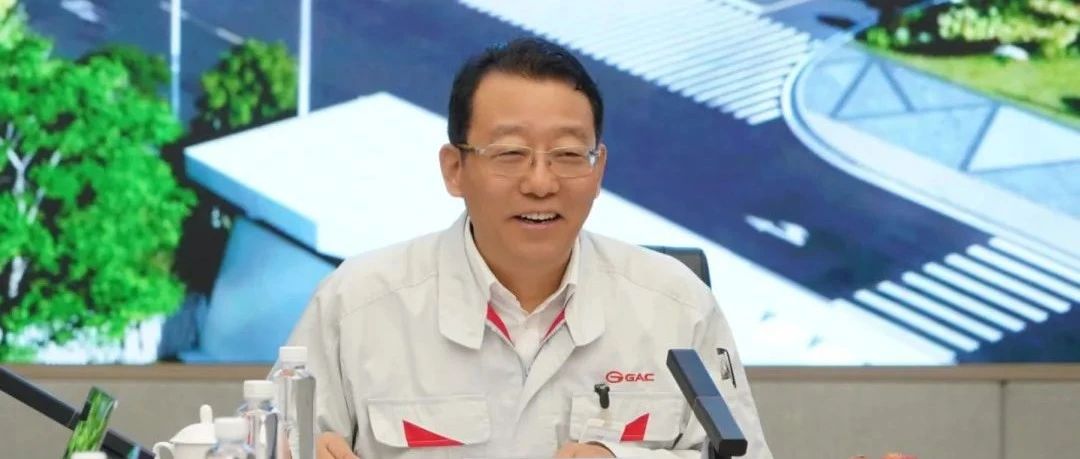
广汽总经理閤先庆:生态合作是应对竞争的必选项
Xin Jing Bao· 2025-11-25 11:51
Core Insights - GAC Group aims to transform into a technology-driven enterprise by implementing a dual-driven strategy of "market + technology" to create a "New GAC" [1][2] - The company acknowledges that its previous performance was subpar due to an engineering mindset that did not align with customer needs [1][2] Transformation Strategy - The first step in the transformation involves shifting the entire R&D system from an engineering mindset to a user-centric approach [2] - GAC has adopted Huawei's Integrated Product Development (IPD) to deeply integrate user needs into the entire product lifecycle, from market insights to delivery [2] - The organizational structure has shifted from a functional model to a matrix structure to enhance end-to-end collaboration [2] Four Engines of Development - GAC has identified "new technology, new products, new services, and new ecosystems" as the four engines to create value for users [3] - Technology is the foundation, focusing on two main directions: new energy technologies, including solid-state batteries, and AI and smart technologies [3] - Product development now emphasizes emotional value, aesthetics, and smart interactions, alongside traditional performance metrics [3] Ecosystem Cooperation - GAC emphasizes that ecological cooperation is essential for meeting customer and market demands and for competitive advantage [4] - The collaboration with Huawei is characterized by deep co-creation rather than a simple supplier relationship, with significant resources allocated to joint R&D efforts [5] Brand Differentiation - GAC's new brand, "Qijing," targets a younger, fashion-conscious market with high-performance demands, differentiating itself from existing brands like Trumpchi and Aion [6] - Trumpchi will continue to focus on both fuel and electric vehicles, while Aion targets young families with electric models [6] - The positioning of each brand is distinct, with Qijing aimed at high-end intelligent electric vehicles, while other brands cater to different customer segments [6]
广汽集团董事长,回应爆雷传闻
新华网财经· 2025-06-21 02:34
Core Viewpoint - GAC Group's Chairman and General Manager, Feng Xingya, addressed recent controversies regarding GAC Aion's employee stock ownership, supplier payment policies, and the development path of independent brands, emphasizing the company's financial stability and strategic direction [1][4]. Employee Stock Ownership - Feng clarified that there is no possibility for GAC Aion executives to withdraw their shares early, as all employees are subject to a five-year lock-up period established during the 2022 mixed reform and employee stock ownership plan [4] - The company is currently not considering an IPO due to unfavorable market conditions, focusing instead on increasing Aion's valuation and exploring diverse exit channels for employees, such as dividends and stock trading [4] Financial Stability - GAC Group's debt-to-asset ratio is projected to be 47.6% in 2024, positioning it as one of the financially healthiest companies in the Chinese automotive industry, distancing itself from rumors of financial distress [4] Supplier Payment Policy - The 60-day payment term for suppliers is a longstanding practice for GAC, not a new commitment, reflecting the company's consistent approach to supply chain cooperation [5] - Feng emphasized the symbiotic relationship between manufacturers and suppliers, stating that the health of suppliers directly impacts product quality [6] Independent Brand Development - GAC's strategy involves a "racehorse mechanism" and strategic tilt towards the new energy sector, with resources allocated to support brands like Aion and Haobo [8] - Aion will focus on the consumer market while developing new brands for the taxi sector, whereas Haobo is positioned as a high-end new energy brand [8] - GAC's advantages include a robust manufacturing system, stability as a state-owned enterprise, market awareness influenced by Lingnan culture, and a comprehensive layout in the new energy supply chain [8] International Expansion - GAC aims to export over 100,000 vehicles in 2024, with a target of 150,000 by 2025, capitalizing on the shift from vehicle exports to overseas production [10] - The company is implementing a cautious expansion strategy with KD production in countries like Nigeria, Thailand, Malaysia, and Indonesia, while accelerating new layouts in Brazil and Egypt [10] Strategic Collaboration with Huawei - GAC's partnership with Huawei is exemplified by the establishment of Huawang Automotive, which is focused on developing a high-end brand targeting the 300,000 yuan market segment, with the first model expected to launch in 2026 [12]
工银国际:予广汽集团“中性”评级 目标价2.2港元
Zhi Tong Cai Jing· 2025-05-14 08:06
Group 1 - The core viewpoint of the report indicates that GAC Group's Q1 performance fell short of expectations, with joint venture brand sales continuing to decline, presenting short-term challenges [1] - GAC Group's Q1 2025 revenue decreased to 19.88 billion RMB, down 7.8% year-on-year and 39.8% quarter-on-quarter, with a net loss of 730 million RMB due to weak automotive demand, intensified market competition, increased promotional costs, and reduced government subsidies [1][2] - The report highlights that GAC's new vehicle deliveries dropped to 371,000 units, a 9.4% year-on-year decline, significantly lagging behind the industry growth rate of 11% [2] Group 2 - The report notes that GAC Group's sales performance is declining despite industry stimulus policies, with specific brands like Trumpchi and Aion seeing sales drop by 19% and 4% respectively [2] - GAC Group is pursuing a dual-track strategy: launching affordable models under the Trumpchi and Aion brands for the mass market, while developing a luxury brand in collaboration with Huawei for the high-end market [2] - The effectiveness of GAC's ongoing transformation remains uncertain, as the company still relies heavily on joint venture brands like Toyota and Honda, which are lagging in the electrification transition compared to local competitors [2]
广汽集团(601238)2024年年报点评:转型期业绩承压,静待自主盈利修复
Guohai Securities· 2025-03-31 13:21
Investment Rating - The investment rating for the company is "Accumulate" (maintained) [1][9]. Core Views - The company's performance is under pressure during the transformation period, awaiting recovery in autonomous profitability [2]. - The company reported a revenue of 107.78 billion yuan for 2024, a year-on-year decrease of 17.1%, and a net profit attributable to shareholders of 0.82 billion yuan, down 81.4% year-on-year [4][5]. Summary by Sections Recent Performance - The company's stock performance over the last year shows a decline of 3.0% over one month, 9.2% over three months, and 2.1% over twelve months, compared to the CSI 300 index [3]. - The current stock price is 8.48 yuan, with a 52-week price range of 7.07 to 10.84 yuan [3]. Sales and Profitability - In 2024, the company's overall sales were under pressure, with self-owned brands performing better than joint ventures. The self-owned brand sales reached 790,000 units, a decrease of 10.9% year-on-year, accounting for 39.4% of total sales [5]. - The joint venture brands saw significant declines, with GAC Honda and GAC Toyota sales down 26.5% and 22.3% respectively [5]. - The total revenue for 2024 was 107.78 billion yuan, with a gross margin of 2.2%, down 0.5 percentage points year-on-year due to intensified market competition [5]. Strategic Initiatives - The company is advancing its smart and international strategies, including a partnership with Huawei to establish a new brand targeting high-end customers, and a significant increase in overseas sales, which reached 127,000 units, up 67.6% year-on-year [5]. - The company is also exploring new technologies, launching a new flying car brand and humanoid robots [5]. Financial Forecast - The company is expected to achieve revenues of 143.2 billion yuan, 165.1 billion yuan, and 179.8 billion yuan from 2025 to 2027, with year-on-year growth rates of 33%, 15%, and 9% respectively [8]. - The net profit attributable to shareholders is projected to be 1.78 billion yuan, 3.06 billion yuan, and 4.85 billion yuan for the same period, with growth rates of 116%, 72%, and 59% respectively [8].