易方达巴西ETF

Search documents
中国公募基金的最大外资买家在买什么?
Sou Hu Cai Jing· 2025-11-21 05:40
Core Insights - The article discusses the increasing interest of foreign institutional investors, particularly Barclays Bank, in Chinese public funds and their global asset allocation strategies [2][4][8]. Group 1: Investment Trends - Barclays Bank has become the largest foreign institutional buyer in the Chinese public fund market, holding over 200 products and creating a vast investment portfolio across four continents [2][4]. - The issuance of two Brazil ETFs by Chinese fund companies marks the first time domestic funds have entered the South American capital market, indicating an expansion of public fund cross-border ETF offerings [3][4]. - Foreign capital is continuously flowing into Chinese public products, with UBS increasing its holdings in Chinese ETFs from 57 to 141 within a year [2][4]. Group 2: Barclays' Investment Strategy - Barclays invested approximately 1.4 billion yuan in the two Brazil ETFs, becoming the largest holder with over 30% of the shares in one fund and nearly 25% in the other [4][6]. - The bank's investment strategy reflects a diversified approach, utilizing Chinese public funds to access global markets, including significant holdings in Hong Kong and U.S. ETFs [6][10]. - Barclays' asset allocation framework consists of 45% in Hong Kong stocks, 27% in U.S. stocks, and smaller allocations in other regions, showcasing a balanced global investment strategy [13]. Group 3: Market Performance and Risks - The Brazil IBOVESPA index, which the ETFs track, has shown a 10-year annualized return of over 12% and a current P/E ratio of 10.37, indicating potential investment value despite some risks associated with domestic political and currency fluctuations [4][5]. - Barclays has demonstrated a proactive investment approach, increasing holdings in key ETFs during market downturns, which has led to significant valuation recovery [14]. - Despite a diversified strategy, Barclays has faced challenges with individual stock selections, highlighting the complexities of investing in emerging markets [15].


13日投资提示:巴西ETF上市
集思录· 2025-11-13 14:05
Group 1 - The article discusses the status of various convertible bonds, highlighting that Meinuo Convertible Bond and Xingrui Convertible Bond will not undergo adjustments [1] - The article lists the recent announcements regarding convertible bonds, including strong redemption and non-strong redemption statuses for specific bonds [2] - It provides detailed information on several convertible bonds, including their current prices, redemption prices, last trading dates, last conversion dates, conversion values, remaining scales, and the proportion of convertible bonds to the underlying stocks [4][6] Group 2 - The article mentions the listing of the Huaxia Brazil ETF and the E Fund Brazil ETF, indicating their availability for trading [1] - It includes a table summarizing the current market conditions of various convertible bonds, showing their performance metrics such as current price and conversion value [4][6]

13日投资提示:巴西ETF上市
集思录· 2025-11-12 13:58
Core Viewpoint - The article discusses the status of various convertible bonds, highlighting that certain bonds will not undergo adjustments, which may impact investor strategies and market dynamics [1][3]. Group 1: Convertible Bonds Status - Xingrui Convertible Bond (127090) and Meinuo Convertible Bond (113618) will not be adjusted, with announcements made on November 13, 2025 [1]. - The current prices and redemption values of several convertible bonds are provided, indicating their market performance and potential for investors [3][5]. Group 2: Market Data Overview - The current price of Tongcheng Convertible Bond (113621) is 125.708, with a redemption price of 101.440 and a conversion value of 126.17 [3]. - The remaining scale of various convertible bonds is detailed, with notable figures such as Hengbang Convertible Bond (127086) having a remaining scale of 8.029 billion [3]. - The flow market ratio for several bonds is presented, indicating their relative size in the market, such as the flow market ratio for Fenghuo Convertible Bond (110062) being 8.33% [5].

买了点巴西ETF,什么时候卖?
Sou Hu Cai Jing· 2025-11-07 09:05
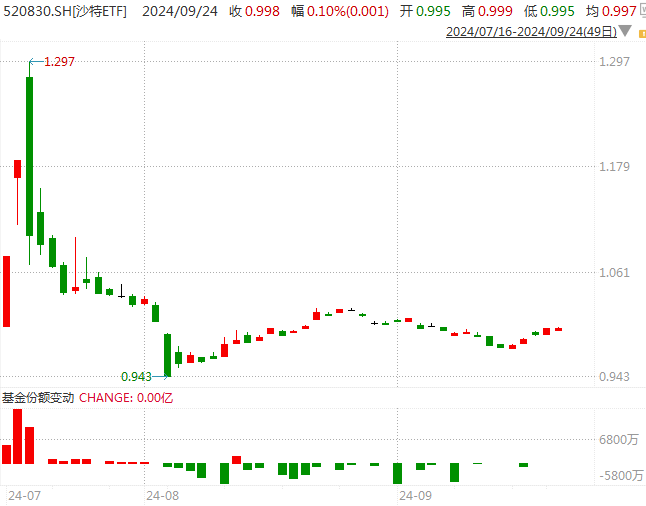
Group 1 - The final share confirmation ratio for Huaxia Brazil ETF is 11.54% [1] - The final share confirmation ratio for E Fund Brazil ETF is 11.82% [2] - The timing for selling these ETFs is crucial, with reference to the performance of the Saudi ETF on its listing day [2][3] Group 2 - Both Huaxia and E Fund Brazil ETFs track the Brazil IBOVESPA Index, which covers major listed companies in Brazil [10] - The IBOVESPA Index accounts for approximately 80% of the trading volume in the Brazilian stock market [12] - The index is a total return index, meaning dividends are included in its performance [14] Group 3 - The annualized return of the IBOVESPA Index is approximately 8.9%, which is lower than the annualized returns of the S&P 500 and CSI 800 when dividends are considered [17] - The Brazilian real has depreciated significantly against the US dollar, impacting investment returns [19] - From January 2016 to May 2021, the IBOVESPA Index increased by 191.16%, but currency depreciation reduced the effective returns [20] Group 4 - The largest company by market capitalization in the IBOVESPA Index is Vale S.A., a global leader in iron ore production [27][29] - The index is diversified across various sectors, including materials, utilities, finance, and energy, with no single sector dominating [31][32] Group 5 - The Brazilian stock market is currently experiencing high volatility, with significant trading activity around the 4000-point mark [34] - There is a noticeable lack of clear market leadership among sectors, leading to a cautious investment sentiment [37] - Recent trends show that while some sectors have performed well, investor confidence remains fragile, with many choosing to sell during price increases [46]
资金疯抢巴西ETF
财联社· 2025-11-05 06:38
Core Viewpoint - The first two Brazilian ETFs in China experienced overwhelming demand, with subscription confirmation ratios of 11.823% and 11.538679%, leading to a significant oversubscription of approximately 7 times the fundraising limit [1][2][3][5]. Group 1: Subscription Results - The subscription confirmation ratio for E Fund's Brazilian ETF was 11.823%, resulting in a fundraising scale of about 25.4 billion yuan [1][3]. - The subscription confirmation ratio for Huaxia's Brazilian ETF was 11.538679%, leading to a fundraising scale of nearly 26 billion yuan [1][5]. - Both ETFs had a fundraising cap of 3 billion yuan, indicating a strong investor interest in these products [1][2]. Group 2: Market Context - The high oversubscription is attributed to a recovering market and investor enthusiasm for equity funds, as well as some investors seeking arbitrage opportunities due to limited QDII quotas [1][10]. - The Brazilian capital market is characterized by high growth potential and volatility, influenced by domestic fiscal policies, interest rate cycles, and political ecology [10]. Group 3: Product Background - These two Brazilian ETFs are the first in China to track Brazilian market indices, specifically the Ibovespa index, and are part of a mutual connectivity product [7][8]. - The issuance of these ETFs marks a significant expansion into the South American capital market for domestic fund managers [13]. Group 4: Industry Trends - The number of cross-border ETFs focusing on non-U.S. markets is increasing, reflecting domestic institutions' efforts to diversify investment tools and meet investor demand [12][14]. - As of now, there are 16 cross-border ETFs issued by domestic fund companies, covering various regions including Asia-Pacific and Europe [14].