布拉德斯科华夏创业板ETF

Search documents
拓宽国际合作范围头部公募海外项目频现成果
Shang Hai Zheng Quan Bao· 2025-11-23 13:51
Core Insights - Leading public funds are increasingly engaging in international collaborations, marking significant progress in their overseas initiatives [1][2][4] Group 1: International Collaborations - In November, China Merchants Fund signed a memorandum of cooperation with a New Zealand fund company, Smart, and the Bank of China New Zealand branch to enhance capital market connectivity [2] - Huatai-PineBridge Asset Management Hong Kong partnered with Korea Investment Trust Management to develop various ETF products in the Hong Kong market, aiming to create richer overseas asset allocation channels for domestic investors [2][3] - E Fund participated in the 2025 Global Responsible Investment Conference in Brazil, co-releasing a white paper on responsible investment between China and Brazil [3] Group 2: Market Expansion - The range of Chinese-themed products in overseas markets has expanded, with ETFs linked to Chinese indices being listed in Brazil and Singapore, marking the first instance of ETF connectivity in South America [4] - The first two Brazil-themed ETFs were launched, expanding the investment scope of QDII products to Latin America, with existing products covering various countries [4] Group 3: Growth of Overseas Subsidiaries - The number of overseas subsidiaries of fund companies is increasing, serving as a crucial platform for international business development [5] - Several institutions, including Changjin Hexin Fund and GF Fund, are in the process of establishing overseas subsidiaries, indicating a trend towards internationalization [5] Group 4: Industry Perspective - Industry experts believe that internationalization is key to the high-quality development of public funds, emphasizing the need for continuous expansion of international perspectives [6] - The evolution from domestic to international operations is driven by the deepening of domestic capital market openness, industry maturity, and upgraded investor demands [6]
跨境ETF规模逼近9000亿元 两只巴西ETF发行配售比创近5年新低
Zheng Quan Shi Bao· 2025-11-05 21:51
Group 1 - The core point of the article highlights the low subscription ratios of the first two Brazilian ETFs, which are below 12%, marking the lowest since 2021 and reflecting the current trend in cross-border ETF development [1][2][3] - The two Brazilian ETFs, managed by E Fund and Huaxia Fund, have subscription ratios of approximately 11.82% and 11.54% respectively, with total subscription funds exceeding 5 billion yuan [2][3] - The low subscription ratios are attributed to a combination of a relatively low fundraising cap of 300 million yuan and high investor enthusiasm, indicating a strong market interest in these new products [3] Group 2 - The global trend of cross-border ETFs is becoming increasingly evident, with the total number of cross-border ETFs reaching 185 and a combined scale of approximately 897.97 billion yuan as of November 5 [4] - The market has seen a significant increase in cross-border ETFs focusing on emerging markets, particularly in regions like the Middle East and South America, with new products being launched to cater to diverse investor needs [5][6] - The dual-directional flow of funds through cross-border ETFs is emphasized, showcasing the mutual benefits for both domestic and international investors, as seen in the recent ETF interconnectivity initiatives between China and Brazil [7][8]
资金疯抢巴西ETF
财联社· 2025-11-05 06:38
Core Viewpoint - The first two Brazilian ETFs in China experienced overwhelming demand, with subscription confirmation ratios of 11.823% and 11.538679%, leading to a significant oversubscription of approximately 7 times the fundraising limit [1][2][3][5]. Group 1: Subscription Results - The subscription confirmation ratio for E Fund's Brazilian ETF was 11.823%, resulting in a fundraising scale of about 25.4 billion yuan [1][3]. - The subscription confirmation ratio for Huaxia's Brazilian ETF was 11.538679%, leading to a fundraising scale of nearly 26 billion yuan [1][5]. - Both ETFs had a fundraising cap of 3 billion yuan, indicating a strong investor interest in these products [1][2]. Group 2: Market Context - The high oversubscription is attributed to a recovering market and investor enthusiasm for equity funds, as well as some investors seeking arbitrage opportunities due to limited QDII quotas [1][10]. - The Brazilian capital market is characterized by high growth potential and volatility, influenced by domestic fiscal policies, interest rate cycles, and political ecology [10]. Group 3: Product Background - These two Brazilian ETFs are the first in China to track Brazilian market indices, specifically the Ibovespa index, and are part of a mutual connectivity product [7][8]. - The issuance of these ETFs marks a significant expansion into the South American capital market for domestic fund managers [13]. Group 4: Industry Trends - The number of cross-border ETFs focusing on non-U.S. markets is increasing, reflecting domestic institutions' efforts to diversify investment tools and meet investor demand [12][14]. - As of now, there are 16 cross-border ETFs issued by domestic fund companies, covering various regions including Asia-Pacific and Europe [14].


华夏、易方达出手,又有重要创新产品来了
Zhong Guo Ji Jin Bao· 2025-10-13 13:09
Core Insights - The China Securities Regulatory Commission has approved the applications for two Brazil-focused ETFs, marking a significant step in the interconnection between Chinese and Brazilian capital markets [1][4] - Brazilian capital markets are characterized as the largest and most influential financial system in Latin America, offering global investors opportunities to tap into its resource dividends and economic growth potential [2][3] Group 1: ETF Developments - China Asset Management has launched the "Hua Xia Bradesco Brazil Ibovespa ETF," while E Fund has introduced the "E Fund Itaú Brazil IBOVESPA ETF," facilitating easier access for investors to the Brazilian market [1] - The approval of these ETFs is seen as a continuation of previous collaborations, including the successful listing of the Bradesco Hua Xia ChiNext ETF in Brazil earlier this year [4] Group 2: Market Characteristics - Brazil's capital market is noted for its high growth potential and volatility, influenced by domestic fiscal policies, interest rate cycles, and political dynamics [2] - The Ibovespa index, a key indicator of the Brazilian economy, has shown a 12% annualized return over the past decade and a year-to-date return of 21.6% as of September [3] Group 3: Investment Opportunities - The Ibovespa index is heavily resource-oriented, comprising major global commodity players, which aligns its performance with international raw material prices and Chinese economic demand [3] - The Brazilian market is positioned as an important destination for global investors seeking diversified portfolios and high returns, with a low correlation to A-shares [2][3]

华夏、易方达出手!又有重要创新产品来了
Zhong Guo Ji Jin Bao· 2025-10-13 12:48
Core Insights - The approval of Brazilian ETFs by China Asset Management and E Fund marks a significant step in the interconnection of capital markets between China and Brazil, allowing investors to easily access the Brazilian market [1] Group 1: Brazilian Capital Market Overview - The Brazilian capital market is the largest and most influential financial system in Latin America, offering global investors opportunities to share in its resource dividends and economic growth potential, while also being affected by domestic fiscal policies, interest rate cycles, and political ecology [2] - Brazil is a key emerging market and a member of the BRICS nations, with a significant consumer market and ongoing recovery in domestic demand, alongside increasing digital penetration and growth potential in the service sector [2] - The Ibovespa index, as the most representative index of the Brazilian capital market, covers industries with comparative advantages such as mining and agriculture, with a high weight in financial and energy sectors [2] Group 2: Performance and Investment Potential - The Ibovespa index has shown a strong performance among emerging economies, reflecting Brazil's resilience as the largest economy in Latin America and its role as the "world's granary" [2] - The index has an annualized return of over 12% over the past decade, with a year-to-date return of 21.6% as of the end of September, indicating its ability to capture global capital flows into emerging markets [3] - The index's performance is closely linked to international commodity prices and Chinese economic demand, presenting significant growth potential amidst its volatility [3] Group 3: Previous Collaborations and Future Prospects - Prior collaborations between China and Brazil in capital market interconnectivity include the successful launch of the Bradesco ChinaAMC ChiNext ETF in May, which allows Brazilian investors to access the Chinese market [4] - The establishment of mutual ETF listings between China and Brazil enhances the recognition of these products among overseas investors and strengthens the influence of domestic capital markets [4] - China Asset Management has been a pioneer in domestic ETFs and is actively promoting the mutual connectivity of ETF products globally, having previously launched a mutual ETF project with Japan [4]

华夏、易方达出手!又有重要创新产品来了
中国基金报· 2025-10-13 12:44
Core Viewpoint - The approval of Brazil ETFs by China’s Huaxia Fund and E Fund marks a significant step in the interconnection of capital markets between China and Brazil, facilitating easier investment access for investors into the Brazilian market [2][3]. Group 1: Brazilian Capital Market Overview - The Brazilian capital market is the largest and most influential financial system in Latin America, offering global investors opportunities to share in its resource dividends and economic growth potential, while also being affected by domestic fiscal policies, interest rate cycles, and political ecology [3][4]. - Brazil is a key emerging market and a member of the BRICS nations, with a significant consumer market and ongoing recovery in domestic demand, alongside increasing digital penetration and growth in the service sector [3][4]. Group 2: Ibovespa Index Insights - The Ibovespa index is the oldest and most representative index in the Brazilian capital market, covering sectors with comparative advantages such as mining and agriculture, with high weights in finance and energy [4][5]. - The index is currently valued at a relatively low level compared to other emerging markets, and its performance shows low correlation with A-shares, making it an important destination for global asset allocation [4][5]. Group 3: Investment Performance and Opportunities - The Ibovespa index has delivered an annualized return of over 12% over the past decade, with a year-to-date return of 21.6% as of September, reflecting Brazil's political and economic reforms and capturing global capital flows into emerging markets [5]. - The interconnection of capital markets between China and Brazil has previously seen cooperation, such as the successful listing of the Bradesco Huaxia ChiNext ETF in Brazil, allowing Brazilian investors to easily access the vibrant Chinese market [5][6]. Group 4: ETF Connectivity Initiatives - The recent launch of mutual ETF listings between China and Brazil enhances the efficiency and convenience for overseas investors to allocate to Huaxia's ETFs, thereby increasing recognition of mutual ETFs and enhancing the influence of domestic capital markets [6]. - Huaxia Fund has been a pioneer in domestic ETFs and is actively promoting the two-way connectivity of ETF products, expanding its global market footprint [6].

海外布局动作频频公募国际化进程持续推进
Shang Hai Zheng Quan Bao· 2025-08-03 13:34
Group 1: Institutional Movements - The internationalization process of public funds is continuously advancing, with institutions frequently "going abroad" [1][2] - On July 30, Rongtong Fund's subsidiary successfully launched its first public fund product in Hong Kong, providing overseas investors with more channels to invest in Chinese assets [1][2] - The China Securities Regulatory Commission (CSRC) has approved the establishment of a subsidiary in Singapore by Xingzheng Global Fund, indicating a gradual expansion of overseas business capabilities [2][3] Group 2: Acceleration of Public Fund Internationalization - The CSRC has issued guidelines to enhance the supervision of securities companies and public funds, promoting high-level openness and supporting qualified foreign institutions to establish operations in China [3] - The public fund industry is expected to take on greater responsibilities and promote representative quality indices to overseas markets [3] Group 3: ETFs Entering Overseas Markets - Multiple ETFs have been launched in overseas markets this year, including the launch of the Aoming E Fund ChiNext ETF in Singapore on July 22 [4] - The first ETF tracking the China Securities Index Dividend Index was successfully listed in Singapore in March, marking a significant step in cross-border investment tools [4] - Several ETFs have also been listed in Brazil, facilitating easier access for Brazilian investors to invest in the Chinese market [4][5]
长“大”了、变“新”了!丨一文看懂15岁“生日”的创业板指
Zheng Quan Shi Bao· 2025-06-01 05:05
Group 1 - The ChiNext Index has grown significantly over 15 years, from a market cap of 0.36 trillion yuan to 5.64 trillion yuan, representing over 15 times growth [5][9] - The ChiNext Index has accumulated a total increase of 99.3% since its launch, outperforming other indices like the CSI 300 and Wind All A [5][6] - The index is recognized as a leading indicator during bull markets, often associated with strong returns for investors [5][6] Group 2 - In 2024, companies within the ChiNext Index reported total revenues of 1.7 trillion yuan and net profits of approximately 180 billion yuan, indicating growth in both revenue and profit [9] - Nearly 70% of the sample companies achieved positive revenue growth, and over 40% saw revenue and net profit growth exceeding 10% [9][10] - The index's sample companies have shown a 12% increase in gross profit and a 16% increase in cash flow year-on-year [9] Group 3 - The ChiNext Index has undergone 53 adjustments since its inception, allowing it to adapt to changing market themes and maintain relevance [11] - The top three sectors by weight in the index currently include power equipment, pharmaceuticals, and electronics, aligning with national development strategies [13] Group 4 - The index focuses on companies that embody innovation and high growth, with significant representation from sectors like semiconductors, AI, and renewable energy [15] - R&D investment among sample companies reached 88 billion yuan in 2024, with over 20% of companies investing more than 15% of their revenue in R&D [15] Group 5 - Cash dividends from the ChiNext Index have increased from 8.69 billion yuan in 2015 to 81.23 billion yuan in 2024, reflecting a growth rate of 8.35 times [17] - The dividend payout ratio has risen from 25% to 45.95%, indicating improved financial health among companies in the index [17] Group 6 - As of May 30, 2025, there are 83 public index funds tracking the ChiNext Index, with a total scale exceeding 140 billion yuan, providing diverse investment options [20] - The ChiNext Index has gained international attention, with ETFs linked to it being launched in various countries, including Brazil [22] Group 7 - The ChiNext Index will implement significant changes to its compilation method, including an ESG negative screening mechanism and a weight cap for individual stocks, effective June 16, 2025 [24][25] - These changes aim to enhance the index's representativeness, investability, and risk control capabilities [26]

长“大”了、变“新”了!丨一文看懂15岁“生日”的创业板指
证券时报· 2025-06-01 04:57
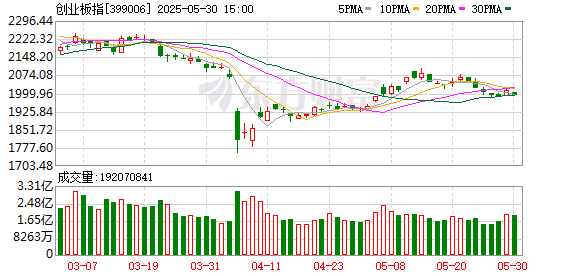
Core Viewpoint - The ChiNext Index has evolved significantly since its inception, showcasing strong growth and performance, particularly during bull markets, making it a favored investment choice for A-share investors [1][5][4]. Group 1: Historical Performance - The ChiNext Index was officially launched on June 1, 2010, and has since accumulated a total increase of 99.3% by May 30, 2025 [4]. - The total market capitalization of the ChiNext Index reached 5.64 trillion yuan, representing over a 15-fold increase from its initial value of 0.36 trillion yuan [5]. - The ChiNext Index has outperformed other major indices during three significant bull market phases since 2010, with a remarkable increase of 554.56% during the 2012 bull market, significantly surpassing the performance of the Wind All A Index and the CSI 300 Index [6][7]. Group 2: Growth Characteristics - The ChiNext Index is characterized by its focus on "innovation and high growth," representing a selection of 100 stocks with large market capitalization and good liquidity [9]. - In 2024, companies within the ChiNext Index reported total revenues of 1.7 trillion yuan and net profits of approximately 180 billion yuan, with nearly 70% of companies achieving revenue growth [10]. - The index's sample companies demonstrated a 12% increase in gross profit and a 16% increase in cash flow, indicating enhanced profitability and financial health [10]. Group 3: Market Adaptation - The ChiNext Index has undergone 53 adjustments since its inception, allowing it to adapt to changing market themes and capture growth opportunities in various sectors [12]. - As of now, the top three sectors by weight in the ChiNext Index are electric equipment, pharmaceuticals, and electronics, aligning with national development strategies [14]. Group 4: Innovation and R&D - The ChiNext Index emphasizes technological innovation, with a focus on industries such as semiconductors, artificial intelligence, and renewable energy [16]. - In 2024, the total R&D investment by sample companies in the ChiNext Index reached 88 billion yuan, reflecting a 10% year-on-year increase [16]. Group 5: Dividend Growth - From 2015 to 2024, the total cash dividends of the ChiNext Index increased from 8.69 billion yuan to 81.23 billion yuan, marking an 8.35-fold increase [19]. - The dividend payout ratio rose from 25% to 45.95%, indicating a commitment to returning value to shareholders [19]. Group 6: Investment Vehicles - As of May 30, 2025, there are 83 public index funds tracking the ChiNext Index, with a total scale exceeding 140 billion yuan, providing diverse investment options for investors [21]. Group 7: International Interest - The ChiNext Index has attracted international attention, with ETFs linked to it being launched in various countries, including Brazil, the US, and Europe, facilitating easier access for foreign investors [23]. Group 8: Index Methodology Update - Significant updates to the ChiNext Index's compilation methodology were announced, including the introduction of an ESG negative screening mechanism and a cap on individual stock weights to enhance representativeness and risk control [26][25].