星网

Search documents
商业航天专家小范围交流
2025-12-29 01:04
Summary of Key Points from the Conference Call Industry Overview - The commercial aerospace sector in China is primarily dominated by state-owned rockets, such as the Long March 6A and Long March 8A, with low participation from commercial rockets, indicating a reliability gap [1][9]. - The G60 and StarNet projects have distinct functionalities, with G60 using Ku-band and lacking laser communication capabilities, while StarNet employs Ka-band and includes laser communication, enhancing data processing and network flexibility [1][5]. Core Insights and Arguments - SpaceX offers significantly lower launch service costs at $2,000 per kilogram, compared to Long March 6A at approximately ¥50,000 per kilogram and Long March 12 at about ¥70,000 per kilogram. Although commercial companies claim they can reduce costs to ¥20,000 per kilogram, they lack reliability validation [1][10][11]. - Rocket engine costs account for the largest share (55%-60%) of total rocket costs, followed by structural components (approximately 30%). The application of 3D printing technology in engine manufacturing can significantly reduce costs, as demonstrated by SpaceX and domestic companies [1][12][17]. - In 2025, China is expected to achieve progress in reusable rockets, with the first flights of Zhuque 3 and Changcheng 12A, although neither achieved complete success. The next launch of Zhuque 3 is anticipated in April 2026, aiming for the first successful recovery [1][14][15]. Future Projections - In 2025, the state-owned rockets are projected to conduct about 50 to 60 launches, while the commercial sector may see 50 to 80 launches, depending on operational conditions and capacity [3][24]. - StarNet plans to launch 324 enhanced satellites in three batches in 2026, while G60 aims to complete the deployment of 540 satellites by adopting a multi-satellite launch mode [2][3]. Additional Important Insights - The reliability gap between commercial rockets and state-owned rockets is attributed to manufacturing processes and testing phases. State-owned engines undergo extensive ground testing, while many commercial companies opt for flight tests to save costs, which may overlook potential failures [1][13]. - The current bottleneck in rocket launch capacity is critical for the development of space computing and 6G communication, emphasizing the need for companies with established capabilities and competitive advantages [24][25]. - The emergence of commercial rocket companies introduces competition, but they are unlikely to completely replace traditional state-owned enterprises due to established relationships and stable supply chains [22].
一大堆鳖版星链堆在仓库,马斯克倒吸一口冷气:中方要动真格的了
Sou Hu Cai Jing· 2025-10-25 07:32
Core Viewpoint - The successful testing of the reusable Zhuque-3 rocket's first stage by Chinese private aerospace company Landspace marks a strategic step for China in catching up with SpaceX's Falcon 9 rocket, with the first flight and recovery planned for November [1] Group 1: Industry Context - Elon Musk acknowledged that excluding SpaceX, China's annual rocket launch numbers far exceed those of the United States, highlighting the limited success of American aerospace companies in producing competitive launch service providers [3] - The American aerospace industry has largely been dominated by SpaceX, with other companies like Blue Origin and United Launch Alliance struggling to achieve significant advancements, particularly in reusable technology [3][4] Group 2: Market Opportunities - The global satellite internet market presents significant opportunities, as many countries lack advanced fiber optic networks, making low-orbit satellite internet services valuable [6] - Chinese companies are actively developing two major satellite constellations, Xingwang and Qianfan, to compete in the satellite internet space, with production capacities of over 200 satellites annually for Xingwang and an average of one satellite per day for Qianfan, aiming for 600 satellites by 2026 [7][9] Group 3: Cost and Operational Efficiency - The significance of reusable rockets lies in their ability to drastically reduce launch costs, as demonstrated by SpaceX's Falcon 9, which lowered the cost per launch from $67 million to $28 million [9] - Achieving reusable rocket technology could lead to a dramatic decrease in China's launch service prices, facilitating rapid deployment of satellite constellations and providing competitive pricing for domestic and international clients [9] Group 4: Future Prospects - The potential for achieving flight-like operations in the rocket industry could be accelerated if multiple commercial rocket companies succeed in reusable technology, potentially allowing China to realize its goal of regularized launches by 2030 instead of 2045 [10][12] - This advancement would enable China's satellite constellations to compete effectively with SpaceX's Starlink and position China as a leading provider of aerospace services globally [12]

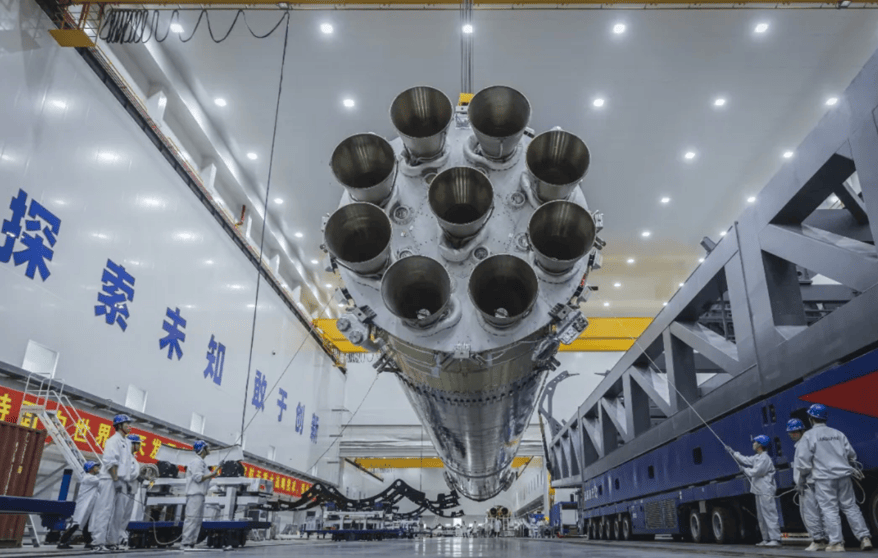
什么时候泡沫破了,什么时候商业航天就成了
3 6 Ke· 2025-09-30 03:37
Core Viewpoint - The commercial space industry is recognized as a trillion-dollar market, with significant developments and investments, yet it still faces challenges in achieving profitability and stability [1][2][3]. Group 1: Industry Development - The commercial space sector has seen the emergence of companies aiming for initial public offerings, with notable advancements in satellite internet and launch capabilities [2][3]. - The "Starlink" project has accelerated the pace of satellite launches, with a record of 38 satellites launched in a short period [2]. - The industry has experienced a shift in focus from "hard technology" to more immediate trends like smart driving, indicating a potential lack of excitement in commercial space developments [3]. Group 2: Investment Landscape - Significant funding has been raised in the commercial space sector, with companies like Xinghe Dynamics securing a record 2.4 billion in Series D financing [2]. - The overall financing scale for the industry exceeded 20 billion last year, marking a new high and indicating growing investor interest [21]. - The presence of numerous unicorns in the commercial space sector suggests a maturing investment landscape [21]. Group 3: Technological Advancements - The industry is witnessing breakthroughs in rocket technology, with 12 successful launches by private companies in 2023 [22]. - The focus on reusable rocket technology is critical for reducing launch costs, with several companies making progress in this area [22][30]. - The satellite internet initiative is gaining momentum, with significant projects like "Starlink" and "G60" pushing for rapid deployment and operational capabilities [26]. Group 4: Market Dynamics - The commercial space sector is increasingly targeting large clients and government contracts, with companies eager to integrate into supply chains [18]. - There is a notable shift towards providing comprehensive industry solutions rather than merely selling satellite data, indicating a more integrated approach to market needs [18][19]. - The industry is expected to undergo consolidation, with weaker players likely to exit the market, reflecting a maturation process [46][47].