
卫星计算

Search documents
Planet Labs PBC(PL) - 2026 Q3 - Earnings Call Transcript
2025-12-10 23:02
Financial Data and Key Metrics Changes - The company generated $81.3 million in revenue, representing approximately 33% year-over-year growth, marking another quarter of growth acceleration [7][22] - Non-GAAP gross margin was 60% in the quarter, down from 64% in the same quarter of the previous fiscal year [25] - Adjusted EBITDA profit was $5.6 million, marking the fourth sequential quarter of profitability [7][26] - The backlog was $734.5 million at the end of the quarter, representing a year-over-year increase of 216% [7][29] - Free Cash Flow was positive for the third consecutive quarter, reinforcing expectations of being Free Cash Flow positive for the full fiscal year [7] Business Line Data and Key Metrics Changes - Revenue from the defense and intelligence sector grew over 70% year-on-year, driven by strong performance in data subscription and satellite services [8][23] - Civil government sector revenue was up approximately 1% year-over-year and up approximately 15% quarter-over-quarter [11] - The commercial sector saw a moderate decline in revenue both year-over-year and quarter-over-quarter, attributed to a focus on larger government customers [12][23] Market Data and Key Metrics Changes - Revenue growth was distributed globally, with approximately 38% year-over-year growth in both Asia-Pacific and EMEA, 30% in North America, and 7% in Latin America [23] - The end-of-period customer count was 910, flat on a sequential basis, reflecting a shift towards larger customer opportunities [24] Company Strategy and Development Direction - The company is focusing on AI-enabled solutions for government customers, which are expected to unlock growth in the commercial sector [13] - Strategic projects include the OWL next-generation monitoring fleet and Project SunCatcher, aimed at enabling scaled AI computing in space [17][18] - The acquisition of Bedrock Research is expected to accelerate the roadmap for AI-enabled solutions and support scaling to meet market demand [19] Management's Comments on Operating Environment and Future Outlook - Management expressed confidence in achieving Adjusted EBITDA profitability for FY26, highlighting strong execution and strategic wins in the government sector [20][31] - The company anticipates continued revenue growth into fiscal 2027, supported by a robust backlog and commitments to developing best-in-class solutions [30][31] Other Important Information - The company raised $460 million of convertible debt in September, enhancing its balance sheet [22][27] - Capital expenditures in Q3 were approximately $27.7 million, driven by prepayments for favorable pricing in hardware procurements [26] Q&A Session Summary Question: Guidance on revenue and margin - Management noted that Q4 guidance reflects one-time benefits from Q3 and adjustments due to downsized contracts, impacting revenue and margins [35][36] Question: Acquisition of Bedrock Research - Bedrock focuses on remote sensing, AI, and national security, integrating various data sets, primarily national security data [39][40] Question: Project SunCatcher feasibility - Management believes Project SunCatcher is viable long-term, with significant market opportunities as space infrastructure costs decrease [44][45] Question: JSAT contract progress - The JSAT contract is progressing well, with the team meeting and exceeding customer expectations, contributing positively to financial forecasts [54][55] Question: Scalability of AXA contract - The AXA contract is highly scalable, with direct margins in the 90s%, enhancing claims processing efficiency through satellite imagery [90][92]

12月起,商业航天将接连迎来多场盛会,政策或也有重磅进展
Xuan Gu Bao· 2025-11-25 07:16
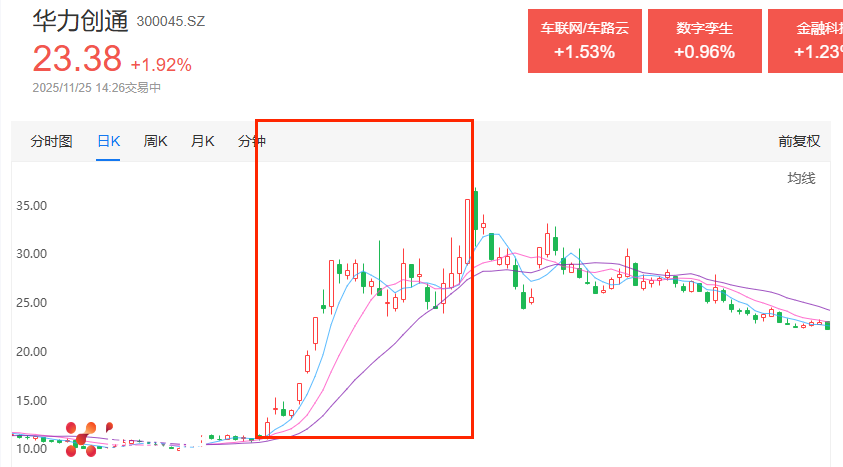
Event Overview - The 2025 Third China Commercial Space Development Conference and the Fourth Zhongguancun Commercial Space Conference will be held in Beijing from December 18 to 19, marking the first national industry event initiated and implemented by industry social organizations in the commercial space sector [1] - Additional major space industry events are scheduled from January to March 2026, including the Third Beijing Commercial Space Industry High-Quality Development Conference and the 2026 Beijing International Commercial Space Exhibition [1] Industry Development Acceleration - The establishment of the Commercial Space Administration signifies a key institutional development, expected to enhance coordination across multiple departments and improve efficiency in satellite industry development, including launch approvals and operational licensing [2] - Analysts from CITIC Securities and Huatai Securities highlight a triple inflection point for the commercial space sector, driven by policy, performance, and technology advancements [2] - The Chinese commercial space industry is projected to reach a value of 2.8 trillion yuan by 2025 [2] Satellite Application Focus - The core of commercial space is identified as satellite applications, which are increasingly integrated with technologies like 6G and AI, leading to rapid expansion in various new business trials [3] - The number of satellite launches is expected to grow by 100%-200% annually during the 14th Five-Year Plan period, with satellite connectivity becoming mainstream in consumer markets [3] Historical Performance of Key Players - Huawei's launch of the HUAWEI Mate 60 Pro, the first mass-market smartphone supporting satellite calls, has significant implications for the industry [4] - Huali Chuantong, a leader in satellite internet, experienced over 200% stock price increase from August 29 to October 11 [5] Related Concept Stocks - A list of concept stocks related to the commercial space industry includes companies involved in solar wings, satellite operations, rocket manufacturing, and testing services, indicating a broad investment landscape [7]

商业航天:卫星应用多点开花加速拓展
HUAXI Securities· 2025-11-23 13:31
Investment Rating - The industry rating for the defense and military industry is "Recommended" [1] Core Insights - The core of commercial aerospace is satellite applications, which are fundamentally space data services. The integration of satellite applications with technologies like 6G and AI is accelerating, leading to a proliferation of new business experiments [2] - The number of satellite launches is expected to grow by 100%-200% annually during the 14th Five-Year Plan period, driven by advancements in domestic reusable rocket testing [2] - Satellite direct connection for mobile phones and vehicles is anticipated to become mainstream applications in the consumer market, with satellite computing transmission scheduling emerging as a key component in the cloud computing market [2] - The development of satellite internet and satellite IoT is expected to complement each other, addressing communication needs in areas where terrestrial networks are unavailable [3] - By 2030, global satellite IoT connections are projected to exceed 300 million, with the market size potentially reaching the hundred billion dollar level, driven by technological maturity and cost reduction [3] Summary by Sections Event Overview - The launch of commercial trials for satellite IoT services in China aims to enhance market supply and stimulate industry vitality [1] - Huawei's upcoming devices are expected to feature satellite connectivity, marking significant advancements in satellite communication technology [1] Analysis and Judgment - The integration of satellite applications with emerging technologies is leading to innovative business models and applications [2] - The trend of satellite computing is emerging, where satellites will incorporate AI capabilities to enhance their functionality [5] Beneficiary Companies - **Putian Technology**: Involved in the "Three-body Computing Constellation" project, contributing to the development of space-based AI computing [6] - **Hollysys**: A key player in satellite measurement, experiencing rapid growth in commercial aerospace orders [7] - **National Science and Technology Military Industry**: Engaged in solid rocket engine production, transitioning to a comprehensive aerospace business model [7] - **Shanghai Hanyun**: Supplies communication systems for low Earth orbit satellite constellations [8] - **Zhenray Technology**: A core supplier of satellite internet chips and components, with significant revenue expected from satellite communication [9]
什么时候泡沫破了,什么时候商业航天就成了
3 6 Ke· 2025-09-30 03:37
Core Viewpoint - The commercial space industry is recognized as a trillion-dollar market, with significant developments and investments, yet it still faces challenges in achieving profitability and stability [1][2][3]. Group 1: Industry Development - The commercial space sector has seen the emergence of companies aiming for initial public offerings, with notable advancements in satellite internet and launch capabilities [2][3]. - The "Starlink" project has accelerated the pace of satellite launches, with a record of 38 satellites launched in a short period [2]. - The industry has experienced a shift in focus from "hard technology" to more immediate trends like smart driving, indicating a potential lack of excitement in commercial space developments [3]. Group 2: Investment Landscape - Significant funding has been raised in the commercial space sector, with companies like Xinghe Dynamics securing a record 2.4 billion in Series D financing [2]. - The overall financing scale for the industry exceeded 20 billion last year, marking a new high and indicating growing investor interest [21]. - The presence of numerous unicorns in the commercial space sector suggests a maturing investment landscape [21]. Group 3: Technological Advancements - The industry is witnessing breakthroughs in rocket technology, with 12 successful launches by private companies in 2023 [22]. - The focus on reusable rocket technology is critical for reducing launch costs, with several companies making progress in this area [22][30]. - The satellite internet initiative is gaining momentum, with significant projects like "Starlink" and "G60" pushing for rapid deployment and operational capabilities [26]. Group 4: Market Dynamics - The commercial space sector is increasingly targeting large clients and government contracts, with companies eager to integrate into supply chains [18]. - There is a notable shift towards providing comprehensive industry solutions rather than merely selling satellite data, indicating a more integrated approach to market needs [18][19]. - The industry is expected to undergo consolidation, with weaker players likely to exit the market, reflecting a maturation process [46][47].

商业航天为什么都在拿县城的钱?
Hu Xiu· 2025-09-30 03:23
Core Viewpoint - The commercial space industry is recognized as a trillion-dollar market, with significant developments and investments, yet it still faces challenges in achieving profitability and operational stability [1][2]. Group 1: Industry Overview - The term "hard technology" has gained traction, with commercial space being a highly regarded sector due to its technological advancements and existing successful cases like SpaceX, which has raised a total of $9.8 billion since its inception [1]. - The commercial space sector has been included in various development plans, such as Chengdu's strategic initiatives to strengthen its aerospace industry [1]. - Despite initial excitement, attention has shifted towards other sectors like smart driving and embodied intelligence, indicating a potential stagnation in commercial space developments [2]. Group 2: Investment and Financing - Star River Dynamics, a leading private rocket company in China, recently completed a Series D financing round totaling 2.4 billion, setting a new record for private rocket financing in the country [2]. - The overall financing scale for the commercial space industry exceeded 20 billion last year, marking a significant increase in capital inflow [26]. Group 3: Market Dynamics - The commercial space industry is characterized by a cycle of optimism and disappointment, often referred to as "every year is the first year, yet no profits are made" [12][13]. - The emergence of the "Star Network" project has provided a clear target for companies in the industry, fostering a more defined market narrative [16]. Group 4: Technological Advancements - The industry has seen advancements in rocket technology, with 12 successful launches by private companies in 2023, and a focus on developing reusable rocket technology to significantly reduce launch costs [28][36]. - The satellite internet sector is rapidly advancing, with projects like "Star Network" and "G60" pushing for large-scale satellite deployments, which require a shift towards mass production and automation in satellite manufacturing [31]. Group 5: Future Outlook - The next two years are expected to witness significant developments in the commercial space sector, including the potential for the first successful recovery of an orbital rocket, which would mark a major technological breakthrough [54][55]. - The industry is anticipated to undergo a consolidation phase, where weaker companies may be eliminated, leading to a more mature market structure [59].