智慧物业平台

Search documents
共建和美小区,他们在行动
Xin Lang Cai Jing· 2026-01-17 18:43
Core Viewpoint - The article emphasizes the importance of community governance in residential areas, highlighting the role of homeowners' committees, property management, and community organizations in enhancing residents' sense of security, happiness, and overall satisfaction with their living environment [1]. Group 1: Homeowners' Committees - Homeowners' committees are encouraged to take initiative and act as the "masters" of community governance, as demonstrated by the proactive efforts of committee members like Ma Jun in addressing issues such as insufficient electric vehicle charging stations [2][3]. - The successful implementation of solutions, such as the installation of new charging stations, showcases the effectiveness of community engagement and collaboration between residents and property management [3]. - Community discussions, such as the "New Area Night Talk" event, allow residents to voice concerns and ensure transparency in decision-making processes, reinforcing the idea that homeowners' input is valued [3][4]. Group 2: Property Management - Property management companies are positioned as "service guarantors," actively engaging with residents to address their needs and concerns, exemplified by staff members conducting regular check-ins with residents [5]. - The establishment of communication channels, such as WeChat groups, facilitates quick responses to residents' requests, enhancing the overall service quality and responsiveness of property management [5][6]. - The integration of "Party Building + Property Services" initiatives aims to improve service standards and foster a sense of community among residents, with property management offering various supportive services [6]. Group 3: Community Organizations - Community organizations play a pivotal role in leading and coordinating efforts among residents, property management, and local governance, as seen in the establishment of a "red property" model that enhances service delivery [7][8]. - The implementation of a rapid response mechanism for maintenance requests demonstrates the effectiveness of community-led initiatives in improving service efficiency and addressing residents' concerns promptly [8]. - The collaboration between community organizations and property management has led to significant improvements in service quality, with over 80 resident issues resolved through this integrated approach [8].
“好房子”需要好服务 如何提升物业服务质量?
Jing Ji Ri Bao· 2026-01-07 06:57
Group 1 - The demand for diverse living services is increasing due to an aging society, faster life pace, and growing needs for childcare and cleaning services [1] - Property service companies are entering communities to provide services, leveraging their proximity to residents and enhancing their potential to offer living services [1] - The "Quality Improvement Action for Property Services" aims to enhance service quality through coordination among community organizations and property service enterprises [1] Group 2 - Key areas for improving property service quality include maintenance of shared facilities, environmental upkeep, order maintenance, greening, and customer service response [2] - Digital and intelligent transformation is essential for property service enhancement, utilizing IoT and AI technologies to create smart property platforms [2] - There are ongoing issues in property services, such as failure to fulfill contracts and encroachment on public benefits, prompting the need for concentrated rectification efforts [2] Group 3 - Property service enterprises are encouraged to extend their services into areas like elderly care, childcare, housekeeping, culture, and health, promoting a "Property Service + Living Service" model [3] - The property service sector is expected to experience significant growth, with opportunities for integrating traditional management with daily resident needs [3] - There is a call for optimizing the development environment for property services, increasing policy support, and enhancing regulatory frameworks to improve service quality [3]

“好房子”建设如何推进
Jing Ji Ri Bao· 2025-07-29 22:12
Core Viewpoint - The construction and renovation of "good houses" is essential for improving living conditions and contributing to the stable and healthy development of the real estate market in China [4] Group 1: Policy Support - There is a need to increase policy support for the construction of "good houses," ensuring quality throughout the entire process from planning to operation [1] - Key responsibilities and focus areas for promoting "good house" construction should be clearly defined, with support from policies, land, finance, and taxation [1] - Support measures should include community service facilities that do not count towards building area limits and encouraging banks to provide credit support for eligible projects [1] Group 2: Technical Support - Strengthening technical support is crucial, with local governments developing standards to address common quality issues such as sound insulation and leakage [2] - Renovation of old houses should follow technical guidelines focusing on updating equipment, using quality materials, and ensuring suitability for various demographics [2] - Demonstration projects should be encouraged through policy incentives, with innovative construction techniques like modular building being explored [2] Group 3: Technological Empowerment - Research on key technologies for smart and near-zero carbon housing is necessary, focusing on improving living quality through insulation and noise reduction [3] - Optimizing property services through digital transformation and smart management is essential for enhancing residential community management [3] - Establishing an industry alliance for "good houses" can integrate various stakeholders and promote advanced technologies in construction [3] Group 4: Market Impact - The shift in urban development from expansion to quality improvement highlights the importance of "good house" construction as a means to enhance living conditions [4] - Continuous progress in "good house" construction will enable more residents to achieve their ideal living conditions [4]
给华为、阿里“管家” 特发服务营收超28亿!净利增速放缓
Nan Fang Du Shi Bao· 2025-04-22 14:18
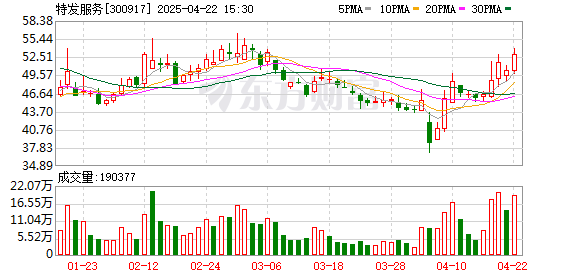
Core Insights - The company reported a revenue of 2.864 billion yuan for 2024, representing a year-on-year growth of 17% and a net profit of 122 million yuan, which is a slight increase of 1.24% compared to the previous year [2][5][6] Financial Performance - Revenue for 2024 was 2.864 billion yuan, up from 2.448 billion yuan in 2023, marking a 17% increase [3] - Net profit attributable to shareholders was 121.6 million yuan, a marginal increase from 120.1 million yuan in 2023, reflecting a growth of 1.24% [3][5] - The company’s cash flow from operating activities was 122.4 million yuan, down 42.36% from 212.3 million yuan in the previous year [3][11] - The gross profit margin for 2024 was 11.78%, a decrease of 3.36% year-on-year, while the net profit margin was 4.65%, down 12.29% [10] Business Segmentation - The company’s revenue is primarily derived from three segments: comprehensive property management services, government services, and value-added services [8] - In 2024, the comprehensive property management services segment generated 2.364 billion yuan, an 18.3% increase; government services brought in 286 million yuan, up 13.18%; and value-added services contributed 212 million yuan, a growth of 10.55% [8] Market Position and Competition - The company has maintained a record of "increasing revenue and profit" for five consecutive years since its listing in 2020, with revenue growth rates of 24.4%, 52.54%, 18.6%, 22.04%, and 17% from 2020 to 2024 [6] - The property management industry is experiencing intensified competition, particularly as residential projects enter a saturation phase, prompting companies to shift focus to non-residential sectors [8] Strategic Developments - The company secured significant contracts with major clients such as Huawei and Alibaba, including projects for facility operation services and property management [10] - The acquisition of a 51% stake in Chengdu Jiazi Ronghui Commercial Operation Management Co., Ltd. enhances the company's market position in the southwest region [10]
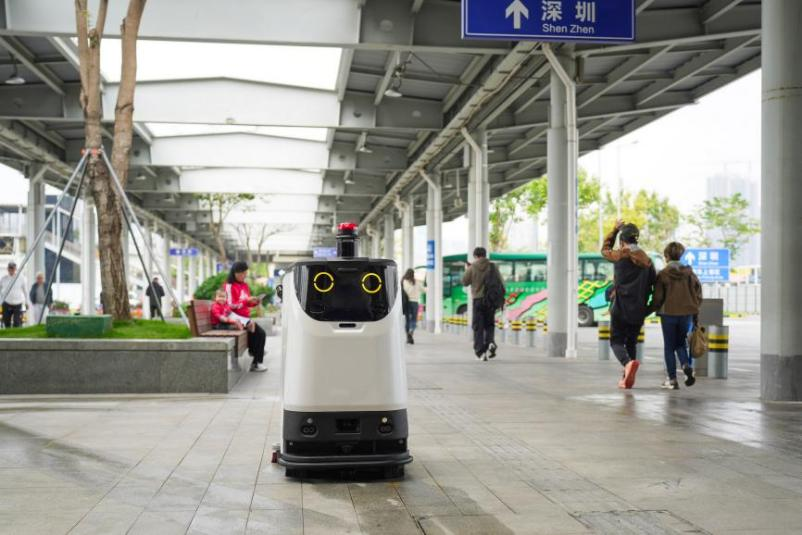
特发服务智能化应用:开启智能服务新篇章
Zhong Guo Jin Rong Xin Xi Wang· 2025-04-09 07:37
Core Insights - The rapid development of technology is driving significant changes in the service sector, with Shenzhen TeFa Service Co., Ltd. leading the way in innovation and smart technology applications [1] Group 1: Smart Devices and Applications - TeFa Port Company has launched a smart translation device at Futian Port, capable of translating into 144 languages in just 3 seconds, easing communication for foreign travelers [2] - Smart cleaning robots have been introduced at Huanggang and Shenzhen Bay ports, operating during off-peak hours to enhance cleaning efficiency without disrupting customs operations [4] - The introduction of smart luggage robots at Huanggang Port improves the handling of large luggage, providing a seamless experience for travelers [4] - Underwater detection robots are now used for bridge safety monitoring at the Futian Port, effectively replacing traditional methods and enhancing safety assessments [4] Group 2: Smart Property Management - The TeFa Property Division has successfully implemented a smart property management platform at the Shenzhen International Exchange, integrating online and offline services to improve operational efficiency [5] - Smart cleaning robots have reduced the cleaning cycle from 15 days to just 2 days, significantly lowering labor costs and improving cleaning quality [6] - IoT technology is widely applied in critical areas such as fire safety and equipment monitoring, enhancing real-time oversight and reducing risks [6] Group 3: Healthcare Innovations - The Medical Service Division has introduced smart cleaning robots in hospitals, optimizing cleaning processes and allowing staff to focus on specialized tasks [7] - The AI Virtual Digital Human developed by TeFa Voice Technology (Wuhan) Co., Ltd. enables interactive services through various smart terminals, enhancing user engagement and service delivery [7][8] Group 4: Future Directions - TeFa Service is committed to deepening the application of smart technologies and aims to enhance service capabilities through a dual strategy of innovation and technological value addition [8]