巨灾保险

Search documents
瑞银:美国冬季风暴或将造成数十亿美元的保险损失
Ge Long Hui· 2026-01-30 03:25
Core Insights - A recent report by UBS analysts indicates that a large winter storm impacting the U.S. is expected to result in insurance losses amounting to billions of dollars [1] - The closest comparable event was the winter storm in 2021, which caused catastrophe losses for the insurance industry ranging from $15 billion to $20 billion [1] Insurance Industry Impact - The anticipated losses from the current winter storm are significant, potentially mirroring the financial impact seen in previous catastrophic weather events [1] - The report highlights the vulnerability of the insurance sector to extreme weather events, emphasizing the need for robust risk management strategies [1]
中国财险20260121
2026-01-22 02:43
Summary of China Pacific Insurance Conference Call Company Overview - **Company**: China Pacific Insurance (CPIC) - **Focus**: Insurance industry, specifically property and casualty insurance Key Points Strategic Asset Allocation - CPIC adheres to a prudent strategy, gradually increasing equity asset allocation starting in 2025 while reducing fixed income assets due to favorable equity market performance and proactive accumulation [2][6] - By 2026, the proportion of equity investments is expected to rise slightly, while fixed income assets will see a minor decrease, with an increase in bond investments [2][7] Market Outlook - CPIC holds a cautiously optimistic view on the equity market for 2026, anticipating positive returns despite potential volatility in the bond market and rising interest rates [2][6] - The company plans to enhance trading account operations to compensate for declining holding returns through spread income [2][6] Regulatory Impact - Recent regulatory changes regarding asset-liability management are expected to have limited impact on CPIC due to its strong underwriting profitability, which reduces pressure from liabilities to assets [3][4] - The new regulations will enforce stricter compliance requirements, particularly in liquidity matching, which may increase compliance pressure [4][5] Non-Motor Insurance Development - CPIC is focusing on expanding personal non-motor insurance, including home, health, and liability insurance, while also exploring new scenarios and products under the consumption and tourism sectors [12][13] - The company is also looking to enhance its overseas business and emerging domestic markets such as technology insurance and catastrophe insurance [12] Motor Insurance Insights - As of September 2025, the share of new energy vehicle (NEV) insurance is 13% in terms of underwriting and 20% in premium contribution, with expectations for this to increase [3][21] - CPIC aims to maintain its competitive edge in new vehicle insurance while improving renewal rates for existing policies [11] Cost and Pricing Strategy - The introduction of transparent product terms will lead to differentiated pricing based on risk levels, allowing low-risk customers to benefit from lower rates while high-risk customers will face higher costs [15][14] - The company anticipates that the overall cost of insurance will remain stable, with improvements in risk and pricing matching due to regulatory changes [13][14] Governance and Operational Efficiency - CPIC has restructured its governance to enhance operational efficiency, creating dedicated centers for personal, corporate, and government business lines [20] - The company is committed to optimizing collaboration between different departments and improving service levels through vertical management and professional team building [20][19] Future Development Focus - In 2027, CPIC will prioritize personal flying car insurance and address loss-making corporate insurance products [18][19] - The company aims to ensure sustainable development across all business lines while maintaining its strategic direction [19] Overall Financial Guidance - CPIC is preparing its budget for 2026 with a focus on high-quality development, aiming to align premium growth with market trends while maintaining a stable market share [22] - The management is committed to achieving both qualitative and quantitative improvements to create greater value for investors and shareholders [22]
浙江金融监管局:推动开展“金融救助+金融保险”试点工作
Bei Jing Shang Bao· 2026-01-14 10:39
Core Viewpoint - The Zhejiang Financial Regulatory Bureau is initiating a pilot program for "financial rescue + financial insurance" to enhance disaster risk management and insurance services in collaboration with local authorities [1] Group 1 - The pilot program will focus on "catastrophe insurance + comprehensive disaster reduction and rescue services" and will last for three years [1] - During the pilot, insurance premiums will be co-funded by municipal and county-level finances on a 1:1 basis, ensuring shared financial responsibility [1] - The insurance amount and liability limits will be dynamically adjusted based on the previous year's actual payouts, comprehensive costs, and changes in risk coverage [1]
慕尼黑再保险:2025年全球自然灾害保险损失约1080亿美元
Guo Ji Jin Rong Bao· 2026-01-14 07:28
Core Insights - The report by Munich Re indicates that global natural disaster losses in 2025 are estimated at approximately $224 billion, with insured losses around $108 billion, despite a decrease from 2024 levels [1] - Meteorological disasters account for 92% of total losses and 97% of insured losses, highlighting the significant impact of floods, severe storms, and wildfires [1] - The Asia-Pacific region faces substantial challenges, with total losses of about $73 billion, exceeding the ten-year average of $66 billion, while insurance penetration remains low in many low-income countries [2] Summary by Category Economic Losses - Total global losses from natural disasters in 2025 are projected at $224 billion, with insured losses at $108 billion, a decrease from $368 billion and $147 billion in 2024 respectively [1] - The overall losses from floods, severe storms, and wildfires in 2025 are estimated at $166 billion, with insured losses of approximately $98 billion, significantly higher than the inflation-adjusted averages of the past 10 and 30 years [1] Regional Analysis - In the Asia-Pacific region, natural disaster losses are around $73 billion, surpassing the past decade's average of $66 billion, while insurance losses are only about $9 billion [2] - Specific events such as the earthquake in Myanmar and severe flooding during the autumn monsoon period have contributed to these losses, with northeastern China experiencing losses of about $5.8 billion, of which less than $500 million was insured [1] Insurance Coverage and Challenges - The report emphasizes the urgent need to reduce the insurance gap in Asia, where nearly one-third of global natural disaster losses occur, making risk management and expanding insurance coverage critical [2] - Munich Re highlights the importance of a robust catastrophe insurance system to enhance disaster response capabilities and build resilience against climate change impacts [2]
钱投哪、养老如何更有保障?解码广东保险业2025新定位
Nan Fang Du Shi Bao· 2026-01-08 01:09
Core Insights - Guangdong's insurance industry has evolved significantly since its revival in 1980, becoming a key pillar of the financial sector alongside banking and securities, and is crucial for supporting the real economy and social welfare [2] - By 2025, the insurance industry in Guangdong is expected to deepen reforms and focus on serving the real economy and social welfare, showcasing a model for national transformation [2] Group 1: Catastrophe Insurance - In the period from January to November 2025, Guangdong's insurance premium income reached 738.96 billion yuan, marking an 8.35% year-on-year increase, positioning it among the top in the nation [3] - The traditional model of catastrophe insurance is shifting from "post-compensation" to a comprehensive risk management approach that includes "pre-warning, in-process control, and post-compensation" [3] - Guangdong has established a multi-layered risk diversification mechanism for catastrophe insurance, balancing public welfare and commercial sustainability through a collaborative model involving market leadership and government support [3][4] Group 2: Long-term Care Insurance - As of October 2025, Guangdong's basic medical insurance enrollment reached approximately 113 million, the highest in the country, providing a solid foundation for promoting long-term care insurance [5] - Guangzhou, as a pilot city for long-term care insurance, has developed a multi-tiered service system, with 2.297 million participants and over 51.8 billion yuan in fund expenditures by June 2025 [7] - The integration of commercial insurance into long-term care services is breaking traditional insurance limitations, extending coverage to care services and enhancing the overall support network for elderly care [7] Group 3: Cross-border Insurance - The Guangdong-Hong Kong-Macao Greater Bay Area's geographical and policy advantages are fostering innovation in the insurance sector, particularly in cross-border vehicle insurance [8][10] - By June 2025, the cross-border vehicle insurance policy has facilitated insurance for 90,300 vehicles from Hong Kong and Macao, while health insurance has served over 150,000 individuals [10] Group 4: Support for Technological Innovation - In 2025, Guangdong's insurance sector provided risk coverage of 31.1 trillion yuan to technology enterprises, reflecting a 76% year-on-year increase, driven by supportive policies in the tech finance sector [11] - Insurance products tailored for specific technological advancements, such as "low-altitude insurance" for eVTOLs and liability insurance for AI systems, are being developed to support innovation [13] Group 5: Investment Trends - Insurance capital is increasingly flowing into diverse sectors, including green energy and elderly care, with significant investments in offshore wind power and community projects [14][16] - By 2025, 17 insurance companies have established nursing homes in Guangdong, with investments exceeding 24 billion yuan in 21 elderly care community projects [16] Group 6: Industry Self-regulation - The Guangdong Insurance Association has introduced a self-regulation charter to combat homogeneous competition and price wars, emphasizing ethical practices and differentiated advantages [17] - The charter aims to maintain industry integrity by prohibiting practices such as excessive commission payments and unethical bidding in government projects [17]


杭州全面加强基层应急消防和防汛防台能力建设
Mei Ri Shang Bao· 2025-11-28 02:28
Group 1 - The core viewpoint of the articles highlights the comprehensive efforts made by Hangzhou to enhance its grassroots emergency firefighting and flood prevention capabilities through training, technology, and infrastructure development [1][2] Group 2 - Hangzhou has established a grassroots emergency firefighting governance system, with the Emergency Management Bureau collaborating with the Fire Rescue Team to strengthen capabilities [1] - A training and assessment system has been developed, including a training outline for grassroots emergency firefighting personnel, with initial training focusing on theoretical knowledge and basic skills [1] - After passing initial training, personnel receive certifications such as the "Red Cross Rescuer Certificate" and the "Emergency First Responder Certificate (Junior)" [1] - The city has built a network of 62 specialized firefighting teams at the township and street levels, with over 860 members and 110 firefighting vehicles [1] - A total of 392 regional micro firefighting stations have been established, with over 3,000 members, creating a responsive firefighting layout [1] Group 3 - The "Hang Xiao Ying" intelligent system has been developed to enhance rapid response capabilities through AI applications for hazard identification and public education [2] - The new meteorological AI short-term forecasting platform provides minute-level, kilometer-level rainfall predictions, significantly improving the accuracy and timeliness of weather alerts [2] - An example of effective risk management was demonstrated when a district preemptively activated emergency responses during heavy rainfall, successfully relocating at-risk populations [2] - Starting next year, a "catastrophe insurance + full-chain service for natural disaster prevention and response" initiative will be implemented to enhance disaster management and support for affected communities [2]
保险安全网守护雪域高原
Jing Ji Ri Bao· 2025-10-19 21:58
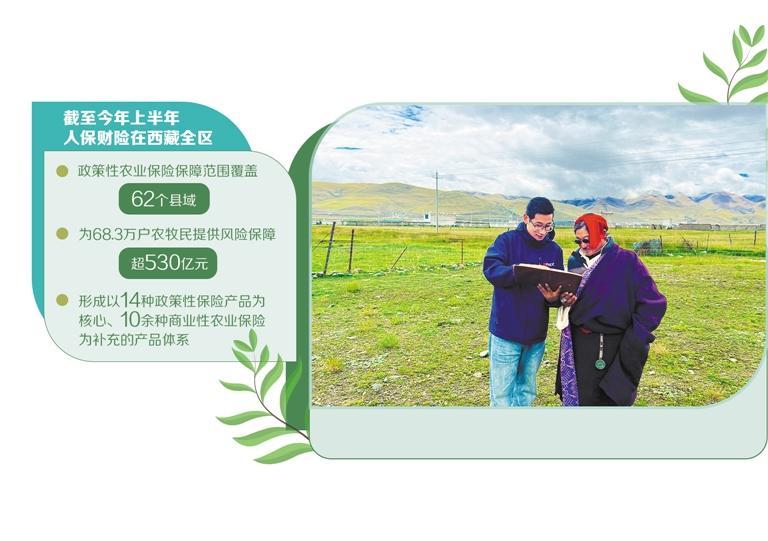
Core Insights - The insurance industry is increasingly integrated into the lives of farmers and herders in Tibet, providing essential support for risk management and livelihood rebuilding [2][3][11] Group 1: Insurance Services and Coverage - The government has been promoting policy-oriented and inclusive insurance to cover high-altitude areas, with insurance companies delivering services directly to farmers and herders [3][4] - In Linzhi, the first village-level insurance service point has been established, allowing villagers to handle insurance matters locally, making insurance more accessible [3] - The introduction of mutual medical insurance in Mêdog County has filled a gap in healthcare coverage, benefiting nearly 5,000 individuals with a total payout of 14.24 million yuan [4][5] Group 2: Impact on Livelihoods - Insurance is seen as a "protective shield" for livestock, with quick claims processing helping herders recover from losses due to natural disasters [6][7] - The insurance company has provided risk coverage of nearly 400 million yuan for a local breeding station, enhancing confidence in livestock breeding and innovation [7][8] - The company has achieved full coverage of agricultural insurance in the region, insuring 5.08 million yaks and 8.65 million sheep, with total risk coverage amounting to 30.9 billion yuan [8][9] Group 3: Disaster Response and Recovery - The insurance sector plays a crucial role in disaster risk management, providing timely compensation and support during recovery efforts after natural disasters [9][10] - Following a 6.8 magnitude earthquake, the insurance company quickly disbursed 1.68 billion yuan in claims, demonstrating its effectiveness in disaster response [10] - The establishment of a "catastrophe insurance + government subsidy + social co-insurance" mechanism is being explored to enhance future disaster risk management [10][11]
聚焦防灾减灾 中国平安发布台风风险地图及巨灾模型
Zhong Guo Jing Ying Bao· 2025-10-16 14:57
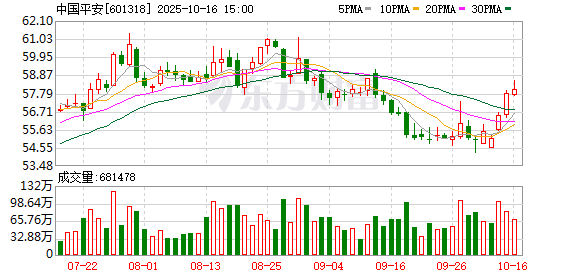
Group 1 - The increasing frequency of natural disasters highlights the importance of catastrophe insurance, with the insurance industry having paid out over 150 billion yuan for flood, typhoon, and earthquake damages [2] - Ping An Property & Casualty has launched the "Ping An Typhoon Risk Map" and "Ping An Typhoon Catastrophe Model" to explore scientific prevention and control of typhoon disasters [2] - The "Ping An Typhoon Risk Map" consists of three digital maps that quantify typhoon risks based on historical data and advanced AI algorithms, providing a basis for underwriting decisions and tailored risk advice [2] Group 2 - The "Ping An Typhoon Catastrophe Model" estimates the probability and potential losses from typhoon disasters, supporting catastrophe insurance pricing and covering various applications such as loss assessment and catastrophe pricing [2] - In the first half of 2025, Ping An Property & Casualty's "Eagle Eye System" issued warnings for 259,000 disasters, sending out 4.26 billion warning messages, covering 64.02 million enterprises and individual clients [3] - The company is establishing five emergency material warehouses across key regions in China to provide emergency supplies and ensure a 100% response to major disasters, covering the entire disaster management process [3]

应对气候变化风险 巨灾保险织密防灾减灾“安全网”
Zhong Guo Zheng Quan Bao· 2025-10-12 20:53
Core Insights - The insurance industry is encouraged to leverage technology to shift risk management from post-event compensation to pre-event prevention, particularly in the context of catastrophe risk reduction [1][5] - Catastrophe insurance plays a crucial role in addressing natural disaster risks and is closely linked to environmental issues within the ESG framework [1][2] - Despite progress, there remains a significant protection gap and limited coverage in China's catastrophe insurance system [3][4] Industry Developments - The frequency of extreme weather events and natural disasters has increased due to global climate change, posing threats to economic development and public safety [1] - Catastrophe insurance has been piloted in over 20 provinces in China, with a premium scale of 1.232 billion yuan and an annual compound growth rate exceeding 39% from 2014 to 2024 [3] - The recent Typhoon "Maidam" in Guangdong prompted rapid compensation payments of 42.8 million yuan within 24 hours, highlighting the effectiveness of catastrophe insurance in disaster recovery [1][2] Challenges and Gaps - China's catastrophe insurance system faces challenges such as an incomplete protection framework, significant coverage gaps, and limited geographical reach [3][4] - Compared to the global average, China's insurance payouts for natural disaster economic losses are only about 10%, while the global average is around 50% [3] Recommendations for Improvement - Experts suggest enhancing the catastrophe insurance framework through top-level design, expanding pilot programs, and strengthening technological support [4][5] - There is a call for the establishment of a national catastrophe insurance system and the exploration of diverse risk dispersion tools, including catastrophe bonds [5]
保险业保障能力稳步提升
Jing Ji Ri Bao· 2025-10-09 01:53
Core Insights - The insurance industry in China has solidified its position as the second-largest insurance market, with cumulative payouts reaching 9 trillion yuan, a 61.7% increase compared to the "13th Five-Year Plan" period [1] - By the end of Q2 2025, total assets of insurance companies and insurance asset management companies are projected to reach 39.2 trillion yuan, reflecting a 9.2% growth from the beginning of the year [1] Group 1: Social Security and Health Insurance - Urban and rural residents' major illness insurance provides further protection against high medical costs, with the government overseeing policy formulation and commercial insurance institutions managing the projects [2] - As of now, major illness insurance has served 1.22 billion urban and rural residents [2] - The "Guiding Opinions on Promoting High-Quality Development of Inclusive Insurance" emphasizes broad coverage, affordability, and fairness in insurance services [3] - Commercial health insurance has paid out a total of 1.8 trillion yuan in economic compensation over the past five years [3] Group 2: Long-term Care Insurance - Shandong Jining has initiated commercial insurance institutions to manage long-term care insurance, benefiting over 5,000 individuals with total payouts of 95 million yuan [4] - The insurance sector is innovating various commercial pension products to address the challenges of an aging population [4] - Long-term care insurance currently covers 180 million people [4] Group 3: Agricultural Insurance - Agricultural insurance provides risk protection for 800 million farming households, with a 72% increase in average coverage for major grain crops during the "14th Five-Year Plan" period [6] - The implementation of comprehensive cost and income insurance for major grain crops has been expanded nationwide, providing significant economic compensation for affected farmers [6] - The central government has allocated 56.2 billion yuan for agricultural insurance in 2024, with over 20 billion yuan specifically for major grain insurance [6] Group 4: Disaster Risk Management - The insurance industry has paid out over 150 billion yuan for natural disasters, ensuring prompt and reasonable compensation [7] - A national catastrophe insurance system is being established to enhance disaster risk management and support disaster relief efforts [7] Group 5: Support for the Real Economy - The insurance sector is actively engaging in risk management and financing needs for key national projects, including the Belt and Road Initiative [8] - China Export & Credit Insurance Corporation (Sinosure) achieved a record underwriting amount of 1.0214 trillion USD in 2024, marking a 10% increase year-on-year [8] - Sinosure's services have directly and indirectly facilitated over 930 billion USD in export amounts, accounting for 26% of China's total exports [8][10]