
智谱AI输入法

Search documents
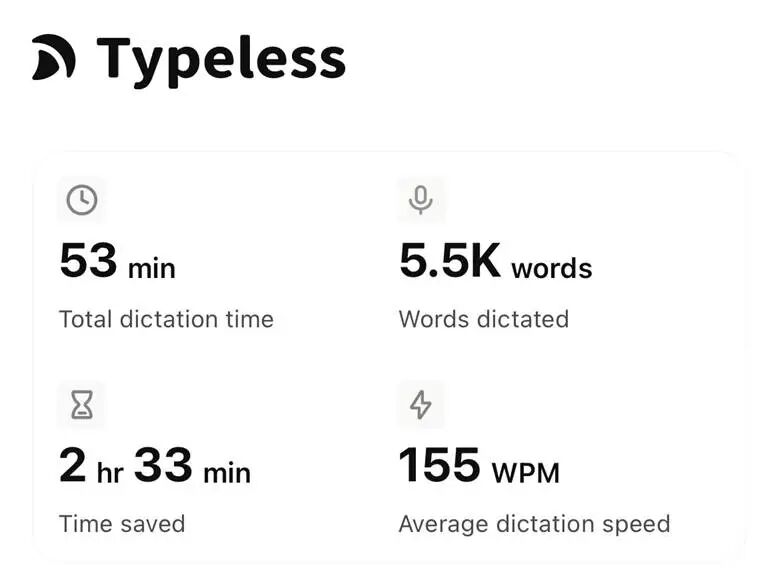
AI语音输入法,人类进入「不打字」时代
36氪· 2026-01-30 13:35
Core Insights - The article discusses the rapid rise of AI voice input technology, highlighting its potential to revolutionize the way people interact with devices, moving from traditional typing to voice commands [6][21][32]. Group 1: Industry Trends - Starting from the second half of 2025, AI voice input methods are expected to become a significant trend, with major players like Sogou and emerging startups like Typeless leading the charge [6][21]. - Sogou's voice input boasts a recognition rate of 98% and an average daily usage of nearly 20 billion times, indicating its dominance in the industry [6][15]. - The financing of Wispr Flow has reached $81 million, with a valuation of $700 million, showcasing investor interest in this sector [6]. Group 2: Performance Metrics - AI voice input methods are reported to be significantly faster than traditional typing, with speeds reaching up to 250 words per minute for voice input compared to 130 words per minute for top typists [12][15]. - Studies indicate that voice input is approximately three times faster than typing, with error rates for voice input at 6.67% compared to 17.73% for keyboard input [14][15]. - Newer voice input technologies, such as those from Typeless and LazyTyper, claim to be four to seven times faster than typing, with accuracy rates around 97.8% [15][18]. Group 3: User Experience - Users report a significant shift in their input habits, with many transitioning from typing to voice input within a short period, citing time savings and increased efficiency [7][34]. - Voice input can function effectively even in low-noise environments, with Sogou claiming a 97% accuracy rate at sound levels as low as 20 decibels [18]. - The technology allows for more natural interaction, enabling users to express complex thoughts in a single voice command rather than multiple typed inputs [35][36]. Group 4: Future Outlook - The article suggests that AI voice input could evolve into a "super entry point" for applications, potentially integrating across different platforms and enhancing user interaction [22][23]. - There is a belief that voice input will eventually replace traditional typing methods, as it aligns more closely with natural human communication [27][32]. - The anticipated advancements in AI voice technology could lead to a future where dedicated input methods are no longer necessary, as systems become more intuitive and capable of understanding user intent [26][36].


AI语音输入法,人类进入“不打字”时代
3 6 Ke· 2026-01-29 04:13
Core Insights - The rise of AI voice input methods is transforming user behavior, with significant advancements in speed and accuracy compared to traditional typing methods [1][4][12]. Group 1: Industry Trends - Starting from the second half of 2025, AI voice input methods have become a new trend, with major players like Doubao and Zhipu launching competitive products [1][4]. - Sogou's voice input claims a recognition rate of 98% and an average daily usage of nearly 2 billion times, leading the industry [1]. - New entrants like Typeless have gained traction, achieving high rankings on platforms like Product Hunt and raising significant funding [1][4]. Group 2: Performance Metrics - AI voice input methods can achieve speeds of up to 250 words per minute, significantly surpassing traditional typing speeds, which average around 90 words per minute [6][8]. - Studies indicate that voice input is approximately three times faster than typing, with error rates for voice input being significantly lower than for keyboard input [7][8]. - Companies like Sogou and Zhipu report accuracy rates of 98% and 97.8%, respectively, validating the effectiveness of these technologies [8]. Group 3: User Experience - Users report a shift in their writing habits, with voice input allowing for more flexibility and comfort, enabling writing in various settings [25]. - Voice input is seen as a more natural form of communication, aligning with human behavioral patterns, as it is rooted in the historical use of spoken language [17][18]. - The technology is evolving to not only transcribe speech but also understand context and intent, enhancing the overall user experience [8][12]. Group 4: Future Outlook - The potential for AI voice input to serve as a "super entry point" for applications is being explored, suggesting a shift towards system-level AI assistants that could integrate across various platforms [14][16]. - The ongoing development in AI voice recognition technology indicates that voice input may eventually replace traditional typing methods, although full replacement is not expected in the short term [23][24].
“双雄”抢跑 国产大模型叩响资本市场大门
Bei Jing Shang Bao· 2025-12-18 23:24
Core Viewpoint - The article discusses the competitive landscape of the large model sector in China, focusing on the IPO progress of two leading companies, MiniMax and Zhiyu AI, both of which have recently passed the Hong Kong Stock Exchange's hearing and are nearing the final stages of their listing process [1][2]. Group 1: IPO Progress - MiniMax and Zhiyu AI have both received approval from the China Securities Regulatory Commission for overseas issuance and have passed the Hong Kong Stock Exchange hearing, marking a significant step towards their IPOs [1]. - MiniMax plans to list on the Hong Kong Stock Exchange in January 2026, while Zhiyu AI's IPO timeline is also closely aligned [1][2]. - This marks a potential milestone as both companies could become the fastest cases of mainland Chinese firms to pass the hearing since the implementation of the "filing system" for Hong Kong listings [1]. Group 2: Company Backgrounds - Zhiyu AI, established in 2019, has a background rooted in Tsinghua University and focuses on large model algorithm research, having released the GLM-10B model in 2021 [2]. - MiniMax was founded in 2021 by former SenseTime executive Yan Junjie and has developed a range of AI applications, achieving significant user engagement globally [2][3]. - Both companies have adopted different paths for their IPOs, with MiniMax being the first large model company to apply for a Hong Kong listing, while Zhiyu AI initially aimed for an A-share listing before shifting to Hong Kong [2]. Group 3: Product and Market Focus - MiniMax emphasizes a multi-modal approach, offering various AI-native applications and targeting a wide user base, with over 212 million users across more than 200 countries [3]. - Zhiyu AI focuses on AGI (Artificial General Intelligence) and has recently released a series of voice recognition models, indicating a strong push into consumer-facing applications [3]. - The competitive landscape suggests that while both companies are advancing, their product offerings and target markets differ significantly, which may influence their commercial success [3][4]. Group 4: Market Dynamics and Challenges - Analysts note that while the audience for large model applications is expanding, the monetization strategies remain unclear, posing challenges for both companies [4]. - MiniMax's focus on audio and video production may allow for quicker applications in consumer markets, but it faces potential copyright issues that need addressing [4]. - The competitive environment is highlighted by the presence of other companies in the sector, with ongoing discussions about the viability and market positioning of these firms [5][6].
国产大模型叩响资本市场大门
Bei Jing Shang Bao· 2025-12-18 16:00
Core Viewpoint - The article discusses the competitive landscape of the large model sector in China, focusing on the IPO progress of two leading companies, MiniMax and Zhiyu AI, both of which have recently passed the Hong Kong Stock Exchange (HKEX) hearing and are nearing the final stages of their listing process [1][2]. Group 1: IPO Progress - MiniMax and Zhiyu AI have both received approval from the China Securities Regulatory Commission for overseas issuance and have passed the HKEX hearing, marking a significant step towards their IPOs [1][2]. - Both companies are expected to become the fastest cases of mainland Chinese enterprises to pass the HKEX hearing since the implementation of the "filing system" for listings [1][2]. - MiniMax plans to list in January 2026, while Zhiyu AI's listing timeline is not specified but is also imminent [1][2]. Group 2: Company Backgrounds - Zhiyu AI, established in 2019 and originating from Tsinghua University, focuses on large model algorithm research and has released the GLM-10B model with 100 billion parameters [2][3]. - MiniMax was founded in 2021 by former SenseTime executive Yan Junjie and has developed a range of AI applications, achieving significant user engagement with over 212 million users globally [2][3]. Group 3: Business Models and Market Position - MiniMax emphasizes a "model as product" approach, offering various AI-native applications and targeting both B2B and B2C markets, particularly in audio and video production [3][4]. - Zhiyu AI focuses on AGI (Artificial General Intelligence) and has recently launched a series of voice recognition models, indicating a broader application scope [3][4]. - The profitability of large model applications remains uncertain, with MiniMax's focus on audio and video potentially allowing for quicker commercialization compared to Zhiyu AI's broader but less urgent applications [4]. Group 4: Competitive Landscape - The article highlights that while MiniMax and Zhiyu AI are leading in the IPO race, their technological positions among the "six small tigers" in the large model sector are not necessarily the strongest [5][6]. - The success of these companies in the IPO process does not guarantee that other competitors lack opportunities, as market conditions and shareholder interests also play significant roles [6][7]. - The focus on user numbers as a measure of success is questioned, emphasizing the importance of converting users into revenue sources [6][7].
MiniMax、智谱双双过聆讯,国产大模型叩响资本市场大门
Bei Jing Shang Bao· 2025-12-18 13:23
Core Viewpoint - The leading domestic AI companies MiniMax and Zhiyu AI have both received approval from the China Securities Regulatory Commission for overseas listings and have passed the Hong Kong Stock Exchange's hearing, marking the final stage before their IPOs [1][3]. Group 1: Company Developments - MiniMax and Zhiyu AI both participated in and passed the Hong Kong hearing on December 17, with MiniMax planning to list in January 2026 [3]. - MiniMax was the first large model company to submit an IPO application to the Hong Kong Stock Exchange in June 2025, while Zhiyu AI initially aimed for an A-share listing before shifting to Hong Kong [3][4]. - MiniMax was founded in 2021 and gained prominence with its Glow model, which surpassed GPT in size during the AI boom in 2023 [4]. Group 2: Business Models and Market Position - MiniMax focuses on multi-modal self-research in text, visual, and audio, offering a range of AI-native applications and has over 212 million users globally [5]. - Zhiyu AI centers its business around AGI models and has recently released a series of voice recognition models, including the GLM-ASR series [5]. - Both companies are seen as competitors in the IPO race, but their technological standings among the "six little tigers" in the industry are questioned [6][7]. Group 3: Market Dynamics and Future Outlook - The profitability of large model applications remains unclear, with MiniMax's focus on audio and video production potentially allowing for quicker applications, while Zhiyu AI's broader modal approach may take longer to commercialize [6]. - The competition for IPOs among the "six little tigers" indicates that technological leadership does not guarantee market success, as future performance will depend on business models and capital endurance [8].
下一代 AI 交互,会长成什么样子?| 42章经 AI Newsletter
42章经· 2025-12-11 13:31
Group 1 - The core idea of the article revolves around the evolution of software interaction, emphasizing that the biggest opportunities for startups lie in designing different interaction methods [2] - Personalized software is gaining traction, with the notion that the future of software will resemble a "YouTube for apps," allowing users to create mini apps tailored to specific needs [4][5] - The shift from traditional software development to a model where anyone can create applications reflects a broader democratization of software, moving from 20 million developers to 8 billion creators [6][10] Group 2 - The article discusses the limitations of independent Vibe Coding, highlighting three critical issues: trust and stability, integration capabilities, and distribution and collaboration [10][11][13] - A platform like Wabi is proposed as a solution to these issues, providing a trusted environment for app creation, integrating various APIs, and fostering social interaction among users [10][11][13] - The future of personal software is envisioned as a "personal memory manager" that consolidates data across different applications, enhancing user experience and personalization [21] Group 3 - The article suggests that the emergence of mini apps will lead to new go-to-market (GTM) strategies, where software becomes a form of content, allowing creators to monetize through app distribution rather than traditional methods [23][24] - Mini apps are expected to act as community starters, bringing together users with shared interests and facilitating offline activities and content co-creation [26][27] - The concept of Wabi is likened to a "Prompt container platform," aiming to provide a user-friendly interface for managing and sharing prompts, thus enhancing the user experience [28][33] Group 4 - The article highlights the potential of AI voice input methods evolving into a "voice operating system," which could significantly reduce cognitive load and enhance user interaction with AI [39][40] - The evolution of input methods is seen as a way to transition from passive recording to active expression, allowing users to communicate more naturally and effectively with AI [44] - The future of input methods may involve them becoming the primary interface for interaction with software, capturing user context and preferences to provide tailored responses [52] Group 5 - The article identifies recent advancements in AI interaction design, emphasizing the need for improved user interfaces that enhance trust and engagement [54][56] - New interaction paradigms, such as parameter sliders and reverse onboarding, are proposed to make AI tools more user-friendly and intuitive [57][65] - The importance of narrative design in AI products is discussed, suggesting that framing AI capabilities in relatable terms can improve user retention and satisfaction [81][82] Group 6 - The article concludes with insights on the future of product design, advocating for a systems-thinking approach that accommodates user preferences and allows for continuous evolution [95][101] - The analogy of software as a building is presented, emphasizing the need for adaptable structures that can evolve over time based on user needs and interactions [96][100] - The discussion highlights the importance of creating resilient systems that can balance innovation with stability, ensuring long-term viability in a rapidly changing environment [107][110]

腾讯研究院AI速递 20251211
腾讯研究院· 2025-12-10 16:01
Group 1 - OpenAI's new image models Chestnut and Hazelnut are set to debut alongside GPT-5.2, but initial tests show they lag behind Google's Nano Banana Pro in generating high-quality images, particularly in facial rendering [1] - Mistral AI has released its next-generation code models, Devstral 2 and Devstral Small 2, achieving 72.2% and 68.0% on SWE-bench Verified, respectively, with a cost efficiency seven times higher than Claude Sonnet [2] - Zhiyu has launched the GLM-ASR-2512 cloud model and GLM-ASR-Nano-2512 edge model, achieving a CER of 0.0717, marking a significant advancement in speech recognition technology [3] Group 2 - Alibaba's Tongyi Lab introduced the Qwen-Image-i2L open-source tool, allowing personalized style transfer with just one sample, and offers various model variants optimized for different applications [4] - The Echo-N1 emotional model, with 32 billion parameters, outperformed a 200 billion parameter commercial model in multi-turn emotional support tasks, showcasing advancements in AI emotional intelligence [6] - The formation of the Agentic AI Foundation by major tech companies aims to establish interoperability standards for AI agents, with OpenAI contributing foundational standards already adopted by over 60,000 open-source projects [7] Group 3 - AI tools have been successfully utilized to design antibody-like molecules, with companies like Nabla Bio and Chai Discovery producing drug-like antibodies that target various diseases [8] - Anthropic's 14,000-word "AI Constitution" aims to guide AI behavior towards positive values, with a small team monitoring its real-world applications and potential risks [9]

智谱正式推出「智谱AI输入法」,要真正实现“指尖即模型,语音即指令”
IPO早知道· 2025-12-10 05:30
Core Viewpoint - The article discusses the launch of the Zhipu AI Input Method, which utilizes the GLM-ASR series voice recognition models to enable seamless voice interaction for users, aiming to enhance productivity by allowing tasks to be completed through voice commands rather than traditional typing [2][4]. Group 1: Product Launch and Features - Zhipu officially released and open-sourced the GLM-ASR series voice recognition models on December 10, which includes the GLM-ASR-2512 model that boasts a character error rate (CER) of only 0.0717, demonstrating industry-leading performance in real-time voice-to-text conversion [2][4]. - The Zhipu AI Input Method allows users to perform accurate voice-to-text transcription, translation, rewriting, and other intelligent operations, encapsulating the concept of "voice as command" [4][5]. - The AI Input Method integrates the GLM model capabilities, enabling users to translate, expand, and refine text directly within the input box, streamlining the process without needing to switch between multiple applications [4][5]. Group 2: Targeted Features for Specific Users - A special feature called Vibe Coding is introduced for developers, allowing them to input code logic and comments via voice, enhancing productivity in coding tasks [5]. - The AI Input Method is optimized for public environments, improving the ability to capture soft sounds and distinguish background noise, thus addressing the challenge of using voice input in settings like open offices and libraries [6]. Group 3: Customization and User Experience - Users can set different "persona" styles to alter the expression of the same sentence based on the context, such as formal reports for work or casual language for personal conversations [4]. - The input method supports the import of custom vocabulary and project codes, making it easier for users to include specialized terms in their voice inputs [6].

智谱推出AI输入法
Bei Jing Shang Bao· 2025-12-10 02:13
Core Insights - The article discusses the official release and open-sourcing of the GLM-ASR series voice recognition models by Zhipu, along with the launch of the Zhipu AI input method based on these models [1] Group 1: Product Launch - Zhipu has launched the cloud-based voice recognition model GLM-ASR-2512, which supports real-time voice-to-text conversion [1] - The company introduced the open-source SOTA edge-side voice model GLM-ASR-Nano-2512, which has a parameter count of 1.5 billion [1] - The Zhipu AI input method is designed to integrate the capabilities of the GLM-ASR series models, allowing users to interact via voice on desktop computers [1] Group 2: Features and Capabilities - The GLM-ASR-2512 model enables accurate voice-to-text transcription and can directly utilize large model capabilities within the input method for tasks such as translation, rewriting, and emotion conversion [1]