
未来城市全景沙盘

Search documents
“物理AI”成CES热议新词
Jing Ji Ri Bao· 2026-01-09 21:57
Core Insights - The 2026 CES in Las Vegas highlighted "Physical AI" as a key term, indicating a shift in AI technology focus from algorithms to real-world applications [1][4] - NVIDIA's CEO emphasized "Physical AI" in his keynote, suggesting its importance in enabling autonomous systems to perceive, understand, and act in the physical world [1][4] Group 1: Definition and Applications of Physical AI - "Physical AI" refers to the capability of systems like cameras, robots, and autonomous vehicles to operate in the physical world, moving beyond mere information provision to actively changing environments [1][4] - Various companies showcased applications of "Physical AI," including home robots that assist with chores and public life solutions like urban infrastructure models that integrate AI for energy management and facility inspections [2][3] Group 2: Industry Perspectives on Physical AI - Qualcomm's China Chairman noted that "Physical AI" and "Personal AI" are evolving simultaneously, with the former focusing on real-world applications in vehicles and robotics [3] - Lenovo's CEO described "Physical AI" as "machines with brains," highlighting the transition of robots from simple mechanical tasks to complex decision-making capabilities [3] Group 3: Industry Consensus and Future Directions - The rise of "Physical AI" reflects a broader industry consensus that AI is becoming integral to real-world production, life, and public scenarios, serving as a bridge between digital and physical realms [4]
道通科技CES展示“全面拥抱AI”战略阶段性成果
Zheng Quan Ri Bao Wang· 2026-01-09 13:45
Core Insights - The 2026 International Consumer Electronics Show (CES) showcased cutting-edge innovations from global tech companies, with Shenzhen Daotong Technology Co., Ltd. prominently displaying its advancements in embodied intelligence for infrastructure applications [1] Group 1: Embodied Intelligence and Robotics - Daotong Technology presented intelligent charging robots designed for automated charging operations for fleets and stations, along with inspection robots that utilize an "embodied cluster intelligence solution" for high-frequency inspections in key scenarios such as parks, energy, and transportation [1] - The inspection robots are designed for critical environments like campuses, energy facilities, and data centers, enabling continuous monitoring of key equipment and forming a closed-loop capability of "inspection—warning—disposal" in conjunction with cloud-based AI analysis [1] Group 2: Future City and Systematic Investment - The debut of the "Future City Panoramic Sandbox" showcased the systematic capabilities of embodied intelligence, covering typical urban infrastructure such as highways, charging stations, and industrial parks, demonstrating the evolution towards an "automated, autonomous, self-operating" future city [2] - Daotong Technology's systematic investment in embodied intelligence is highlighted by the establishment of Shenzhen Daohengtongtai Robotics Co., Ltd. in November 2024, focusing on the development and implementation of embodied intelligence capabilities in smart transportation, parks, and energy [2] Group 3: V2G Technology and Charging Solutions - The company introduced the V2G (Vehicle-to-Grid) ACCompactGen2, showcasing the application of bidirectional energy interaction, allowing electric vehicles to not only draw power from the grid but also return power when needed, optimizing energy management [3] - Daotong Technology also presented the compact DC fast charger MaxiCharger DC50, which boasts a conversion efficiency of 97.5%, saving customers 2% more on electricity costs compared to industry averages, and supports future upgrades to V2G [3] Group 4: Cloud Operations and AI Integration - The company demonstrated its cloud-based operational capabilities through the Charge Cloud management platform and MaxiCare service platform, offering integrated management from deployment to revenue optimization [4] - The "AI digital employee" system provides 24/7 operational support, facilitating the transition of charging operations from mere equipment management to intelligent business management, thereby enhancing the scalability of deployment [4] - Daotong Technology's strategy to fully embrace AI is evident, focusing on three core business areas: "AI + Diagnosis," "AI + Charging," and "AI Robotics," aiming to become a leader in the commercialization of AI industry models [4]

记者手记|“物理AI”成为美消费电子展热议新词
Sou Hu Cai Jing· 2026-01-09 11:40
Core Insights - The 2026 Consumer Electronics Show (CES) in Las Vegas highlights "Physical AI" as a key trend, reflecting a shift in AI technology development and industry focus [1][5][10]. Group 1: Definition and Importance of Physical AI - "Physical AI" refers to enabling autonomous systems like cameras, robots, and self-driving cars to perceive, understand, reason, and execute complex actions in the physical world [5][10]. - Unlike previous AI discussions focused on algorithms and computing power, "Physical AI" emphasizes the integration of AI into robots, autonomous vehicles, and smart devices, allowing them to actively change their environments [5][14]. Group 2: Industry Applications and Innovations - At CES, various demonstrations showcased "Physical AI" in action, including smart robots navigating spaces, self-driving concept cars, and smart home devices executing commands accurately [5][9]. - Companies like Hisense and Xiaomi presented products such as companion robots and AI-driven cleaning devices, illustrating the practical applications of "Physical AI" in everyday life [9][10]. Group 3: Industry Perspectives and Future Directions - Industry leaders, such as Qualcomm and BOE, noted that "Physical AI" is evolving alongside "Personal AI," with applications expanding into wearables, personal devices, and public life scenarios [10][14]. - The integration of display technology and sensors is expected to enhance the capabilities of "Physical AI," leading to machines that not only perform tasks but also think and collaborate [14].

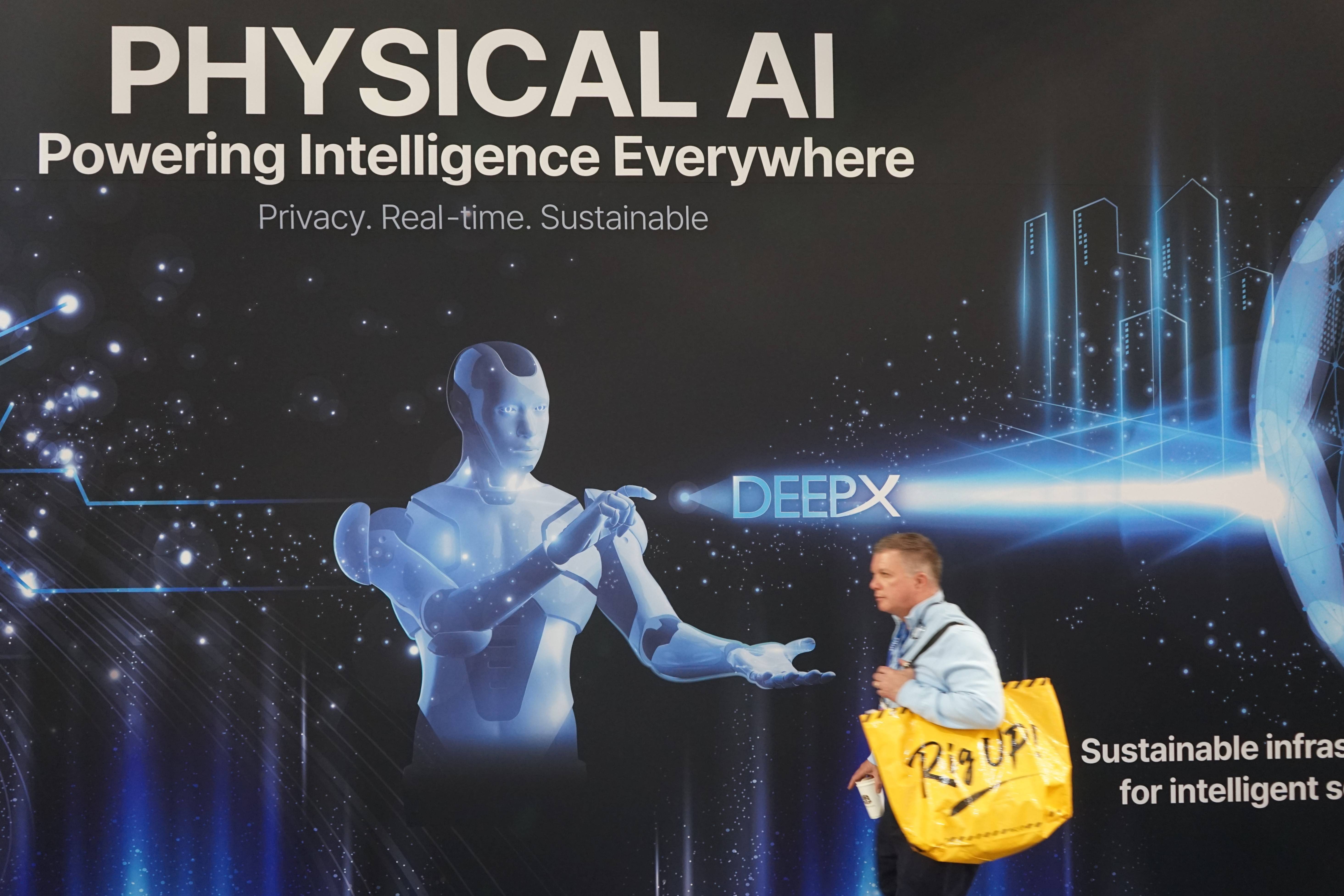
记者手记|“物理AI”成为CES热议新词
Xin Hua She· 2026-01-08 10:32
Core Insights - The term "Physical AI" emerged as a key topic at CES 2026, reflecting a shift in the focus of AI technology development and industry interests [1][4] - Physical AI refers to the ability of autonomous systems, such as cameras, robots, and self-driving cars, to perceive, understand, reason, and execute complex actions in the physical world [1][3] Group 1: Industry Trends - Physical AI is characterized by its integration into robots, self-driving cars, smart devices, and industrial equipment, enabling machines to actively participate in and alter their environments [1][4] - The presence of intelligent robots, autonomous vehicles, and smart home devices at CES illustrates the practical application of Physical AI in everyday life [2][4] Group 2: Company Perspectives - Qualcomm's China Chairman highlighted the simultaneous evolution of "Personal AI" and "Physical AI," with the latter advancing into real-world applications like automobiles and robotics [3] - BOE Technology Group's executive noted that the deep integration of display technology and sensors will enhance the application possibilities of Physical AI [3] - Lenovo's CEO emphasized that Physical AI represents "machines with brains," indicating a transition from mere mechanical execution to machines capable of perception, understanding, and decision-making [3]
