
机器人交警

Search documents
互联网普及率超80% 数智生活向新向好
Xin Hua She· 2026-02-06 01:24
Core Insights - The report indicates that by December 2025, China's internet user base is projected to reach 1.125 billion, with an internet penetration rate of 80.1% [3][5] - The user base for generative artificial intelligence is expected to reach 602 million, reflecting a growth of 141.7% compared to the end of 2024 [6] Group 1: Internet Infrastructure Development - China has established the world's largest and technologically advanced information and communication network, enhancing the connectivity for economic and social development [5] - As of December 2025, the internet penetration rate has increased by 9.7 percentage points since the beginning of the 14th Five-Year Plan, with rural internet penetration at 69.5% and internet usage among individuals aged 60 and above at 53.7% [5] Group 2: Artificial Intelligence Integration - AI applications are becoming increasingly prevalent across various sectors, including steel, electricity, and telecommunications, enhancing product development, quality inspection, and customer service [7] - The integration of AI into daily life and production is seen as a key driver for the digital and intelligent transformation of society [6] Group 3: Digital Services and Quality of Life - By December 2025, the number of online government service users is expected to reach 940 million, providing efficient services throughout the lifecycle of enterprises and individuals [8] - The online healthcare user base is projected to be 411 million, with over 200 inter-recognition projects for medical examination results across all provinces [8] - Online education users are expected to reach 327 million, with an increasing number of digital educational resources available on the national smart education public service platform [8]

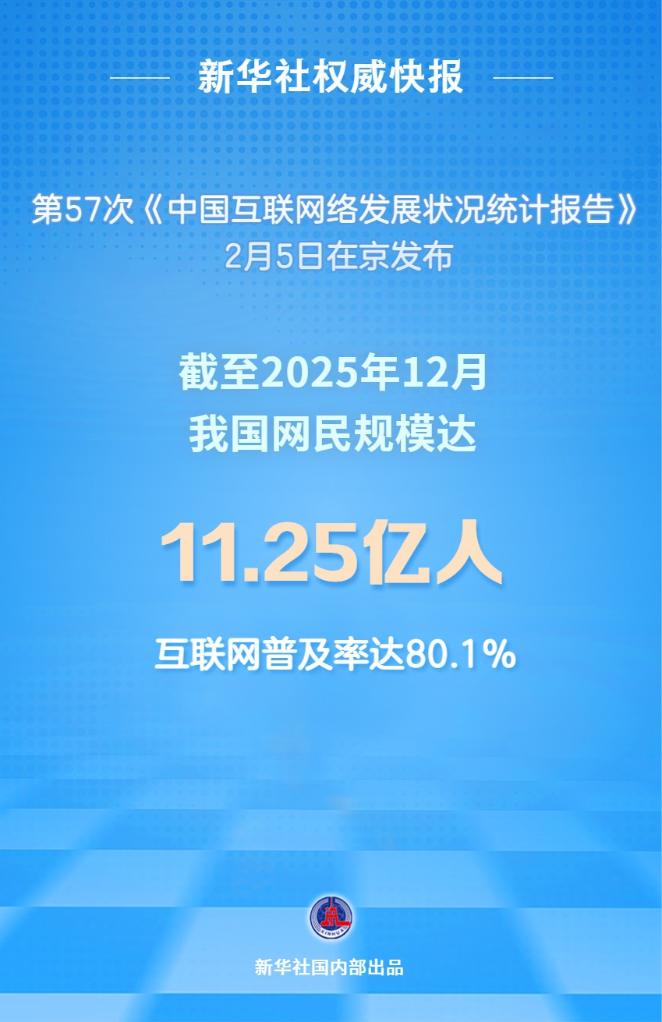
生成式人工智能用户规模超6亿人
Sou Hu Cai Jing· 2026-02-06 00:07
我国互联网普及率逾80% 生成式人工智能用户规模超6亿人 2025年5月4日,人们在浙江省杭州市文三数字生活街区的AI黑科技市集上体验DeepSeek的人工智能大 模型。(新华社发) 截至2025年12月,我国网民规模达11.25亿人,互联网普及率达80.1%;生成式人工智能用户规模达6.02 亿人,普及率达42.8%。 AI加速应用,发展动能更强—— AI旅行助手完成个性化行程定制、农业机器人广泛渗透"耕、种、管、收、运"全场景作业、机器人交警 高效实现交通动态分流…… 从"技术积淀"到"场景深耕",人工智能正加速融入日常生活与生产领域,成为推动社会数字化、智能化 转型的重要引擎。 报告显示,截至2025年12月,我国生成式人工智能用户规模达6.02亿人,较2024年底增长141.7%。 2月5日,中国互联网络信息中心政策与国际合作所发布第57次《中国互联网络发展状况统计报告》。一 系列亮眼的数据,勾勒出我国互联网发展持续向"新"而行、朝"好"迈进的生动图景。 夯实数字基座,互联网普及更广—— 报告显示,我国已建成全球技术领先、规模最大的信息通信网络,打通了经济社会发展的信息"大动 脉"。 我国已累计建成5 ...

数智生活向“新”向“好”
Xin Lang Cai Jing· 2026-02-05 18:10
Group 1: Internet Development - As of December 2025, the number of internet users in China is projected to reach 1.125 billion, with an internet penetration rate of 80.1%, reflecting a 9.7 percentage point increase since the beginning of the 14th Five-Year Plan [2][5] - The construction of a leading global information and communication network has been completed, with 4.838 million 5G base stations built, covering over 330 cities, significantly enhancing network service penetration [2][3] Group 2: AI Application Growth - The user base for generative artificial intelligence is expected to reach 602 million by December 2025, representing a 141.7% increase from the end of 2024 [4] - AI applications are increasingly integrated into key industries such as steel, electricity, and telecommunications, enhancing product development, quality inspection, and customer service [4][3] Group 3: Digital Inclusion and Quality of Life - Online government service users are projected to reach 940 million, providing efficient services that cover the entire lifecycle of businesses and individuals [5] - The online healthcare user base is expected to reach 411 million, with over 200 projects for mutual recognition of medical examination results among local medical institutions implemented across all provinces [5] - Online education users are anticipated to reach 327 million, with a growing number of digital educational resources available on the national smart education public service platform [5]
互联网普及率超80%!数智生活向“新”向“好”
Xin Hua She· 2026-02-05 14:07
Group 1: Internet Development in China - As of December 2025, the number of internet users in China is projected to reach 1.125 billion, with an internet penetration rate of 80.1% [1][3] - The internet penetration rate has increased by 9.7 percentage points since the beginning of the 14th Five-Year Plan, with rural internet penetration at 69.5% and internet usage among individuals aged 60 and above at 53.7% [5] Group 2: 5G Infrastructure and Network Services - China has built 4.838 million 5G base stations, covering over 330 cities, significantly enhancing the penetration of various network services [5] - Two-thirds of prefecture-level cities have achieved gigabit city standards, and pilot projects for 10-gigabit optical networks have been initiated in some cities [5] Group 3: Artificial Intelligence Adoption - The user base for generative artificial intelligence in China is expected to reach 602 million by December 2025, representing a growth of 141.7% compared to the end of 2024 [7] - AI applications are increasingly penetrating key industries such as steel, electricity, and telecommunications, impacting product development, quality inspection, and customer service [7][6] Group 4: Digital Services and Quality of Life - The number of online government service users is projected to reach 940 million, providing efficient services that cover the entire lifecycle of businesses and individuals [8] - Online healthcare users are expected to reach 411 million, with over 200 projects for mutual recognition of inspection results among medical institutions across all provinces [8] - The online education user base is anticipated to reach 327 million, with more digital educational resources available on the national smart education public service platform [8]
新华鲜报 | 互联网普及率超80%!数智生活向“新”向“好”
Xin Hua She· 2026-02-05 13:53
Group 1: Internet Penetration and Infrastructure - As of December 2025, the number of internet users in China is projected to reach 1.125 billion, with an internet penetration rate of 80.1%, an increase of 9.7 percentage points since the beginning of the 14th Five-Year Plan [2][5] - China has built a leading global information and communication network with 4.838 million 5G base stations, covering over 330 cities, significantly enhancing network service penetration [2][3] - The rural internet penetration rate is 69.5%, and the internet usage rate among individuals aged 60 and above is 53.7%, indicating broader access to digital services [2] Group 2: AI Application and Growth - The user base for generative artificial intelligence is expected to reach 602 million by December 2025, representing a growth of 141.7% compared to the end of 2024 [4] - AI applications are increasingly integrated into key industries such as steel, electricity, and telecommunications, enhancing product development, quality inspection, and customer service [4][3] - AI is becoming a crucial driver for the digital and intelligent transformation of society, with applications ranging from personalized travel planning to agricultural robotics [3] Group 3: Digital Inclusion and Quality of Life - The number of users for online government services is projected to reach 940 million by December 2025, providing efficient services that cover the entire lifecycle of businesses and individuals [5] - Online healthcare services are expected to have 411 million users, with over 200 projects for mutual recognition of medical examination results across cities [5] - The online education user base is anticipated to reach 327 million, with more digital educational resources becoming available through the national smart education public service platform [5]
新华鲜报丨互联网普及率超80%!数智生活向“新”向“好”
Xin Hua She· 2026-02-05 12:56
Core Insights - As of December 2025, the number of internet users in China is projected to reach 1.125 billion, with an internet penetration rate of 80.1% [1][3] - The user base for generative artificial intelligence is expected to grow to 602 million, representing a 141.7% increase from the end of 2024 [7] Group 1: Internet Development - China has established the world's largest and technologically advanced information and communication network, facilitating economic and social development [5] - The country has built 4.838 million 5G base stations, covering over 330 cities, which supports the penetration of various network services [5] - By December 2025, the internet penetration rate is expected to increase by 9.7 percentage points from the beginning of the 14th Five-Year Plan, with rural internet penetration at 69.5% and 53.7% of internet users aged 60 and above [5] Group 2: Artificial Intelligence Integration - AI applications are rapidly integrating into daily life and production, serving as a key driver for digital and intelligent transformation [6] - Generative AI is being applied across key industries such as steel, electricity, and telecommunications, enhancing product development, quality inspection, and customer service [7] Group 3: Digital Inclusion and Quality of Life - The online government service user base is expected to reach 940 million, providing efficient services throughout the lifecycle of enterprises and individuals [8] - Online healthcare users are projected to reach 411 million, with over 200 projects for mutual recognition of inspection results among medical institutions across all provinces [8] - The online education user base is anticipated to grow to 327 million, with more digital educational resources becoming available on the national smart education public service platform [8]
“第一眼看到跟真人一样” 安徽“机器人交警”实习上岗
Xin Lang Cai Jing· 2026-01-16 17:04
近日,在安徽芜湖市赤铸山路和徽州路交叉口,一名佩戴白色警帽、身穿反光背心的机器人交警,用标 准的手势向车流发出指示,提醒着过往车辆,并与现场交警协同配合,参与文明出行劝导。据了解,机 器人交警安装有6个摄像头和1个激光雷达,可以对路面交通情况进行感知,移动过程中实现自动避障, 并将现场采集的数据传输至后台。(新闻及图片来自央视新闻客户端) (来源:劳动午报) 点评:机器人交警的上岗不由地让人感叹技术的飞速发展,或许在不久的未来,人机一起工作的场景会 更多出现。 转自:劳动午报 ...

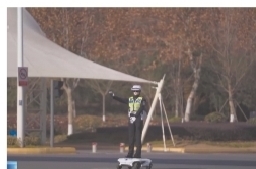
安徽芜湖:“机器人交警”上岗辅助指挥交通
Yang Shi Wang· 2026-01-11 22:59
Group 1 - The article highlights the introduction of a new robotic traffic police officer in Wuhu City, Anhui Province, China, which is a product of domestic research and development [1] - The robot is set to participate in frontline traffic enforcement and order maintenance, indicating a shift towards the integration of technology in public safety roles [1]