桑皮纸

Search documents
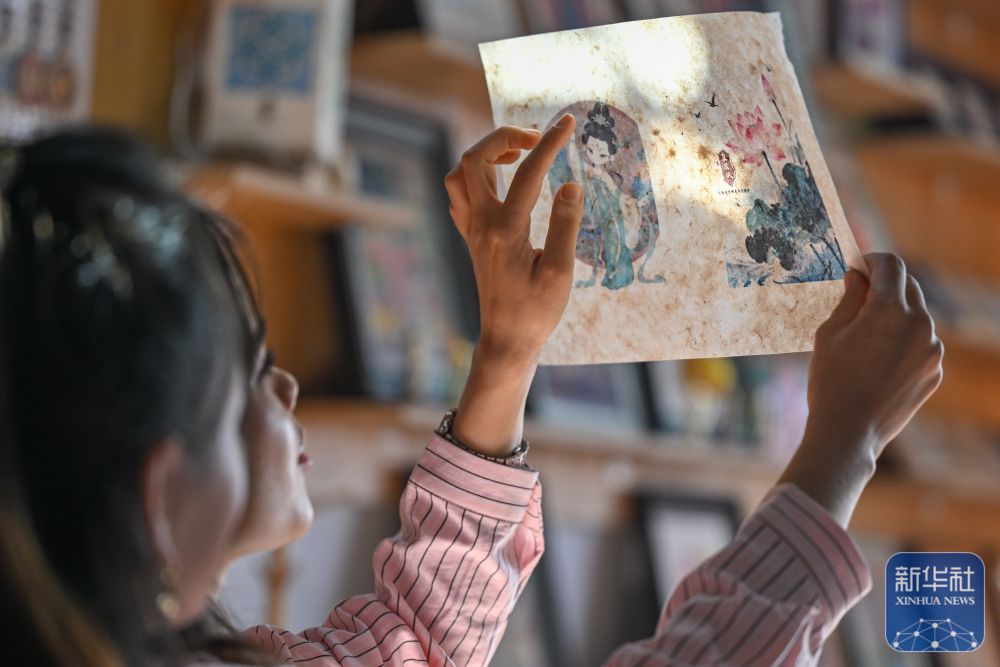
“00后”的画笔,落在千年桑皮纸上
Xin Hua She· 2026-01-15 03:54
Core Insights - The article highlights the revival and contemporary adaptation of traditional mulberry paper, a national intangible cultural heritage, through the efforts of young designers like Mu Yaisier, who integrates local culture into modern creative products [1][2]. Group 1: Industry Development - The mulberry paper cultural industrial park in Xinjiang's Moyu County was established in 2025 with support from aid forces, featuring a design that includes a garden, a museum, and a street area for cultural display, creative incubation, and tourism experience [1]. - The park serves as a new platform for the contemporary inheritance of mulberry paper, allowing for the integration of traditional craftsmanship with modern design [1]. Group 2: Cultural Significance - Mulberry paper is described as a "living fossil" of the paper industry with a history spanning over a thousand years, deeply rooted in the local community's daily life and cultural memory [1]. - The designer Mu Yaisier expresses a desire for mulberry paper to represent not just a material but a tangible connection to nostalgia and the future, transforming ancient techniques into wearable patterns and everyday items [2]. Group 3: Creative Innovation - Mu Yaisier's work includes designing various mulberry paper products such as decorative paintings, fridge magnets, and artistic lamps, reflecting her understanding of traditional culture and innovative attempts [1]. - The designer utilizes social media platforms to promote the ancient charm of mulberry paper, aiming to reach a broader audience and enhance its visibility [1].

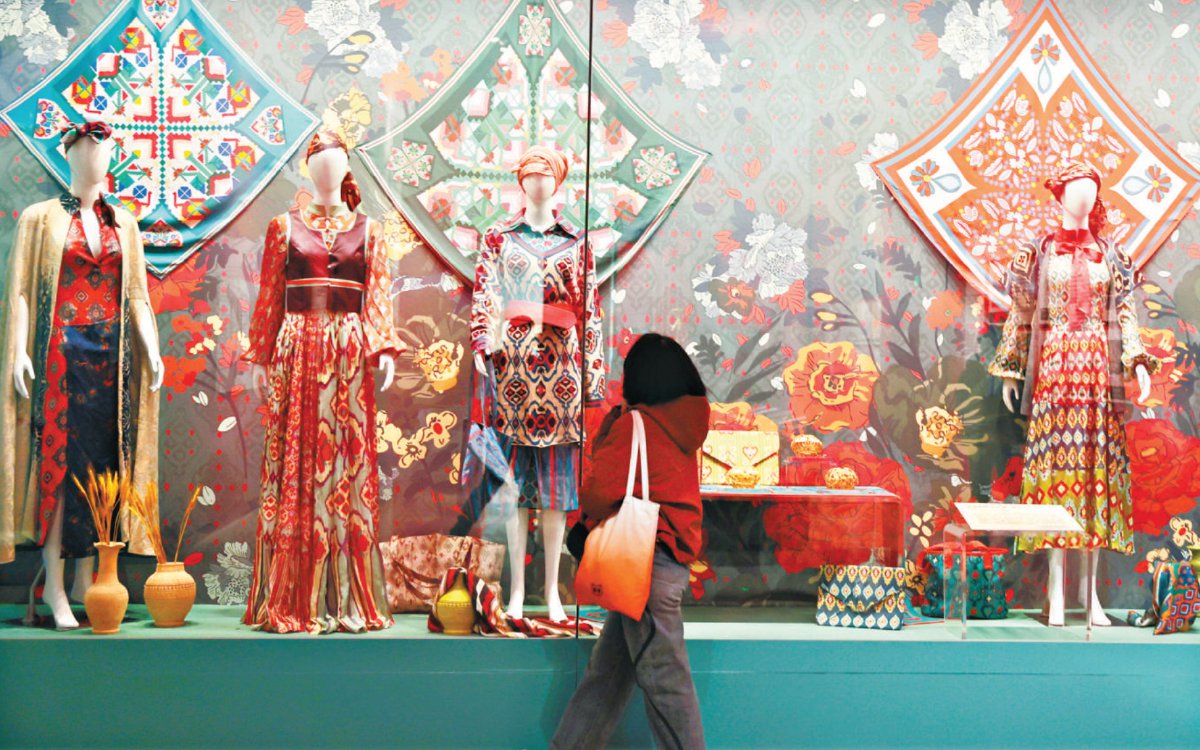
昆仑神话 千年锦绣踏乐而来
Bei Jing Wan Bao· 2025-12-08 06:44
Core Viewpoint - The exhibition "Wanfang Lezou You Yutian - Intangible Cultural Heritage Exhibition of Hotan Region" showcases nearly 600 items representing various national and regional intangible cultural heritage projects, highlighting the rich history and culture of the Hotan region in Xinjiang [1][2]. Group 1: Historical Significance - Hotan, historically known as Yutian, has been a significant hub on the southern Silk Road, with a history that dates back thousands of years [1]. - The region was mentioned in historical texts, including Sima Qian's "Records of the Grand Historian," and has been under various administrations since the Han Dynasty [3]. - The "Jade Road" for transporting Hotan jade has been established since ancient times, connecting to civilizations like Babylon [4]. Group 2: Cultural Heritage - The exhibition features six thematic units, including "Kunlun Myth," "Jade from Kunlun," and "Silk Road City," showcasing the diverse cultural heritage of the Hotan region [1]. - Hotan jade is renowned for its quality and has been a symbol of beauty and good fortune throughout history [3]. - The traditional jade-making process is demonstrated in the exhibition, allowing visitors to experience the craftsmanship firsthand [4]. Group 3: Textile and Craftsmanship - Hotan is recognized as one of the earliest regions to master sericulture and silk weaving, contributing significantly to the Silk Road's silk supply [4]. - The exhibition highlights the unique Aidelaisi silk, which is known for its vibrant colors and intricate dyeing techniques, recognized as a national intangible cultural heritage [5][6]. - Hotan carpets, known for their softness and unique patterns, are also featured, showcasing the region's rich textile traditions [6][7]. Group 4: Immersive Experience - The exhibition includes immersive displays that recreate traditional living environments, showcasing the architectural techniques of the Uyghur people [7]. - Visitors can also experience local cuisine, with traditional dishes being offered during the exhibition [8]. - The exhibition emphasizes the unity and cultural diversity of various ethnic groups in Xinjiang, portraying a harmonious narrative [8]. Group 5: Additional Cultural Artifacts - The exhibition features the restoration of the Dama Gou Small Buddhist Temple, the smallest ancient Buddhist temple discovered, highlighting its historical significance [11]. - The ancient craft of mulberry paper-making, recognized as a "living fossil" of human papermaking, is also showcased, emphasizing its historical importance [12].
走进“新疆和田地区非物质文化遗产展”—— 赏丝路明珠的绚烂画卷
Ren Min Ri Bao Hai Wai Ban· 2025-11-26 23:41
Core Viewpoint - The exhibition "Wanfang Lezou You Yutian - Intangible Cultural Heritage Exhibition of Hotan Region, Xinjiang" showcases nearly 600 exhibits, highlighting the rich cultural heritage and craftsmanship of the Hotan region, including traditional techniques such as the production of Adire silk and Uyghur carpet weaving [2][5][6]. Group 1: Exhibition Highlights - The exhibition features 30 representative projects of national and regional intangible cultural heritage, including Adire silk weaving, Uyghur carpet weaving, and traditional residential construction techniques [2][5]. - Visitors can engage in immersive experiences, including watching traditional performances, tasting local cuisine, and participating in hands-on demonstrations of heritage crafts [2][7]. Group 2: Cultural Significance - Hotan is historically significant as a key point on the Silk Road, known for its jade and silk production, which facilitated cultural exchanges between the East and West [3][4][7]. - The region has a long-standing tradition of silk production, with evidence of sericulture dating back over 2,200 years, making it a major silk supplier along the Silk Road [5][6]. Group 3: Craftsmanship and Techniques - Adire silk, characterized by its vibrant colors and unique patterns, is a significant cultural product of the region, with its weaving techniques recognized as a national intangible cultural heritage since 2008 [5][6]. - The exhibition also showcases other traditional crafts, such as Hotan carpets and mulberry paper, which reflect the ancient wisdom and skills of the local people [6][7].
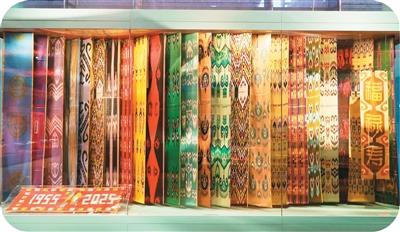
赏丝路明珠的绚烂画卷
Ren Min Ri Bao Hai Wai Ban· 2025-11-26 23:09
Core Points - The exhibition "Wanfang Lezou You Yutian - Intangible Cultural Heritage Exhibition of Hotan Region, Xinjiang" showcases nearly 600 exhibits, highlighting 30 national and regional intangible cultural heritage projects, including traditional crafts like Adire silk weaving and Uyghur carpet making [1][5] - The exhibition offers an immersive experience through various forms such as video displays, skill demonstrations, and interactive activities, allowing visitors to appreciate the rich culture of Hotan [1][7] Group 1: Cultural Heritage - The exhibition features significant intangible cultural heritage items from the Hotan region, including Adire silk weaving, Uyghur carpet weaving, and traditional residential construction techniques [1][5] - The Adire silk, known for its vibrant colors and unique patterns, has been recognized as a national intangible cultural heritage since 2008, with Hotan being a key area for this craft [5][6] - The historical significance of jade from Hotan is emphasized, with archaeological findings dating back thousands of years showcasing the region's long-standing connection to jade culture [4][5] Group 2: Economic and Cultural Exchange - Hotan has historically been a vital point on the Silk Road, facilitating trade and cultural exchange between the East and West, with its jade and silk products playing a crucial role [4][7] - The region's silk production techniques were influenced by Central Plains agricultural practices, leading to Hotan becoming a major silk production area along the Silk Road [5][6] - The exhibition not only highlights the craftsmanship of the region but also aims to promote tourism and cultural appreciation, encouraging visitors to explore Xinjiang [7][8]

方寸墨玉桑皮纸 书展新疆乡村古韵新颜
Zhong Guo Xin Wen Wang· 2025-10-25 06:45
Core Insights - The article highlights the revival and modernization of the traditional mulberry paper industry in Xinjiang, showcasing how local artisans are transforming this ancient craft into contemporary cultural products that attract tourists [1][2]. Group 1: Industry Overview - Mulberry paper, made from the bark of mulberry trees, is known for its flexibility, pest resistance, and durability. It was recognized as a national intangible cultural heritage in 2006 [1]. - The traditional craft of mulberry paper making is primarily practiced in regions with abundant mulberry trees, such as Moyu County and Turpan City in Xinjiang [1]. Group 2: Economic Impact - The local government has increased financial support and training for artisans, leading to the establishment of a sustainable development model that integrates cultural heritage, artistic innovation, and industrial growth [1]. - In Budai Village, there are currently four mulberry paper enterprises and 27 family workshops, employing over 1,000 people in the industry [2]. - During peak tourist seasons, a single workshop can generate sales of up to 5,000 yuan per day, with the ability to produce 100 sheets of paper daily [2]. Group 3: Employment and Skill Development - The mulberry paper industry has created temporary jobs and provided training in silk farming, with some workers earning up to 5,000 yuan per month [2]. - Young artisans, like Muyeisai, are returning to their hometowns to innovate and share their craft through modern platforms such as live streaming, thereby attracting consumer interest [2][3].
非遗在新疆讲述民族交往交流交融的故事
Zhong Guo Xin Wen Wang· 2025-08-17 02:23
Core Viewpoint - The 2025 "Xinjiang is a Good Place" intangible cultural heritage (ICH) aid exhibition event showcases the integration and promotion of various ethnic cultures through ICH, highlighting the significance of cultural exchange and collaboration among different regions in China [1][3]. Group 1: Event Overview - The main venue for the event is the ancient city of Yotkan in Hotan, Xinjiang, which opened on August 15, featuring the largest scale of ICH projects and representatives from 25 provinces and regions, with 435 ICH representative projects and 383 inheritors participating [1][3]. - The event emphasizes the role of ICH in fostering interaction and integration among different ethnic groups, with 52 ICH exchange works symbolizing harmonious coexistence and mutual learning among provinces [1][3]. Group 2: Cultural Innovations - The brand "Grandpa Does Not Brew Tea" launched an ICH collaboration in Yotkan, combining tea culture with the traditional Uyghur Adras silk dyeing technique, showcasing a blend of design and sensory experience [3]. - The collaboration features a tea product that incorporates elements from both Wuhan's paper-cutting and Uyghur silk patterns, reflecting a vibrant fusion of traditional heritage and modern culture [3]. Group 3: Youth Engagement - The newly opened Tianjin ICH Museum in Yotkan aims to engage young students, hosting over a thousand middle and primary school students daily for educational visits, thereby planting the seeds of cultural appreciation among the youth [6]. - The museum showcases various ICH projects, including Yangliuqing New Year paintings and clay figurines, contributing to a continuous cultural celebration in the region [6].

人民日报看新疆丨火焰山下土村美(文化中国行·走进传统村落)
Ren Min Ri Bao· 2025-07-31 15:02
Core Viewpoint - The article highlights the rapid development of the cultural tourism industry in Shanshan County, Turpan City, Xinjiang, driven by the integration of traditional villages into a historical and cultural experience tourism area, resulting in significant increases in tourist numbers and revenue [9][17]. Group 1: Traditional Villages and Cultural Heritage - Shanshan County has eight villages listed in the national traditional village directory, focusing on preserving and promoting cultural tourism [9]. - The county features 952 traditional earthen buildings, which are significant to local architecture and culture, earning it the title of "Earthen Building Museum" [13]. - The unique earthen structures are well-suited to the local climate, providing thermal comfort due to their thick walls [13]. Group 2: Tourism Growth and Economic Impact - In 2024, Shanshan County received 13.01 million tourists, a year-on-year increase of 24.6%, with total tourist spending reaching 6.8 billion yuan, up 28.47% [17]. - The integration of traditional villages into the tourism framework has made them a new highlight in cultural tourism, enhancing local economic development [17]. Group 3: Local Crafts and Non-Material Cultural Heritage - The traditional craft of making mulberry paper, once a staple in local life, has been revitalized through tourism, with visitors eager to participate in the production process [15]. - The production of Aydalisi silk, a traditional textile, has also gained popularity among tourists, showcasing ancient dyeing techniques [15]. - The local music tradition, "Tuyugun Mukam," is being preserved and innovated, with performances attracting attention and awards [16][17].

火焰山下土村美(文化中国行·走进传统村落)
Ren Min Ri Bao· 2025-07-29 23:03
Core Viewpoint - The article highlights the rapid development of the cultural tourism industry in Shanshan County, Turpan City, Xinjiang, driven by the integration of traditional villages into a historical and cultural experience tourism area, resulting in significant increases in tourist numbers and revenue [10][19]. Group 1: Traditional Villages and Cultural Heritage - Shanshan County has eight villages listed in the national traditional village directory, focusing on preserving and promoting cultural tourism [10]. - The county features a unique architectural style known as "earthen buildings," with 952 well-preserved structures across its traditional villages, showcasing a blend of local culture and history [13]. - The traditional village of Tuyugou retains many earthen buildings, constructed using local materials, which are environmentally friendly and suitable for the region's climate [12][13]. Group 2: Tourism Growth and Economic Impact - In 2024, Shanshan County received 13.01 million tourists, a year-on-year increase of 24.6%, with total tourist spending reaching 6.8 billion yuan, up 28.47% [19]. - The county has been enhancing infrastructure in traditional villages to modernize living conditions while preserving cultural heritage [19]. Group 3: Non-Material Cultural Heritage - The region is home to traditional crafts such as the production of mulberry paper and the weaving of Adras silk, both of which have gained popularity among tourists [16]. - The Tuyugou village is known for its mulberry paper-making technique, which has been revitalized through tourism, providing income for local artisans [15][16]. - The region also features the Uygur Muqam art, recognized as a UNESCO intangible cultural heritage, with local performances contributing to cultural tourism [18].