桑葚干

Search documents
从年货市集看西藏消费新活力
Xin Lang Cai Jing· 2026-02-15 08:32
Core Insights - The article highlights the vibrant atmosphere in Lhasa during the New Year celebrations, showcasing local traditions and the growth of markets [2][4]. Group 1: Market Dynamics - The market in Lhasa's Duilong Deqing District features over 100 vendors, offering traditional items like "Tibetan New Year Flowers" and new products such as imported Russian candies, which have seen significant sales [2][3]. - Daily foot traffic at the market ranges from 1,200 to 1,800 visitors, with an average daily sales revenue of approximately 200,000 yuan, indicating a substantial increase in market scale compared to previous years [3]. Group 2: Cultural Significance - "Tibetan New Year Flowers," a traditional decoration made from dyed wheat and barley, symbolize prosperity and are a key part of the New Year celebrations, with the craft recognized as an intangible cultural heritage since 2018 [2]. - The tradition of making "Kasa," a fried dough snack for the Tibetan New Year, remains popular, with families experimenting with new flavors and ingredients [5]. Group 3: Innovation in Sales - The market has adopted a hybrid model combining online and offline shopping experiences, allowing customers to purchase products remotely through live streaming, which has been well-received [3].
在苏州感受丝绸产业的创新脉动——古老丝绸牵手现代潮流(看中国好物七十二变)
Ren Min Ri Bao· 2026-01-27 22:25
Core Insights - The article highlights the transformation of the silk industry in Suzhou, showcasing how traditional silk products are being modernized to appeal to younger consumers and integrate into daily life [1][2][3]. Fashion Trend Transformation - The introduction of youthful designs, such as the "城南旧事" series of qipaos, reflects a shift towards modern aesthetics while maintaining traditional elements [2]. - The designer, Shi Yi, identified a market gap for winter qipaos and innovatively incorporated a thin down lining to enhance warmth without sacrificing style, achieving comfort suitable for temperatures as low as -5 degrees Celsius [2][3]. Technological Advancements in Production - The silk industry is experiencing a technological renaissance, with companies like Huajia Silk implementing smart manufacturing processes that enhance production efficiency and product quality [5][6]. - Innovations such as nano-level protective structures have addressed traditional silk's cleaning challenges, making it more suitable for modern lifestyles [5][6]. Cultural Integration and Lifestyle Changes - The silk culture is being revitalized through initiatives that blend traditional craftsmanship with contemporary design, creating products that resonate with modern consumers [4][8]. - The establishment of cultural hubs, such as "山水桑田," emphasizes the integration of silk into a broader lifestyle philosophy, promoting experiences that connect consumers with the heritage of silk production [10][11]. Market Expansion and Global Reach - The silk brand "龙泉禧里" has successfully penetrated international markets, showcasing the appeal of Chinese silk products abroad [9][10]. - The innovative approaches in design and production have allowed traditional silk products to become accessible to a wider audience, transforming them from luxury items to everyday essentials [7][10].
有企业产品快要卖光 有顾客连着两天都来
Xin Lang Cai Jing· 2025-12-21 17:38
Group 1 - The event showcased various traditional Sichuan products, including "Pidu Douban," "Fan Saoguang," and other local specialties, highlighting the rich cultural heritage of Sichuan [1][2] - The participation of multiple cities in the Chengdu metropolitan area in a collective exhibition is seen as more effective than individual promotions, leading to increased product sales and interest from external markets [1][3] - The event facilitated interactions among the cities of Deyang, Meishan, and Ziyang, promoting resource sharing and collaborative development within the Chengdu metropolitan area [3] Group 2 - Companies like Sichuan Diplomat Technology Co., Ltd. showcased products such as mulberry wine and dried mulberries, enhancing product visibility through offline activities [2] - Attendees expressed a strong emotional connection to the Sichuan cuisine and culture, with visitors from other regions enjoying authentic Sichuan flavors during the event [2] - The Chengdu municipal government plans to continue building platforms for promoting local products, aiming to expand the reach of "Tianfu gifts" both nationally and internationally [3]
山东省临沂市市场监督管理局关于33批次食品不合格情况的通告2025年第11期
Zhong Guo Zhi Liang Xin Wen Wang· 2025-12-09 09:00
Core Viewpoint - The Linyi Market Supervision Administration conducted a food safety inspection, testing 1,622 samples across 14 categories, revealing that 33 samples from 12 categories failed to meet safety standards due to pesticide residues, veterinary drug residues, and excessive food additives [2]. Group 1: Inspection Results - A total of 1,622 food samples were tested, including categories such as catering food, edible agricultural products, and grain processing products [2]. - Out of the tested samples, 33 failed to meet safety standards, indicating a failure rate of approximately 2.03% [2]. - Specific failures included the detection of 305.2 µg/kg of metronidazole in eggs, which should not be present, and 0.42 mg/kg of abamectin in cowpeas, exceeding the allowable limit of 0.2 mg/kg [2]. Group 2: Non-compliance Details - The inspection identified non-compliance in various food products, including eggs and cowpeas, with specific violations related to pesticide and veterinary drug residues [2]. - The testing revealed that the eggs from Linyi County's Wanjiafu Trading Co. had unacceptable levels of metronidazole, while cowpeas had excessive levels of abamectin [2]. - The results highlight ongoing concerns regarding food safety and the need for stricter compliance with food safety regulations [2].

千里跃进大别山丨桑蚕进工厂,振兴新“丝”路
Yang Guang Wang· 2025-09-02 09:01
Core Insights - The article highlights the transformation of Chashui Town in Anhui Province into a thriving sericulture hub, leveraging modern techniques to enhance productivity and quality in silkworm farming [1][2]. Industry Overview - Chashui Town has a long-standing tradition of sericulture, dating back to the 1980s, and has successfully turned this traditional industry into a significant economic driver [1]. - The introduction of factory-based silkworm farming has led to a 10% to 20% increase in cocoon production compared to traditional methods, with a 90% quality rate for 5A grade cocoons [2][4]. Technological Advancements - The use of an intelligent control system in the sericulture process allows for precise management of temperature, humidity, and light, significantly improving the survival rate and health of silkworms [2]. - Factory farming reduces space requirements by 60% and eliminates seasonal constraints, allowing for year-round production and increased efficiency [4][5]. Economic Impact - The sericulture industry in Chashui Town has generated an estimated value of 15 million yuan (approximately 2.1 million USD) and is projected to contribute an additional 180,000 yuan (approximately 25,000 USD) in collective income in 2024 [4][6]. - The cooperative model involving companies, cooperatives, and farmers has enabled over 150 local farmers to benefit from the factory's resources, with an average additional income of 6,000 yuan (approximately 850 USD) per household [6]. Future Prospects - The village plans to expand its sericulture operations by developing a standardized mulberry plantation and establishing a feed processing plant, aiming to enhance the entire industry chain [7]. - There is a vision to integrate cultural tourism with sericulture, promoting activities such as sericulture education and cultural festivals to further develop the local economy [7].
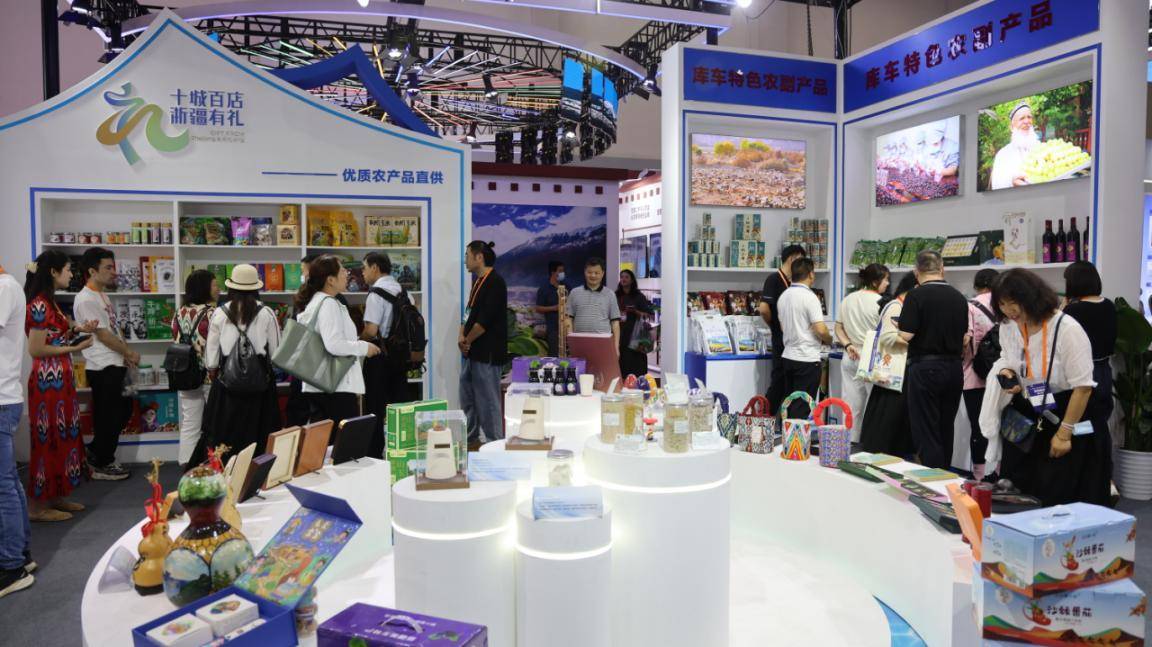
新疆库车市:千年龟兹好物消博会受热捧
Sou Hu Cai Jing· 2025-05-23 07:27
Core Insights - The Kucha exhibition at the 2025 China-Central and Eastern European Countries Expo showcased over 210 unique products, attracting significant attention and interest from attendees [1][3] - The exhibition featured a variety of agricultural products and cultural items, highlighting Kucha's regional stories and cultural heritage, which resonated well with consumers and buyers alike [3][4] Product Highlights - The Kucha exhibition included appealing agricultural products such as walnuts, beef jerky, mulberries, and apricots, as well as non-heritage cultural creations like handmade bags and musical instrument bookmarks [3] - The "Green Pearl" walnut oil, launched in May of the previous year, received positive feedback from consumers, indicating strong market acceptance [3] Market Engagement - The exhibition facilitated numerous interactions between buyers and sellers, with many procurement discussions taking place, leading to preliminary cooperation intentions with over 10 companies on the first day [3] - Buyers expressed interest in visiting Kucha for further exploration and potential collaboration, indicating a strong market demand for Kucha's products [4]