歼20战机

Search documents
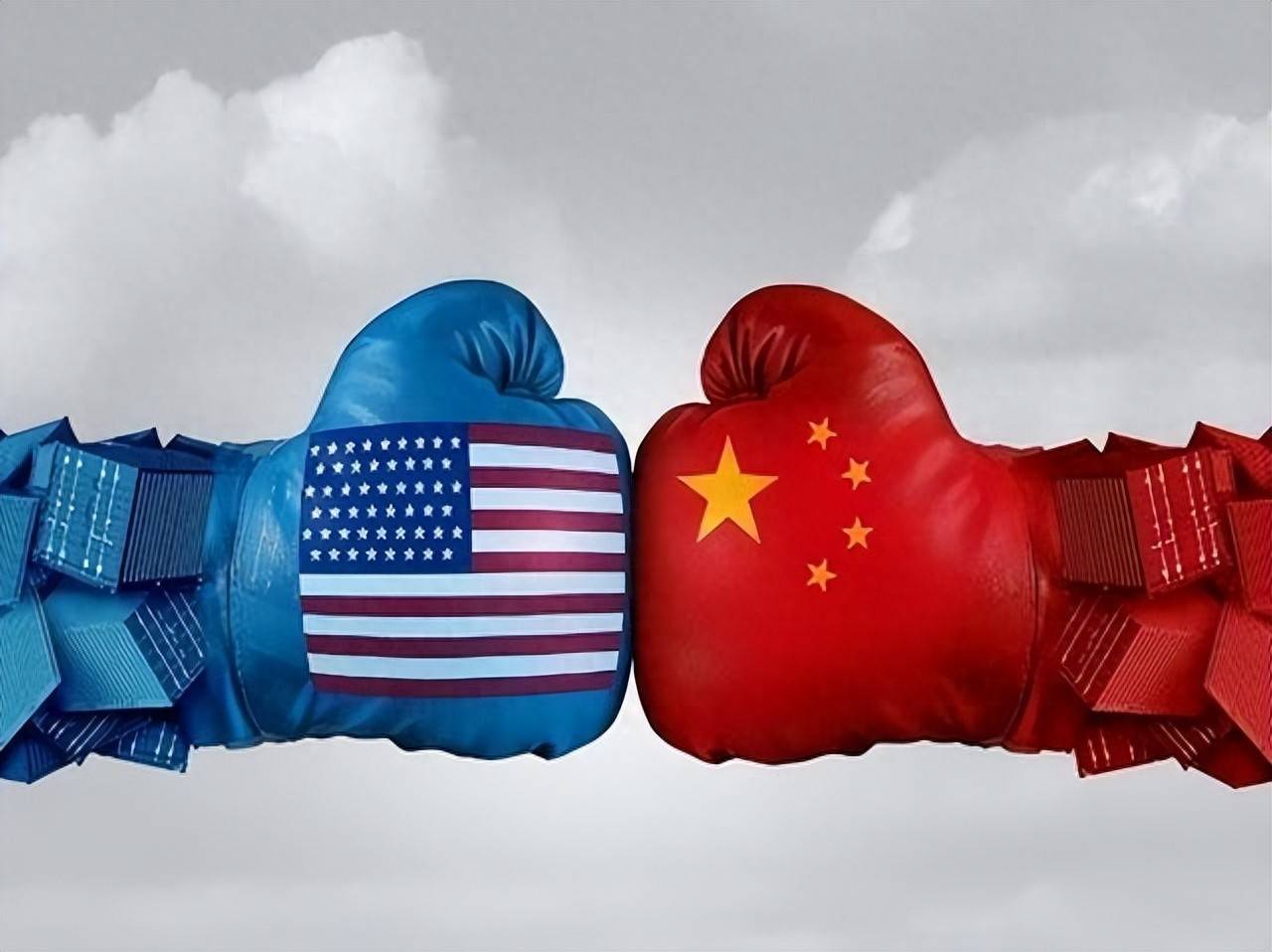
中国崛起挡不住!从电力到军工全面领先,美国霸权彻底撑不住了!
Sou Hu Cai Jing· 2026-02-26 12:53
Group 1: Power Supply and Energy Sector - The recent snowstorm in the northeastern United States caused power outages for nearly 400,000 people, highlighting the differences in power supply management between the U.S. and China [1] - U.S. power companies are privately owned and prioritize profit, leading to power cuts during financial losses, while China's state-owned grid prioritizes electricity supply to citizens, even at a loss [3] - China's total power generation exceeds that of the next nine countries combined, with coal accounting for 55% and the remainder from clean energy sources, showcasing a stronger energy infrastructure compared to the U.S. [3] Group 2: Military and Defense Industry - The U.S. recently revealed its sixth-generation fighter jet, the F47, which is still in the conceptual stage and not expected to enter production until 2032, while China's sixth-generation fighter, the J-36, has already completed test flights and is nearing mass production [4][6] - The design and performance of the J-36 are superior, featuring three engines for sufficient thrust, unlike the F47, which relies on design compromises due to inadequate thrust [6] - The U.S. defense budget exceeds $900 billion, yet it struggles to maintain its military capabilities, indicating a decline in its once-dominant position in military aviation [6] Group 3: International Trade and Semiconductor Industry - The Netherlands is attempting to align with the U.S. by promoting a "de-risking" strategy in the semiconductor sector against China, despite the high trade dependency of the Netherlands on China [7][9] - The potential severance of semiconductor ties with China could harm Dutch companies and employment, as many are reliant on the Chinese market [9] - China is advancing its domestic semiconductor capabilities, reducing reliance on foreign suppliers, which could lead to negative consequences for countries like the Netherlands that choose to align with U.S. policies [9] Group 4: Gold Market - The announcement of a trade war by former U.S. President Trump has increased uncertainty in global markets, driving investors towards gold, which has recently surpassed $5,200 per ounce [11] - Experts predict that gold prices could reach $5,500 per ounce due to the depreciation of the dollar and the diminishing global gold reserves, with 80 mines recently declared exhausted [11] - Unlike cryptocurrencies, gold remains a unique and irreplaceable asset, leading to increased purchases by central banks and individuals, which is expected to sustain upward price trends [11]


中航沈飞20260127
2026-01-28 03:01
Summary of the Conference Call for AVIC Shenyang Aircraft Corporation (中航沈飞) Industry and Company Overview - The focus of the conference call is on AVIC Shenyang Aircraft Corporation, specifically regarding the J-35 fighter jet and its implications for the company’s growth and the global fifth-generation fighter jet market [2][3]. Key Points and Arguments J-35 as a Core Growth Driver - The J-35 is expected to achieve significant breakthroughs in both domestic and international sales by 2026, becoming a core growth driver for AVIC Shenyang [2][5]. - The external market for military trade presents substantial profit potential, which is crucial for the company's strategic upgrade [2][5]. Market Potential Comparison - The global fifth-generation fighter jet market shows that the F-35 has an order volume 18 times greater than that of the F-22 over its entire lifecycle, indicating a larger market potential for second-generation fifth-generation jets like the J-35 [2][7]. - The F-35's success is attributed to shared core performance, reduced R&D costs, shortened development cycles, and an expanded customer base, which are lessons applicable to the J-35's development [2][8]. Production Efficiency Improvements - The F-35 has seen a significant reduction in production hours from 160,000 to approximately 70,000 hours, alongside improved delivery timeliness and extended fault-free operation times, which have driven order growth [10]. - Cost reductions for the F-35 have been substantial, dropping from around $250 million to approximately $70-80 million per unit [10]. Development Patterns of Fifth-Generation Fighters - The development of fifth-generation fighters follows certain patterns: the first model faces high costs and difficulties, while the second can leverage shared core technologies, serve multiple military branches, and utilize previously vetted suppliers [11][12]. Revenue Growth During the 14th Five-Year Plan - AVIC Shenyang's revenue grew significantly from 27 billion yuan in 2020 to 47 billion yuan in 2023, primarily driven by domestic demand [4]. Strategic Importance of J-35 - The J-35 is positioned to become a key model for military exports due to its technological sharing, adaptability to multiple versions, and improvements in China's industrial base [3][12]. - The J-35 aims to achieve a strategic goal of elevating the company through international military trade, with potential prices in the external market reaching up to $200 million per unit, including missile systems [5]. Additional Important Insights - The J-20 and J-35 share core technologies and production efficiencies, with the J-20 serving the domestic air force while the J-35 targets export markets [12][13]. - The overall improvement in China's industrial capabilities enhances the production maturity of the J-35, making it a strong candidate for future military trade opportunities [12][13].

为啥美国现在要拼命围攻中国?5年后,中国将不再忌惮任何国家!
Sou Hu Cai Jing· 2026-01-22 06:55
Group 1 - The article highlights the increasing urgency of Washington's actions against China, driven by anxiety over China's rapid development and its potential to reshape the global landscape in the next five years [1] - The U.S. national security strategy released in 2025 emphasizes economic competition with China, focusing on trade, supply chains, and critical resources, despite claiming to prioritize the Western Hemisphere [3] - China's trade surplus reached $1.2 trillion in 2025, with exports to Africa growing by 26% and steady growth in Southeast Asia, showcasing China's industrial strength across various sectors [3] Group 2 - Since 2011, China has maintained the world's largest industrial output, and this trend is expected to continue in 2025, despite U.S. attempts to hinder China's semiconductor industry through tariffs [5] - The military capabilities of China have significantly advanced, with the successful performance of Chinese equipment in real combat situations, challenging previous Western perceptions of its military strength [7] - By 2030, China's defense is projected to see substantial advancements, including over 1,000 nuclear warheads and a navy of 435 vessels, indicating a robust industrial and technological self-sufficiency [8] Group 3 - China's nominal GDP is expected to reach $19.4 trillion by 2025, with a growth rate of 4.8%, reflecting resilience despite trade tensions [8] - The article suggests that the economic relationship between the U.S. and China has become nearly equal, with both countries engaged in intense economic competition [8] - The narrative indicates that the U.S. is driven by internal anxieties and that China's development trajectory will continue unabated, positioning it as a leader across industrial, technological, and military domains [8]
不再贱卖,中国严格控制大宝贝出口,留给歼20战机加速量产
Sou Hu Cai Jing· 2025-10-21 06:35
Core Viewpoint - China's titanium resources are abundant, with significant reserves, particularly in Panzhihua, and the country is shifting from exporting raw materials to focusing on domestic high-end titanium alloy production to enhance value and meet military needs [1][6][35] Group 1: Resource and Industry Overview - China ranks among the top countries globally in titanium reserves, with a rich supply of vanadium-titanium magnetite [1] - Historically, China exported low-priced titanium ore and semi-finished products, leading to minimal profits, while advanced countries profited from deep processing [3][5] - The domestic demand for titanium has increased since the 1990s, particularly in military and chemical sectors, but exports remained significant until recent policy changes [5][6] Group 2: Policy Changes and Export Control - After 2010, domestic demand for titanium materials surged, with a peak in 2011, leading to increased production and the introduction of export controls for dual-use items, including titanium alloys [6][8] - New regulations effective from July 1, 2024, require export licenses for aerospace-related titanium materials, prioritizing military use and preventing sensitive technology outflow [8][10] - The export volume of titanium from China has decreased, with a rising proportion of domestic consumption [10][12] Group 3: Military Applications and Demand - The military sector, particularly advanced aircraft like the J-20, has significantly increased its titanium usage, with the J-20 utilizing 20% of its weight in titanium [16][20] - The demand for titanium in military applications is expected to grow, with the production of military aircraft accelerating due to improved domestic supply [20][24] - The transition to prioritizing military use of titanium resources has led to a more stable supply chain and reduced reliance on exports [24][26] Group 4: Technological Advancements - Continuous advancements in titanium technology have been made, including the development of titanium-aluminum single crystal alloys and titanium-based composite materials [28][30] - New manufacturing processes and equipment have improved the quality and strength of titanium alloys, enhancing their application in aerospace and military sectors [30][31] - The overall structure of the titanium industry is evolving, with a focus on high-quality development and innovation to maintain a competitive edge [33][35]