钛合金

Search documents
冰与火!中国有色金属的王牌VS卡脖子(部分高度依赖进口):73种有色金属全景图、战略价值与未来机遇梳理
材料汇· 2026-03-01 15:46
Core Viewpoint - The article emphasizes the strategic importance of non-ferrous metals in modern industry, highlighting their role in various sectors such as new energy vehicles, aerospace, and semiconductor manufacturing, and outlines the complete value chain of these metals in supporting China's manufacturing upgrades and technological advancements [3][15]. Summary by Sections 1. Definition and Value of Non-Ferrous Metals - Non-ferrous metals are defined as all metals excluding iron, manganese, and chromium, categorized into five main types based on their industrial applications and properties [5]. - The article proposes a redefinition of these metals using industry labels to better reflect their core value and relevance in modern manufacturing [4]. 2. Types of Non-Ferrous Metals - **Light Metals**: Includes aluminum and magnesium, crucial for lightweight applications in manufacturing, with aluminum projected to reach over 40 million tons in China by 2025, accounting for over 60% of global production [7]. - **Heavy Metals**: Comprises copper, nickel, and cobalt, essential for electrical applications and the backbone of the economy, with copper demand in the new energy sector expected to exceed 25% by 2025 [8]. - **Precious Metals**: Includes gold and silver, recognized as hard currencies and vital for high-end manufacturing, with central banks expected to increase gold reserves by over 1,200 tons in 2025 [9]. - **Rare Metals**: This category includes lithium and rare earth elements, which are critical for high-end manufacturing and military applications, with China holding nearly 50% of global rare earth reserves [10][12]. - **Metalloids**: Such as silicon, which is foundational for the semiconductor and photovoltaic industries, with over 95% of semiconductor chips based on silicon [13]. 3. Role in New Energy and Semiconductor Industries - Non-ferrous metals are identified as essential for the new energy revolution, with lithium, cobalt, and nickel being key materials for batteries, and demand for lithium expected to grow by 25% by 2025 due to the surge in electric vehicle sales [17][19]. - In the semiconductor sector, metals like gallium and germanium are crucial for chip manufacturing, with China controlling over 90% of global gallium and germanium production [27]. 4. Strategic Importance in Aerospace and Military - Non-ferrous metals define the performance limits of aerospace and military equipment, with titanium alloys being essential for aircraft and high-temperature alloys being critical for jet engines [29][30]. - Rare earth elements are vital for military applications, with China dominating the supply of these materials [30]. 5. Economic and Financial Security - Non-ferrous metals are fundamental to national economic stability, with copper being a key material in the electrical system, and gold serving as a hedge against geopolitical risks [34][32]. - The article highlights the importance of uranium and thorium for nuclear energy, which is crucial for achieving carbon neutrality goals [34]. 6. Global Competitive Landscape - China holds significant advantages in the non-ferrous metals sector, including leading positions in rare earths and critical materials for semiconductors, but faces challenges in high-end processing technologies and resource dependencies [36][44]. - The article identifies both strengths, such as the complete supply chain for rare earths, and weaknesses, including high import dependencies for certain critical metals like platinum and cobalt [37][44].


机器人需要的金属材料:一场静默的“金属革命”
Xin Lang Cai Jing· 2026-02-26 03:32
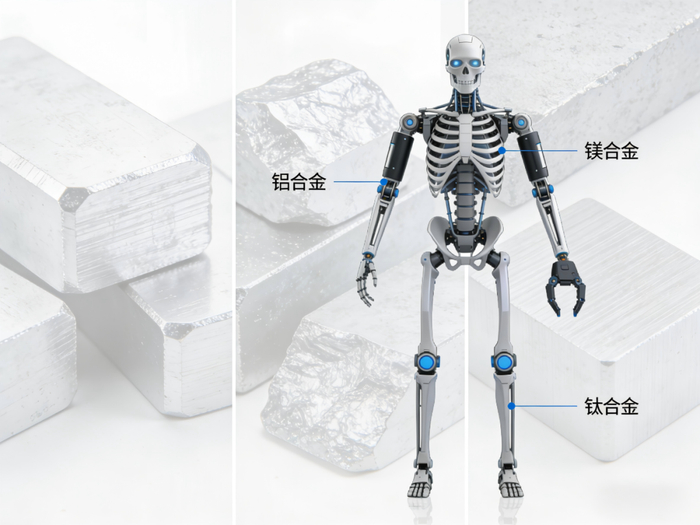
Group 1 - The core viewpoint of the article highlights a significant shift in metal demand driven by the rise of the robotics industry, which is reshaping the demand curve for various base metals [2] - The demand for lightweight metals such as aluminum, magnesium, and titanium is increasing due to the need for robots to be agile and precise, with aluminum alloy consumption exceeding 500,000 tons annually and growing at over 15% per year [2][4] - Magnesium alloys are emerging as a replacement for aluminum in applications requiring extreme lightweight properties, although they face challenges in corrosion resistance and processing difficulty [3] Group 2 - Neodymium-iron-boron magnets are essential for the robotics industry, with each industrial robot consuming 5-10 kg and humanoid robots consuming 2-3 kg, leading to an estimated demand increase of 100,000 tons by 2030 [5] - The production of neodymium-iron-boron requires significant amounts of rare earth metals, indicating that the robotics industry will drive a substantial increase in demand for rare earth oxides [5][6] - The addition of heavy rare earth elements like dysprosium and terbium is necessary to enhance the thermal stability of magnets used in high-performance robots, making dysprosium a critical and scarce resource [6] Group 3 - Copper is crucial for the internal wiring of robots, with industrial robots averaging 15-25 kg of copper and humanoid robots potentially exceeding 50 kg, necessitating high-performance copper alloys to meet durability requirements [8][9] - The market for high-strength, high-conductivity copper alloys is growing at a rate of 20% per year, posing challenges for upstream copper producers in terms of alloying and precision processing capabilities [9] - Silver is indispensable for electrical connections in robots, with an average consumption of 50-80 grams per industrial robot, leading to a significant increase in silver demand across the industry [10] Group 4 - The demand for precision transmission components in robots requires high-purity bearing steel and high-temperature alloys, with only a few companies capable of producing the necessary quality [12][13] - The rise of the robotics industry necessitates a shift in mining strategies, focusing on niche metals like dysprosium and terbium, which are becoming increasingly valuable due to their strategic importance [14][15] - The purity requirements for metals used in robotics are significantly higher than traditional industrial standards, demanding advanced purification technologies from upstream producers [15] Group 5 - The collaboration between upstream mining and downstream manufacturing is becoming critical, as high-end materials require precise management of raw materials during extraction [16] - The emergence of humanoid robots in factories and homes signals a new productivity revolution, with the raw materials for this revolution lying in previously overlooked mineral deposits [18] - Companies that can identify trends in metal demand and enhance their processing capabilities are positioned to benefit significantly from the anticipated "robotic dividend" over the next decade [18]

重磅!“十五五”新材料产业发展规划与解读(附100+份解读资料)
材料汇· 2026-02-18 13:48
Core Viewpoint - The new materials industry is crucial for supporting modern industrial systems and achieving high-level technological self-reliance in China, with significant strategic importance for building a strong manufacturing and quality nation [2]. Industry Background and Development Situation - During the 14th Five-Year Plan, China's new materials industry saw continuous growth, with total output value exceeding 8.2 trillion yuan and an average annual growth rate of over 12% [4]. - Achievements include breakthroughs in ultra-high-strength steel, high-performance carbon fiber, semiconductor silicon wafers, and key materials for lithium-ion batteries [4]. - Challenges remain in high-end materials and the need for improved self-sufficiency in core processes and equipment [4]. Overall Requirements - The guiding ideology emphasizes innovation-driven development, demand-oriented approaches, and green low-carbon principles, focusing on enhancing the self-sufficiency of strategic materials and original innovation capabilities [8]. - Basic principles include innovation leadership, application orientation, enterprise-driven collaboration, and green development [9]. Development Goals (by 2030) - Comprehensive security capability for strategic materials to exceed 80%, with a focus on achieving global leadership in original achievements in frontier new materials [11]. - Continuous increase in R&D investment intensity, aiming to break through over 500 key core technologies [11]. - Establishment of over 20 distinctive, complete, and internationally leading new materials industrial clusters [11]. Key Development Directions - Advanced basic materials include ultra-high-strength automotive steel and high-performance aluminum alloys [13][14]. - Key strategic materials focus on high-temperature alloys and advanced semiconductor materials [18][19]. - New energy materials target high-energy-density battery materials and photovoltaic materials [21]. Key Tasks and Major Projects - Focus on urgent new materials needed in critical application areas such as aerospace, new energy vehicles, and electronic information [27]. - Specific projects include developing high-performance carbon fiber composites for aircraft and high-nickel ternary cathode materials for batteries [29][31][32]. Collaborative Innovation System - Establish a collaborative innovation system that integrates enterprises, academia, and research institutions to enhance innovation capabilities [51]. - Plans to build five national new materials laboratories and ten engineering research centers to support innovation [52]. Market Cultivation for Key New Materials - Implement insurance compensation mechanisms for the first application of key new materials to encourage market adoption [56]. - Establish a project library for demonstration projects to showcase the advantages of new materials in practical applications [57]. Breakthroughs in Key Processes and Equipment - Focus on overcoming bottlenecks in key processes and specialized equipment for new materials production [61]. - Plans to support the development of over 80 key processes and equipment technologies, aiming for significant improvements in production efficiency and cost reduction [64].

天工股份20260211
2026-02-11 15:40
Summary of Conference Call on Tiangong Co., Ltd. Company Overview - **Company Name**: Tiangong Co., Ltd. - **Industry**: Titanium processing and manufacturing - **Core Products**: Titanium alloys, including titanium plates, pipes, ingots, and rods - **Market Position**: Leading supplier of titanium materials for the consumer electronics sector, particularly for major clients like Apple and Samsung [3][20] Key Points and Arguments Industry Focus - The conference is part of a series aimed at highlighting key companies in the Beijing Stock Exchange (北交所), particularly those with significant market capitalization and unique assets not found in the Shanghai and Shenzhen markets [1][2] - The focus is on companies with high growth potential, scarcity barriers, and internationalization potential [2] Tiangong Co., Ltd. Specifics - Tiangong specializes in titanium processing, transitioning from rough processing to precision and deep processing [3] - The company is a critical supplier in the consumer electronics supply chain, particularly for high-end products like smartphones and watches [4][5] - Tiangong is also expanding into 3D printing applications and aerospace sectors, which are expected to drive future growth [5][6] Market Trends and Demand - Anticipated demand for titanium materials is expected to rise with the introduction of next-generation products in the consumer electronics sector [6][7] - The company is positioned to benefit from the increasing use of titanium alloys in high-end consumer electronics, with a focus on 3D printing technologies [7][8] Financial Performance - Tiangong's revenue for 2024 is projected to be around 800 million, with a net profit of approximately 170 million [13] - The company has a healthy balance sheet with a low debt ratio and strong cash flow [15] - The gross margin for titanium wire is expected to reach 41.19% in 2024, while the margins for plates and pipes are significantly lower [12][13] Competitive Advantages - Tiangong has established significant technical barriers, including advanced production techniques like electron beam melting and plasma atomization, which enhance material recovery and reduce waste [9][10] - The company has a strong customer base, with major clients accounting for a significant portion of its revenue [14][15] - Tiangong's products are positioned in the high-end market, with a focus on high-performance applications in consumer electronics and aerospace [17][18] Future Growth Potential - The company is expanding its production capacity, with plans to increase output to over 10,000 tons, focusing on high-end titanium products [23][24] - The growth in the 3D printing sector and the increasing penetration of titanium in consumer electronics are expected to drive future revenue growth [21][22] - Tiangong is also exploring opportunities in the medical device sector, further diversifying its application areas [9][10] Market Outlook - The titanium processing industry in China is experiencing a structural shift towards high-end applications, with increasing demand from sectors like aerospace and consumer electronics [30][31] - The global market for titanium materials is expected to grow, particularly in high-end consumer electronics, with a projected increase in the use of titanium alloys in products like foldable smartphones [35][36] Additional Important Insights - The company is actively working on enhancing its ESG (Environmental, Social, and Governance) profile by investing in sustainable production technologies [9][10] - Tiangong's strategic partnerships and joint ventures, such as with Jiangsu Tiangong Titanium Crystal, are aimed at expanding its capabilities in 3D printing materials [8][11] - The competitive landscape shows that Tiangong is well-positioned against peers, with a focus on high-margin products and innovative applications [17][18] This summary encapsulates the key points discussed during the conference call regarding Tiangong Co., Ltd., highlighting its market position, growth potential, and strategic initiatives within the titanium processing industry.
西媒:中国又开始"反人类”,曾经比黄金还贵的钛,中国拿它造锅
Sou Hu Cai Jing· 2026-02-10 03:42
Core Viewpoint - The article discusses the transformation of titanium from a strategic military material to a widely used industrial material in consumer products, highlighting China's advancements in titanium production and processing capabilities over the past decades [1][21]. Group 1: Titanium's Properties and Historical Context - Titanium is known for its high strength-to-weight ratio, with a strength close to high-strength steel but only 60% of its density, making it ideal for aerospace and military applications [3][9]. - The metal's high melting point of 1668°C allows it to maintain structural integrity in high-temperature environments, which is crucial for military aircraft and engines [3]. - Titanium's excellent corrosion resistance and biocompatibility make it suitable for various applications, including medical devices [5][7]. Group 2: Challenges in Titanium Production - The complexity of titanium extraction and processing has historically limited its use in mass markets, as it requires highly controlled conditions to prevent reactions with gases like oxygen and nitrogen [7][11]. - During the Cold War, titanium became a strategic resource due to its critical role in military technology, particularly in the development of the SR-71 reconnaissance aircraft [9][11]. Group 3: China's Rise in the Titanium Industry - China has emerged as a dominant force in the global titanium industry, overcoming previous limitations in processing technology and industrial capabilities [11][13]. - The country has developed a comprehensive industrial system for titanium production, achieving significant increases in sponge titanium output from a few thousand tons to approximately 200,000 tons annually by 2023, accounting for over 60% of global production [15][19]. - The shift from reliance on imported titanium products to domestic production has transformed China's industrial landscape, allowing for stable and continuous production at lower costs [15][19]. Group 4: Expansion into Consumer Markets - As production capabilities improved, titanium began to penetrate consumer markets, appearing in products like cookware, water bottles, and sports equipment, marking a significant shift from its traditional military and aerospace applications [17][19]. - The entry of titanium into the consumer market has diversified the industry's operational model, providing a stable demand base and enhancing the industry's resilience against economic fluctuations [19][21]. - This transition reflects a broader evolution of China's industrial system, showcasing its ability to transform raw materials into high-value products through integrated industrial capabilities [21].

七丰精工净利预增超86%:“工业之米”瞄准高端,航空航天订单成增长引擎
Quan Jing Wang· 2026-02-05 03:13
Core Viewpoint - Qifeng Precision Technology Co., Ltd. expects a net profit of 26 million to 32 million yuan in 2025, representing a year-on-year growth of 86.52% to 129.56%, driven by its successful transformation into high-end sectors such as aerospace and rail transit [1] Group 1: Company Transformation and Strategy - The company has successfully transitioned from traditional foreign trade exports to high-end fields, capitalizing on the significant market potential in aerospace and rail transit [1] - Qifeng Precision is recognized as a long-term player and innovator in the high-end fastener industry, which is essential for modern industrial systems [1] - The company has established a special task force for aerospace, focusing on the research and development of new materials and processes, and has applied for ASP special process certification [2] Group 2: Market Expansion and Financial Outlook - Qifeng Precision's market expansion strategy includes a dual approach: enhancing product quality and expanding globally, with recognition from major companies like Chengdu Aircraft Industrial Group and China Aerospace Science and Technology Corporation [2] - The company plans to apply for a comprehensive credit limit of up to 300 million yuan from financial institutions to support future development [3] - Capital expenditure has increased due to the construction of a project aimed at producing 15.8 million high-end precision components annually, leading to a 42.92% decrease in cash funds compared to the previous year [3] Group 3: Industry Context and Future Directions - The Chinese manufacturing industry is undergoing significant transformation, with high-end equipment demand driving the fastener market's rapid growth [2][4] - The focus areas for high-end equipment manufacturing include aerospace, rail transit, and intelligent manufacturing, which require advanced fasteners and connectors [4] - Qifeng Precision is integrating digital technologies to optimize processes, reduce operational costs, and align product offerings with national support for high-performance, high-value products [4]
ATI(ATI) - 2025 Q4 - Earnings Call Transcript
2026-02-03 14:32
Financial Data and Key Metrics Changes - Q4 revenue was $1.2 billion, with adjusted EBITDA of $232 million, exceeding guidance [5][13] - Full year 2025 revenue totaled $4.6 billion, up 5% year-over-year, driven by 14% growth in aerospace and defense [5][13] - Adjusted EBITDA for 2025 exceeded $859 million, up 18% year-over-year, with adjusted EPS at $3.24, a 32% increase from 2024 [5][14] - Adjusted free cash flow totaled $380 million, up 53% from 2024, representing 124% of free cash flow returned to shareholders [5][14] Business Line Data and Key Metrics Changes - Aerospace and defense revenue represented 68% of total revenue in 2025, up from 62% in 2024, with jet engine sales growing 21% year-over-year [8][13] - Specialty energy business delivered 9% year-over-year growth in Q4, supported by multi-year customer commitments [8][9] - Adjusted EBITDA margins improved to 19.7% in Q4, a 900 basis point increase since 2019, with full-year margins at 18.7% [15][10] Market Data and Key Metrics Changes - Strong demand in commercial aerospace and defense markets, with significant growth in next-generation engines and aftermarket demand [6][7] - Defense revenue grew 14% year-over-year, with missile sales up 127% due to increased government spending [8][9] - Projected double-digit growth in jet engines and continued strength in defense and airframe demand [8][22] Company Strategy and Development Direction - Company focuses on differentiated products and long-term agreements to secure pricing and expand market share [9][10] - Capital discipline and operational execution are central to the strategy, with targeted investments in proprietary engine alloys [10][11] - Plans to prioritize aerospace and defense while reducing capacity in industrial, medical, and electronics sectors [22] Management's Comments on Operating Environment and Future Outlook - Management expresses confidence in customer demand and operational execution, guiding for $1 billion of adjusted EBITDA in 2026, a 16% increase year-over-year [6][17] - Anticipated continued margin expansion, with full-year consolidated margins projected to be around 20% in 2026 [23] - Management highlights the importance of long-term contracts and differentiated capabilities in supporting future growth [25] Other Important Information - Company plans to invest $220-$240 million in capital expenditures for 2026, focusing on proprietary engine alloys and high-return opportunities [10][19] - The backlog remains just under one year of revenue, with expectations for it to increase as lead times for specialized materials extend [70] Q&A Session Summary Question: Capacity expansion with customer support - Management explains that customer agreements ensure access to differentiated materials while allowing flexibility to serve other customers [29][30] Question: Airframe growth visibility - Management indicates that airframe inventories are normalizing, with modest improvements in order rates expected in the second half of 2026 [32] Question: Breakdown of defense revenue - Management provides insights into defense revenue composition, highlighting growth in naval and missile segments [37][38] Question: 2027 guidance update - Management expresses confidence in the 2027 guidance, indicating a bias towards the top end of EBITDA margin expectations [42][44] Question: Share gains opportunities - Management notes opportunities for share gains in defense, jet engines, and specialty energy, driven by customer demand and operational reliability [46][47] Question: Pricing outlook for exotic alloys - Management discusses pricing assumptions for 2026, indicating that half of the EBITDA growth is expected from pricing and mix improvements [55] Question: Headcount plans for 2026 - Management states that headcount will remain stable, with some open positions to support new capacity, leveraging the current experienced workforce [89][90] Question: Isothermal forging growth - Management confirms that isothermal forging is in high demand, with lead times extending beyond 18 months, indicating continued growth potential [92][93]

下一个国家级战略主线:深海科技(附42页PPT)
材料汇· 2026-02-02 14:42
Core Viewpoint - The article emphasizes the strategic importance of deep-sea technology as a national priority, highlighting its potential in resource security, defense, and the development of a blue economy [14][23][57]. Group 1: Deep-Sea Technology as a National Strategy - Deep-sea technology is positioned as a key national strategic focus, alongside commercial aerospace and low-altitude economy [14]. - The government has initiated large-scale application demonstrations for new technologies in deep-sea industries, marking a significant policy shift [14][23]. - Recent government reports have highlighted deep-sea technology for the first time, indicating its importance in future industrial development [14][23]. Group 2: Resource Security and Global Competition - The U.S. and Japan are actively pursuing deep-sea resource exploration, indicating a competitive landscape for global marine resources [25][31]. - The article notes that the U.S. has significant deep-sea mineral resources, with estimates suggesting over 1 billion tons of polymetallic nodules in its offshore areas [30]. - Japan plans to initiate experimental drilling for rare earth elements in its exclusive economic zone, aiming to reduce reliance on imports from China [31]. Group 3: Defense and National Security - The article discusses the need for enhanced underwater defense capabilities, as current security measures are deemed insufficient [50]. - The concept of a "water under the national gate" highlights vulnerabilities in underwater security, necessitating a robust defense strategy [50]. - The U.S. and Japan have established comprehensive military strategies focused on deep-sea operations, enhancing their maritime control [48][50]. Group 4: Blue Economy and Industrial Development - The blue economy is projected to be a trillion-dollar industry, with significant growth potential in sectors like deep-sea mining, aquaculture, and marine tourism [18][24]. - The deep-sea industry chain encompasses everything from basic materials to high-end equipment manufacturing, indicating a complex and interdisciplinary approach [73][74]. - The article outlines various emerging sectors within the blue economy, including deep-sea wind power and marine biotechnology [68][72]. Group 5: Policy and Regulatory Framework - Multiple regions in China are developing policies to promote deep-sea technology, with plans focusing on marine economic development and innovation [11][12]. - The article lists specific policy documents from provinces like Hainan and Shandong that aim to enhance deep-sea technology capabilities [13]. - The government's strategic plans emphasize the integration of deep-sea technology into broader economic and environmental goals [61].

3D打印深度汇报-商业航天应用
2026-01-26 02:49
Summary of 3D Printing and Commercial Aerospace Applications Industry Overview - 3D printing technology is characterized by high material utilization, especially in small batch complex scenarios, but still faces limitations in processing precision and large-scale production capabilities, indicating it is in an early development stage [1][3] - Mainstream 3D printing technologies include Selective Laser Melting (SOM) and Directed Energy Deposition (DED), with SOM suitable for high-precision small parts and DED for larger products, widely applied in the commercial aerospace sector [1][5] Key Market Insights - The 3D printing materials market is composed of 60% non-metal and 40% metal materials, with titanium alloys being the primary metal (20%) and nylon and ABS as common non-metal materials [1][6] - The largest downstream application for 3D printing is aerospace (17%), followed by dental and medical (16%) and automotive (15%), with industrial applications still dominating but consumer-grade sectors growing rapidly [1][7] Market Size and Growth - The domestic 3D printing market is projected to reach approximately 36.7 billion RMB by 2024, with a significant portion (around 50%) attributed to equipment [1][9] - The global installed capacity is highest in the US (33%), while China accounts for only about 10% [2][9] Competitive Landscape - Major companies in the 3D printing equipment market include EOS, GE, and domestic players like PlasTech and Huashu Gaoke, with market shares of 6.6% and 5% respectively [2][9] - Domestic companies such as South Arrow Aerospace and Oriental Space are beginning to adopt 3D printing technology, but penetration rates remain low (30%-60%) [4][12] Technological Advancements - Commercial aerospace significantly drives the 3D printing industry due to its complex and customized demands, which promote the development of additive manufacturing technologies [4][10] - 3D printing in aerospace applications, such as rocket engines, shows a penetration rate of over 70% in SpaceX's Falcon series, indicating substantial potential for growth in domestic companies [11][12] Future Trends - The potential adoption of DED technology for larger structural components in commercial aerospace is anticipated, which could provide new growth opportunities for companies like PlasTech [14] - The outlook for core component suppliers in the commercial aerospace sector is positive, with domestic companies gradually entering the market and expected to play significant roles as demand grows [15]

商业航天新材料合集|10+篇硬核解析:降本革命与千亿赛道机遇(附多份报告)
材料汇· 2026-01-24 15:44
Core Insights - The article provides a comprehensive overview of the opportunities and investment logic in the commercial aerospace new materials sector, highlighting the critical materials used in aerospace applications and their domestic production progress [3][4]. Material Categories - **Metal Materials**: - Aluminum-lithium alloys (e.g., 2195, 2099) reduce weight by 10-15% compared to traditional aluminum alloys and enhance strength by 20% [3]. - Titanium alloys (e.g., Ti-6Al-4V) are used in engine components and have a density of 4.5g/cm³, withstanding temperatures up to 600°C [3]. - Stainless steel and high-temperature alloys are fully domestically produced, with stainless steel being low-cost and capable of withstanding temperatures up to 1400°C [3]. - **Composite Materials**: - Carbon fiber reinforced polymers (CFRP) are lightweight (1/5 the weight of steel) and have a strength 5-7 times that of steel, with T300-T800 grades fully produced domestically [3]. - Basalt fiber composites offer a cost advantage (1/3 the cost of carbon fiber) while achieving comparable strength [3]. - **Ceramic and Thermal Protection Materials**: - Ceramic matrix composites (CMC) are highlighted for their high-temperature resistance, with applications in rocket nozzles and thermal protection systems [4]. - Various thermal insulation materials are fully domestically produced, enhancing the performance of reusable rockets [4]. Investment Opportunities - The article emphasizes the growing market for ceramic matrix composites (CMC) in aerospace, with significant potential for domestic companies to capture market share as the technology matures [11]. - Investment in companies producing high-temperature alloys and stainless steel is encouraged due to the increasing demand for these materials in the aerospace sector [16]. Cost Analysis and Trends - The cost breakdown of satellite core systems indicates that structural materials like aluminum honeycomb panels are critical, with prices ranging from 1.5-4 million yuan per square meter depending on specifications [8]. - The article notes a trend towards reducing costs in satellite manufacturing through advancements in materials and production techniques, which is essential for the scalability of low Earth orbit satellite deployments [21]. Conclusion - The commercial aerospace sector is poised for growth, driven by advancements in material science and domestic production capabilities, presenting numerous investment opportunities for stakeholders in the industry [3][11][21].