
芯片制造业

Search documents
调控年末流动性,时隔三个月央行重启14天逆回购;特朗普行政令确认2028年登月目标并取消国家太空委员会;全国流感病毒检测阳性率下降|早报
Di Yi Cai Jing· 2025-12-19 00:15
Group 1 - The People's Bank of China has restarted the 14-day reverse repurchase operation after three months, injecting 1,000 billion yuan into the market, indicating a relatively loose liquidity environment [2] - The Chinese Ministry of Commerce has noted an increase in trade restrictions from the EU, with 12 trade remedy investigations and 3 foreign subsidy investigations initiated against China this year [5] - The Ministry of Commerce has approved some general license applications for rare earth exports, indicating progress in compliance and export control [6] Group 2 - The National Development and Reform Commission emphasizes the need to expand effective investment in emerging industries and optimize investment structures [7] - The inventory of passenger vehicles in China reached 3.79 million units at the end of November, an increase of 380,000 units from the previous month, indicating a seasonal stockpiling trend [9] - Shanghai has exported over 20,000 used cars from January to November, marking a growth of over 100% year-on-year, supported by a new comprehensive service platform for used car international trade [10][11] Group 3 - The establishment of a new joint venture, TikTok USDS Joint Venture LLC, aims to enhance data security and algorithm safety for TikTok's operations in the U.S. [19] - Sony has reportedly sold its Huizhou factory last year, dispelling rumors of its closure [20] - The average increase of 164% in the stock prices of 90 new "hundred yuan stocks" in A-shares highlights a significant investment opportunity in sectors like electronics and machinery [22]

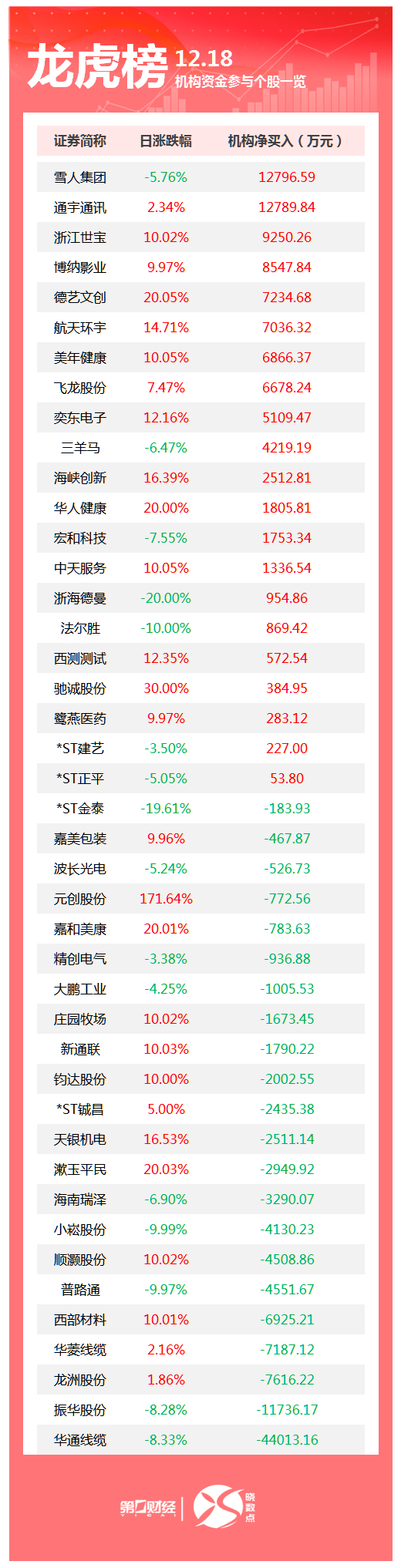
A股五张图:令人羡慕的“户口本”行情!
Xuan Gu Bao· 2025-12-10 10:32
Market Overview - The market experienced a slight V-shaped recovery today, with the retail sector opening strong and several stocks hitting the daily limit up [3] - The Shanghai Composite Index and the ChiNext Index closed down by 0.23% and 0.02% respectively, while the Shenzhen Component Index rose by 0.29%, indicating a mixed market performance with a total trading volume of nearly 1.8 trillion [4] Retail Sector - The retail sector saw a strong opening driven by local stocks in Fujian, with East Hundred Group (4 limit ups), Yonghui Supermarket (3 limit ups), and Huijia Times all hitting the daily limit [6] - The retail sector peaked with a 2.8% increase in the morning but closed with a gain of 1.55%, primarily influenced by the strong performance of Yonghui Supermarket, which saw significant buying interest [6][6] - The so-called National Retail Industry Innovation Development Conference was mentioned as a catalyst, but the real driver was the unexpected strong bidding for Fujian stocks [6] Hainan Sector - Hainan stocks outperformed today, with a significant rally following the release of the 15th Five-Year Plan suggestions by the Hainan Provincial Committee, which aims to enhance trade liberalization and promote future industries [9] - Stocks such as Ronniu Mountain, Hainan Ruize, and Hainan Highway all hit the daily limit, contributing to a total increase of 6.86% in the Hainan sector [10] - The upcoming closure of Hainan's free trade port on December 18 also contributed to the bullish sentiment in the market [10] Real Estate Sector - The real estate sector was ignited by a sudden surge in Vanke A shares, which led to multiple stocks in the sector hitting their daily limits [11] - Vanke A's stock price rose significantly, with reports suggesting that China International Capital Corporation (CICC) is involved in a rescue plan for the company [11] - The real estate, property management, and real estate brokerage sectors closed with gains of 1.65%, 2.05%, and 4.87% respectively, driven by the momentum from Vanke A [11] Computing Chip Sector - The computing chip sector initially faced a downturn due to limited acceptance of Nvidia's H200 chip and negative news regarding domestic AI chips, leading to significant declines in stocks like Zhongke Shuguang and Huahong Semiconductor [15][15] - However, the sector saw a rebound later in the day, influenced by the strong performance of newly listed Moer Thread, which rose sharply [16][17] - The overall computing chip sector closed with a slight gain of 0.19%, recovering from earlier losses [17]


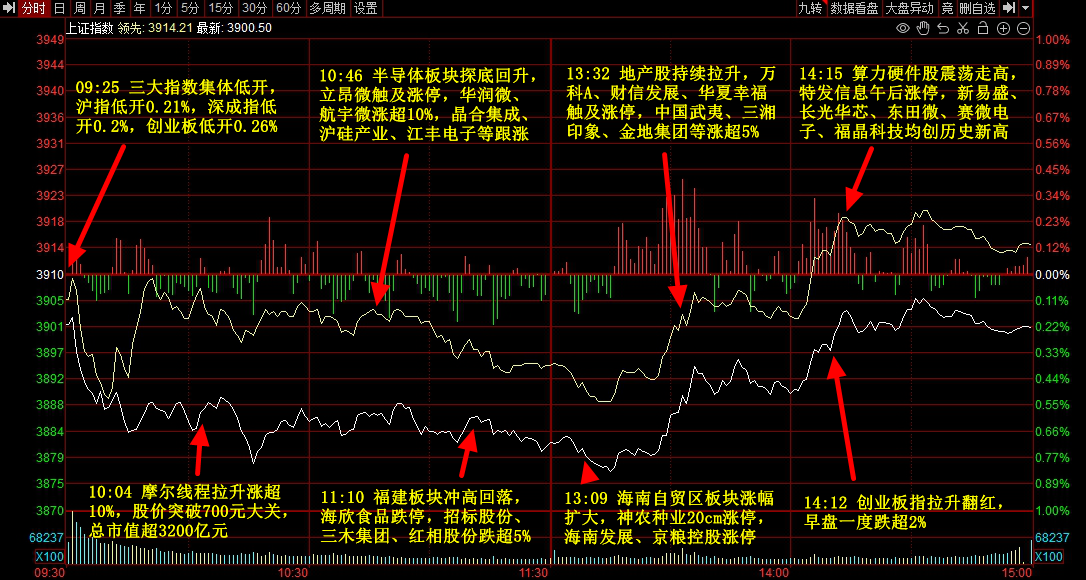
外资撤离!韩元大幅贬值
Guo Ji Jin Rong Bao· 2025-11-13 10:16
Group 1: Currency Depreciation - The Korean won is approaching its lowest point since the 2009 global financial crisis, having depreciated 6% in the last three months, making it the largest decline among Asian currencies [1] - The won fell to 1475 against the US dollar, nearing the critical level of 1487.45 reached in March 2009 [1] Group 2: Foreign Capital Outflow - A significant factor behind the depreciation is the massive outflow of foreign capital, with overseas investors net selling 7.26 trillion won (approximately 5.2 billion USD) in Korean stocks in the first week of November, marking the largest single-week outflow on record [2] - This outflow exceeded the total outflow of 5.34 trillion won in October and nearly erased all inflows from September [2] - The focus of foreign selling has been on semiconductor manufacturers, which were previously overvalued due to AI hype, amid concerns over an overheated AI stock market [2] Group 3: Domestic Investment Trends - South Korean residents invested 99.85 billion USD in foreign stocks and bonds from January to September, more than three times the 29.65 billion USD foreign investment in Korean securities [2] - This strong demand for overseas securities is contributing to the depreciation pressure on the won [2] Group 4: Economic Vulnerabilities - The Korean economy's structural vulnerabilities, particularly its heavy reliance on semiconductor exports and the US dollar, make it susceptible to risks from US-driven tariffs and policies [2] - A report from Citibank highlighted that South Korea's commitment to invest 350 billion USD in the US could exert significant long-term pressure on the won [2] Group 5: Government Response - In response to the ongoing depreciation, the Bank of Korea has indicated a willingness to intervene in the currency market if volatility escalates, although it downplayed the weakening trend of the won [4] - The Bank of Korea has taken measures to enhance foreign exchange supply, including increasing banks' forward foreign exchange position limits and relaxing restrictions on foreign currency loans for domestic use [5][6] Group 6: Economic Growth Outlook - The continuous depreciation of the won casts a shadow over South Korea's economic recovery, with the International Monetary Fund projecting a growth rate of only 0.9% for the year, the slowest among Asian countries [6] - The Bank of Korea has maintained interest rates unchanged since a cut in May, contrasting with recent rate cuts by Indonesia, Malaysia, and Thailand [6]
刚刚!中美大利好!全线大涨
中国基金报· 2025-11-10 08:10
Market Overview - The A-share market showed mixed performance with the Shanghai Composite Index rising by 0.53% and the Shenzhen Component Index increasing by 0.18%, while the ChiNext Index fell by 0.92% [2] - A total of 3,376 stocks rose, with 92 hitting the daily limit up, while 1,957 stocks declined [3][4] - The total trading volume reached 21,943.71 billion, with a trading volume of 140,007.9 million [4] Consumer Sector Performance - The consumer sector experienced a collective surge, with nearly 20 stocks, including China Duty Free Group and Shede Spirits, hitting the daily limit up [5] - The latest data from the National Bureau of Statistics indicated that the Consumer Price Index (CPI) rose by 0.2% year-on-year in October, marking a shift from decline to growth, while the Producer Price Index (PPI) showed a narrowing year-on-year increase [5] Financial Sector Activity - Financial stocks, including Northeast Securities, saw significant gains, with Northeast Securities hitting the daily limit up [8] - Other notable financial stocks included GF Securities and Dongxing Securities, which rose by 3.74% and 3.10% respectively [8] Chemical Sector Trends - The chemical sector continued its strong performance, with companies like Luxi Chemical and Chengxing Chemical hitting the daily limit up [9] - Notable gainers included Dongyue Silicon Materials, which rose by 14.94%, and other chemical stocks showing increases around 10% [9] Storage Chip Sector Dynamics - The storage chip sector was notably active, with companies such as Dawi Co. and Wanrun Technology hitting the daily limit up [10] - Key performers included Shen Gong Co., which rose by 20%, and other stocks in the sector showing significant gains [10] Downward Adjustments - The robotics sector faced adjustments, with Zhejiang Rongtai hitting the daily limit down [11] - Other companies in the sector also experienced declines, indicating a potential correction phase [11] Global Market Influences - Positive global market sentiment was noted, with major Asian indices like the Seoul Composite Index rising over 3% and the Nikkei 225 Index increasing over 1% [11] - The U.S. market also showed signs of recovery, with pre-market indices trending upwards [13] Trade Relations Impact - Recent developments in U.S.-China trade relations, including the suspension of investigations into China's shipbuilding industry, contributed to market optimism [14][15] - The U.S. government nearing the end of a shutdown also provided a positive backdrop for market performance, with potential funding agreements being discussed [16]






中国重拳出击,反制美国霸权港口费,打出贸易正义组合拳
Sou Hu Cai Jing· 2025-10-05 02:20
Core Insights - The new shipping fee policy implemented by the Trump administration is a strategic move aimed at targeting Chinese shipping companies, imposing fees of up to $140 per net ton for vessels built or operated in China docking at U.S. ports [1][2] - In response, Chinese shipping companies have adjusted their routes, diverting traffic from Los Angeles to ports in Mexico and Canada, resulting in a 22% cost saving despite a 36-hour increase in transit time [1][2] - The U.S. policy has led to immediate negative impacts on American ports, with a 41% year-on-year drop in container handling at Long Beach and a 60% reduction in dockworker overtime [3] Industry Adjustments - The global shipping industry is undergoing significant restructuring, with ports like Shenzhen's Yantian seeing a shift in cargo flow towards Europe and Southeast Asia, reflecting a 11.9% growth in Latin American routes for China COSCO Shipping [5][7] - New ports, such as the Chinese-invested deep-water port in Peru, are emerging as key nodes in global shipping, providing alternative routes that bypass the U.S. and save significant transit time [7] - Shipping costs are expected to rise, with HSBC estimating an additional $2 billion burden on COSCO and its subsidiaries due to the U.S. policy, which will likely be passed on to American consumers [9][10] Strategic Responses - The Chinese government has revised its international shipping regulations to allow for countermeasures against discriminatory practices, including special fees and restrictions on port access [2][3] - The potential for data access restrictions poses a significant threat to U.S. shipping companies, as the digitalization of the shipping industry relies heavily on data flow [3][10] - Global shipping alliances are adapting their operational strategies to mitigate the impact of U.S. fees, exploring alternative routes through Canada and Mexico [10][11]
美联储新任理事米兰为特朗普激进降息站台,却被批理由站不住脚!
Jin Shi Shu Ju· 2025-09-24 12:45
Core Viewpoint - The article questions the rationale provided by Federal Reserve Governor Stephen Miran for advocating significant interest rate cuts, suggesting that if his views are accepted, it would imply that the Federal Reserve, investors, and independent economists are all incorrect [2]. Group 1: Miran's Arguments - Miran supports a reduction of interest rates from the current 4%-4.25% range to approximately 2.5%, citing the impact of Trump's policy changes, including reduced immigration, lower government borrowing, and deregulation, which he believes should lead to lower long-term rates [2][3]. - He estimates that the "neutral real long-term interest rate" has decreased by over 1 percentage point due to these policy changes, predicting a potential 10% increase in the price of 10-year TIPS if yields drop to his estimated levels [3]. Group 2: Market Implications - If Miran's assumptions hold, significant adjustments in market pricing would be necessary, leading to a weaker dollar and favorable conditions for the stock market, despite concerns about high stock prices [3]. - The combination of lower borrowing costs and a weaker dollar is expected to benefit the stock market, suggesting that it could rise even further if Miran's views are validated [3]. Group 3: Counterarguments and Economic Context - The article highlights potential downsides to Miran's proposed policy changes, such as labor shortages and rising wages due to immigration restrictions, which could increase inflation [4][5]. - It also points out that the effectiveness of deregulation is unpredictable and that Miran's reliance on the Taylor Rule may not fully account for current economic conditions, as other metrics suggest a higher recommended interest rate range [5]. - Current economic indicators, including a projected GDP growth rate exceeding 3% for Q3 and strong market performance, challenge the necessity for further rate cuts, indicating that the economic landscape is more robust than Miran suggests [6][7].
财联社8月15日早间新闻精选
Xin Lang Cai Jing· 2025-08-15 00:18
Group 1: Central Bank and Market Operations - The central bank announced a 500 billion yuan reverse repurchase operation to maintain liquidity in the banking system, set to take place on August 15 with a six-month term [1] - A-shares trading volume surged to 2.3 trillion yuan, marking the 28th trading day in history to exceed 2 trillion yuan, with August 14 being the 7th day and the 2nd day in nearly a decade to surpass both 2 trillion yuan in trading volume and margin financing [3][4] Group 2: Company Announcements and Financial Results - JD Group reported Q2 revenue of 356.7 billion yuan, a year-on-year increase of 22.4%, reaching a three-year high [11] - Net income for NetEase in Q2 was 27.9 billion yuan, a 9.4% year-on-year growth, slightly below the forecast of 28.4 billion yuan [12] - Cambrian Technology announced that information regarding a large order of carrier boards from a certain manufacturer was inaccurate [8] - China Shipbuilding Industry announced a stock swap to absorb China Heavy Industry, and has submitted an application for voluntary delisting from A-shares [9] - Zhongchi Holdings announced that its largest shareholder, Changjiang Environmental Group, plans to transfer 24.73% of its shares through a public solicitation [10] Group 3: Industry Developments - 152 energy storage companies have voiced against internal competition, covering lithium-ion, flow, and sodium-ion battery supply chain units, indicating a potential industry consensus and self-regulation [2] - Tianpu Co. announced that its actual controller is planning a change in company control, leading to a stock suspension starting tomorrow [13] - Kangda New Materials plans to acquire 51% of Zhongke Huami's equity for 275 million yuan, aiming to enhance its assets in the special integrated circuit design and testing sector [14] - Dayuan Pump Industry reported that its liquid cooling temperature control business is part of its original operations, with related product sales revenue of approximately 1.6 million yuan in Q1 [15] Group 4: Market Trends and Economic Indicators - The U.S. 30-year mortgage rate stands at 6.58%, marking a fourth consecutive week of decline and the lowest level since October of the previous year [17] - The U.S. Producer Price Index (PPI) for July increased by 3.3% year-on-year, significantly higher than June's 2.3% and market expectations of 2.6%, representing the highest level since February [19]