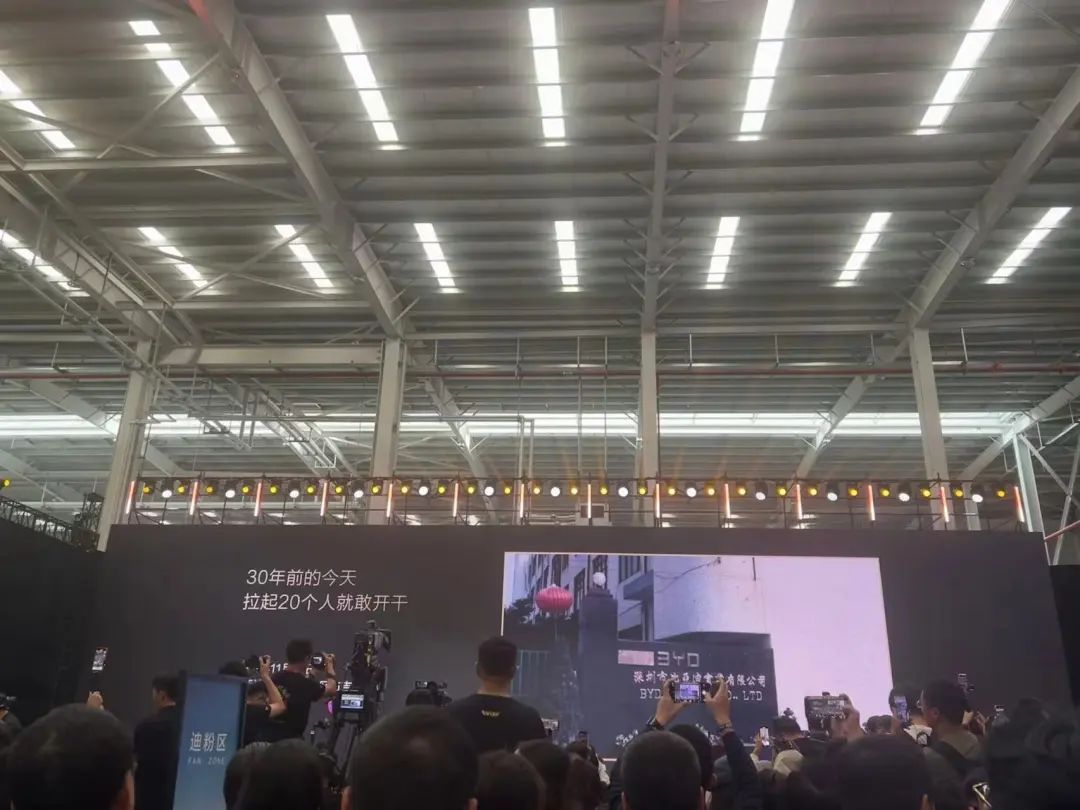
比亚迪F3DM

Search documents
比亚迪、宁德时代诞生汽车产业链企业首批院士
2 1 Shi Ji Jing Ji Bao Dao· 2025-11-21 13:50
Core Insights - The election results for the 2025 Chinese Academy of Sciences and Chinese Academy of Engineering academicians were announced, with key figures from the new energy vehicle industry, including BYD's Lian Yubo and CATL's Wu Kai, being elected [2] - This marks the first time that technical leaders from the new energy vehicle supply chain have been recognized as academicians, breaking the previous trend of academicians coming primarily from universities and research institutions [2] Company Highlights - Wu Kai, as the chief scientist at CATL, has been instrumental in developing core products like the Kirin battery and the Shenzhou supercharging battery, which have set new benchmarks for energy density and charging speed in global power batteries [2] - Lian Yubo's career reflects a cross-disciplinary approach, having transitioned from aircraft manufacturing to leading the development of electric platforms at BYD, making him a key figure in the company's technology output [2][3] - Under Lian Yubo's leadership, BYD launched the world's first dual-mode electric vehicle, the F3DM, which achieved a significant range of 100 kilometers on electric power alone, establishing BYD's dominance in hybrid technology [3] Industry Trends - From 2020 to 2023, BYD's sales of plug-in hybrid vehicles surged from 48,000 to 1.43 million units, marking a growth of approximately 30 times, highlighting the increasing importance of hybrid technology in China's new energy vehicle sector [3][5] - The plug-in hybrid technology route is becoming a core competitive advantage for China's new energy vehicle industry in the global market, with data indicating that plug-in and hybrid models have become new growth points in exports [3][4] - The election of these two corporate academicians underscores the comprehensive technological breakthroughs across the Chinese new energy vehicle supply chain, from core components to vehicle manufacturing, aligning with global automotive industry transformation goals under the "dual carbon" initiative [5]



比亚迪、宁德时代诞生汽车产业链企业首批院士
21世纪经济报道· 2025-11-21 13:43
Core Insights - The election of BYD's executive vice president Lian Yubo and CATL's chief scientist Wu Kai as academicians of the Chinese Academy of Engineering marks a significant milestone, as it is the first time that leaders from the new energy vehicle industry have been recognized in this capacity, breaking the norm of previous academicians coming from universities and research institutions [1][4] Group 1: Key Figures and Achievements - Wu Kai is recognized for his foundational work on CATL's key products, such as the Kirin battery and the Shenzhou supercharging battery, which have set the technical limits for global power batteries in terms of energy density and charging speed [1] - Lian Yubo's career trajectory showcases a cross-disciplinary approach, having transitioned from aircraft manufacturing to leading the development of electric platforms at BYD, making him a pivotal figure in the company's technological output [1][3] Group 2: Technological Advancements - Under Lian Yubo's leadership, BYD launched the world's first dual-mode electric vehicle, the F3DM, which achieved a significant milestone in plug-in hybrid technology, offering a pure electric range of 100 kilometers, surpassing competitors like GM and Toyota [2][3] - The continuous iteration of BYD's DM technology has established it as a key identifier for the company, with plug-in hybrid vehicle sales skyrocketing from 48,000 units in 2020 to 1.43 million units in 2023, representing a growth of approximately 30 times [3] Group 3: Industry Impact - The election of these two academicians reflects the comprehensive technological breakthroughs across China's new energy vehicle industry, from core components to vehicle manufacturing, aligning with the global automotive industry's transformation towards carbon neutrality [4]
深圳新能源造车爆发,产量四年涨26倍
3 6 Ke· 2025-08-22 08:53
Core Viewpoint - Shenzhen has transformed from a small fishing village to a global metropolis, becoming a leader in the electric vehicle industry, particularly in the production of new energy vehicles (NEVs) [1][3][27]. Group 1: Shenzhen's Development - Shenzhen's financial landscape has grown significantly, with over 2,800 listed companies [1]. - The city has seen a remarkable increase in skyscrapers, with the tallest reaching 599 meters [1]. - Shenzhen has advanced from 2G to 6G in communication technology, showcasing its leadership in tech innovation [1]. Group 2: BYD's Growth - BYD was founded in Shenzhen in 1994, capitalizing on the burgeoning automotive industry [3][4]. - The production of NEVs in Shenzhen surged from 109,300 units in 2020 to 2,935,300 units in 2024, marking a 26-fold increase in just four years [3][14]. - BYD's sales reached 1,868,500 units in 2022, a 152.46% increase year-on-year, and projected to reach 4,272,000 units in 2024, a 41.26% increase [14]. Group 3: Industry Ecosystem - Shenzhen has developed a comprehensive ecosystem for the NEV industry, including battery manufacturers, electric motor control companies, and smart cockpit technology firms [22]. - The city has established over 1,002 supercharging stations and more than 410,000 charging piles, surpassing the number of gas stations [23]. - The local government has implemented policies to promote NEVs, such as financing leasing models and encouraging electric bus purchases [11][12]. Group 4: Global Expansion - BYD has expanded its global presence, with sales reaching 550,000 units overseas in 2023, surpassing the total for the previous year [24]. - The company has established production bases in several countries, including Thailand and Hungary, and has increased its European store count from 3 to over 400 [24]. - The "Shenzhen号" roll-on/roll-off ship carried over 6,800 BYD vehicles to Belgium, highlighting the company's international logistics capabilities [24][25].