
气候贷

Search documents
聚焦一号文件 沪农商行锚定农业农村现代化 助力乡村振兴开新局
Jin Rong Jie· 2026-02-13 06:46
Core Viewpoint - The 2026 Central Document No. 1 has been released, emphasizing the goal of modernizing agriculture and rural areas, with Shanghai Rural Commercial Bank committed to translating this vision into practical rural revitalization efforts [1] Group 1: Agricultural Production and Financial Support - Shanghai Rural Commercial Bank prioritizes food security by enhancing agricultural production capabilities and quality, focusing on key areas such as grain production and livestock farming [2] - The bank has initiated a "government-bank-insurance guarantee" cooperation mechanism and conducted outreach to over 2,000 farmer cooperatives, directing credit resources to essential sectors [2] - A dedicated financial service plan was created for the construction of 100,000 acres of unmanned farms, facilitating the first loan for "unmanned farm" construction to support the transition from mechanization to intelligence in agriculture [2] Group 2: Agricultural Infrastructure and Technology Innovation - The bank has launched the first agricultural guarantee loan for fixed assets in facility agriculture, providing crucial funding for the upgrade of smart glass greenhouses [3] - A specialized financial service plan named "Kexin Agriculture" has been developed to support agricultural technology innovation, focusing on high-investment, long-cycle, and light-asset characteristics of agricultural tech enterprises [3] - The bank has successfully implemented the first plant variety pledge loan in the city, creating new pathways for supporting agricultural intellectual property and seed technology advancements [4] Group 3: Rural Revitalization and Economic Development - The bank aims to enhance farmers' income by fostering county-level industries and promoting the integration of primary, secondary, and tertiary industries [5] - A three-year action plan has been established to support rural revitalization, with strategic cooperation agreements signed with 108 towns [5] - Innovative financial support methods have been introduced for rural tourism projects, addressing financing bottlenecks and facilitating the development of new rural industries [5] Group 4: Ecological Protection and Green Development - The bank supports the construction of a 40 MW "fishing-light complementary" project, which is expected to generate over 50 million kWh annually and significantly reduce carbon emissions [6] - A pioneering "climate loan" has been introduced to help agricultural entities manage weather-related risks, enhancing the resilience of rural ecological agriculture [6] - The bank promotes local geographical indication products, facilitating their online sales and enhancing the income of local specialty industries [6] Group 5: Financial Inclusion and Credit System Development - The bank has established a "grid-based financial service" mechanism to convert soft information into hard credit assessments, evaluating 369 credit villages and 10 credit towns by the end of 2025 [7] - The "Silver-Farmer Direct Connection" initiative aims to enhance financial services in rural areas, improving the management of collective funds and promoting healthy rural economic development [8] - By the end of 2025, the bank's agricultural loan scale is expected to exceed 66 billion yuan, with inclusive agricultural loans surpassing 15 billion yuan, maintaining a leading position in the regional market [8] Group 6: Commitment to Agricultural Modernization - Shanghai Rural Commercial Bank is dedicated to the mission of "inclusive finance to enhance the quality of life for the public," continuously innovating products and services to allocate more financial resources to key areas of rural revitalization [9]
苏州首笔“气候贷”落地
Jiang Nan Shi Bao· 2026-02-11 23:29
Core Insights - Suzhou Rural Commercial Bank successfully launched the first "climate loan" in Suzhou, providing 1.12 million yuan in specialized credit to a plantation in Linhu Town for winter maintenance of loquat crops, enhancing their resilience against pests and low-temperature disasters [1] - The bank collaborates with meteorological departments to create a multi-dimensional risk assessment system that evaluates the financial resilience of agricultural enterprises against climate change [1] - The bank implements a tiered management approach, offering green financing channels to strong disaster-resistant entities while providing targeted guidance to those needing improvement based on professional meteorological assessments [1] Future Plans - Suzhou Rural Commercial Bank aims to deepen cooperation with meteorological departments, enhance its green financial product system, and strengthen disaster prevention capabilities for farmers [2] - The bank plans to extend its services to climate-sensitive industries such as energy, ecology, and infrastructure, contributing to regional green development and sustainable agricultural revitalization [2]

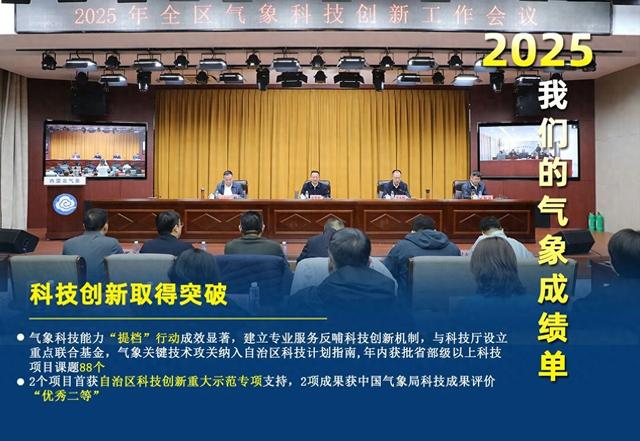
准确率93.4% 预警提前量超70分钟 满意度94.2!内蒙古气象晒出2025“硬核”成绩单
Xin Lang Cai Jing· 2026-02-01 11:05
Core Insights - In 2025, Inner Mongolia achieved a public meteorological service satisfaction score of 94.2, ranking third nationally and marking a historical high [1][3] - The accuracy rate for heavy rain warnings reached 93.4%, with a lead time of over 70 minutes for severe convective weather warnings, both setting new records in the past decade [3] Group 1: Meteorological Service Improvements - The "Tuozuo Model" for grassroots disaster prevention and mitigation has been effectively promoted across the region, enhancing local capabilities to respond to meteorological disasters [1] - The decision-making service app has been upgraded to improve the timeliness of information transmission, establishing a direct meteorological service mechanism for local government leaders [3] Group 2: Sector-Specific Meteorological Services - The meteorological department has extended its service chain to focus on key sectors such as renewable energy, agriculture, transportation, and tourism, injecting "meteorological momentum" into industry development [5] - In the renewable energy sector, a tailored service model has been implemented to support the planning and operation of renewable energy projects, contributing to high-quality development [5] Group 3: Financial and Agricultural Innovations - The introduction of "climate loans" has linked meteorological technology with financial services, providing scientific bases for enterprise credit evaluations [7] - Collaboration with China Agricultural University has led to the establishment of a potato technology center, focusing on meteorological services throughout the production cycle [7] Group 4: Transportation and Safety Enhancements - The meteorological department has achieved minute-level forecasts and kilometer-level warnings for 14 key road sections, significantly reducing traffic accident rates by 50% [7] - Meteorological services have been integrated into local low-altitude economic development plans, ensuring safety for general aviation operations [7] Group 5: Climate Resource Utilization - The meteorological department has hosted a climate tourism development conference, promoting the transformation of climate resources into tourism economic benefits [9] - Successful implementation of artificial weather modification has resulted in an increase of 28.2 billion tons of precipitation, providing crucial support for agricultural production and ecological protection [9] Group 6: Future Directions - The Inner Mongolia meteorological department aims to enhance service capabilities by focusing on regional characteristics and development needs, continuing to integrate meteorological work with economic and social development [11]

兴业银行:逐“绿”而行,点绿成金!绘就美丽中国新画卷
Zhong Jin Zai Xian· 2026-01-29 11:20
Core Viewpoint - The news highlights the significant role of green finance in promoting ecological sustainability and supporting low-carbon development initiatives across various sectors and regions in China, particularly through the efforts of Industrial Bank. Group 1: Green Finance Initiatives - Industrial Bank issued a green loan of 145 million yuan for the ecological reserve forest project in the Yellow River basin, demonstrating its commitment to ecological protection [1] - As of June 2025, Industrial Bank's green finance financing balance reached 2.43 trillion yuan, with green loan balance at 1.08 trillion yuan, supporting projects that save 15.73 million tons of standard coal and reduce CO2 emissions by 27.45 million tons annually [1] - The bank has developed a comprehensive product system for green finance since 2006, expanding its services to include green investment banking, leasing, trust, and funds [2][3] Group 2: Climate-Friendly Financial Services - Industrial Bank provided a "climate loan" of 365 million yuan to support a cable company in enhancing its disaster prevention capabilities and carbon efficiency [4] - The first "climate loan" was replicated in various regions, with a loan in Guizhou expected to reduce CO2 emissions by 4,470 tons, equivalent to planting 182 hectares of trees [5] - The bank issued the first climate-friendly green bond in August 2024, which is projected to reduce CO2 emissions by 14.997 million tons annually [5] Group 3: Carbon Management and Risk Mitigation - Industrial Bank has been enhancing its climate risk management and conducting regular climate risk stress tests since 2021, integrating ESG factors into its credit processes [6] - The bank supports export-oriented enterprises in adapting to carbon tariffs by providing green finance solutions for renewable energy projects, such as a solar power station that can reduce CO2 emissions by 9,800 tons annually [7] - The bank launched a dual-carbon management platform in 2023 to assist enterprises in carbon management, promoting digital and intelligent carbon data management [8]

把“企业呼声”变为“政策回声”
Xin Lang Cai Jing· 2026-01-21 21:34
Group 1 - The core viewpoint emphasizes the importance of optimizing the business environment as a top priority for high-quality development in Yuanjiang County, focusing on addressing urgent issues faced by private enterprises [1] - The county's business association has established a "business service special team" to facilitate direct communication between government and enterprises, conducting bi-monthly "director consultation" sessions to address enterprise demands [1] - Since 2025, five sessions have been held, responding to 50 enterprise requests related to financing, land use, approvals, and labor, achieving a 100% satisfaction rate among enterprises [1] Group 2 - The county's business association promotes simultaneous efforts in policy review and institutional innovation, implementing the "multi-certificates integrated, one code" reform, with 29,585 integrated business licenses issued, achieving a 99% issuance rate [2] - The time required to establish a business has been reduced to less than one working day, with 99.58% of new enterprises completing registration through the "one-stop" platform [2] - Over 41 billion yuan in loans have been issued through more than 10 financial innovation products, supporting local enterprises in key sectors such as specialty agriculture and green industry [2]
气候风险管理体系更健全
Jing Ji Ri Bao· 2025-12-25 22:05
Group 1 - Climate risk is increasingly recognized as a critical factor for financial stability, prompting financial institutions to enhance their risk identification, measurement, management, and pricing capabilities to ensure robust operations and fulfill social responsibilities [1][2] - The Netherlands Central Bank and the Bank of England have initiated significant measures, such as simulating asset value changes under different carbon pricing paths and conducting climate-related stress tests, to assess the long-term impacts of climate change on financial stability [1][2] - The Network for Greening the Financial System (NGFS), initiated by multiple central banks including the People's Bank of China, serves as a core international platform to integrate climate risk into financial regulatory frameworks, providing climate scenario models and risk assessment methodologies [1][2] Group 2 - China has prioritized the relationship between climate change and financial stability, with policies like the "Meteorological High-Quality Development Outline (2022-2035)" promoting the inclusion of climate risk in macro-prudential management and the establishment of climate risk stress testing systems [2][3] - Banks are innovating climate-friendly financial products, while insurance companies are collaborating with meteorological departments to develop products like meteorological index insurance and catastrophe bonds, enhancing risk reduction services related to weather disasters [2][3] Group 3 - Reinsurance plays a crucial role in managing climate risk by enhancing the underwriting capacity of the insurance industry and preventing systemic risks from major disasters [3][4] - Future efforts in reinsurance should focus on industry collaboration, standard-setting, and improving resilience within the financial system through partnerships with academic institutions, meteorological agencies, and emergency management departments [3][4] Group 4 - Climate risk management must be integrated into the overall financial governance framework, emphasizing a systemic approach and enhancing the resilience of the financial system against climate-related shocks [4] - Financial institutions are encouraged to strengthen their capabilities in climate risk identification, assessment, and monitoring, while optimizing asset allocation and risk mitigation strategies to maintain stability amid climate changes [4]
《气候资源经济蓝皮书——中国气候资源经济转化研究报告(2025)》发布
Xin Lang Cai Jing· 2025-12-25 13:18
Core Insights - The "Climate Resource Economic Transformation Blue Book" was released at the second Climate Resource Economic Transformation Technology Exchange Conference, outlining the current state of climate resource application in the economy and providing scientific support for achieving carbon neutrality and ecological civilization [1][2] Group 1: Current State and Challenges - China's climate resource transformation faces challenges such as technological bottlenecks and imperfect mechanisms, necessitating technological empowerment, institutional innovation, and regional collaboration to overcome these issues [2] - The blue book highlights the need for a unified scientific accounting standard system to facilitate the marketization of climate ecological products [2][4] Group 2: Sector-Specific Insights - In agriculture, climate resource assessment has contributed to food security, with findings indicating that the corn planting area in Northeast China has expanded by approximately 6.1 million acres due to warming [3] - In the energy sector, the development efficiency of wind and solar energy is constrained by meteorological factors, and improved forecasting accuracy can reduce disaster losses and optimize grid scheduling [3] - In tourism, climate landscapes have emerged as new economic growth points, with Chongqing identifying suitable climate areas based on temperature and humidity indices [3] - In health and wellness, research shows significant correlations between meteorological factors and diseases, with precise forecasting aiding in reducing morbidity rates [3] Group 3: Future Directions - The blue book emphasizes the need to enhance technological capabilities in monitoring and forecasting, improve resource assessment precision, and establish robust policy and market mechanisms to support climate resource transformation [4] - It advocates for deep integration of climate considerations into energy transition, health care, and green finance strategies to cultivate new growth areas in the climate economy [4] - The promotion of cross-administrative resource development and ecological compensation mechanisms is essential for building a complementary value transformation community [4]
“十四五”发展成效丨贵州:执改革之笔 绘就新时代高质量发展新图景
Xin Lang Cai Jing· 2025-12-22 06:58
Core Viewpoint - The article emphasizes the significant advancements made by the Guizhou meteorological department in implementing the "14th Five-Year Plan" for high-quality meteorological development, showcasing improvements in monitoring, forecasting, and service capabilities to support economic and social development [1][2]. Group 1: Implementation of the "14th Five-Year Plan" - Guizhou meteorological department has been actively implementing the "Meteorological High-Quality Development Outline (2022-2035)" and related government policies, leading to a substantial increase in overall meteorological capabilities compared to the "13th Five-Year" period [2]. - The department has focused on addressing weaknesses and enhancing monitoring and forecasting capabilities, resulting in a significant leap in operational and technological levels [2]. Group 2: Monitoring Network Development - The establishment of a comprehensive meteorological monitoring network is crucial for Guizhou's diverse weather conditions, with efforts to eliminate monitoring blind spots and enhance disaster weather monitoring [3][4]. - As of now, Guizhou has built 5,600 ground meteorological observation stations, reducing the average distance between stations from 7.5 kilometers to 5.6 kilometers, and achieving full coverage of automatic meteorological stations in townships [5]. - The construction of various weather radars has improved monitoring coverage from 72% to 90.1% at a height of 1 kilometer, significantly enhancing disaster monitoring capabilities [5]. Group 3: Precision Forecasting Enhancements - Guizhou has developed a robust research ecosystem to enhance meteorological forecasting capabilities, resulting in a more than 50% increase in personnel engaged in research and development [9]. - The region has established a digital grid forecasting system with a resolution of 1 kilometer for 0-10 day forecasts, and 500 meters for major cities, significantly improving the accuracy and lead time of severe weather warnings [10]. - The accuracy of heavy rain warning signals has reached 98.19%, with an average lead time of 112 minutes, while hail warning accuracy stands at 93.82% with a lead time of 54 minutes [10]. Group 4: Integration of Meteorology with Other Sectors - The Guizhou meteorological department has initiated innovative financial products like "climate loans" to support green finance, marking a significant step in leveraging meteorological data for economic development [10]. - Collaborative efforts in agriculture have led to the establishment of specialized meteorological service centers, enhancing agricultural productivity and risk management through tailored weather services [11]. - The integration of meteorology with transportation has improved safety measures, resulting in a decrease in traffic accidents related to weather conditions [14]. Group 5: Future Directions - As the "14th Five-Year Plan" approaches its conclusion, the Guizhou meteorological department aims to continue enhancing its core capabilities and service levels, contributing to the modernization of meteorological services in the province [15].

上海农商银行:以金融活水助力乡村振兴
Zhong Guo Jing Ji Wang· 2025-12-19 07:37
Core Insights - Shanghai Rural Commercial Bank is leveraging innovative financial models and precise services to empower rural industrial upgrades and enhance rural construction and governance levels, transitioning from supporting individual projects to enabling broader models and benefiting multiple villages [1] Group 1: Financial Innovations - The bank has developed a comprehensive service plan that includes a combination of "flow loans, fixed loans, personal business loans, and residential land renovation loans," effectively overcoming traditional financing barriers for light-asset, long-cycle rural cultural tourism projects [2] - The bank has successfully addressed financing bottlenecks for collective operational construction land by issuing a "collective land market entry" corporate loan for another rural cultural tourism project in Qingpu District, injecting new financial momentum into activating idle rural land resources [2] Group 2: Agricultural Financing Solutions - Shanghai Rural Commercial Bank has introduced the "facility agriculture fixed asset loan" product to address common financing challenges in facility agriculture, collaborating with the municipal financing guarantee center to innovate around the characteristics of facility agriculture construction and operation [3] - The bank has launched the first "climate loan" in the city, which quantifies the ability of enterprises in Jinshan District to cope with meteorological disasters, providing favorable financing costs based on performance indicators [3] Group 3: Rural Financial Services - As of the end of Q3 2025, the bank's agricultural loans exceeded 65 billion yuan, with inclusive agricultural loans surpassing 15 billion yuan, maintaining a leading position in rural financial services in the regional market [4] - The bank has completed the evaluation of 337 credit villages and 10 credit towns, delivering inclusive financial services directly to rural areas through the "whole village credit" model [4] - Future plans include deepening collaboration among government, banks, enterprises, and farmers, enriching product offerings, optimizing service processes, and innovating more replicable financial support models for rural revitalization [4]
从“满山乡遇”到“千村万象”,上海农商银行以金融之笔绘就乡村振兴新图景
Jin Rong Jie· 2025-12-18 09:52
Core Viewpoint - Rural revitalization has become a crucial support for national strategy, with Shanghai Rural Commercial Bank innovating financial models and precise services to empower rural industrial upgrades and enhance rural governance and construction [1] Group 1: Financial Innovation and Support - Shanghai Rural Commercial Bank is implementing a comprehensive service plan tailored to rural tourism projects, providing a total of 2.75 million yuan (300,000 yuan for initial funding and 2.45 million yuan for subsequent phases) to support the development of a rural tourism project in Qingpu District [2][3] - The bank has developed a combination of financial products, including "flow loans + fixed loans + personal operating loans + residential land renovation loans," effectively overcoming traditional financing barriers for light-asset, long-cycle rural tourism projects [3] Group 2: Ecosystem Development for Rural Revitalization - The bank has introduced innovative financial products such as "facility agriculture fixed asset loans" and "climate loans," addressing common financing challenges in facility agriculture and providing flexible, efficient services [4] - A new product called "farmland certification loan" has been launched, allowing agricultural operators to obtain funding without collateral, thus promoting land circulation and agricultural scale development [5] Group 3: Community Engagement and Governance - The bank has partnered with local governments to create a "financial + points" model, transforming villagers' positive actions into quantifiable credit assets, thereby enhancing community engagement in rural governance [5] - As of the end of Q3 2025, the bank's agricultural loans exceeded 65 billion yuan, with inclusive agricultural loans surpassing 15 billion yuan, maintaining a leading position in rural financial services [6]