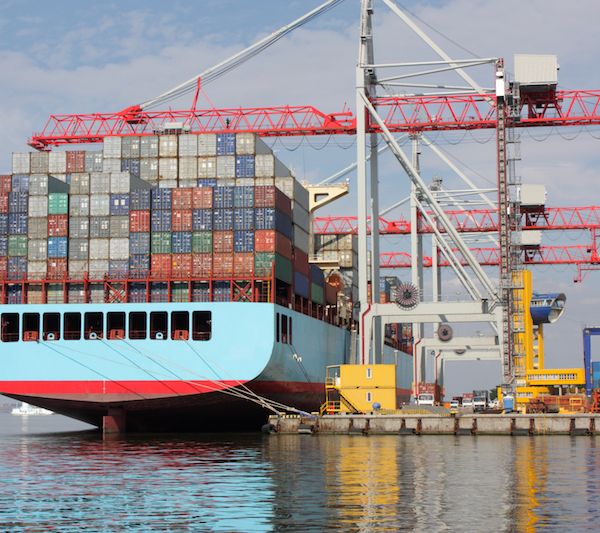
氨燃料船

Search documents
印度砸4470亿要造船?先看看他们的对手有多可怕
Sou Hu Cai Jing· 2026-01-12 06:43
Group 1 - The Indian government announced a plan to invest approximately 447 billion Indian Rupees (around 35 billion RMB) to support its shipbuilding industry, aiming to rank among the top ten globally by 2030 and the top five by 2047 [1] - As of October 2025, China's shipbuilding industry holds 68.4% of new ship orders globally, with South Korea at 24.9% and Japan at 6.3%, while India's share is less than 0.1%, indicating significant challenges ahead for India [1] - The U.S. has been actively courting India to play a more significant role in the Indo-Pacific strategy, and the shipbuilding industry aligns with U.S. strategic interests [3] Group 2 - There is a growing market opportunity with a surge in orders for green vessels, including LNG carriers and methanol-powered ships, with global new ship orders expected to reach 120 million deadweight tons by 2025 [5] - The Modi government’s "Make in India" initiative requires flagship projects to support it, and the shipbuilding industry can provide extensive employment opportunities, making it politically attractive [5] - However, India faces substantial competition, as China has maintained a dominant position in shipbuilding metrics, including completion volume, new orders, and backlog, for 15 consecutive years [7] Group 3 - India's shipbuilding plan is reminiscent of the European shipbuilding industry's decline post-2008 financial crisis, where significant investments did not prevent the collapse of the industry [7] - The investment of 447 billion Rupees can be used for equipment purchases, dock construction, and training, but it cannot replace decades of technological accumulation or a complete supply chain [7] - The skills required in shipbuilding, such as certain welding techniques, take at least ten years to master, highlighting the long-term challenges India faces in developing its shipbuilding capabilities [7]


财经观察:日本造船巨头并购,能追赶中韩吗
Huan Qiu Shi Bao· 2026-01-11 22:46
Core Viewpoint - The acquisition of Japan Marine United Corporation (JMU) by Imabari Shipbuilding marks a significant consolidation in Japan's shipbuilding industry, aiming to enhance competitiveness against Chinese and Korean rivals and restore Japan's global market share in shipbuilding [1][2][3] Industry Consolidation - Imabari Shipbuilding has increased its stake in JMU to 60%, making JMU a subsidiary, which will allow for deeper collaboration in procurement and production [1] - The merger is seen as the largest consolidation in Japan's shipbuilding sector in decades, occurring at a critical time for the industry's survival [1][3] - The Japanese shipbuilding industry is undergoing significant restructuring, with companies like Mitsui E&S Shipbuilding reducing operations and focusing on ship repairs [3] Government Support and Strategic Goals - The Japanese government has identified shipbuilding as a strategic industry, aiming to revitalize it as part of its economic security policy, with a target investment of 1 trillion yen (approximately 441.9 billion RMB) [2] - Japan's shipbuilding capacity is currently around 9 million gross tons, with a goal to double this to 18 million gross tons by 2035 [2] - The government aims to increase Japan's global market share from approximately 13% to around 20% [2] Challenges and Competitive Landscape - Japan's shipbuilding industry faces structural challenges, including labor shortages and higher production costs compared to competitors in China and Korea [6][7] - The industry has seen a decline in market share due to aggressive investments and strategic initiatives by Chinese and Korean shipbuilders [5][6] - Japan's shipbuilding capacity has decreased from 16 million gross tons in 2019 to 9 million gross tons in 2024, leading to concerns about meeting domestic demand [5] Technological and Market Position - Despite challenges, Japan retains strengths in specific areas such as bulk carrier design and construction, as well as advancements in green technologies like ammonia and hydrogen fuel [8][9] - The collaboration between Imabari and JMU aims to leverage their combined strengths in technology and production to enhance competitiveness in the global market [10] - The focus on integrating advanced technologies and automation is crucial for Japan to maintain its position in the shipbuilding industry [7][10]
押注新能源船!造船巨头投资扩建产能
Sou Hu Cai Jing· 2025-09-07 12:49
Group 1 - Japan's largest shipbuilding group, Imabari Shipbuilding, is enhancing its production capacity for environmentally friendly new energy vessels [2][3] - The company plans to build new facilities at its Kagawa shipyard by the fiscal year 2028 to increase the production capacity of fuel tanks, a key component for new energy ships [2] - Imabari Shipbuilding will also expand its dock facilities for outfitting operations, aiming to avoid delays in shipbuilding processes [3] Group 2 - The company is currently the largest shipbuilder in Japan by completed ship volume, operating 10 shipyards and capable of constructing over 90 vessels annually [4] - Imabari Shipbuilding's Kagawa headquarters features Japan's largest dry dock, measuring 600 meters in length, 80 meters in width, and 11.7 meters in depth [4] - The company aims to produce fuel tanks for methanol-powered and ammonia-fueled ships in addition to LNG-powered vessels [3] Group 3 - Earlier this year, Imabari Shipbuilding announced an agreement to acquire additional shares in Japan Marine United (JMU), increasing its stake from 30% to 60% [5] - This acquisition will allow Imabari Shipbuilding and JMU to collaborate in the same market, covering various types of vessels including container ships and LNG carriers [5] - The merger is expected to lead to cost savings through shared design and procurement efforts [5]
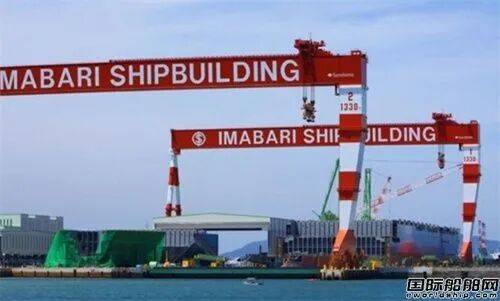
日本造船复活的条件(上)联合开发新一代船
日经中文网· 2025-06-06 07:55
Core Viewpoint - The Japanese shipbuilding industry is experiencing a temporary boom due to high demand and ship prices, but faces significant challenges from Chinese and Korean competitors, particularly in the LNG transport ship sector, leading to a declining global presence [1][5][7]. Group 1: Current Market Conditions - The shipyard schedule in Japan is booked for three years ahead, with ship prices remaining high, marking a rare "spring" for the industry [1]. - The Japan Marine United (JMU) reported a net profit increase to 19.9 billion yen for the fiscal year 2024, a 5.4 times increase from the previous year, indicating strong performance among Japanese shipbuilders [5]. - Despite the current success, Japan's share of new ship orders has dropped to 7% in 2024, with China at 69% and South Korea at 15%, highlighting a significant decline in global competitiveness [5]. Group 2: Challenges and Competition - Japanese companies have not secured any LNG ship orders since 2016, with South Korea and China dominating the market, holding 60% and 40% of the orders respectively [7]. - The Japanese government is attempting to support the industry by investing approximately 120 billion yen in zero-emission ships, including ammonia and hydrogen fuel vessels, to enhance competitiveness [7][8]. - The "All Japan" initiative aims to standardize fuel tanks for new eco-friendly ships, which could reduce design costs and improve delivery times, addressing the challenges posed by larger competitors [7][8]. Group 3: Future Prospects - The MILES initiative, a collaboration between Imabari Shipbuilding and Mitsubishi Heavy Industries, aims to develop liquid CO2 transport ships, indicating a shift towards innovative projects in response to market pressures [8][9]. - The global ship rental market is currently facing low rates due to an oversupply of LNG vessels, complicating the outlook for future ship sales at high prices [9]. - Japanese shipbuilders must adapt quickly to maintain relevance in a rapidly changing market, as exemplified by the completion of a liquid CO2 ship by a Chinese company, which underscores the urgency for Japanese firms to innovate [9].
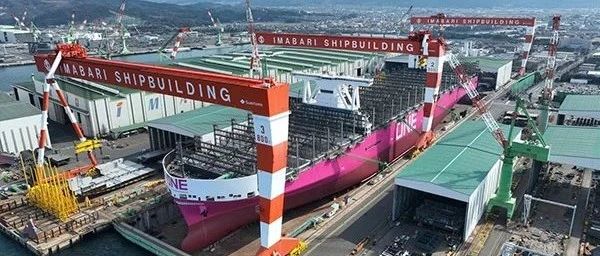
中国造船业“超级周期”启幕:全球69%订单背后的技术突围与重组革命
Hua Xia Shi Bao· 2025-05-23 07:06
Core Insights - The Chinese shipbuilding industry is experiencing a remarkable transformation, leading the global market with a 69% share of new ship orders in April 2024, totaling 51 vessels and 2.51 million gross tons [1][2] - The industry is witnessing a significant increase in order volume, with new orders up 58.8% year-on-year and a backlog of orders projected to last until 2029 [2][4] - The merger between China Shipbuilding and China Shipbuilding Industry Corporation is a historic consolidation aimed at enhancing operational efficiency and competitiveness in the shipbuilding sector [4][5] Group 1: Industry Performance - In 2024, China's shipbuilding completion volume is expected to grow by 13.8%, with a 49.7% increase in the backlog of orders [2][3] - China has maintained its position as the world's largest shipbuilding nation for 15 consecutive years, with significant advancements in high-tech vessels such as LNG carriers [2][3] - The market share of new green ship orders in China reached 78.5%, indicating a strong focus on environmentally friendly technologies [2][3] Group 2: Technological Advancements - The delivery of the world's first fifth-generation large LNG carrier by Hudong-Zhonghua marks a significant milestone for China in the LNG shipping sector [2][3] - Chinese shipyards are leading in the construction of green vessels, with six shipyards ranking among the top ten globally for green power ship orders [3][4] - The industry is adapting to new technologies, including artificial intelligence and quantum technology, to maintain its competitive edge [7][9] Group 3: Financial Outlook - China Shipbuilding's revenue is projected to exceed 80 billion yuan by 2025, with a significant increase in the value of its order backlog [4][5] - The merger between China Shipbuilding and China Shipbuilding Industry Corporation is expected to create the largest listed company in the A-share market, enhancing overall operational efficiency [4][5] - The global shipbuilding market is facing challenges, including a decline in new orders, but the backlog remains strong, indicating a healthy demand for shipbuilding services [8][9]