
沪渝蓉沿江高铁武宜段

Search documents
中国新闻网:沪渝蓉沿江高铁武宜段开通运营
Zhong Guo Xin Wen Wang· 2025-12-28 01:41
Core Viewpoint - The opening of the Wuhan to Yichang section of the Shanghai-Chongqing-Rongjiang High-Speed Railway enhances connectivity in the Yangtze River Economic Belt, facilitating faster travel between cities and promoting regional development [4]. Group 1: Project Overview - The Wuhan to Yichang section of the Shanghai-Chongqing-Rongjiang High-Speed Railway spans 314 kilometers with a design speed of 350 kilometers per hour [2]. - The line includes eight stations: Hankou, Hanchuan North, Tianmen, Jingmen South, Zhongxiang South, Jingmen West, Dangyang West, and Yichang North, with a total of 58 trains operating daily at the initial stage [2][3]. - The project features a high bridge-tunnel ratio of 84.8%, with 88 new bridges and 25 tunnels constructed due to complex geological conditions [4]. Group 2: Economic Impact - The railway's operation is expected to enhance the status and functionality of Yichang as a regional center, while also accelerating the development of the central urban agglomeration in the middle reaches of the Yangtze River [4]. - The railway is part of a larger initiative to connect six provinces and municipalities, with the entire Shanghai-Chongqing-Rongjiang High-Speed Railway expected to be completed by around 2030, forming a major backbone of the national high-speed rail network [8].

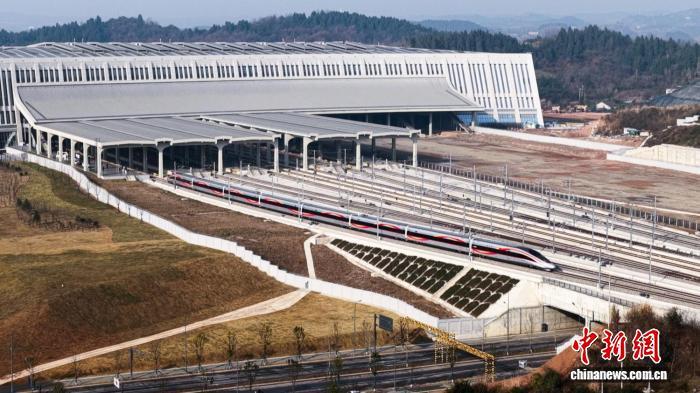
西延高铁正式开通运营 我国高铁里程突破5万公里
Yang Guang Wang· 2025-12-27 01:58
Core Points - The Xi'an to Yan'an high-speed railway officially opened on December 26, marking the entry of the Shaanxi Northern Revolutionary Area into the high-speed rail era and pushing China's high-speed rail operating mileage beyond 50,000 kilometers [1][2] Group 1: High-Speed Rail Development - The Xi'an to Yan'an high-speed railway is 299 kilometers long with a design speed of 350 kilometers per hour, significantly reducing travel time between the two cities to as short as 68 minutes [1] - The railway is a crucial part of China's "Eight Vertical and Eight Horizontal" high-speed rail network, enhancing connectivity and integrating Yan'an into the "one-hour economic circle" of Xi'an [2] Group 2: Economic and Social Impact - The opening of the Xi'an to Yan'an high-speed railway is expected to accelerate the flow of people, goods, and information, contributing to regional economic development [2] - To promote tourism, all scenic spots in Ganquan County will offer free admission to high-speed rail passengers until the Spring Festival, along with free shuttle services [2] Group 3: National High-Speed Rail Statistics - As of the opening, China's high-speed rail operating mileage has increased by approximately 32% since the end of 2020, with 12,000 kilometers of high-speed rail expected to be completed during the 14th Five-Year Plan [2] - High-speed rail now accounts for about 80% of passenger traffic in China, with urban clusters within a 500-kilometer radius achieving 1 to 2-hour travel times [2]
中国高铁运营里程突破5万公里,每天流动一个超大城市
Di Yi Cai Jing· 2025-12-26 09:32
Core Insights - This year is expected to be the year with the highest number of high-speed rail (HSR) lines put into operation during the "14th Five-Year Plan" period, with three new lines opening on December 26, contributing to a total operational mileage of over 50,000 kilometers for China's high-speed rail network [1][2] Group 1: High-Speed Rail Expansion - The newly opened Xi'an to Yan'an high-speed rail (Xi-Yan HSR), Hangzhou to Quzhou high-speed rail (Hang-Qu HSR), and the Wuhan to Yichang section of the Shanghai-Chongqing high-speed rail (Wu-Yi HSR) are significant additions to the network [1][2] - The Xi-Yan HSR spans 299 kilometers with a design speed of 350 km/h, connecting key regions and enhancing transportation in the Shaanxi province [2] - The Hang-Qu HSR, measuring 131 kilometers and also designed for 350 km/h, is crucial for the integration of the Yangtze River Delta region [2] Group 2: Future Projections and Achievements - The National Railway Administration's 2024 report anticipates that the total high-speed rail operational mileage will reach 48,000 kilometers by 2024, with a target of 16,500 kilometers of total railway operational mileage by 2025 [1] - The goal for new railway lines in 2025 is set at 2,600 kilometers, with actual completion expected to exceed this target, as over 2,500 kilometers of high-speed rail have already been put into operation this year [1] - Historical data shows that from 2021 to 2024, the National Railway Group has consistently increased the length of new lines, with high-speed rail contributions of 2,168 km, 2,082 km, 2,776 km, and 2,457 km respectively [2] Group 3: High-Speed Rail's Role in Transportation - High-speed rail accounts for 80% of passenger volume and 69% of passenger turnover in China's railway system, establishing itself as the primary mode of medium to long-distance travel [3] - Daily operations include an average of 9,346 high-speed trains carrying approximately 9.36 million passengers, equivalent to the population of a large city moving through the network each day [3] - During peak travel periods, such as the Spring Festival, the number of trains can exceed 10,000, with passenger numbers surpassing 16 million, significantly alleviating transportation pressure [3]
沪渝蓉沿江高铁武宜段开通运营
Zhong Guo Xin Wen Wang· 2025-12-26 07:52
Core Viewpoint - The opening of the Wuhan to Yichang section of the Shanghai-Chongqing-Rongjiang High-Speed Railway enhances connectivity in the Yangtze River Economic Belt, facilitating faster and more efficient transportation between cities [4]. Group 1: Project Overview - The Wuhan to Yichang section of the Shanghai-Chongqing-Rongjiang High-Speed Railway officially opened on December 26, with a total length of 314 kilometers and a design speed of 350 kilometers per hour [3]. - The railway features eight stations, including both existing and newly constructed ones, with a maximum of 58 train services operating daily during the initial phase [3][4]. - The project is characterized by significant engineering challenges, including the construction of 88 new bridges and 25 tunnels, resulting in a bridge-tunnel ratio of 84.8% [4]. Group 2: Economic Impact - The new railway line is expected to enhance the status and functionality of Yichang as a regional center, while also promoting the development of the central Yangtze River urban agglomeration [4]. - The completion of the entire Shanghai-Chongqing-Rongjiang High-Speed Railway, projected for around 2030, will create a comprehensive transportation network across six provinces and cities, becoming a key component of the national high-speed rail grid [7].
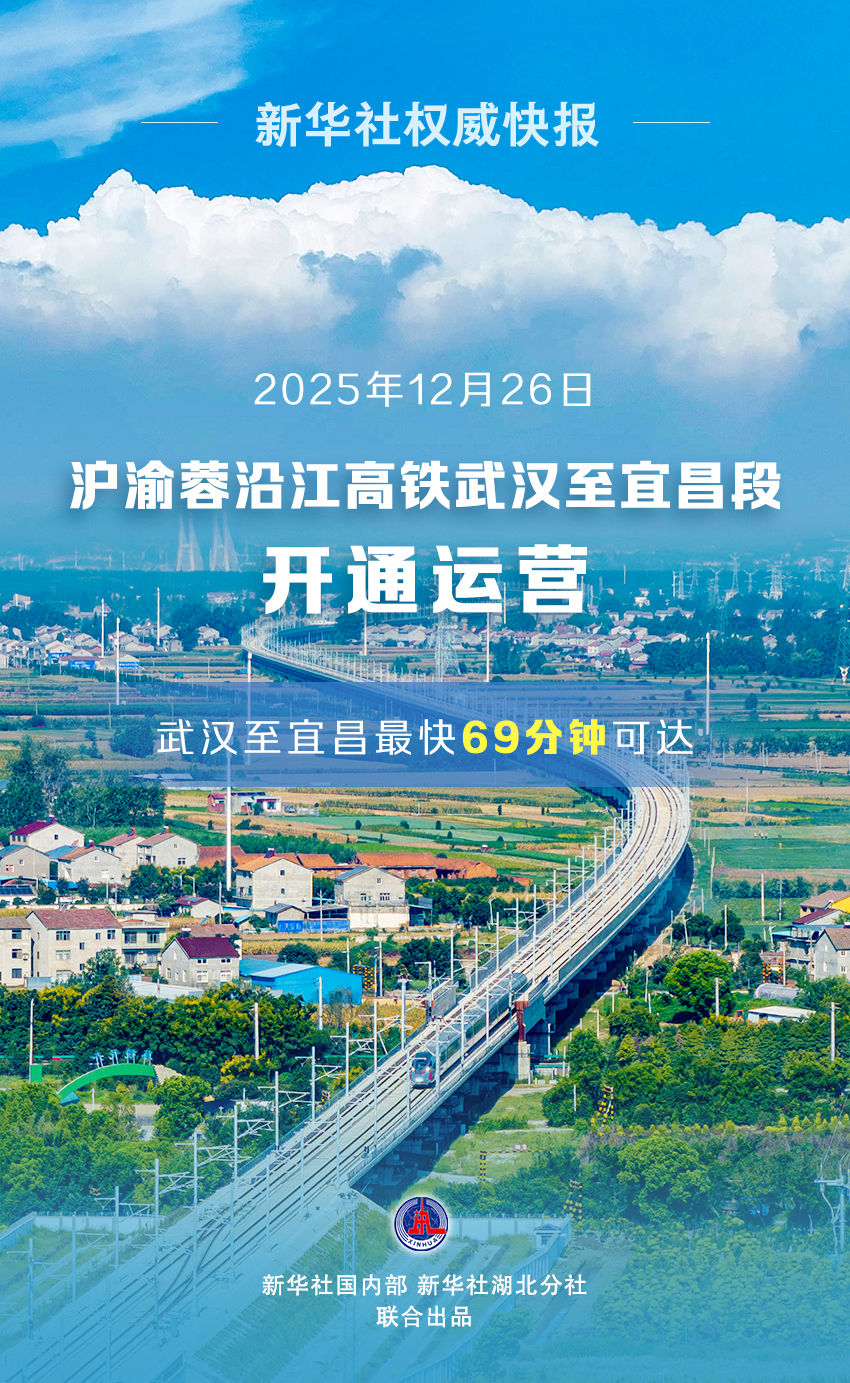
新华社权威快报|沪渝蓉沿江高铁武宜段开通运营 长江经济带高铁网再扩展
Xin Hua She· 2025-12-26 05:32
Core Viewpoint - The Wuhan to Yichang section of the Shanghai-Chongqing-Chengdu High-Speed Railway officially commenced operations, significantly enhancing transportation connectivity in central China [3]. Group 1: Project Overview - The Wuhan to Yichang section spans 314 kilometers and is designed for a maximum speed of 350 kilometers per hour [3]. - This section is a crucial part of China's "Eight Vertical and Eight Horizontal" high-speed rail network, connecting major hubs and facilitating efficient travel [3]. Group 2: Connectivity and Impact - The new high-speed rail segment will create a dual-channel high-speed rail system between Wuhan and Yichang, improving travel options for passengers [3]. - The strategic location of Hubei province within the national railway network allows for travel to major cities across the country in approximately 3 to 4 hours [3].
新华社权威快报丨沪渝蓉沿江高铁武宜段开通运营 长江经济带高铁网再扩展
Xin Hua Wang· 2025-12-26 02:05
Core Viewpoint - The Wuhan to Yichang section of the Shanghai-Chongqing-Lanzhou high-speed railway officially commenced operations, enhancing the high-speed rail network in China and improving connectivity in Hubei province [4]. Group 1: Project Overview - The Wuhan to Yichang section of the Shanghai-Chongqing-Lanzhou high-speed railway is 314 kilometers long and designed for a speed of 350 kilometers per hour [4]. - This section is a crucial part of China's "eight vertical and eight horizontal" high-speed rail network, connecting the Wuhan hub to ongoing projects towards Yichang [4]. Group 2: Connectivity and Impact - The opening of this high-speed rail segment creates a dual-channel high-speed rail system between Wuhan and Yichang, significantly improving travel times [4]. - The high-speed rail network in Hubei province will allow for travel to major cities across the country in approximately 3 to 4 hours [4].
城市24小时 | 跌出全国前十,西北“枢纽”要逆袭了?
Mei Ri Jing Ji Xin Wen· 2025-12-25 15:06
Group 1: Core Insights - Xi'an Xianyang International Airport has officially entered the "three-runway" era with the launch of the new South Runway, enhancing regional air transport capacity [1] - The South Runway, part of the airport's Phase III expansion, is 3000 meters long and 45 meters wide, capable of accommodating large aircraft like the Airbus A380 [1][2] - The Phase III expansion includes the construction of three new runways and a new terminal (T5), which will significantly increase the airport's capacity to handle 83 million passengers and 1 million tons of cargo annually [2] Group 2: Industry Context - The expansion project is considered the top priority for civil aviation development in Shaanxi Province and is the largest and most complex airport construction project in Northwest China [2] - Once completed, the airport will have four runways and four terminals, doubling the terminal area compared to existing facilities [2] - Despite the expansion, Xi'an Airport's passenger traffic has declined in national rankings, dropping from 7th in 2019 to 11th in 2024, indicating a need for improved competitiveness [2][3] Group 3: Strategic Importance - The airport is positioned as a key international aviation hub under the "Belt and Road" initiative, which may help regain competitive advantages and foster the development of the aeronautical economy [3]
沪渝蓉沿江高铁武宜段即将开通运营
Xin Hua Wang· 2025-12-25 08:17
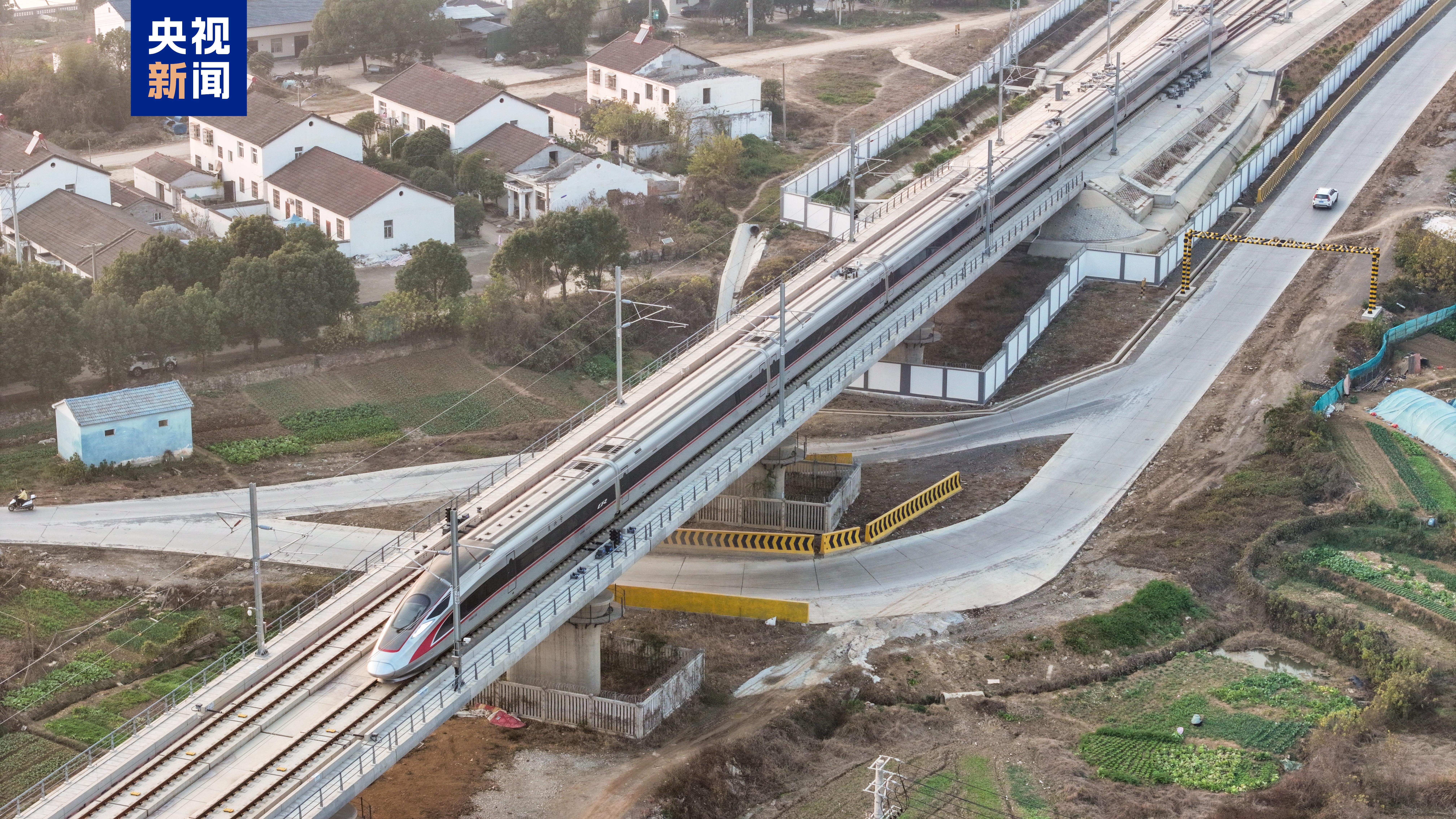
Core Viewpoint - The Wuhan to Yichang section of the Shanghai-Chongqing-Chengdu High-Speed Railway will commence operations on December 26, enhancing the transportation network in the Yangtze River Economic Belt and promoting regional economic development [1][2]. Group 1: Project Overview - The Wuhan to Yichang section of the Shanghai-Chongqing-Chengdu High-Speed Railway spans 314 kilometers with a design speed of 350 kilometers per hour, significantly reducing travel time to 69 minutes between Wuhan and Yichang [1]. - The railway line connects key cities including Wuhan, Tianmen, Jingmen, and Yichang, and traverses complex geological conditions, including soft soil and fault zones [1]. Group 2: Construction and Engineering - Since its construction began in September 2021, the project has seen significant advancements, including the completion of major structures like the Zhongxiang Hanjiang Grand Bridge and the Baiguoshu No. 1 Tunnel [1]. - The Zhongxiang Hanjiang Grand Bridge, located in Jingmen, is notable for being the largest span concrete cable-stayed bridge for high-speed rail in China, with a main span of 270 meters [1]. Group 3: Strategic Importance - The Wuhan to Yichang section is a crucial part of China's "Eight Vertical and Eight Horizontal" high-speed rail network, linking existing and under-construction rail lines, thereby enhancing connectivity in the region [2]. - The opening of this section will create a dual-channel high-speed rail system between Wuhan and Yichang, optimizing the regional rail network and facilitating travel for local residents [2].

高铁新线明天开通!武汉至宜昌最快69分钟可达
Yang Shi Xin Wen· 2025-12-25 06:01
Core Viewpoint - The Wuhan to Yichang section of the Huhuo Rong Railway will commence operations on the 26th, providing a new rapid passenger transport route between the Jianghan Plain and the western Hubei region [1]. Group 1: Project Details - The Huhuo Rong Railway Wuhan to Yichang section starts from Hankou Station in Wuhan, passing through Tianmen City and Jingmen City, and connects to Yichang North Station [4]. - The total length of the Wuhan to Yichang section is 314 kilometers, with a designed speed of 350 kilometers per hour, and it includes eight stations: Hankou, Hanchuan North, Tianmen, Jingmen South, Zhongxiang South, Jingmen West, Dangyang West, and Yichang North [8]. Group 2: Economic Impact - This railway section is a crucial part of China's "Eight Vertical and Eight Horizontal" high-speed rail network along the Yangtze River, linking the Wuhan hub to the under-construction Yichang to Xingshan and Yichang to Fuling railways [14]. - The opening of this line will create a dual high-speed rail corridor between Wuhan and Yichang, facilitating travel for local residents and promoting high-quality development of the Yangtze River Economic Belt [14].
沪渝蓉沿江高铁武汉至宜昌段12月26日开通运营
Zheng Quan Shi Bao Wang· 2025-12-25 04:51
Core Viewpoint - The Wuhan to Yichang section of the Shanghai-Chongqing-Rongjiang High-Speed Railway will commence operations on December 26, enhancing the rapid passenger transport network in the Yangtze River Economic Belt [1] Group 1 - The new high-speed rail segment will allow travel from Wuhan to Yichang in as little as 69 minutes [1] - This development creates an additional fast passenger transport corridor between the Jianghan Plain and the western Hubei region [1] - The opening of this railway section adds a new artery to the high-speed rail network in the Yangtze River Economic Belt [1]