河北净菜

Search documents
长图· 2025年河北GDP增速何以跑进全国前三丨经济运行稳中向好,韧性活力不断增强
Xin Lang Cai Jing· 2026-02-01 13:46
来源:河北日报客户端 细看2025年成绩单,河北经济 从"量"的累积加速迈向"质"的 提升,高质量发展底气更是、韧性 Fatto 以"数"观势,这一年河北经济 向新向优的是迹愈发清晰。 沉甸甸的成绩单,离不开重大 国家战略深入实施。 沉甸甸的成绩单,离不开政策 措施有力指举。 规上工业增加值增速7.9% 快于全国2.0个百分点 居全国第六位 x 0 固定资产投资增速6.1% 快于全国9.9个百分点 居全国第三位 3 社会消费品零售总额增速5.6% 快于全国1.9个百分点 居全国第二位 "稳" 的权居而序 LETLE FATH LIFE 经济实力稳步提升 就业形势总体稳定 粮食总产量达到784亿斤 创历史新高 居民收入稳步增长 "进"的步伐有力 nl lul 2025年 河北地区生产总值49305.2亿元 向5万亿元迈进 同比增长5.6% 增速快于全国0.6个百分点 增速位次为全国第三 这一年 河北经济预期目标圆满实现 地区生产总值增速 规模以上工业增加值增速 固定资产投资增速全国位次均为 历史最好水平 规模以上工业增加值 比上年增长7.9% 其中,制造业增长8.7% 九八公二十六十 4VT 1丁亚人关于 30 ...


2025年雄安新区固定资产投资同比增长14%
Zhong Guo Xin Wen Wang· 2026-01-22 15:34
Core Insights - Hebei Province's fixed asset investment is projected to grow by 6.1% in 2025, with investments in projects over 100 million RMB increasing by 9.6%, contributing 6.5 percentage points to the overall investment growth [1] Group 1: Economic Development - Xiong'an New Area's fixed asset investment is expected to increase by 14% year-on-year in 2025 [1] - The second Xiong'an Future City Scenario Summit will be successfully held, with 278 applications for "co-city" government services fully implemented [1] - The Beijing-Tianjin-Hebei coordinated development is deepening, with the Beijing-Tangshan Intercity Railway fully connected [1] Group 2: Industrial Growth - Industrial production in Hebei is experiencing rapid growth, with state-owned enterprises' value-added output increasing by 6.0% year-on-year [1] - Joint-stock enterprises saw an 8.1% increase, foreign and Hong Kong-Macau-Taiwan invested enterprises grew by 10.0%, and private enterprises increased by 8.9% [1] - Specific product outputs show significant growth: industrial robots up by 29.3%, urban rail vehicles up by 67.6%, and food manufacturing machinery up by 29.5% [1]
活力中国调研行·河北篇丨“米袋子”“菜篮子”充足丰盈 夯实基础惠民生
Xin Lang Cai Jing· 2026-01-17 05:22
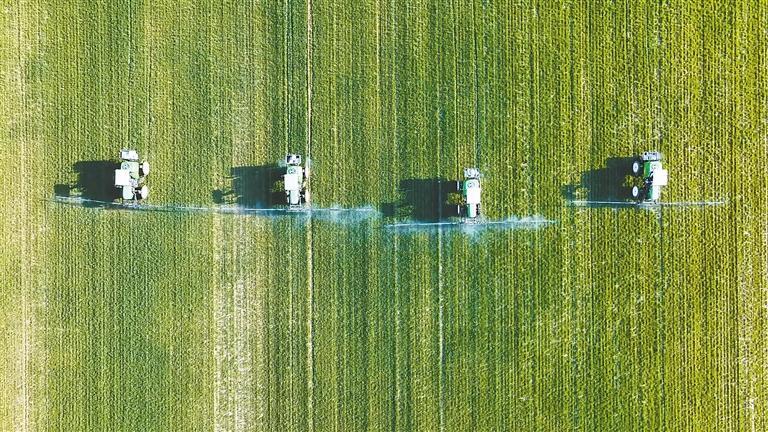
Core Insights - The article emphasizes the importance of food security and agricultural productivity in Hebei province, highlighting initiatives to enhance grain and vegetable production [1] Group 1: Grain Production - Hebei province is focusing on the integration of new varieties, technologies, equipment, and training for farmers to strengthen food security [1] - The province has developed over 350 excellent crop varieties, maintaining a coverage rate of 98% for superior crop varieties [1] - The total grain planting area in Hebei is projected to reach 96.915 million acres, with a total output of 78.4 billion pounds and an average yield of 404.5 kg per acre, showing steady growth in all three metrics compared to the previous year [1] Group 2: Vegetable Production - Hebei's vegetable production is set to reach over 58 million tons by 2025, with facility vegetables maintaining a leading position nationally [1] - The province has established nine key vegetable production counties around Beijing, with a total vegetable planting area of over 7.2 million acres, creating a "one-hour supply circle" for seasonal supply [1] - In the Beijing market, Hebei vegetables account for 43.04% of the total, ranking first among suppliers [1]
【活力中国调研行·河北篇】“米袋子”“菜篮子”充足丰盈 夯实基础惠民生
Xin Lang Cai Jing· 2026-01-16 13:38
Core Insights - The article emphasizes the importance of food security and agricultural productivity in Hebei province, highlighting the integration of new varieties, technologies, equipment, and training for farmers to enhance grain production and ensure a stable supply of food [1][5]. Group 1: Grain Production - Hebei province has developed over 350 superior varieties of crops, maintaining a coverage rate of high-quality varieties at 98% [6][7]. - The province's grain sowing area reached 96.915 million acres, with a total production of 78.4 billion pounds and an average yield of 404.5 kg per acre, showing steady growth in all three metrics compared to the previous year [7]. - The implementation of precision agriculture techniques, such as smart water and fertilizer integration systems, has led to continuous increases in grain yields [6][7]. Group 2: Vegetable Production - Hebei's vegetable production is supported by the establishment of nine key counties with over 200,000 acres each, contributing to a total vegetable planting area of over 7.2 million acres in the surrounding areas of Beijing [4][9]. - The total vegetable production in Hebei is projected to exceed 58 million tons by 2025, with facility vegetables maintaining a leading position nationally [8]. - Hebei vegetables account for 43.04% of the major agricultural products in Beijing's wholesale market, indicating a strong market presence [8]. Group 3: Agricultural Strategies - The province is focusing on the "Four New" integration strategy, which includes new varieties, technologies, equipment, and training for farmers, to transform traditional farming into data-driven practices [2][6]. - Policies such as machinery purchase subsidies and complete cost insurance for grain are being implemented to help farmers reduce costs and increase profits [7]. - The ongoing development of specialty agricultural clusters and modern agricultural parks aims to invigorate the agricultural landscape in Hebei [9].
冀时评丨“菜园子”紧连“菜篮子”:京津冀协同的民生答卷
Xin Lang Cai Jing· 2026-01-16 04:41
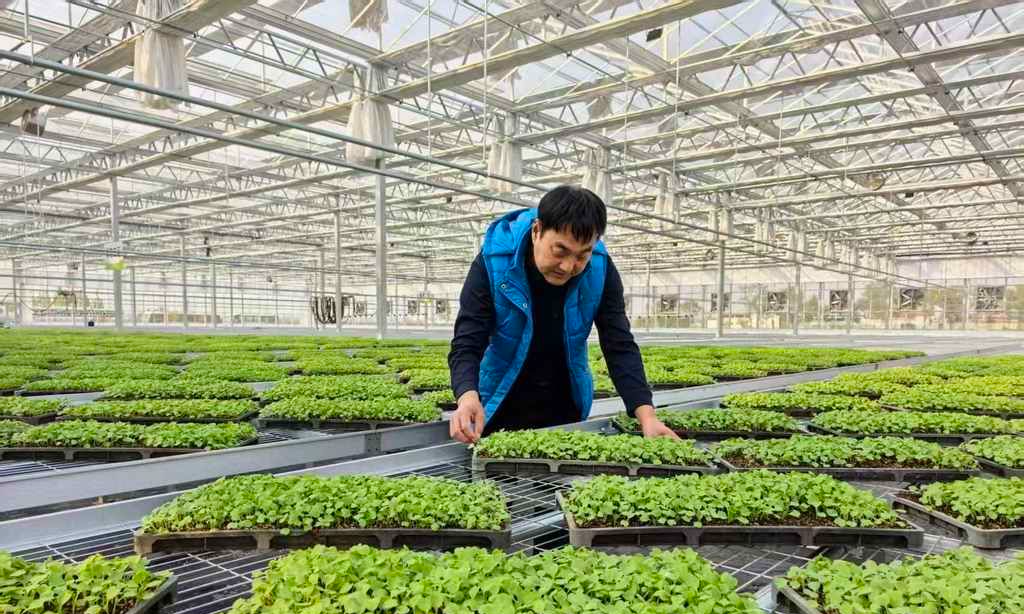
Core Insights - In 2025, Hebei's vegetable market share in Beijing reached 43.04%, an increase of 0.54 percentage points from the previous year, marking a historical high [1] - This growth signifies that nearly half of the vegetables on Beijing's dining tables come from Hebei, showcasing effective regional collaboration and supply chain management [1] Group 1: Supply Stability - Hebei, as a major northern facility vegetable province, has established a comprehensive supply structure with five complementary production areas, ensuring year-round supply [2] - The region supports a stable supply capacity of nearly 100,000 to 200,000 tons daily, with a "1-hour supply circle" around Beijing, featuring 7.18 million acres of vegetable production areas and 183 emergency supply bases [2] Group 2: Collaborative Development - The collaboration between Hebei and Beijing is driven by mutual benefits, with Hebei leveraging its agricultural strengths to create the largest northern greenhouse leafy vegetable base and the largest summer mushroom base in the country [2] - The partnership enhances supply chain efficiency and quality control through joint base construction and contract farming, resulting in a more effective and shorter supply chain [2] Group 3: Quality Improvement - Hebei is advancing its vegetable industry by establishing three national research centers and a digital quality indicator system for high-quality vegetables, ensuring scientific standards for produce [5] - The integration of production and market demand through the Beijing-Tianjin-Hebei information coordination mechanism has improved market access for Hebei's "clean vegetables," benefiting both consumers and farmers [5]
“十四五”期间三河农业农村全面进步惠民生
Xin Lang Cai Jing· 2026-01-13 04:19
Core Insights - The article highlights the growth and development of the agricultural sector in Sanhe City, particularly in the production and supply of "clean vegetables" to meet the demands of the Beijing-Tianjin market [6][7]. Agricultural Development - Sanhe City has established two provincial-level clean vegetable production demonstration bases and three surrounding vegetable production bases, supplying 5,969 tons of vegetables annually to Beijing, accounting for 92% of the total supply [11]. - The city has achieved a stable grain planting area of over 308,600 acres, with an annual production exceeding 270 million pounds [13]. - The total output value of agriculture, forestry, animal husbandry, and fishery reached 3.19 billion yuan [7]. Vegetable Industry - The annual vegetable planting area in Sanhe City has reached 95,700 acres, with a total output of 374,800 tons, contributing significantly to local income and food supply [14]. - The city is focusing on modern agricultural practices, including the use of smart greenhouses and cold storage facilities to enhance production efficiency [6]. Rural Development and Economic Growth - Sanhe City has been recognized with 26 honors at the municipal level and above, including seven national-level awards, showcasing its strong development capabilities [7]. - The per capita disposable income of rural residents is projected to reach 29,577 yuan in 2024, ranking first in Langfang City [7]. - Collective economic income in 395 villages has surpassed 100,000 yuan annually, with 107 villages exceeding 500,000 yuan [15]. Innovative Agricultural Practices - The introduction of smart management systems in farms has improved efficiency, allowing for better control over environmental conditions and crop management [9]. - The city is exploring the integration of technology with tourism to enhance agricultural value and provide recreational opportunities for visitors [9]. Specialty Products and Support Initiatives - Sanhe City has successfully cultivated three nationally recognized specialty agricultural products and two unique agricultural products, while investing 242 million yuan in 36 industry projects to support poverty alleviation [16].