洛布替尼

Search documents
正面挑战跨国药企 创新药老兵谭芬来博士底气何在?
Nan Fang Du Shi Bao· 2026-02-26 23:14
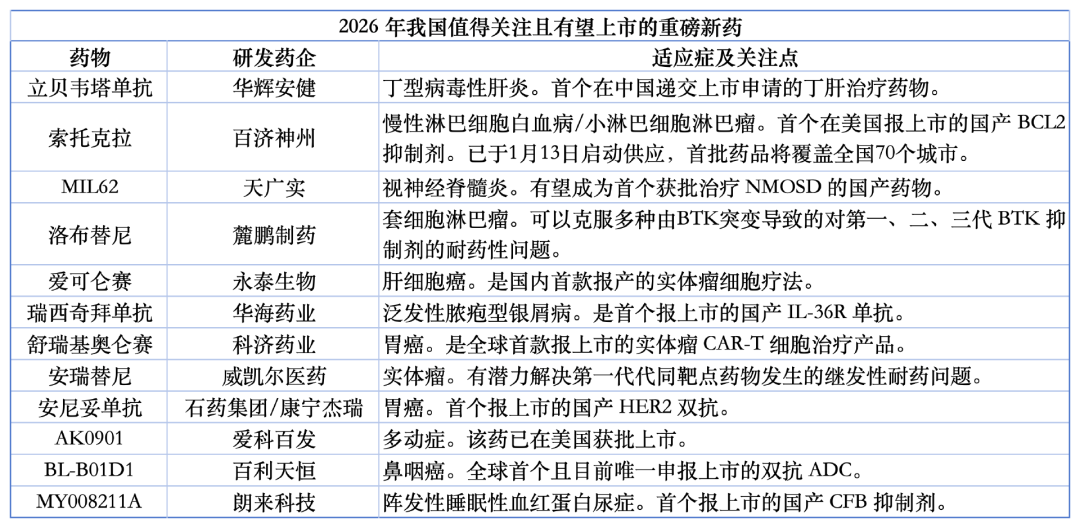
Core Insights - Dr. Tan Fenlai, a veteran in China's innovative drug development, founded LUPENG Pharmaceutical after leading the clinical development of China's first small molecule targeted cancer drug, Aiketing (Kaimena) [5][10] - LUPENG has achieved significant milestones, including the development of Lobatinib, the world's first and only dual mechanism BTK inhibitor, which has been recognized as a breakthrough therapy for DLBCL and is undergoing critical Phase II clinical trials [5][14] - The company aims to address unmet clinical needs in the oncology sector, particularly focusing on drug resistance in chronic lymphocytic leukemia and small lymphocytic lymphoma [15][19] Company Background - Dr. Tan's journey began with a strong foundation in medicine, leading to his involvement in pioneering drug development and regulatory frameworks in China [8][10] - After returning to China in 2007, he played a crucial role in developing Aiketing, which became a milestone in China's innovative drug history, benefiting over 850,000 lung cancer patients by 2024 [11][12] Strategic Positioning - LUPENG was established in 2018, capitalizing on favorable market conditions and government support for the biopharmaceutical industry, aiming to create globally competitive innovative drugs [13][14] - The company focuses on small molecule drugs in the hematological oncology field, specifically targeting BTK and BCL-2 pathways, amidst a competitive landscape dominated by established global players [14][15] Clinical Development and Innovation - Lobatinib is designed to tackle drug resistance by targeting both wild-type and mutated BTK, with promising clinical data showing a 63.9% objective response rate in patients with refractory or relapsed mantle cell lymphoma [15][16] - The company is also expanding its research into autoimmune diseases, recognizing the significant market potential in this area, with BTK inhibitors expected to play a crucial role [19][20] Financial and Operational Challenges - The company faced significant challenges during the capital market downturn, leading to strategic decisions to ensure financial stability while maintaining employee support [20][21] - A recent investment round has positioned LUPENG to regain momentum, with plans for an IPO to accelerate global innovation efforts [21]


最高447%!这些药企净利润翻倍,药明康德、康辰药业…
Xin Lang Cai Jing· 2026-01-14 11:44
Group 1 - The pharmaceutical industry in A-shares is showing a recovery trend, with some companies exceeding performance expectations for 2025 [1][14] - WuXi AppTec expects revenue of approximately 45.456 billion yuan for 2025, a year-on-year increase of about 15.84%, and a net profit of approximately 19.151 billion yuan, a year-on-year increase of about 102.65% [1][15] - WuXi AppTec's performance is driven by stable growth in its main business and the sale of equity in three companies, generating nearly 5.6 billion yuan in revenue [1][15] Group 2 - WoHua Pharmaceutical anticipates a net profit between 80 million and 115 million yuan for 2025, representing a year-on-year increase of 119.76% to 215.90% [2][16] - The growth in WoHua's performance is attributed to the price-volume trade-off trend after the entry of its product into centralized procurement and the extension to outpatient markets [3][17] Group 3 - Kangchen Pharmaceutical expects a net profit between 14.5 million and 17.5 million yuan for 2025, a year-on-year increase of 243% to 315% [4][19] - The company attributes its performance to the absence of goodwill impairment provisions for 2025, following a decline in revenue from a previously acquired business [5][19] Group 4 - Baiaosaitu is projected to achieve a net profit growth of 249.5% in 2025, with expected revenue of 1.31 billion yuan, a year-on-year increase of 37.75% [6][20] - The company began to achieve commercial profitability in 2024, successfully turning around its financial performance [6][20] Group 5 - The Chinese pharmaceutical market is expected to see significant developments in 2026, with a focus on innovative drug research and business development (BD) [7][21] - China has become the second-largest market for innovative drug launches globally, with leading pharmaceutical companies showing R&D intensities close to global averages [7][21] Group 6 - The total value of innovative drug licensing transactions from China is expected to exceed 130 billion USD in 2025, indicating strong recognition of Chinese pipelines by overseas buyers [9][23] - The CXO service industry is recovering, with predictions that the market size will approach 100 billion USD in 2026, driven by increased demand from innovative drug development [9][23] Group 7 - The AI pharmaceutical sector is becoming increasingly active, with significant transactions and the listing of AI companies on stock exchanges [11][25] - The global market for AI solutions in healthcare is projected to grow from 13.7 billion USD in 2022 to 155.3 billion USD by 2030, highlighting the potential for companies in this space [13][27]

技术风暴席卷,2026年医疗生态大洗牌
Guo Ji Jin Rong Bao· 2026-01-07 07:45
Group 1: Overall Industry Outlook - In 2026, the pharmaceutical industry is expected to experience a surge in innovative drugs, a recovery in the CXO sector, transformation in traditional Chinese medicine, contraction of retail pharmacies, restructuring of hospitals, and a wave of mergers and acquisitions, leading to increased industry differentiation and stronger players remaining dominant [1] Group 2: Innovative Drugs - A total of 76 innovative drugs were approved in 2025, marking a 58% increase from the previous year, with over 150 licensing transactions totaling more than $130 billion, indicating robust growth in China's innovative drug sector [3] - Approximately 20 major innovative drugs are anticipated to be approved in China in 2026, covering various therapeutic areas including oncology and rare diseases, with notable examples such as BL-B01D1 for esophageal squamous carcinoma [3][4] Group 3: CXO Sector - The CXO (Contract Research Organization) industry is experiencing a recovery driven by external factors such as U.S. interest rate cuts and increased R&D investments from multinational pharmaceutical companies, alongside domestic demand for CRO services [5][6] - The penetration rate of outsourcing in areas like ADCs and oligonucleotides is expected to rise to 65%, with companies like WuXi AppTec and Kelun Biotech showing strong growth in these segments [6] Group 4: Traditional Chinese Medicine - The Chinese medicine sector is entering an era of refined management, driven by policy upgrades and market innovations, with a focus on quality and cost balance in procurement [7][9] - By the end of 2026, China aims to establish 180 domestic and 30 international standards for traditional Chinese medicine, with the market expected to exceed 1 trillion yuan for the first time in 2024 [9] Group 5: Medical Devices - The medical device industry is shifting from price suppression to innovation-driven growth, with domestic companies rapidly advancing in high-end imaging, surgical robots, and AI medical devices [10] - Chinese medical device companies are increasingly expanding into international markets, with a notable rise in export volumes expected by 2026 [10] Group 6: Retail Pharmacies - The offline pharmacy sector is projected to contract significantly due to the growth of O2O and B2C models, with over 15,975 stores closing by September 2025, reflecting a 73% year-on-year increase in closures [12][13] Group 7: Private Hospitals - Private hospitals are facing severe challenges, with an average of 1.4 closures per day in 2024, and this trend is expected to continue into 2026 due to regulatory pressures and financial difficulties [14][15]
跃居全国顶流!生物医药“黄埔军团”,再也藏不住了
21世纪经济报道· 2025-09-04 07:30
Core Viewpoint - The article highlights the rapid rise of Guangzhou High-tech Zone in the biopharmaceutical industry, showcasing its significant growth and competitive advantages compared to other major biopharmaceutical hubs in China. Summary by Sections Industry Ranking and Growth - Guangzhou High-tech Zone ranked fifth in the national biopharmaceutical industry park competition, showing a remarkable improvement from twelfth place in 2021, climbing seven positions [4][5]. - The number of biopharmaceutical enterprises in Huangpu District has increased from 1,000 to 4,800 since 2017, a growth of 3.8 times, while revenue surged from 65 billion to 240 billion yuan, also a 2.7 times increase [6]. Leading Enterprises and Innovations - Huangpu District is home to 528 high-tech enterprises in the biopharmaceutical sector and 21 listed companies, accounting for 75% of Guangzhou's total [7]. - Notable companies include Kangfang Biotech, which has developed globally innovative dual-specific antibody drugs, and Hengrui Medicine, which has seen its innovative drug sales reach 9.561 billion yuan, making up 60.66% of its total revenue [9]. Competitive Advantages - The article identifies three key advantages for Huangpu's attractiveness to biopharmaceutical giants: top-tier location, superior medical resources, and a robust talent supply [10]. - The Guangdong-Hong Kong-Macao Greater Bay Area's economic scale reached 14.8 trillion yuan in 2024, making it a strategic development zone for pharmaceutical companies [10]. Policy Support and Ecosystem - Huangpu has implemented comprehensive policies to support the biopharmaceutical industry, including significant funding for innovative drug research and development [14]. - The district has established a "white list" system for the import of research materials, significantly reducing customs clearance times for biopharmaceutical companies [14]. Infrastructure and Development Model - Huangpu's industrial layout includes the Biopharmaceutical Island for R&D, the Science City for innovation, and the Knowledge City for production, creating a complete industrial chain [17][18]. - The integration of research, funding, clinical trials, and production within a short distance enhances operational efficiency for biopharmaceutical companies [18]. Future Outlook - Huangpu's development path reflects the broader transformation of China's biopharmaceutical industry, moving from generic drug production to innovative drug development [20].