
海洋盐度探测卫星

Search documents
英特尔与AMD据悉向中国客户通报CPU供应短缺,交付周期或长达六个月;航天造国产分体式电动垂直起降飞行器首飞成功丨智能制造日报
创业邦· 2026-02-07 03:48
Group 1 - The China Academy of Space Technology has successfully transitioned the Land Detection Satellite No. 4 and the Ocean Salinity Detection Satellite into operational status, showcasing advancements in microwave remote sensing technology and enhancing China's observation systems in marine and disaster reduction fields [2] - The world's first 20-megawatt offshore wind turbine has successfully connected to the grid in Fujian, marking a significant milestone in China's offshore wind power capabilities, with a weight reduction of over 20% compared to industry averages and improved wind capture and power generation efficiency [2] - Intel and AMD have informed Chinese customers about CPU supply shortages, with delivery times potentially extending up to six months, leading to a price increase of over 10% for Intel's server products in China due to tight supply conditions [2] - The first domestically produced electric vertical takeoff and landing (eVTOL) aircraft has successfully completed its maiden flight in Chongqing, demonstrating an innovative design that allows seamless transition between land and air travel [2]



新华社权威速览丨从探洋识冰到巡天瞰海:中国海洋卫星大家族都有哪些成员?
Xin Hua She· 2025-12-21 01:01
新华社权威速览 从探洋识冰到巡天瞰海: 中国海洋卫星大家族 都有哪些成员? 近日,执行中国第 42 次南极考察任务的 " 雪龙"号和" 雪龙 2"号在中山站成功完 成物资卸运和人员登陆工作。协同卸货作 业期间," 雪龙 2" 号为" 雪龙 " 号破冰引航, 海洋监视监测卫星发挥了重要作用。 包括海洋监视监测卫星在内 我国已建成海洋卫星观测体系 编织起"海洋感知网 " 中国海洋卫星大家族都有哪些成员? 起来了解↓ "海岸里服 海洋监视监测卫星 海洋监视监测卫星目前在轨 3颗,包括高分 号卫星、 1 米 C-SAR 卫星 01 和 02 星 能 目前,海洋水色系列卫星共有海洋一号 C、 一号 D 和海洋一号 E 三星在轨组网运行 海洋一 已实现中国近海中等分辨率每日 1 次的全 覆盖观测 图为海洋一号 C、海洋一号 D 效果图 后续还将发射海洋一号 F 和高轨海洋与海 岸带环境监测卫星,进一步提升海洋生态 和海岸带观测能力 "体能监测师" 图为 1 米 C-SAR 卫星 01 和 02 星效果图 凭借全天时、全天候、高分辨率微波观测 能力,海洋监视监测卫星不仅可以在重重 冰障中指明航向,还是维护海洋权益的" 千 ...

从探洋识冰到巡天瞰海:中国海洋卫星大家族都有哪些成员?
Xin Lang Cai Jing· 2025-12-20 13:55
转自:北京日报客户端 包括海洋监视监测卫星在内 我国已建成海洋卫星观测体系 编织起"海洋感知网" 中国海洋卫星大家族都有哪些成员? 起来了解↓ "健康观察员" 海洋水色卫星 通过捕捉海水对太阳光的反射光谱, 海洋 水色卫星可精准获取叶绿素浓度、 悬浮 泥沙等生态参数并开展海水表面温度的 红外遥感 目前,海洋水色系列卫星共有海洋一号 C、 海洋一号 D 和海洋一号 E 三星在轨组网运行 已实现中国近海中等分辨率每日 1 次的全 覆盖观测 "海上千里眼" 海洋监视监测卫星 海洋监视监测卫星目前在轨3颗,包括高分 号卫星、1 米 C-SAR 卫星 01 和 02 星 图为 1 米 C-SAR 卫星 01 和 02 星效果图 凭借全天时、全天候、高分辨率微波观测 能力,海洋监视监测卫星不仅可以在重重 冰障中指明航向,还是维护海洋权益的" 千 里眼" 海洋监视监测卫星将在 2030 年前实现高、 低轨卫星组网观测 海报制 来源:新华社 作者: 刘祯 顾天成 图为海洋一号 C、海洋一号 D 效果图 后续还将发射海洋一号 F 和高轨海洋与海 岸带环境监测卫星,进一步提升海洋生态 和海岸带观测能力 "体能监测师" 海洋动力卫 ...

新华社权威速览|从探洋识冰到巡天瞰海:中国海洋卫星大家族都有哪些成员?
Xin Hua She· 2025-12-20 13:34
新华社权威速览 从探洋识冰到巡天瞰海: 国海洋卫星大家族 都有哪些成员? 近日,执行中国第 42 次南极考察任务的 " 雪龙"号和" 雪龙 2"号在中山站成功完 成物资卸运和人员登陆工作。协同卸货作 业期间,"雪龙2"号为"雪龙"号破冰引航, 海洋监视监测卫星发挥了重要作用。 包括海洋监视监测卫星在内 我国已建成海洋卫星观测体系 编织起"海洋感知网" 中国海洋卫星大家族都有哪些成员? 起来了解 J 通过捕捉海水对太阳光的反射光谱,海洋 水色卫星可精准获取叶绿素浓度、 悬浮 泥沙等生态参数并开展海水表面温度的 红外遥感 GG 每上千里服" 海洋监视监测卫星 海洋监视监测卫星目前在轨3颗,包括高分 号卫星、1 米 C-SAR 卫星 01 和 02 星 图为 1 米 C-SAR 卫星 01 和 02 星效果图 凭借全天时、全天候、高分辨率微波观测 4+ 与光收视收到工具工作可以左手手 m 1 1 m / N 用比/J, 冰障中指明航向,还是维护海洋权益的"千 里眼" 海洋监视监测卫星将在 2030年前实现高、 低轨卫星组网观测 "健康观察员 海洋水色卫星 目前,海洋水色系列卫星共有海洋一号 C、 海洋一号 D 和海 ...

从探洋识冰到巡天瞰海!我国海洋卫星大显身手
Xin Hua Wang· 2025-12-18 20:48
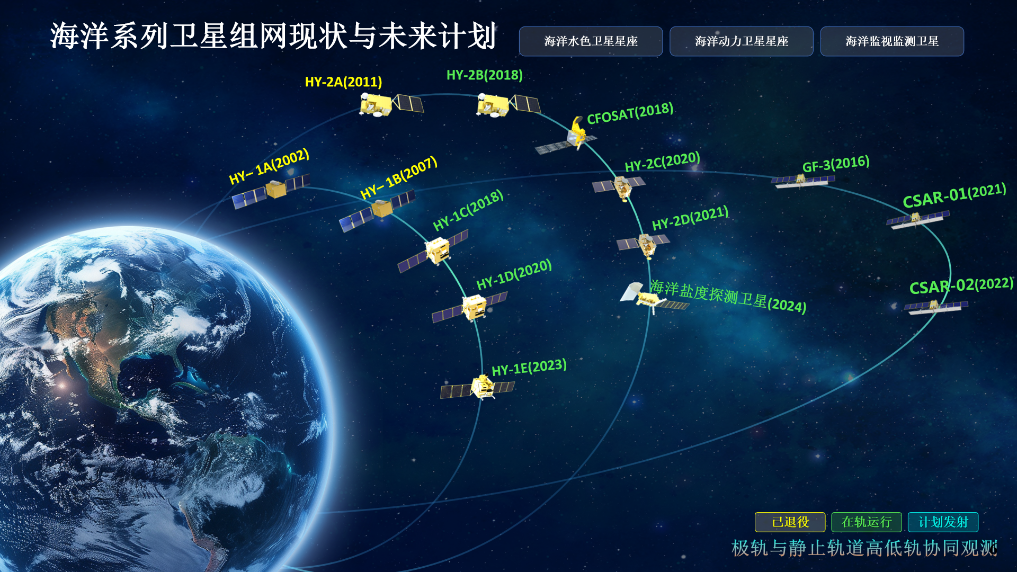
新华社北京/"雪龙"号12月18日电 题:从探洋识冰到巡天瞰海!我国海洋卫星大显身手 新华社记者刘祯、顾天成 近日,执行中国第42次南极考察任务的"雪龙"号和"雪龙2"号在中山站成功完成物资卸运和人员登陆工作。协同卸货作业期间,"雪龙2"号为"雪 龙"号破冰引航。 在较为复杂的冰情下,"雪龙"兄弟探洋识冰,海洋监视监测卫星功不可没。记者从考察队和国家卫星海洋应用中心了解到,我国已建成由海洋水 色、海洋动力、海洋监视监测三大系列卫星组成的协同观测体系,11颗在轨卫星编织起全天时、全天候、全覆盖的"海洋感知网",助力巡天瞰 海。 海洋监视监测卫星:名副其实的"海上千里眼" 南极科考,为什么"雪龙2"号可以判断乱冰区情况,确定最优破冰路线? "哪怕是乌云密布、大雾弥漫甚至伸手不见五指的黑夜,海洋监视监测卫星也能穿透干扰、透过黑暗捕捉海面的细节。"指着5米分辨率、50公里 幅宽的高分辨率冰区卫星遥感冰情信息专题图,海洋监视监测卫星地面系统副总师安文韬十分自豪地告诉记者。 "海水呈绿色通常表明浮游生物繁盛,偏黄色则多由泥沙、悬浮物等导致。"海洋水色卫星地面系统副总师叶小敏的一句话,道出了海洋水色卫星 的"拿手绝活"。 ...
科学与健康|从探洋识冰到巡天瞰海!我国海洋卫星大显身手
Xin Hua She· 2025-12-18 11:06
近日,执行中国第42次南极考察任务的"雪龙"号和"雪龙2"号在中山站成功完成物资卸运和人员登陆工 作。协同卸货作业期间,"雪龙2"号为"雪龙"号破冰引航。 在2030年前,海洋监视监测卫星将实现高、低轨卫星组网观测,提升对海上目标的实时跟踪能力,从而 为海上航行与作业安全保障、海洋权益维护提供更有力的技术支撑。 海洋水色卫星:细致入微的"健康观察员" "海水呈绿色通常表明浮游生物繁盛,偏黄色则多由泥沙、悬浮物等导致。"海洋水色卫星地面系统副总 师叶小敏的一句话,道出了海洋水色卫星的"拿手绝活"。 在较为复杂的冰情下,"雪龙"兄弟探洋识冰,海洋监视监测卫星功不可没。记者从考察队和国家卫星海 洋应用中心了解到,我国已建成由海洋水色、海洋动力、海洋监视监测三大系列卫星组成的协同观测体 系,11颗在轨卫星编织起全天时、全天候、全覆盖的"海洋感知网",助力巡天瞰海。 三大系列卫星示意图。(国家卫星海洋应用中心供图) 海洋监视监测卫星:名副其实的"海上千里眼" 南极科考,为什么"雪龙2"号可以判断乱冰区情况,确定最优破冰路线? "哪怕是乌云密布、大雾弥漫甚至伸手不见五指的黑夜,海洋监视监测卫星也能穿透干扰、透过黑暗捕 捉 ...

国防军工:军工本周观点:关注四中新方向-20251027
Huafu Securities· 2025-10-27 05:11
Investment Rating - The industry rating is "Outperform the Market" indicating that the overall return of the industry is expected to exceed the market benchmark index by more than 5% in the next 6 months [57]. Core Insights - The report emphasizes the importance of national security and the goals set for the military by the 20th Central Committee, highlighting the need for modernization in defense and military capabilities [41][42]. - The report identifies significant growth opportunities in emerging industries such as aerospace, new energy, and low-altitude economy, which are expected to drive economic growth over the next decade [41][42]. - The military industry is anticipated to experience strong demand recovery from 2025 to 2026, supported by various catalysts including the "14th Five-Year Plan" and the "100-Year Military Goal" [42]. Summary by Sections 1. Industry Performance Review - The military industry index (801740) increased by 2.81% from October 20 to October 24, while the CSI 300 index rose by 3.24%, resulting in an underperformance of 0.43 percentage points [15][17]. - Since the beginning of 2025, the military index has risen by 16.47%, compared to an 18.44% increase in the CSI 300 index, indicating a relative underperformance of 1.98 percentage points [17]. 2. Market and Valuation - As of October 24, the military industry index has a TTM price-to-earnings ratio of 74.63, placing it in the 96.86 percentile, suggesting a high valuation relative to historical levels [42][27]. - The report notes a slight net outflow of passive funds, with expectations of a recovery in demand leading to a positive outlook for future fund inflows [42][27]. 3. Key Investment Opportunities - The report suggests focusing on specific companies within various segments of the military industry, including land equipment, stealth materials, deep-sea technology, engines, unmanned systems, AI, and nuclear fusion [44]. - Notable companies to watch include Tianqin Equipment, Gaode Infrared, and Aerospace Technology among others [44]. 4. Important News and Announcements - The report highlights recent successful launches in the aerospace sector, including the successful deployment of satellites by the Li Jian No. 1 rocket [45]. - It also discusses advancements in nuclear fusion technology and the establishment of new policies to support the low-altitude economy [46][49].
我国首颗海洋盐度探测卫星完成在轨测试
Zheng Quan Shi Bao Wang· 2025-10-22 10:07
Core Viewpoint - The successful completion of in-orbit testing for China's first ocean salinity detection satellite marks a significant milestone in the country's civil space infrastructure and enhances the satellite observation system for marine studies [1] Group 1: Satellite Development - The ocean salinity detection satellite was developed by China Aerospace Science and Technology Corporation's Fifth Academy [1] - It was launched on November 14, 2024, by the Long March 4B rocket [1] Group 2: Importance and Impact - This satellite fills a gap in satellite-based ocean salinity detection, contributing to the overall marine observation capabilities [1] - It is recognized as a key scientific satellite within the national civil space infrastructure [1]
