源网荷储小型智能微电网

Search documents
“场景”为何能成为关键创新资源?
Ren Min Ri Bao· 2025-12-03 07:04
Group 1 - The concept of "scene" has become a key innovation resource, representing the specific context for the application of new technologies, products, and business models [1][2] - The "14th Five-Year Plan" suggests increasing the construction and openness of application scenarios, highlighting the importance of bridging research and market needs [2][6] - Real-world application scenarios, such as the intelligent microgrid showcased at the 15th National Games, demonstrate the practical use of advanced technologies [1][2] Group 2 - The complexity and uncertainty of real-world scenarios, such as those faced by smart connected vehicles, necessitate practical testing environments to validate new technologies [2][3] - New scenarios empower technological breakthroughs by clarifying demands and fostering collaboration between enterprises and research institutions [4][5] - The integration of innovation outcomes requires both hard infrastructure and supportive soft environments, such as regulations and policies [4][6] Group 3 - Collaborative ecosystems are essential for innovation, allowing various stakeholders to work together and create synergies [5][6] - The recent implementation opinions from the State Council aim to promote large-scale application of new scenarios, elevating this initiative to a national policy level [6]
“场景”为何能成为关键创新资源?(读者点题·共同关注)
Ren Min Ri Bao· 2025-12-02 22:09
Group 1 - The concept of "scene" has emerged as a key innovation resource, bridging the gap between research and market needs, facilitating the application of new technologies and products in real-world contexts [1][2] - The "14th Five-Year Plan" emphasizes the importance of enhancing application scene construction and openness, leveraging China's vast market and industrial system to create rich application scenarios [2][6] - Real-world testing environments, such as the open road testing in Nansha District, Guangdong, allow for the practical application of autonomous driving technologies, demonstrating the necessity of real-world scenarios for technology validation [2][3] Group 2 - New scenes empower technological breakthroughs by aligning research with market demands, as seen in the collaboration between academia and industry to develop specialized materials for space missions [4][5] - The integration of innovation outcomes requires both hard infrastructure and supportive soft environments, such as regulations and policies, to facilitate successful technology transfer [4][5] - The recent implementation opinions from the State Council aim to accelerate the cultivation of application scenes, positioning it as a national policy to drive industrial development and enhance new productive forces [6]
深度融合 场景生态怎样建
Jing Ji Ri Bao· 2025-11-14 01:58
Core Insights - The Guangdong-Hong Kong-Macao Greater Bay Area is embracing "All Sports Time" with the opening ceremony of the 15th National Games, showcasing technological innovations like the electric water mist system for the torch lighting [1] - Scene innovation is becoming a new engine for economic growth in China, emphasizing the importance of open collaboration and ecosystem building [1][2] Group 1: Scene Innovation and Economic Growth - Scene innovation is characterized by its integrative nature, combining new technologies, products, and business models to unlock deeper value and experiences [3] - The city of Hefei has launched 431 scene matching activities, resulting in over 1,200 cooperative projects, highlighting the effectiveness of demand-supply matching [2] - The establishment of various alliances, including state-owned enterprises and international collaborations, aims to promote resource sharing and innovation [2] Group 2: Technological Advancements and Applications - The "Flying Sea" model in Nansha, Guangzhou, integrates advanced technologies and resources to enhance deep-sea economic development [4] - The International Advanced Technology Application Promotion Center is facilitating the integration of major scientific infrastructure to support innovation in deep-sea applications [4][5] - The Guangdong region is leading in innovation, with initiatives like allowing L4 autonomous vehicles to operate without safety personnel, paving the way for commercial applications [5] Group 3: Regulatory and Institutional Framework - Effective scene cultivation requires not only infrastructure development but also regulatory and policy innovations to create a supportive environment for innovation [6] - The need for collaboration between effective markets and proactive government is emphasized to address uncertainties in scene development [5][6] Group 4: Urban Scene Innovation Practices - As of mid-2024, 65 cities in China have engaged in scene innovation practices, reflecting a significant increase and evolution in this area [7] - The transition from isolated actions to a more systematic approach in scene cultivation is noted, with a focus on integrating local resources and strengths [7][8] - Different cities have unique scene resource potentials based on their industrial foundations and consumer dynamics, necessitating tailored approaches to scene development [8]
深度融合,场景生态怎样建
Jing Ji Ri Bao· 2025-11-13 22:20
Core Viewpoint - The Guangdong-Hong Kong-Macao Greater Bay Area is leveraging innovative technologies and collaborative ecosystems to drive economic growth through scene innovation, as demonstrated by the recent National Games opening ceremony featuring a tech-driven "flame" [1][3]. Group 1: Scene Innovation and Economic Growth - Scene innovation is becoming a new engine for economic growth, integrating technology, products, and business models to create deeper value and experiences [3][6]. - Hefei has launched 431 scene matching activities, resulting in over 1,200 cooperative projects, showcasing a systematic approach to linking supply and demand [2][3]. - The establishment of various alliances, including state-owned enterprises and city coalitions, aims to break down regional barriers and promote resource sharing [2][3]. Group 2: Technological Integration and Development - The "Flying Sea" model in Nansha, Guangzhou, integrates advanced technologies and resources to enhance deep-sea development, addressing regional disparities in marine resource utilization [4][5]. - The National Development and Reform Commission emphasizes the need for both hard infrastructure and soft innovations, such as regulations and policies, to foster a conducive environment for scene innovation [6][7]. Group 3: Urban Scene Innovation Practices - Since 2018, cities like Beijing, Hefei, and Shanghai have initiated scene innovation, with 65 cities engaged in related activities by mid-2024, reflecting a shift from scattered efforts to systematic integration [7][8]. - Different cities have unique scene resources based on their industrial foundations, consumer activity, and development stages, necessitating tailored approaches to scene application [8][9].
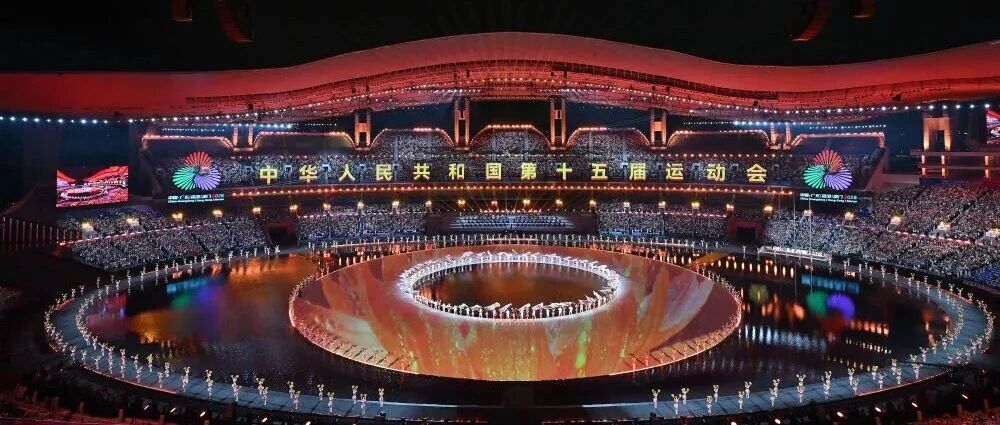
100%绿电!十五运会开幕式圆满落幕,总导演点赞供电保障
中国能源报· 2025-11-10 02:36
Core Viewpoint - The article highlights the successful power supply guarantee by Southern Power Grid during the opening ceremony of the 15th National Games, showcasing the integration of advanced technologies and green energy initiatives. Group 1: Event Overview - The opening ceremony took place on November 9 at the Guangdong Olympic Sports Center, featuring a blend of traditional culture and modern technology, including AIGC, AR, and holographic projections [1] - Southern Power Grid ensured a reliable power supply with zero outages and fluctuations across 240,000 meters of power lines and 30,000 lighting fixtures [1] Group 2: Technological Innovations - Southern Power Grid introduced a pioneering "grid power + energy storage" dual supply model, enhancing voltage support and reducing CO2 emissions by nearly 100 tons compared to traditional diesel generators [7] - The company developed the first hydrogen-powered intelligent power inspection robot team in the country and deployed the first solid-state hydrogen energy emergency power vehicle for stable and clean power support [8] - A smart power supply system was established using "Electric Hong + Quantum Communication" technology for transparent monitoring of load, equipment, and personnel across the venue [9] Group 3: Green Energy Initiatives - The event aimed for a "carbon-neutral" approach, utilizing 100% green electricity, with an estimated consumption of over 188 million kilowatt-hours, equivalent to a reduction of approximately 160,000 tons of carbon emissions [10] - A collaborative power supply mechanism was established with Hong Kong and Macau, involving regular information sharing and joint emergency drills [10] - The event's venues in Guangzhou are expected to consume about 85.65 million kilowatt-hours of green electricity, reducing carbon emissions by approximately 77,000 tons [17] Group 4: Operational Excellence - On the day of the ceremony, 37,500 personnel were on duty to ensure risk management and the stability of the power grid [20] - Southern Power Grid completed 136 supporting engineering projects and conducted extensive safety inspections to ensure optimal conditions for power facilities [20] - The company mobilized 538 technical experts from four provinces to provide cross-border support for power supply during the event [24]