
炒货食品及坚果制品

Search documents
河南省鹤壁市市场监督管理局关于2026年春节专项食品抽检情况的通告
Xin Lang Cai Jing· 2026-02-24 08:01
Core Viewpoint - The Heibi Municipal Market Supervision Administration conducted a special food safety inspection for the Spring Festival, revealing that all 196 batches of food tested were compliant with safety standards [1] Group 1: Food Safety Inspection - The inspection covered a variety of food categories including edible agricultural products, dairy products, alcoholic beverages, pastries, fried snacks, nuts, catering foods, and grain processing products [1] - No non-compliant food items were found during the inspection, indicating a positive outcome for food safety in the region [1] Group 2: Consumer Engagement - Consumers are encouraged to actively participate in food safety supervision and report any issues by calling the complaint hotline "12315" [1] - The market supervision department has initiated a regular food inspection service called "You Point, I Inspect" to enhance consumer engagement and improve food safety [1]
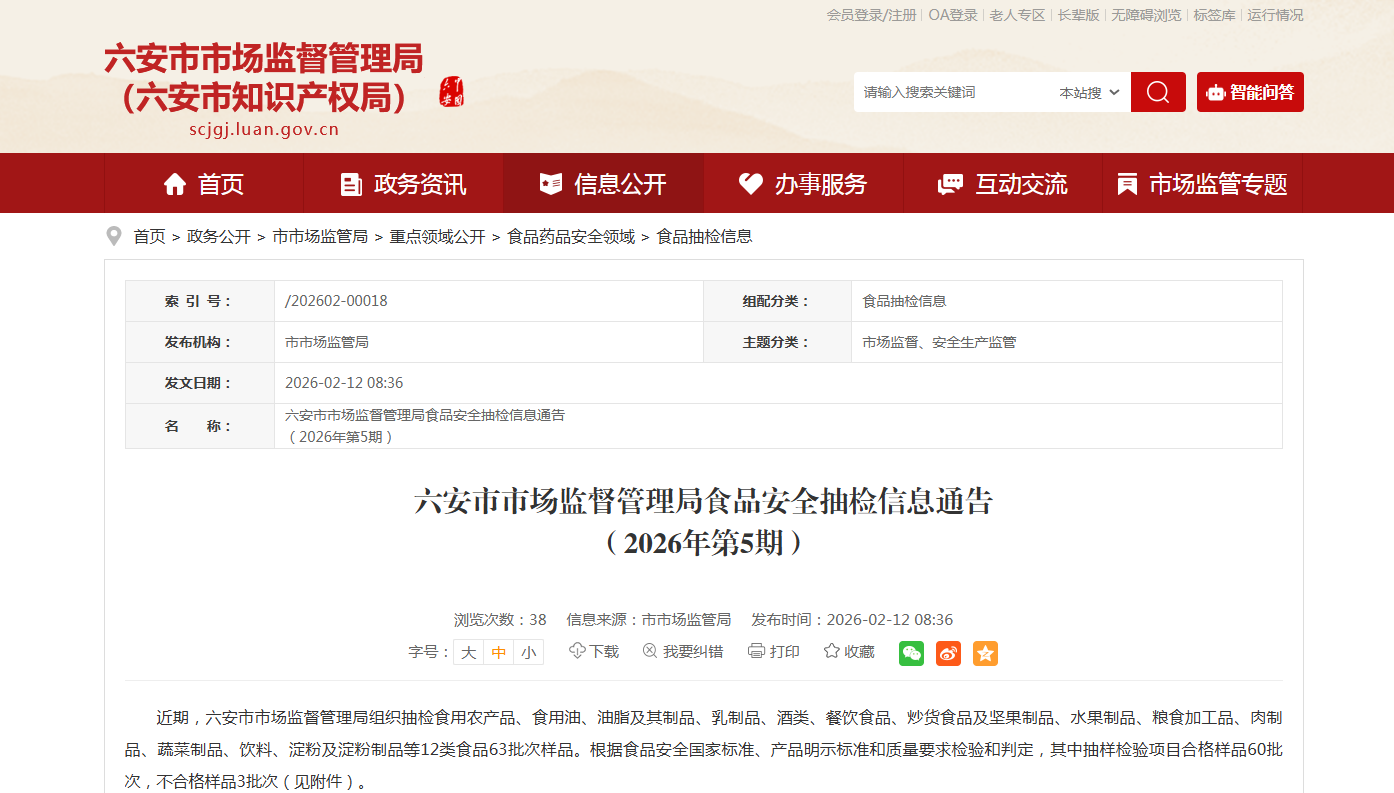
安徽省六安市市场监督管理局食品安全抽检信息通告(2026年第5期)
Xin Lang Cai Jing· 2026-02-14 09:15
Core Viewpoint - The Liu'an Market Supervision Administration conducted a food safety inspection, revealing that out of 63 samples from various food categories, 60 passed inspection while 3 were found to be non-compliant [1][2]. Group 1: Inspection Details - The inspection covered 12 categories of food products, including edible agricultural products, edible oils, dairy products, alcoholic beverages, and various processed foods [1]. - A total of 63 samples were tested according to national food safety standards and product quality requirements [1]. Group 2: Non-compliance Actions - The local market supervision department has initiated verification and disposal actions for the identified non-compliant food products [2].

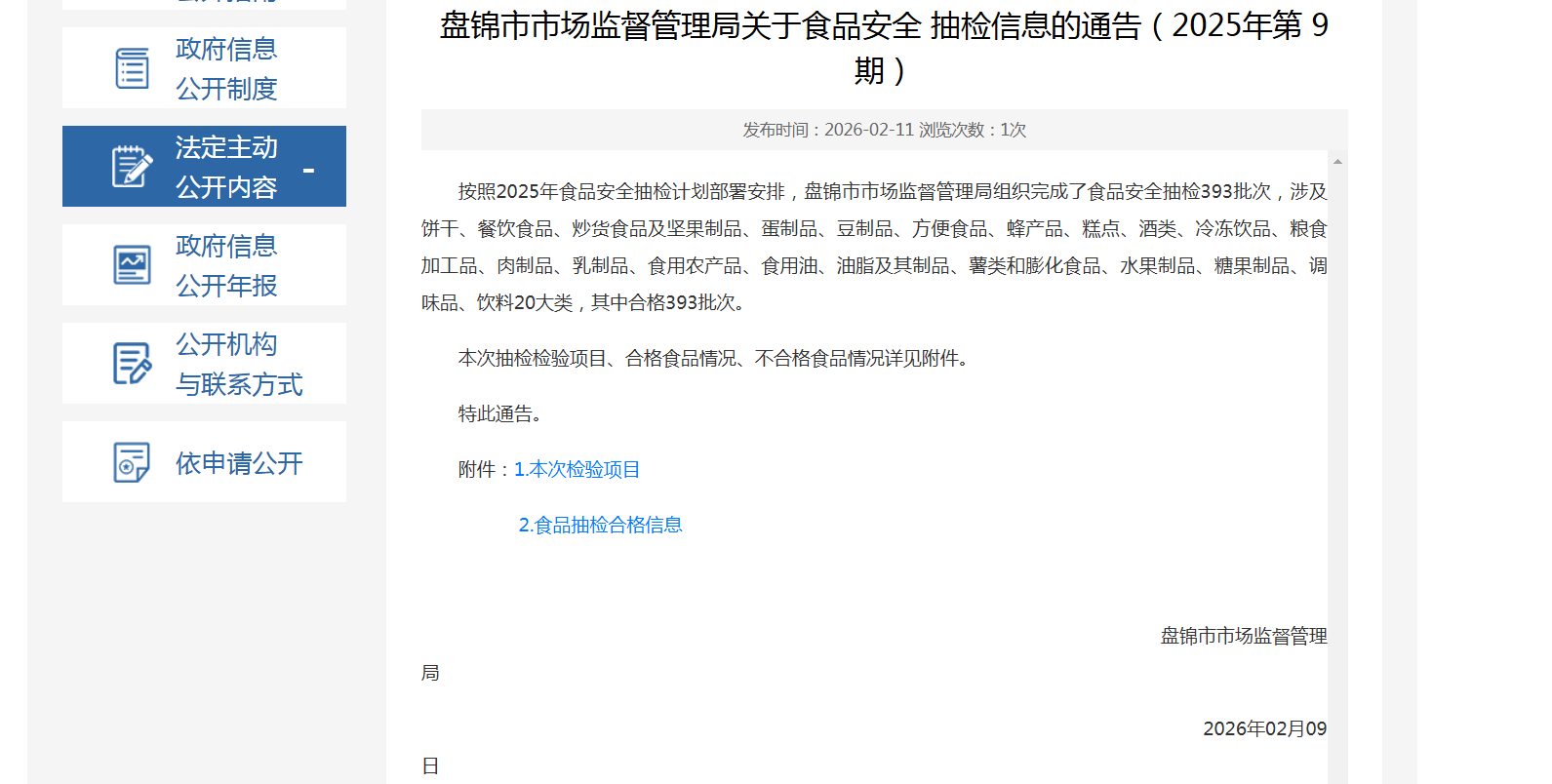
辽宁省盘锦市市场监督管理局关于食品安全抽检信息的通告(2025年第 9 期)
Xin Lang Cai Jing· 2026-02-14 05:06
Core Viewpoint - The Panjin Market Supervision Administration has completed a food safety inspection plan for 2025, conducting a total of 393 batches of food safety tests across various categories, with all batches passing the inspection [3] Group 1: Inspection Overview - A total of 393 batches of food safety inspections were organized, covering 20 major categories including biscuits, catering food, nuts, egg products, and beverages [3] - All inspected batches were found to be compliant, indicating a positive outcome for food safety standards in the region [3] Group 2: Categories of Inspected Products - The inspection included a diverse range of food products such as frozen drinks, meat products, dairy products, edible agricultural products, and condiments [3] - The comprehensive nature of the inspection reflects a thorough approach to ensuring food safety across multiple food categories [3]
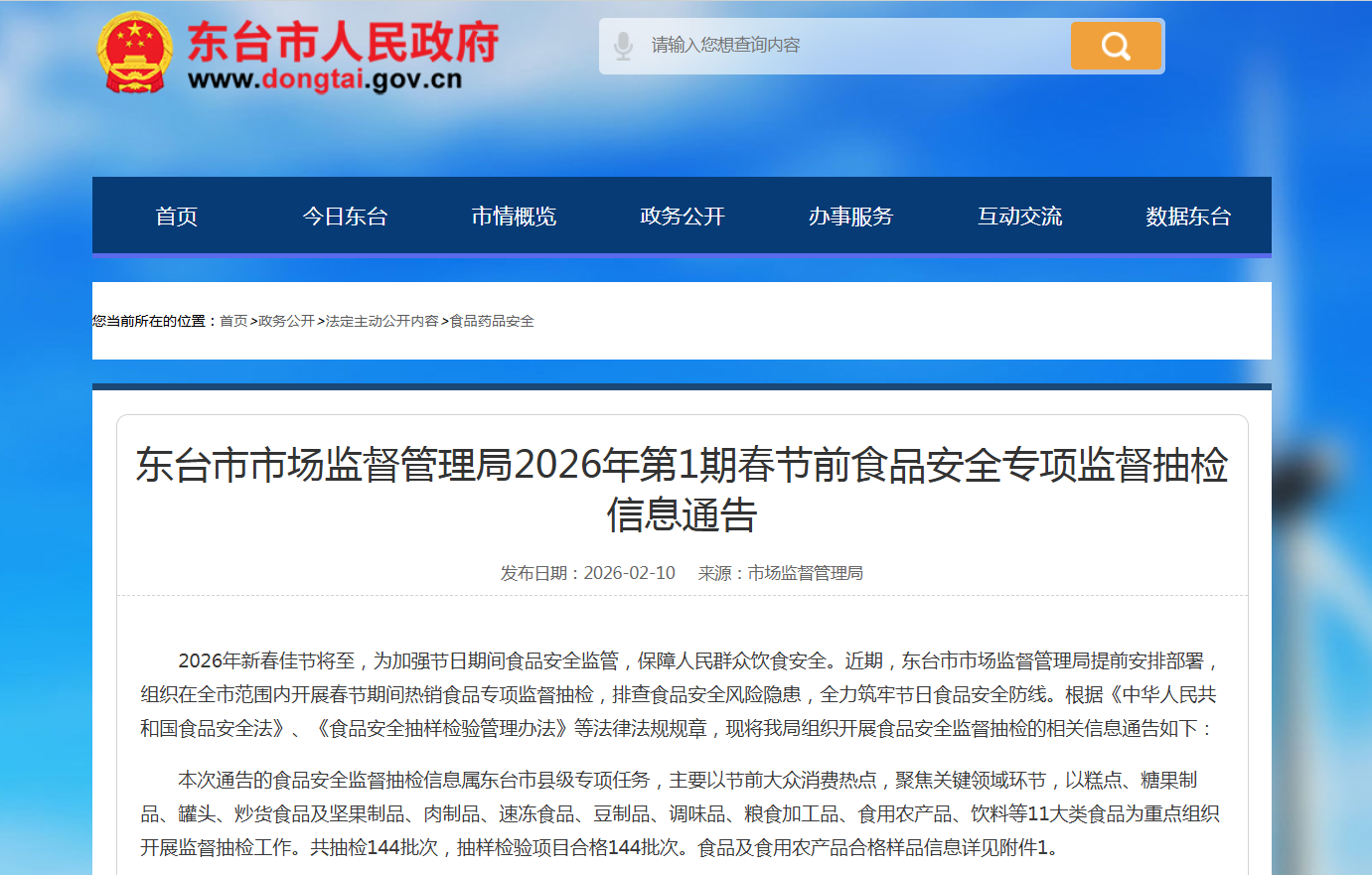
江苏省东台市市场监督管理局2026年第1期春节前食品安全专项监督抽检信息通告
Xin Lang Cai Jing· 2026-02-14 05:06
Core Viewpoint - The article emphasizes the proactive measures taken by the Dongtai Market Supervision Administration to ensure food safety during the upcoming Spring Festival by conducting special inspections on popular food items [2] Group 1: Food Safety Supervision - The Dongtai Market Supervision Administration has organized a special supervision and sampling inspection for food safety in preparation for the Spring Festival [2] - The focus of the inspections includes 11 categories of food, such as pastries, candy products, canned goods, nuts, meat products, frozen foods, soy products, seasonings, grain processing products, agricultural products, and beverages [2] - A total of 144 batches were sampled, with all 144 batches passing the inspection [2]
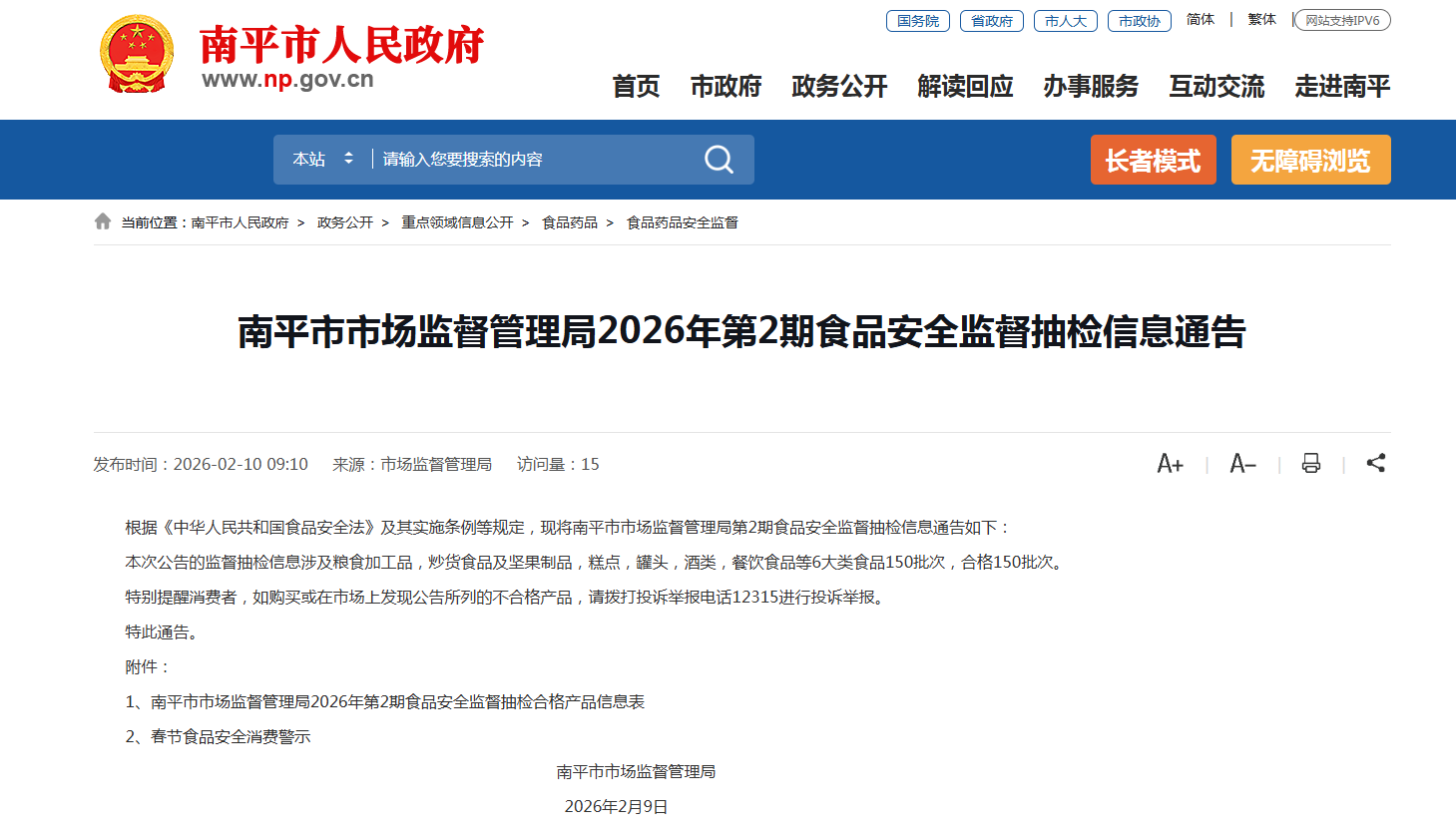
福建省南平市市场监督管理局2026年第2期食品安全监督抽检信息通告
Xin Lang Cai Jing· 2026-02-14 05:05
Core Viewpoint - The announcement from the Nanping Market Supervision Administration indicates that all 150 batches of food products tested in the second phase of food safety supervision are compliant with safety standards [2] Group 1: Food Categories - The supervision and sampling information covers six major categories of food: grain processing products, fried foods and nut products, pastries, canned foods, alcoholic beverages, and catering foods [2] - A total of 150 batches were tested, and all were found to be qualified [2] Group 2: Consumer Advisory - Consumers are advised to report any non-compliant products listed in the announcement by calling the complaint hotline 12315 [2]
节日食品抽检:仅1批次炒货不合格 794批次食品抽检合格率为99.87%
Su Zhou Ri Bao· 2026-02-11 23:01
Group 1 - The core viewpoint of the news is that Suzhou's market regulatory authority has initiated a special food safety inspection during the Spring Festival to ensure safe food consumption and a pleasant holiday environment for the public [1] Group 2 - The special inspection focuses on 18 categories of pre-packaged foods, including meat products, pastries, nuts, frozen foods, beverages, dairy products, cooking oils, and alcoholic beverages, as well as commonly used ingredients for family gatherings like pork, beef, and seafood [1] - A total of 794 food samples were collected, with a compliance rate of 99.87%, as 793 samples met food safety standards, while one sample of nuts exceeded the peroxide value limit [1][2] - The inspection covered key sampling locations such as wholesale markets, representative large and medium-sized supermarkets, and dining establishments, with 27.99% of samples taken from tourist attractions [1] Group 3 - Peroxide value is a critical indicator of the oxidation and rancidity of oils and oil-containing foods, and while exceeding this limit generally does not harm health, it can lead to gastrointestinal discomfort if consumed in excess [2] - The market regulatory authority has directed local departments to promptly investigate and address the non-compliant food items found during the inspection to effectively manage food safety risks [2]
总体食品安全状况良好
Xin Lang Cai Jing· 2026-02-10 22:10
Core Insights - The article highlights the results of a nationwide food safety inspection conducted by the State Administration for Market Regulation (SAMR) ahead of the Spring Festival, indicating a high compliance rate of 98.38% across 67,000 samples tested [1] Group 1: Inspection Overview - The inspection covered 31 provinces, focusing on high-traffic areas such as tourist attractions, large supermarkets, highway service areas, and train stations, as well as 23 online platforms including JD.com, Taobao, and Meituan [1] - Key food items tested included pastries, nuts, candies, and meat products, with a focus on food additives, microorganisms, quality indicators, and pesticide residues [1] Group 2: Results and Findings - Nine categories of food, including dairy products, convenience foods, and canned goods, showed no non-compliant samples [1] - However, issues were noted with fruits and fruit products, as well as seasonings, regarding the excessive use of food additives and pesticide residues in agricultural products [1] Group 3: Regulatory Actions - Following the detection of non-compliant samples, SAMR has urged local regulatory bodies to conduct investigations and take necessary actions to ensure food safety during the festive period [1]
春节热销食品抽检公布合格率为98.38%
Xin Lang Cai Jing· 2026-02-10 21:07
Core Viewpoint - The overall food safety situation in China is good, with a high compliance rate of 98.38% from a special inspection of 67,000 batches of popular food items conducted by the State Administration for Market Regulation before the Spring Festival [1] Group 1: Inspection Overview - The special inspection covered 31 provinces, focusing on high-traffic areas such as tourist attractions, large supermarkets, highway service areas, and train stations, as well as 23 online platforms including JD.com, Taobao, and Meituan [1] - Key food items inspected included pastries, nuts, candies, and meat products, with a focus on food additives, microorganisms, quality indicators, and pesticide residues [1] Group 2: Inspection Results - No non-compliant samples were found in nine categories of food, including dairy products, convenience foods, and canned goods [1] - However, issues were noted with excessive use of food additives in fruits and seasonings, as well as pesticide residues in agricultural products [1] Group 3: Regulatory Actions - The State Administration for Market Regulation has urged local regulatory departments to conduct investigations and take action regarding the non-compliant samples identified during the inspection [1]
市场监管部门开展春节食品安全专项抽检
Ren Min Ri Bao· 2026-02-10 19:46
Core Insights - The National Market Supervision Administration conducted a special food safety inspection before the Spring Festival, testing 67,000 batches with a compliance rate of 98.38%, indicating a generally good food safety status [1] Group 1: Inspection Overview - The special inspection covered 31 provinces, focusing on high-traffic areas such as tourist attractions, large supermarkets, highway service areas, and train stations [1] - Online platforms including JD.com, Taobao, and Meituan were also included in the inspection, covering 23 different e-commerce sites [1] Group 2: Focused Food Categories - Key food items inspected included pastries, fried snacks, nuts, candies, and meat products, which are popular during the festive season [1] - The inspection emphasized testing for food additives, microorganisms, quality indicators, and residues of agricultural and veterinary drugs [1] Group 3: Results of the Inspection - The results showed that no non-compliant samples were found in nine categories of food, including dairy products, convenience foods, and canned goods [1]
市场监管总局开展 春节食品安全专项抽检
Xin Lang Cai Jing· 2026-02-10 16:59
Core Insights - The article reports that the State Administration for Market Regulation conducted a special food safety inspection before the Spring Festival, testing 67,000 batches of food with a compliance rate of 98.38%, indicating a generally good food safety situation [1] Group 1: Inspection Overview - The special inspection covered 31 provinces, focusing on high-traffic areas such as tourist attractions, large supermarkets, highway service areas, and train stations [1] - The inspection also included 23 online platforms like JD.com, Taobao, and Meituan, targeting popular festive food items such as pastries, nuts, candies, and meat products [1] Group 2: Testing Focus - Key testing items included food additives, microorganisms, quality indicators, and residues of agricultural and veterinary drugs [1] - The article emphasizes the importance of ensuring food safety during the festive season to protect consumers' health [1] Group 3: Follow-up Actions - Following the detection of non-compliant samples, the State Administration for Market Regulation has urged local regulatory departments to conduct investigations and take necessary actions [1]