焦炉煤气制氢

Search documents
2026年河北省重点化工项目公布(附名单)
Xin Lang Cai Jing· 2026-01-18 08:11
Core Insights - Hebei Province has announced a list of key construction projects for 2026, focusing on strategic emerging industries, traditional industry upgrades, modern services, and infrastructure [1] - A total of 747 key projects are planned with a total investment of 1.56 trillion yuan, an increase of 44 projects compared to the previous year [1] Group 1: New Projects - The new projects include a 40,000-ton annual production project for benzaldehyde and related products by Hebei Jindong New Materials [1] - Hebei Siyou Shucan's 300,000-ton α-olefin project is set to be developed in the Bohai New Area [1] - A 33,83-ton high-purity hydrogen sulfide production project by China Shipbuilding (Handan) is planned [1] - North China Petrochemical will initiate a 100,000-ton annual sustainable aviation fuel project [1] - A 200,000-ton annual carbon capture and utilization project is also planned by North China Petrochemical [1] Group 2: Ongoing Projects - The ongoing projects include a 400,000-ton annual sustainable aviation fuel hydrogenation project by Zhongneng Yida [2] - A 50,000-ton straw biomass fuel project by Langfang Qida is under development [2] - Hebei Dexin Hydrogen Energy Technology's comprehensive utilization project for coke oven gas is also in progress [2] - A 12 billion square meters wet-process lithium battery separator project by Cangzhou Mingzhu is ongoing [2] - The green transformation development project by Sinopec's Shijiazhuang Refining and Chemical Company is also part of the ongoing projects [2]
美锦能源:关于部分可转债募集资金投资项目延期的公告
Zheng Quan Ri Bao· 2025-12-10 14:13
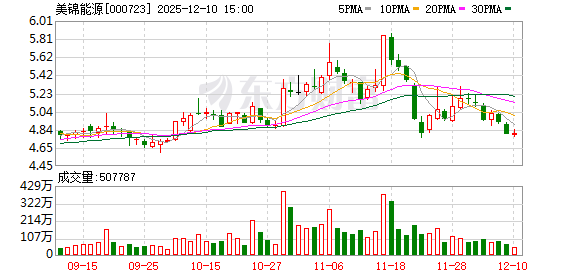
Core Viewpoint - Meijin Energy announced a postponement of the completion date for its hydrogen production project from December 2025 to December 2026 [2] Group 1 - The company held its 47th board meeting on December 10, 2025, to review the proposal regarding the delay of certain convertible bond fundraising investment projects [2] - The specific project affected is the "Luanzhou Meijin New Energy Co., Ltd. 14,000 Nm³/h coke oven gas hydrogen production project" [2]


山西探路焦炉煤气制氢
Jing Ji Guan Cha Wang· 2025-11-29 12:07
Core Insights - The focus of the Shanxi coking industry is shifting towards the utilization of by-products from the coking process, particularly coke oven gas, as a growth point for the future [2][9] Industry Overview - Shanxi is a major coking province with a total coking capacity of approximately 142 million tons and an established coke oven capacity of 118 million tons [2] - In 2024, Shanxi's coke production is projected to be 92.116 million tons, accounting for 18.8% of the national total, making it the largest producer in China [2] - The domestic steel production has stabilized, with crude steel output expected to decrease from approximately 1.03 billion tons in 2021 to about 1.005 billion tons in 2024 [2] - The profitability of steel mills has declined significantly, with average production profits for hot-rolled coils dropping from around 800 RMB/ton in 2021 to less than 100 RMB/ton in 2024 [2] Financial Performance - The Shanxi coking industry is facing pressure, with an expected industrial added value growth rate decline of 0.4% in 2024, and total revenue projected at 235.6 billion RMB, a year-on-year decrease of 12.1% [2] - The industry is anticipated to incur a loss of 6.93 billion RMB in 2024, an increase in losses by 3.09 billion RMB compared to the previous year [2] By-product Utilization - The focus is on the recovery and utilization of various by-products from the coking process, such as coal tar and coke oven gas, to extend the coal chemical industry chain [2][3] - Coke oven gas has a high hydrogen content of about 60%, making it a valuable resource for hydrogen production [4] Hydrogen Production Potential - Shanxi can produce over 40 billion Nm³ of coke oven gas annually, with approximately 55% of it available for hydrogen extraction, representing a total development potential of over 13 billion Nm³ per year [5] - The cost of hydrogen production from coke oven gas is estimated to be between 10 to 12 RMB/kg, significantly lower than the local green hydrogen cost of around 20 RMB/kg [6] Industry Trends - There is a growing trend among Shanxi coking enterprises to enhance the utilization of coke oven gas for hydrogen production, with many companies actively investing in hydrogen energy projects [6][7] - The development of hydrogen energy heavy trucks has created new application scenarios for hydrogen produced from coke oven gas, with several companies already deploying hydrogen energy trucks [7][8] Future Outlook - The coking industry is expected to transition from a focus on coke production to a greater emphasis on coke oven gas, particularly as hydrogen metallurgy becomes more viable [9] - The industry is exploring various technological routes for steel production, including electric furnaces and hydrogen direct reduction, to reduce carbon emissions [9][10]

开辟新路径、大市场!钢铁厂直接出产清洁能源 服务高精尖产业
Yang Shi Wang· 2025-11-25 00:09
Core Insights - The first 100% conversion project of coke oven gas in China has been established in Lingyuan, Liaoning, paving a new path for green and low-carbon development in the steel industry [1] Group 1: Project Overview - The new energy plant utilizes advanced separation and synthesis technology to convert coke oven gas into LNG (liquefied natural gas), liquid ammonia, and hydrogen [2][3] - The conversion process achieves 100% utilization of coke oven gas, with the produced LNG being described as the "cleanest fossil energy" [3] Group 2: Environmental Impact - China, being the largest producer of coke, generates approximately 210 billion cubic meters of coke oven gas annually. Utilizing 30% of this could reduce carbon dioxide emissions by about 45 million tons per year in the steel industry [3] Group 3: Economic Benefits - The project is expected to generate over 100 billion yuan in industrial output, promoting innovation in the traditional steel sector [3] Group 4: Hydrogen Production and Applications - The cost of hydrogen production from coke oven gas is only 30% to 50% of that from traditional coal or natural gas methods, leading to rapid market growth for this application [5] - Hydrogen produced from coke oven gas is being increasingly applied in high-end manufacturing sectors, with purity levels improving from 99.999% to 99.9999% [7] Group 5: Emerging Applications - One emerging application is hydrogen fuel for heavy-duty trucks, capable of transporting approximately 40 tons of cargo over significant distances [6]

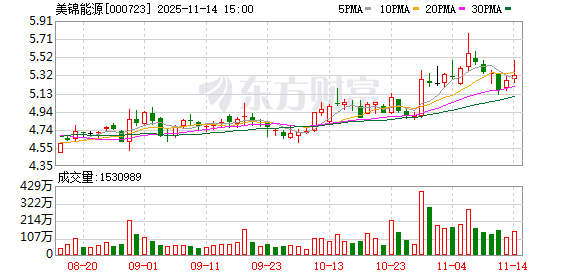
美锦能源终止氢能募投项目 “传统+氢能”模式前景几何?
Zhong Guo Jing Ying Bao· 2025-11-14 10:03
Core Viewpoint - Meijin Energy has decided to terminate its hydrogen energy project phase one due to insufficient policy support and external environmental changes, reflecting broader issues in the hydrogen energy industry policy framework [2][4]. Project Termination - The hydrogen energy project phase one was initially planned with a total investment of 1.502 billion yuan, with a revised fundraising target of 250 million yuan after adjustments [3]. - The project aimed to establish a hydrogen fuel cell power system and commercial vehicle component production base, but progress was slow, with only 29.37% of the planned investment utilized by September 30, 2025 [4]. - The decision to terminate the project was influenced by the lack of inclusion of Jinzhong City in the national fuel cell vehicle demonstration city cluster, leading to a slow project advancement [4]. Financial Performance - Meijin Energy's financial performance has fluctuated significantly, with a peak revenue of 24.6 billion yuan and a net profit of 2.209 billion yuan in 2022, followed by a decline in 2023 to 20.811 billion yuan in revenue and a net profit drop of over 86% [6]. - In 2024, the company reported a revenue of 19.03 billion yuan, marking an 8.55% decline, and a net loss of 1.142 billion yuan, indicating a significant downturn in profitability [7]. - As of the first three quarters of 2025, the company continued to face losses, with a revenue of 12.974 billion yuan, down 9.71% year-on-year, and a net loss of 737 million yuan, reflecting ongoing market pressures [7]. Industry Challenges - The hydrogen energy industry faces significant policy and infrastructure challenges, including regional disparities in policy support and a lack of coordinated development between local and national initiatives [2][4]. - The company has recognized the need for a dual-driven model of "policy + market" to reduce reliance on subsidies and enhance its competitive position in the hydrogen sector [5]. - The chairman of Meijin Energy has emphasized the importance of a national development plan for distributed hydrogen energy systems to address the imbalances and challenges within the industry [5].