基础设施

Search documents
中国平安联席CEO郭晓涛:今年中国资本市场整体向好 基础设施、医疗健康养老、高股息等是相对确定性的资产
Xin Lang Cai Jing· 2026-03-27 05:59
Core Viewpoint - The overall outlook for China's capital market is positive for the year, despite global market volatility and uncertainties [1] Group 1: Investment Opportunities - The company emphasizes the importance of finding certainty within uncertainty in investments this year [1] - Key sectors identified as relatively certain assets include infrastructure, healthcare and elderly care, and high-dividend stocks [1] - Investment in gold has met expected returns and will continue to be included in asset categories and portfolio strategies [1]

开电车奔赴团圆,为啥能一路从容?答案里有“三重力量”
Ren Min Ri Bao· 2026-02-14 09:10
Group 1 - The core viewpoint of the articles emphasizes the growing adoption of electric vehicles (EVs) in China, with a significant increase in charging demand and infrastructure development to support this trend [1][2] - The National Grid predicts that the peak daily charging volume for EVs will exceed 34 million kilowatt-hours, representing a 17% year-on-year increase [1] - Nearly one in two new cars sold in China is an electric vehicle, indicating a robust market for EVs and related services [1] Group 2 - The diverse energy replenishment methods for EVs, such as supercharging, fast charging, and battery swapping, are flourishing, with NIO's battery swap service surpassing 100 million instances and over 3,700 battery swap stations established nationwide [2] - The integration of infrastructure, including power grids, highways, and communication systems, is facilitating collaboration across industries and regions, enhancing overall economic synergy [4][6] - The collaboration between NIO and the National Grid to explore vehicle-to-grid technology aims to alleviate grid pressure and improve energy utilization, transforming vehicles into energy nodes within smart cities [5] Group 3 - The fusion of technological and industrial innovation is accelerating, with advancements in AI and robotics leading to increased productivity and efficiency across various sectors [7] - The upcoming Central Economic Work Conference in December 2025 aims to achieve significant breakthroughs in quality improvement, highlighting the importance of leveraging large-scale markets, infrastructure support, and technological integration for high-quality development [7]


独家洞察 | 美国ETF摘要:2025年12月及全年「成绩单」
慧甚FactSet· 2026-02-03 08:50
Core Insights - By the end of 2025, the assets under management (AUM) of U.S. ETFs reached a record $13.5 trillion, with December alone seeing an inflow of $228 billion, contributing to a total annual inflow of $1.49 trillion, also a record high [1][17]. - A total of 131 new ETFs were launched in December, bringing the total for 2025 to 1,167 new funds, a 59% increase from 736 in 2024 [13]. Fund Flows by Asset Class - **Equities**: AUM of $10.62 trillion, December inflow of $173.09 billion, and total inflow for 2025 of $917.67 billion [3]. - **Fixed Income**: AUM of $2.27 trillion, December inflow of $41.65 billion, and total inflow for 2025 of $436.91 billion [3]. - **Others**: AUM of $641 billion, December inflow of $14.20 billion, and total inflow for 2025 of $137.14 billion [3]. - **Total**: AUM of $13.53 trillion, December inflow of $228.94 billion, and total inflow for 2025 of $1.49 trillion [3]. Fund Flows by Industry - The industrial, consumer discretionary, and utilities sectors attracted the most inflows in December, while technology, consumer staples, and energy sectors experienced outflows [6]. ETF Inflows by Type - **Equity ETFs**: Accounted for 76% of total inflows, with a rise from $103 billion in November to $173 billion in December, a 67% increase [8]. - **Fixed Income ETFs**: Inflows decreased by 5.9% from $44.2 billion in November to $41.7 billion in December [8]. - **Commodity ETFs**: Inflows surged by 396% from $2 billion in November to $99.9 billion in December [8]. - **Currency ETFs**: After a $3.4 billion outflow, they rebounded with an inflow of $413 million in December [8]. - **Asset Allocation ETFs**: Increased inflows from $6.76 million in November to $16 million in December [8]. - **Alternative Investment ETFs**: Inflows rose from $1.9 billion to $2.2 billion [8]. Notable New ETF Products - In December, 92 new equity ETFs were launched, making up 61% of new issuances. Fixed income ETFs added 15 new funds, accounting for 19.5% [13]. - Highlighted new products include: - DAC 3D Dividend Growth ETF (DVGR) focusing on companies with at least 30 years of double-digit dividend growth. - USCF Oil + Bitcoin Strategy Fund (WTIB) providing leveraged exposure to oil and Bitcoin futures. - Grayscale Chainlink Trust ETF (GLNK) passively holding LINK and tracking its value [13]. Annual Performance Highlights - In 2025, equity ETFs saw a net inflow of $917 billion, with $809.5 billion allocated to various fund sizes and styles, and $465.9 billion flowing into large-cap ETFs [20]. - Thematic ETFs rebounded, attracting $43.5 billion in new investments after experiencing outflows in 2024 [20]. - Fixed income ETFs also grew, with inflows increasing by 45% from $300 billion in 2024 to $437 billion in 2025 [23]. - Commodity ETFs saw a dramatic rise in inflows from $1.3 billion in 2024 to $58 billion in 2025, largely driven by gold ETFs [26].

亚洲市场举措叠加纳斯达克新规,2026年亚洲公司赴美上市路怎么走?
Sou Hu Cai Jing· 2026-02-03 02:39
Core Insights - Hong Kong is projected to have 119 companies complete IPOs in 2025, raising over HKD 285.8 billion (approximately USD 36.7 billion), with at least 7 companies raising over USD 1 billion each [1] - The Hong Kong Stock Exchange (HKEX) is expected to surpass the New York Stock Exchange and NASDAQ as the leading exchange for Chinese companies by 2025 [1] - The Singapore Exchange (SGX) is collaborating with NASDAQ to streamline dual listings for companies in the US and Singapore, with a new Global Listing Board set to launch in mid-2026 [1][2] - NASDAQ has made several rule changes to increase the minimum public float and fundraising requirements for new listings, impacting companies seeking to go public [4][5][6] Group 1: Hong Kong IPO Market - In 2025, Hong Kong is expected to see a significant increase in IPO activity, with a total of 119 companies projected to go public [1] - The total funds raised through these IPOs are anticipated to exceed HKD 285.8 billion (around USD 36.7 billion) [1] - At least 7 companies are expected to raise over USD 1 billion each, including those already listed in mainland China [1] Group 2: Singapore Exchange Developments - SGX announced a partnership with NASDAQ to simplify the dual listing process for companies in the US and Singapore, aiming to attract more listings [1][2] - A new Global Listing Board is set to be established by mid-2026, allowing companies with a market cap of at least SGD 2 billion (approximately USD 1.6 billion) to enter both markets simultaneously [1][2] - The Singapore government has introduced a SGD 5 billion (approximately USD 3.9 billion) stock market development plan to stimulate investment in local stocks [1] Group 3: NASDAQ Rule Changes - NASDAQ has raised the minimum public float requirements for new listings, increasing the minimum market value of unrestricted public shares from USD 500,000 to USD 1.5 million [4] - New rules allow NASDAQ to exercise discretion in rejecting IPO applications based on factors that may lead to market manipulation, affecting companies from China and the Asia-Pacific region [5][6] - A proposed rule would require companies based in mainland China, Hong Kong, and Macau to raise at least USD 25 million through public offerings to qualify for listing [6]

百姓的事就是我们的事
Xin Lang Cai Jing· 2026-01-29 16:41
Education Reform - The focus is on promoting balanced development of educational resources, particularly in rural areas, to improve the quality of education for rural students [1][3] - Suggestions include planning and allocating educational resources effectively, improving conditions for boarding schools, and promoting equitable development in compulsory education [1][3] - Encouragement for schools to adopt unique educational programs and optimize resource distribution to enhance urban-rural educational collaboration [1][3] Healthcare - Recommendations include integrating mental health education for minors into regular school curricula and establishing a collaborative mental health protection system involving families, schools, and society [5][9] - Proposals to enhance the long-term care insurance system and promote diverse nursing services, including the establishment of public nursing hospitals [7] - Suggestions for building a modern infectious disease monitoring and early warning platform, improving public health infrastructure, and enhancing the management of chronic diseases [8][9] Social Welfare - Emphasis on improving support policies for childbirth and parenting to address challenges posed by an aging population and declining birth rates [12] - Recommendations to enhance the quality of life for the elderly and reduce family burdens, including the establishment of comprehensive support policies covering all stages from childbirth to elder care [12] - Suggestions to increase the value-added of agricultural products to boost farmers' incomes and ensure food supply stability [13] Infrastructure - Proposals for the construction of key highways to promote regional development and improve urban infrastructure, including road lighting and urban renewal projects [14][15] - Recommendations to enhance rural infrastructure, including road networks and water management systems, to improve living conditions in rural areas [16] Tourism Innovation - Suggestions to develop a comprehensive space tourism destination in Wenchang, integrating space education and tourism experiences [17] - Recommendations to establish North Port Island as a model for coastal tourism and promote low-impact ecological tourism [18] - Proposals to enhance tourism elements along key highways to expand tourism opportunities across the region [19]
“中国正是值得信赖的朋友”
Ren Min Ri Bao· 2026-01-20 23:38
Core Viewpoint - The cooperation between Hungary and China is based on deep friendship and strategic mutual trust, with both countries achieving fruitful results in various fields, setting a new model for international relations [2]. Group 1: Bilateral Relations - Hungary and China have maintained close exchanges and cooperation in political, economic, and cultural fields since Hungary was one of the first countries to establish diplomatic relations with the new China [2]. - The relationship between Hungary and China has rapidly developed, particularly with the announcement of elevating their relationship to a comprehensive strategic partnership during President Xi Jinping's state visit to Hungary in 2024 [2]. Group 2: Economic Cooperation - China has become Hungary's largest source of foreign investment and the EU's largest trading partner, with significant investments from Chinese companies in key sectors such as new energy, battery manufacturing, and logistics infrastructure [3]. - The investments from Chinese enterprises have created numerous job opportunities and enhanced Hungary's competitiveness in regional industrial chains [3]. Group 3: Cultural Exchange - Over the past 15 years, the air passenger traffic between Hungary and China has increased fivefold, symbolizing economic exchange and cultural integration [3]. - The people-to-people exchanges in tourism and language learning have fostered mutual understanding and friendship, which are foundational for the stable development of bilateral relations [3]. Group 4: Future Cooperation - Hungary aims to continue serving as a "bridge" between Europe and China, assisting more Chinese companies in entering the European market and promoting deeper understanding and cooperation [3]. - There is significant potential for collaboration in areas such as technological innovation, green energy, infrastructure, and vocational education, with the stability and complementarity of Hungary-China relations expected to maintain strong resilience [3].

2026年河北省重点化工项目公布(附名单)
Xin Lang Cai Jing· 2026-01-18 08:11
Core Insights - Hebei Province has announced a list of key construction projects for 2026, focusing on strategic emerging industries, traditional industry upgrades, modern services, and infrastructure [1] - A total of 747 key projects are planned with a total investment of 1.56 trillion yuan, an increase of 44 projects compared to the previous year [1] Group 1: New Projects - The new projects include a 40,000-ton annual production project for benzaldehyde and related products by Hebei Jindong New Materials [1] - Hebei Siyou Shucan's 300,000-ton α-olefin project is set to be developed in the Bohai New Area [1] - A 33,83-ton high-purity hydrogen sulfide production project by China Shipbuilding (Handan) is planned [1] - North China Petrochemical will initiate a 100,000-ton annual sustainable aviation fuel project [1] - A 200,000-ton annual carbon capture and utilization project is also planned by North China Petrochemical [1] Group 2: Ongoing Projects - The ongoing projects include a 400,000-ton annual sustainable aviation fuel hydrogenation project by Zhongneng Yida [2] - A 50,000-ton straw biomass fuel project by Langfang Qida is under development [2] - Hebei Dexin Hydrogen Energy Technology's comprehensive utilization project for coke oven gas is also in progress [2] - A 12 billion square meters wet-process lithium battery separator project by Cangzhou Mingzhu is ongoing [2] - The green transformation development project by Sinopec's Shijiazhuang Refining and Chemical Company is also part of the ongoing projects [2]
北京将推进“3个100”重点工程 2026年计划完成投资超3000亿元
Yang Shi Xin Wen· 2026-01-15 15:49
Group 1 - The core focus of Beijing's development plan for 2026 is the "3 100" key engineering projects, which will involve a total investment of approximately 312.8 billion yuan [1] - The "3 100" projects are categorized into three main areas: technological innovation, infrastructure, and improvement of people's livelihoods, with 100 projects in each category [1] - Out of the 300 projects, 180 are ongoing projects and 120 are new projects, with social investment accounting for no less than 70% of the total investment [1] Group 2 - Beijing plans to launch 160 major municipal projects in the first quarter of 2026, with a total investment of 518.8 billion yuan [1] - This includes 32 new key engineering projects that cover modern industries, infrastructure, improvement of people's livelihoods, and urban renewal [1]
北京将推进“3个100”重点工程 2026年计划完成投资超3000亿
Yang Shi Xin Wen· 2026-01-15 10:40
Group 1 - The core focus of Beijing's development strategy for 2026 includes the implementation of the "3 100" key engineering projects, which will involve a total investment of approximately 312.8 billion yuan, accounting for over 30% of the city's total investment [1] - The "3 100" projects are categorized into three main areas: technological innovation, infrastructure, and improvement of people's livelihoods, with 100 projects in each category, comprising 180 ongoing projects and 120 new projects [1] - In the first quarter, Beijing plans to launch 160 major city projects with a total investment of 518.8 billion yuan, including 32 new key engineering projects across modern industries, infrastructure, livelihood improvements, and urban renewal [1] Group 2 - The economic recovery in Beijing is showing significant improvement, with market consumption accelerating for four consecutive months, supported by key industries and ongoing policy benefits [2] - The Beijing Development and Reform Commission plans to establish a series of special approval and service coordination mechanisms to ensure the successful implementation of major projects, marking a solid first step in the new "14th Five-Year Plan" [2]
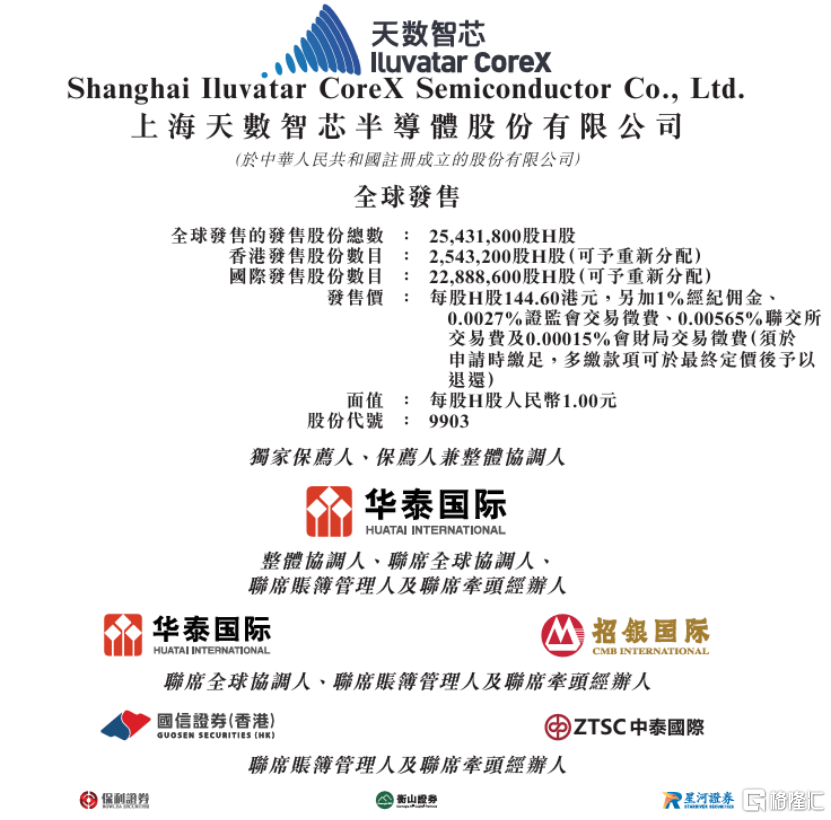
天数智芯赴港上市,国产大模型算力底座的含金量!
Ge Long Hui· 2026-01-08 01:20
Core Viewpoint - The article highlights the excitement in the Hong Kong stock market surrounding the computing power sector, particularly focusing on the upcoming IPO of TianShu ZhiXin, a leading domestic GPU company, which is positioned as a key player in the Chinese AI landscape [1][4][21]. Company Overview - TianShu ZhiXin is set to debut on the Hong Kong stock market, boasting a cumulative shipment of 52,000 units and backing from 18 cornerstone investors, indicating strong market confidence [4]. - The company has shifted from merely telling a "technology story" to focusing on "certain profitability," aiming for a more pragmatic investment approach [4][5]. Market Positioning - TianShu ZhiXin has established itself as a critical provider of computing power for large model companies, emphasizing its role in the domestic GPU market without directly competing with international giants [7]. - The company achieved a rapid adaptation of its DeepSeek R1 model in just one day, setting a benchmark for efficiency in integrating domestic computing power with top-tier models [7]. Financial Performance - The Chinese general GPU market is projected to reach 154.6 billion yuan in 2024 and grow to 715.3 billion yuan by 2029, with domestic replacement rates expected to rise from 17.4% to over 50% [8]. - TianShu ZhiXin's revenue for the first half of 2025 is reported at 324 million yuan, surpassing its total revenue for 2023, showcasing its strong market traction [12]. Competitive Analysis - Compared to competitors like BiRan Technology, TianShu ZhiXin has a more favorable research and development expenditure to revenue ratio, indicating a healthier investment strategy [14]. - The company has diversified its customer base across 290 clients in various industries, reducing dependency on any single sector and mitigating risks associated with market fluctuations [15]. Investment Insights - The IPO pricing for TianShu ZhiXin is set at 144.60 HKD per share, with a total of 25.43 million shares available, and a balanced allocation for retail investors [10]. - The company is expected to benefit from the current market sentiment and the recent surge in interest in the computing power sector, particularly following the strong debut of BiRan Technology [21].