牵引电机

Search documents
链主领航集群攻坚 湖南构建国产替代产业生态
Zheng Quan Shi Bao· 2025-11-30 17:24
Core Insights - The article highlights the significant advancements in production efficiency within the construction machinery sector, particularly by Zoomlion, which produces various machinery at impressive rates [1] - Hunan Province is emerging as a hub for industrial clusters, focusing on key sectors such as construction machinery, rail transportation, aerospace, chips, basic software, and medical devices, aiming for domestic substitution [1] Group 1: Leading Enterprises - Leading enterprises play a crucial role in driving technological breakthroughs and facilitating industry collaboration, exemplified by Zhuhai Hard Alloy Group, which has made significant advancements in high-end hard materials [2] - The development of Zhuhai Hard Alloy Group has led to the establishment of over 300 related enterprises in Zhuzhou, with a total industrial cluster scale exceeding 40 billion [2] Group 2: Industry Clusters - Industry clusters are essential for supporting domestic substitution, with Hunan Province having developed five trillion-level industries and 17 hundred-billion-level industries, including advanced manufacturing clusters in various sectors [4] - The new generation of autonomous safety computing system cluster in Changsha stands out as the only one in the country focusing on computing systems, becoming a core force in breaking foreign monopolies [4][5] Group 3: Industrial Parks - Industrial parks serve as vital incubators for domestic substitution, with the establishment of the Beidou Industrial Park in Zhuzhou, which has attracted over 170 related enterprises [6] - The Hunan Medical Device Industrial Park has successfully introduced over 290 enterprises in just six years, with a focus on optimizing approval processes to accelerate product registration and market entry [7]
“一带一路”旗舰工程马东铁路机车在中车大连下线 预计2027年年初启用
Zhong Guo Jing Ying Bao· 2025-11-18 13:16
Core Insights - The East Coast Rail Link (ECRL) project in Malaysia is a flagship initiative under the Belt and Road Initiative, representing the largest single transportation infrastructure project undertaken by Chinese enterprises overseas [1][2] - The project is set to officially enter its operational phase in early 2027, with the first batch of passenger and freight locomotives recently rolled out [2][3] Group 1: Project Overview - The ECRL spans 640 kilometers and connects several key cities in Peninsular Malaysia, designed for a maximum speed of 160 km/h for passenger services and 80 km/h for freight [3] - The project is managed by China Communications Construction Company (CCCC) and is considered a top priority project by the CCCC group [2] Group 2: Technical Specifications - The passenger trains and electric locomotives are based on the CR200J and HXD3C technology platforms, respectively, with adaptations made for local conditions [1][2] - The passenger trains feature a smart network control system with dual redundancy, enabling real-time monitoring of critical systems [2] - The electric locomotives are designed with high starting traction and wide constant power range, equipped with intelligent human-machine interaction and safety monitoring systems [3] Group 3: Cultural and Design Elements - The design of the passenger trains incorporates local Malaysian flora and fauna, with a color scheme of blue and white reflecting coastal themes [3] - The trains include features such as a prayer room to respect local cultural practices, and the driver’s display supports Malay, Chinese, and English languages [3] Group 4: Production and Delivery Timeline - The project includes the delivery of 11 sets of passenger trains and 12 electric locomotives, with the first batch consisting of 2 trains and 2 locomotives recently completed [2] - The remaining units are scheduled for delivery by 2026 to ensure the railway is operational by 2027 [2]

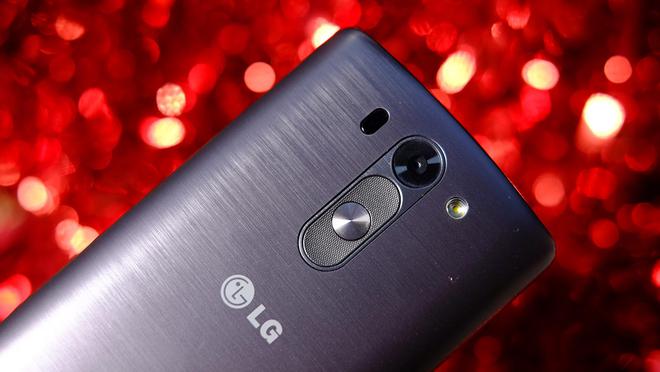
曾经年出货上亿部,知名手机品牌彻底退出市场
Guan Cha Zhe Wang· 2025-04-21 08:20
Core Viewpoint - LG Electronics will terminate wireless firmware upgrades for its mobile devices on June 30, 2025, marking the end of its mobile phone services and support, following its exit from the smartphone market in 2021 [1][3]. Group 1: Company History and Market Position - LG Electronics began its mobile phone business in 1994 and became one of the top three global mobile brands in 2008, with a shipment volume of 100 million units that year [4]. - The company faced continuous losses in its mobile division starting from Q2 2015, accumulating losses of 5 trillion KRW (approximately 29.36 billion RMB) by Q4 2020, with a market share of only 1.5% [4]. Group 2: Transition and Future Focus - LG Electronics announced its exit from the smartphone market in April 2021, officially ceasing production and sales by July 31, 2021, due to long-term losses and intense market competition [3][4]. - The company is reallocating resources to growth areas such as electric vehicle components, smart home technology, artificial intelligence, and robotics as part of its transformation strategy [3]. Group 3: Current Business Performance - According to LG Electronics' 2024 financial report, the company achieved a record revenue of 87.73 trillion KRW (approximately 450.93 billion RMB) and an operating profit of 3.42 trillion KRW (approximately 17.57 billion RMB) [4]. - The home appliance division generated revenue of 33.2 trillion KRW (approximately 170.64 billion RMB), while the home entertainment division, including OLED TVs, generated 15.23 trillion KRW (approximately 78.28 billion RMB) [4]. Group 4: Market Share in Key Segments - In 2024, LG's OLED TV shipments reached 3.18 million units, capturing over 52.4% of the global market share [5]. - In the global power battery market for Q1 2024, LG Energy ranked third with a market share of 21.7%, following CATL and BYD [5].