
特斯拉擎天柱机器人Optimus

Search documents
福莱新材7亿定增落地,人形机器人量产配套企业静待东风
2 1 Shi Ji Jing Ji Bao Dao· 2026-02-13 10:41
Core Viewpoint - The company Fulei New Materials (福莱新材) is accelerating its production of robotic electronic skin, having recently completed a private placement to raise funds for expansion and development projects, particularly in the flexible sensor field, which is crucial for humanoid robots [1][2]. Group 1: Fundraising and Investment Projects - Fulei New Materials announced a total fundraising amount of 707 million yuan, with a net amount of 692 million yuan after deducting issuance costs, through a private placement priced at 32.66 yuan per share, representing a 2.83% premium over the base price [1]. - The four major investment projects funded by this placement include the expansion of label printing materials, upgrading electronic-grade functional materials, enhancing the R&D center, and supplementing working capital [1]. Group 2: Market Trends and Product Development - The market for flexible tactile sensors is expected to grow significantly, with predictions indicating a market size of 27.4 billion yuan by 2030, driven by the increasing complexity of robotic applications [4]. - Fulei New Materials has begun to rapidly enter the flexible sensor market, launching its first-generation electronic skin products in 2025 and subsequently introducing second and third-generation products that integrate advanced sensing capabilities [4][5]. Group 3: Strategic Partnerships and Supply Chain - Fulei New Materials signed a comprehensive strategic cooperation agreement with Lingxin Qiaoshou, which will procure 100,000 tactile sensors, positioning the company as a secondary supplier to leading humanoid robot manufacturers [7]. - The company has established a pilot production line for flexible sensors and is preparing for mass production, with plans to achieve an annual capacity exceeding 10,000 sensors [5]. Group 4: Industry Context and Future Outlook - The humanoid robot industry is approaching a significant production milestone, with Tesla's Optimus Gen 3 expected to debut in the first quarter of 2026, marking a shift towards large-scale production [8][9]. - Major Chinese manufacturers are also ramping up production, with targets in the thousands of units for 2026, indicating a broader industry trend towards mass production of humanoid robots [9].

机器人概念狂欢背后:云深处、优必选等产业链企业拟抢滩上市,特斯拉“小伙伴”新剑传动能否搅动市场?
Jin Rong Jie· 2026-01-13 07:44
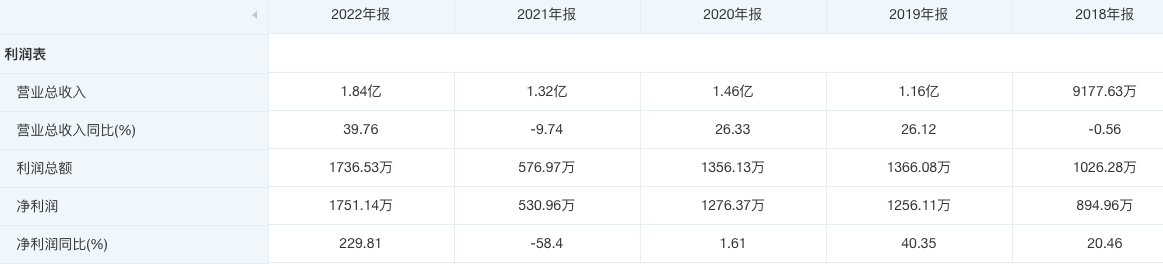
Core Viewpoint - The humanoid robot trend is intensifying, leading to significant activity in the capital market, particularly in the A-share market, with several robotics stocks experiencing substantial gains [1] Group 1: Market Activity - As of January 13, A-share robotics concept stocks have shown strong performance, with companies like Boke Co., Ltd. rising over 13% and Fenglong Co., Ltd. hitting a 10% limit up for 13 consecutive trading days [1] - The acceleration of humanoid robot mass production is highlighted, with Tesla planning to establish a production line capable of producing one million units annually by 2026 and aiming to deliver 50,000 to 100,000 units that year [1] Group 2: Company Developments - Several companies in the humanoid robot supply chain are pursuing public listings, including Yunshe Technology and Xinjian Transmission, which is a key supplier of components for Tesla's "Optimus" robot [1][2] - Xinjian Transmission's listing is seen as a revaluation of core assets in Tesla's robot supply chain, providing a new pricing reference for other high-barrier segments like screw and reducer manufacturing [2] Group 3: Financial Performance - Xinjian Transmission reported revenues of 146 million, 132 million, and 184 million yuan from 2020 to 2022, with net profits of 12.76 million, 5.31 million, and 17.51 million yuan respectively [2][3] - The company is expanding its production capabilities with a new project for planetary roller screws, with a total investment of 2.6 billion yuan planned for construction in two phases [3] Group 4: Industry Growth - The demand for planetary roller screws is rapidly increasing, with projections indicating that the market value for these components in humanoid robots will reach 22.96 billion yuan by 2030, with a CAGR of 154.1% [4] - Domestic companies are making technological breakthroughs in high-end fields like rolling screws, transitioning from followers to competitors in the market [4]


权威部门首次预警人形机器人行业风险,背后信号很大
21世纪经济报道· 2025-11-28 10:27
Core Viewpoint - The National Development and Reform Commission (NDRC) has highlighted the rapid growth of the humanoid robot industry in China, noting the presence of over 150 companies, with more than half being startups or from other sectors. This growth is seen as positive for innovation but raises concerns about product redundancy and compressed R&D space [1][3]. Group 1: Industry Growth and Challenges - The NDRC's comments are not an indication of overheating in the industry but rather a call to coordinate resource allocation and support globally competitive Chinese humanoid robot companies [3]. - The humanoid robot sector is experiencing a surge in capital investment, but there are concerns about the industry's maturity and the potential for unrealistic expectations among investors [8][9]. - The industry is expected to face a critical juncture in Q1 2026, with potential impacts on confidence if major players like Tesla continue to delay product launches [10]. Group 2: Market Dynamics and Competition - The current trend of product demonstrations in the industry, inspired by Tesla's Optimus, is seen as a way to attract investment, but it may not reflect the actual capabilities of the robots [6][8]. - The success of companies like Yushu Technology has created a competitive environment that is difficult for new entrants to penetrate, leading to concerns about market saturation and innovation stifling [7]. - The financing landscape for humanoid robot companies in China is fragmented, with an average of just over 100 million yuan per company since 2025, which is significantly lower compared to international counterparts [13]. Group 3: Future Directions and Strategic Focus - Industry experts emphasize the need for a shift towards commercial viability and practical applications rather than merely showcasing new products [7][8]. - There is a consensus on the importance of developing high-value scenarios and solutions that can be rapidly commercialized to drive the industry forward [11][14]. - The integration of artificial intelligence and embodied intelligence is crucial for the advancement of humanoid robots, with a focus on enhancing their capabilities through real-world training and performance improvements [14].


权威部门首次预警人形机器人风险 背后有何考量?
2 1 Shi Ji Jing Ji Bao Dao· 2025-11-28 06:38
Core Viewpoint - The National Development and Reform Commission (NDRC) has issued a warning regarding risks in the humanoid robot industry, highlighting the rapid influx of capital and the increasing number of companies in this sector, which exceeds 150, with over half being startups or companies from other industries [1][2]. Industry Overview - The NDRC's warning is the first of its kind for the humanoid robot industry in China, emphasizing the need to prevent the market from being flooded with similar products and to ensure adequate research and development space [2]. - Following the NDRC's comments, the A-share humanoid robot sector experienced a cooling effect, with many stocks showing a pattern of rising and then falling [3]. Market Dynamics - The NDRC aims to coordinate resource allocation within the industry to support companies that possess global competitiveness [3]. - There is a call for investment to focus on critical segments of the humanoid robot supply chain, such as the "big and small brains" of robots, to promote coordinated and rapid development while avoiding internal competition [4]. Investment Trends - The investment community has noted a trend where companies showcase their products through demonstrations to attract venture capital, a practice referred to as "Price to Demo" [5]. - The industry is currently experiencing a surge in product launches, but there are concerns that the market may be oversaturated with similar offerings, which could hinder innovation [6][7]. Future Outlook - Experts suggest that the humanoid robot industry is still in its early stages, and while there is significant capital inflow, the focus should shift towards practical applications and commercial viability [9]. - The NDRC's strategic adjustments are seen as beneficial for the industry, helping to avoid chaotic development and allowing for more concentrated talent and investment [9]. Competitive Landscape - The financing landscape for humanoid robot companies in China is fragmented, with an average of just over 100 million yuan per company since 2025, which is significantly lower compared to international counterparts [13]. - Notably, global companies like FigureAI and Apptronik have secured substantial funding, highlighting a disparity in financial resources available to Chinese firms [13]. Technological Development - The humanoid robot sector is recognized for its potential in embodied intelligence, but current language models are insufficient for achieving this goal [14]. - Companies are encouraged to focus on real-world applications and simulations to enhance the robots' capabilities and to identify viable commercial scenarios for their deployment [14].
权威部门首次预警人形机器人风险,背后有何考量?
2 1 Shi Ji Jing Ji Bao Dao· 2025-11-28 05:53
Core Insights - The National Development and Reform Commission (NDRC) has highlighted the rapid growth of the humanoid robot industry in China, with over 150 companies currently operating, more than half of which are startups or from other sectors [1][2] - The NDRC's comments indicate a need to prevent market saturation with similar products and to ensure that innovation is not stifled by excessive competition [1][3] Industry Overview - The humanoid robot sector is experiencing significant capital influx, but there are concerns about the potential for oversaturation and the need for coordinated resource allocation to support globally competitive companies [3][6] - The industry is still in its early stages, with many companies focusing on demonstration rather than practical applications, leading to inflated expectations among investors [7][9] Market Dynamics - The financing landscape for humanoid robot companies in China is fragmented, with an average of just over 100 million yuan per company since 2025, which is significantly lower compared to international counterparts [9][10] - Major international players like FigureAI and Apptronik have secured substantial funding, highlighting a disparity in financial resources between Chinese and foreign companies [10] Future Directions - Industry experts emphasize the importance of identifying high-value applications and commercializing solutions to drive growth and development [8][11] - There is a call for a more rational approach to investment and development within the humanoid robot sector to avoid the pitfalls of overhyped expectations and to focus on practical, scalable solutions [7][10]
人形机器人成上海车展“新宠” 小鹏、比亚迪等都有布局
Mei Ri Jing Ji Xin Wen· 2025-04-29 15:14
Core Insights - The 2025 Shanghai International Auto Show showcased humanoid robots as a highlight, indicating a growing trend in the automotive industry towards integrating AI and robotics [1][3] - Major automotive companies, including Xiaopeng Motors and Chery, are actively developing humanoid robots for various applications, signaling a shift in focus towards this technology [2][3] Group 1: Humanoid Robots at the Auto Show - The 2025 Shanghai Auto Show featured nearly 1,000 exhibitors from 26 countries, with around 1,300 vehicles displayed and over 100 new models launched [1] - Xiaopeng Motors introduced its humanoid robot IRON, which stands 178 cm tall, weighs 70 kg, and has 22 degrees of freedom, aiming for industrial mass production by 2026 [1] - Chery's humanoid robot Mornine gen-1, developed by the aimoga team, is 167 cm tall, weighs 65 kg, and has 41 degrees of freedom, designed for various interactive roles [2] Group 2: Industry Trends and Developments - Automotive companies are rapidly expanding their focus on humanoid robots, with GAC Group launching its third-generation robot GoMate, featuring innovative mobility structures [3] - Tesla plans to begin trial production of its humanoid robot Optimus, with a target of producing 5,000 units this year and 50,000 by 2026, highlighting the strategic importance of robotics for the company [3] - BYD is investing in humanoid robotics through both self-development and acquisitions, having become a significant shareholder in several robotics firms [4] Group 3: Market Potential and Challenges - The global humanoid robot market is projected to reach $7 trillion by 2050, with an estimated 648 million units, potentially matching the current global car ownership [4] - Despite the promising market outlook, experts caution that the humanoid robot industry is still in its infancy, with significant uncertainties and potential for market bubbles [4]

