
甲基三氯硅烷

Search documents
华泰证券:1月化工行业整体价差环比扩大,26年有望迎景气回暖
Sou Hu Cai Jing· 2026-02-11 00:11
Group 1 - The overall price spread in the chemical industry expanded in January, with the CCPI-raw material price spread reaching 2631, which is in the 15th percentile since 2012, up from 2500 at the end of 2025, driven by geopolitical conflicts affecting oil prices and rising resource prices [1][6] - The industry is expected to see a recovery in 2026, supported by improved profitability in bulk chemicals as supply-side adjustments accelerate under the "anti-involution" policy, and demand growth from emerging markets in Asia, Africa, and Latin America [1][4] Group 2 - The January PMI was reported at 49.3, indicating a slowdown in capital expenditure growth in the chemical industry, which has been declining since June 2025, suggesting a potential supply-side turning point [2][18] - The demand for chemical products is shifting from real estate to consumer goods, infrastructure, and emerging technologies, with domestic chemical products benefiting from global cost advantages [2][9] Group 3 - Oil prices have been supported by expectations of lithium battery storage growth, rising crude oil prices, and winter heating demand, leading to price increases in certain chemical products [3][35] - However, some products experienced price declines due to supplier price adjustments, maintenance recoveries, and reduced acceptance of high prices by downstream consumers [3][35] Group 4 - The chemical industry is approaching a turning point in capital expenditure, with significant declines since June 2025, and the "anti-involution" policy expected to facilitate supply-side adjustments [4][18] - The recovery in demand and exports, particularly to Asia and Africa, is anticipated to support the gradual recovery of bulk chemicals [4][34] Group 5 - The January oil price increase was influenced by geopolitical tensions in Venezuela and Iran, with WTI and Brent crude prices rising by 13.57% and 16.17% respectively compared to the end of December [21][6] - The outlook for oil prices suggests a potential bottoming out and recovery in 2026, driven by demand recovery and global inventory replenishment [21][34] Group 6 - The chemical industry is expected to benefit from high dividend assets as capital expenditure declines, with companies likely to increase their willingness and ability to distribute dividends [34][34] - The phosphate resource sector is projected to maintain high profitability for at least three years, attracting investor interest [34][34]


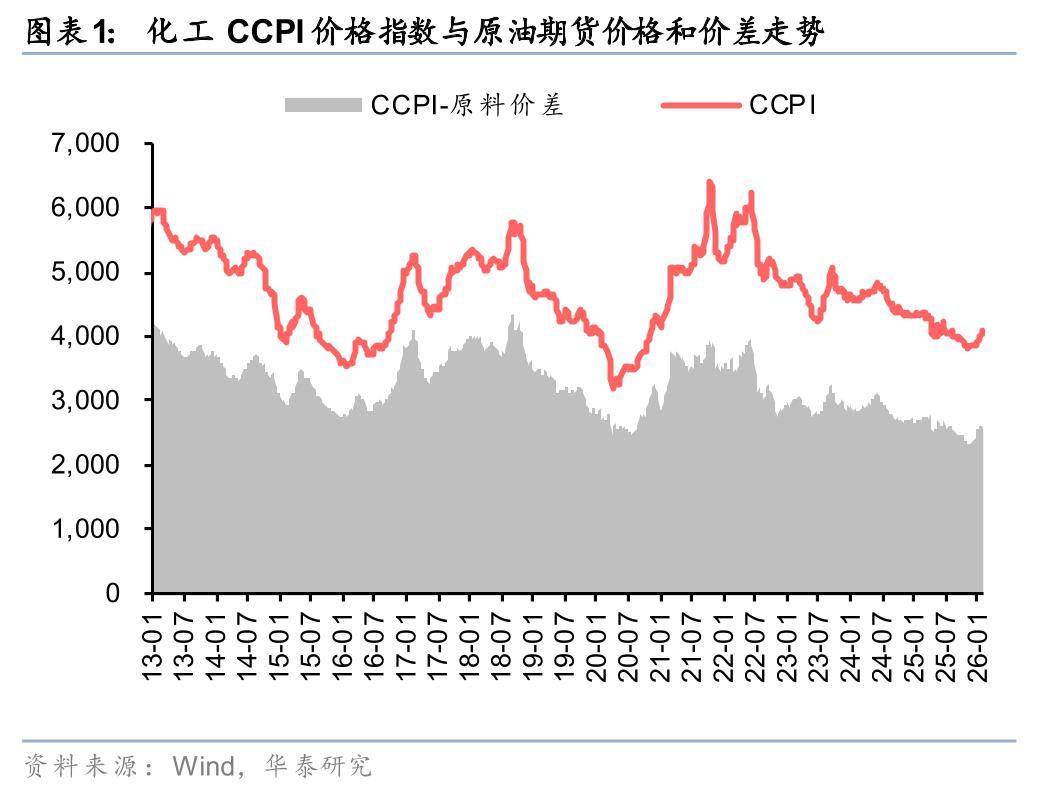
1月行业价差改善或助力盈利景气回暖
HTSC· 2026-02-09 11:56
Investment Rating - The report maintains an "Overweight" rating for the oil and gas sector and the basic chemicals sector [5]. Core Insights - The overall price spread in the industry improved in January, indicating a potential recovery in profitability for 2026, with the CCPI-raw material price spread reaching 2631, up from 2500 at the end of 2025 [1][9]. - The demand for chemical products is shifting from real estate to consumer goods, infrastructure, and emerging technologies, with significant growth potential driven by global economic trends [2][11]. - The capital expenditure growth in the chemical industry has been declining since June 2025, suggesting a supply-side adjustment is approaching, which may lead to improved profitability in the sector [2][16]. Summary by Sections Price Trends - In January, oil prices rose due to geopolitical tensions and strong global crude oil replenishment demand, leading to a slight improvement in the price spread of most chemical products [9][21]. - Major price increases were observed in products like lithium carbonate and butadiene, while some products like methyltrichlorosilane saw price declines due to supply adjustments [3][33]. Supply and Demand Dynamics - The January PMI was reported at 49.3, indicating a continued bottoming out in the real estate sector, while consumer goods and major infrastructure showed positive growth [2][11]. - The chemical industry is expected to see a recovery in demand, supported by the exit of high-energy-consuming facilities in Europe and North America, and economic growth in Asia, Africa, and Latin America [2][11][14]. Investment Strategy - The report suggests focusing on sectors with potential recovery, such as oil and gas, basic chemicals, and companies leveraging synthetic biology for cost reduction [32]. - Specific stock recommendations include China Petroleum & Chemical Corporation, Baofeng Energy, and Yun Tianhua, among others, highlighting their potential for growth and profitability [7][32]. Monthly Performance Review - In January, the basic chemical index rose by 12.72%, with significant gains in sub-sectors like dye chemicals and petrochemical raw materials [34][36]. - The report notes that the chemical industry is experiencing a recovery phase, with various sub-sectors showing positive price movements and improved market conditions [34][36].



东岳硅材1.32亿元项目环评获原则同意
Mei Ri Jing Ji Xin Wen· 2026-01-27 07:49
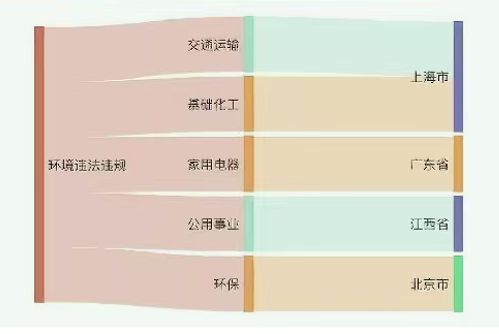
Group 1 - The core viewpoint of the news is that Dongyue Silicon Materials (SZ300821) has received preliminary approval for the environmental assessment of its methyltrichlorosilane industrial chain extension project, with a total investment of 132 million yuan [1] - The "A-share Green Report" project aims to enhance the transparency of environmental information for listed companies by monitoring their environmental performance based on authoritative regulatory data from 31 provinces and 337 cities [1] - The project involves professional data analysis and interpretation, providing timely updates on environmental risks associated with listed companies through AI-generated reports and weekly green reports [1] Group 2 - The previous issue of the A-share Green Weekly Report indicated that five listed companies recently exposed environmental risks [3]
9月“旺季不旺”,26年景气或上行
HTSC· 2025-10-14 06:35
Investment Rating - The report maintains an "Overweight" rating for the oil and gas sector and the basic chemicals sector [6]. Core Views - The industry is experiencing a "weak peak season" in September, with overall demand remaining subdued and capital expenditure in the chemical sector continuing to decline, indicating a potential turning point in supply and demand dynamics [14][22]. - The CCPI-raw material price spread as of the end of September 2025 is at 2439, which is below the 30th percentile since 2012, reflecting weak pricing across most chemical products [2][14]. - The report anticipates an upward trend in industry conditions for 2026, driven by supply-side adjustments and demand recovery, particularly in the context of high energy-consuming facilities exiting the market in Europe and North America [2][40]. Summary by Sections Demand Side - The PMI for September 2025 is reported at 49.8, indicating that traditional peak season demand is not being met, with slow recovery expected in the short term [3][17]. - The real estate sector continues to show negative growth, impacting overall demand, while consumer goods and infrastructure sectors are expected to drive future demand for chemical products [17][20]. Supply Side - From January to August 2025, the capital expenditure in the chemical raw materials and products sector has decreased by 5.2% year-on-year, suggesting a tightening supply side and a potential turning point approaching [3][22]. - The report highlights that the competitive landscape has intensified, leading to a significant decline in profitability across many sub-sectors since the second half of 2022 [3][22]. Price Trends - Some chemical products have seen price increases due to overseas demand and domestic maintenance activities, while others have declined due to weak demand and reduced supply-side coordination [4][41]. - The report identifies key products with price increases, including methyltrichlorosilane and glyphosate, while products like sucrose and vitamins have seen price declines [4][41]. Investment Strategy - The report suggests focusing on sectors with improving supply dynamics and new technology-driven products, with recommendations for specific companies such as China Petroleum, Juhua Co., and Dongyue Group [5][40]. - It emphasizes the importance of export-driven growth for domestic chemical products, which maintain competitive advantages in cost and quality [20][40].
5月价差有所改善,中游供需拐点渐至
HTSC· 2025-06-07 13:20
Investment Rating - The report maintains an "Overweight" rating for the oil and gas sector and a "Buy" rating for several chemical companies [6]. Core Views - The overall price spread in the industry improved in May 2025, with the CCPI-oil price spread at approximately 731, reflecting a 30% improvement compared to the past decade [2][15]. - The report anticipates a recovery point for chemical cyclical products in the second half of 2025, driven by demand recovery and significant slowdown in capital expenditure [2][3]. Summary by Sections Demand Side - The domestic PMI for May 2025 was reported at 49.5, indicating a potential recovery in demand alongside easing tariffs [3][18]. - The report highlights that while the real estate sector remains weak, sectors like automotive and home appliances are showing positive growth due to domestic consumption policies [18]. Supply Side - Capital expenditure in the chemical raw materials and products sector showed a year-on-year increase of 1.3% from January to April 2025, but the growth rate is declining [3][37]. - The report suggests that the industry is entering a self-adjustment phase, with some sectors nearing capacity inflection points [3][37]. Investment Strategy - The report suggests that the second half of 2025 may mark the beginning of an upward trend, focusing on resilient demand and improved market conditions [5][42]. - Recommended stocks include China Petroleum, Juhua Co., Dongyue Group, and others, particularly in sectors like refrigerants and isocyanates, which are expected to see early optimization [5][9]. Monthly Price Changes - In May, several products, including urea and TDI, saw price increases due to supply constraints and export demand [4][43]. - The report notes that while some products are experiencing price increases, others like methyl trichlorosilane are facing price declines due to weak demand [4][43]. Key Sub-industry Review - The oil and gas sector experienced fluctuations in prices, with Brent crude oil prices showing a slight recovery after initial declines [49]. - The report indicates that OPEC+ has adjusted production targets, which may impact future oil prices [49][56].
需求仍有承压,部分品种供给端改善
HTSC· 2025-03-13 02:08
Investment Rating - The report maintains an "Overweight" rating for the basic chemicals and oil and gas sectors [5]. Core Views - Demand is expected to gradually improve, supported by policy initiatives in real estate and consumption, while supply-side adjustments are anticipated to lead to a recovery in 2025 [1][19]. - The chemical industry is currently experiencing a mismatch in supply and demand, with the PMI data indicating a slight recovery above the neutral line [2][19]. - The overall price spread in the chemical sector remains under pressure due to high oil prices and seasonal demand fluctuations, although some products have seen price increases due to supply constraints [3][37]. Summary by Sections Demand Side - The PMI for February 2025 is reported at 50.20, indicating a shift above the neutral line, suggesting potential demand recovery in the chemical sector [2][19]. - The real estate sector continues to show weak performance, with new construction and sales down by 23.0% and 12.9% respectively in 2024 [19]. - The automotive and home appliance sectors are benefiting from policies like "trade-in for new," contributing to positive growth in production and sales [19]. Supply Side - Fixed asset investment in the chemical raw materials and products sector grew by 8.6% year-on-year in 2024, although the growth rate has slowed compared to 2021-2023 [30]. - The industry is expected to undergo self-adjustment and optimization due to increased competition and reduced capital expenditure willingness among companies [30]. Investment Strategy - The report suggests focusing on downstream products that may recover first, with an emphasis on supply optimization and new technology-driven products [4][35]. - Recommended stocks include China National Offshore Oil Corporation, Hengli Petrochemical, and Satellite Chemical, among others, based on their potential for recovery and strong dividend yields [4][8]. Monthly Review of Key Sub-sectors - In February 2025, most chemical products faced price pressures due to seasonal demand, while some products like methyl trichlorosilane and potassium chloride saw price increases driven by supply constraints [3][37]. - The report highlights the performance of various sub-sectors, with significant price increases in oil sales and storage, while sectors like nitrogen fertilizer and coal chemicals faced declines [38][40].