三氯蔗糖

Search documents
基础化工行业研究:原油继续大涨,影响时间和幅度或超预期
SINOLINK SECURITIES· 2026-03-29 08:24
Investment Rating - The report does not explicitly provide an investment rating for the chemical industry Core Insights - The geopolitical tensions, particularly between the US and Iran, have led to significant disruptions in the chemical supply chain, affecting various sectors including fertilizers and semiconductors [1][2] - The chemical market is experiencing price fluctuations due to supply chain vulnerabilities, with specific products like helium and fertilizers facing acute shortages [1][2] - The AI industry is facing challenges due to increased demand for computing power, leading to a surge in CPU prices and extended delivery times [1] - Major companies are actively expanding production capacities to meet rising demand, with significant investments in AI infrastructure [1] Summary by Sections Market Review - Brent crude oil settled at an average of 105.45 USD/barrel, down 0.87% week-on-week, while WTI crude oil averaged 92.98 USD/barrel, down 3.22% [9] - The basic chemical sector outperformed the index with a 2.31% increase, while the petrochemical sector saw a slight decline of 0.10% [10] Recent Views from the Chemical Team - The tire industry is stabilizing with a slight increase in production rates, while raw material prices are on the rise [23] - The dye market remains stable, with prices for disperse dyes holding steady and active dyes experiencing an upward trend due to strong cost support [25] - The carbon dioxide market is seeing limited price increases due to insufficient demand support [27] Key Events - Iran's response to the US ceasefire proposal has introduced new conditions, impacting market stability [2] - Australia's largest ammonia plant has been offline for two months, exacerbating global fertilizer shortages during the planting season [2] - A significant reduction in helium supply from Qatar due to Iranian attacks poses a threat to the semiconductor industry [2]
原油继续大涨,影响时间和幅度或超预期
SINOLINK SECURITIES· 2026-03-29 07:05
Investment Rating - The report does not explicitly provide an investment rating for the chemical industry Core Insights - The geopolitical tensions, particularly between the US and Iran, have led to significant disruptions in the chemical supply chain, affecting various sectors including fertilizers and semiconductors [1][2] - The chemical market is experiencing price fluctuations due to supply chain vulnerabilities, with specific products like helium and fertilizers facing acute shortages [1][2] - The AI industry is facing challenges due to increased demand for computing power, leading to a surge in CPU prices and extended delivery times [1] - Major companies are actively expanding production capacities to meet rising demand, with significant investments in AI infrastructure [1] Summary by Sections Market Review - Brent crude oil averaged $105.45 per barrel, down 0.87% week-on-week, while WTI crude oil averaged $92.98 per barrel, down 3.22% [9] - The basic chemical sector outperformed the index with a 2.31% increase, while the petrochemical sector saw a slight decline of 0.10% [10] Recent Views from the Chemical Team - The tire industry is stabilizing with a slight increase in operating rates, while raw material prices are on the rise [23] - The dye market remains stable, with prices for disperse dyes holding steady and active dyes experiencing an increase due to strong cost support [25][27] - The carbon dioxide market is seeing limited price increases due to insufficient demand support [28] Key Events - Iran's response to the US ceasefire proposal has created uncertainty in the market, impacting supply chains [2] - The shutdown of major ammonia plants in Australia and India has exacerbated the fertilizer supply crisis [2] - A significant reduction in helium supply due to attacks on Qatari facilities poses a threat to the semiconductor industry [2] Price Movements - The price of titanium dioxide has increased by 5.1% due to rising costs and supply constraints [29] - The market for vitamin A and E has seen price fluctuations, with both experiencing upward trends followed by stabilization [30] Production and Supply Chain Insights - The report highlights the ongoing challenges in the supply chain, with many companies facing production delays and increased costs due to geopolitical tensions [1][2][23] - The report notes that companies are adjusting their pricing strategies in response to rising raw material costs and supply chain disruptions [29][30]
地缘局势预期波动不改行业长期逻辑推进
Orient Securities· 2026-03-21 13:40
Investment Rating - The industry investment rating is maintained as "Positive" [5] Core Viewpoints - The geopolitical situation in the Middle East continues to impact the stability of raw material supplies, which is a primary concern for the chemical industry. Despite fluctuations in stock prices, the underlying demand for certain chemical products remains strong, particularly in sectors like polyurethane, PVC, and polyester [2][8] - The sweetener industry is showing signs of marginal improvement, with a notable increase in exports of sucralose and acesulfame K, indicating a potential recovery in demand. The domestic market for sucralose as a feed additive is also expected to expand, enhancing the industry's growth prospects [8] Summary by Relevant Sections Investment Recommendations and Targets - The report highlights several key companies across various sub-industries within the chemical sector: - MDI leader: Wanhua Chemical (600309, Buy) - PVC industry players: Zhongtai Chemical (002092, Not Rated), Xinjiang Tianye (600075, Not Rated), Chlor-alkali Chemical (600618, Not Rated), Tianyuan Co., Ltd. (002386, Not Rated) - Refining industry leaders: Sinopec (600028, Buy), Rongsheng Petrochemical (002493, Buy), Hengli Petrochemical (600346, Buy) - Agricultural chemical chain: Guoguang Co., Ltd. (002749, Buy), Xinyangfeng (000902, Buy), Shidanli (002588, Not Rated), Yuntu Holdings (002539, Not Rated), Runfeng Co., Ltd. (301035, Buy) - Phosphate chemical companies benefiting from energy storage growth: Chuanheng Co., Ltd. (002895, Not Rated), Yuntianhua (600096, Not Rated) - Oxalic acid industry: Hualu Hengsheng (600426, Buy), Huayi Group (600623, Buy), Wankai New Materials (301216, Buy) - Titanium dioxide leaders: Tianyuan Co., Ltd. (002386, Not Rated), Longbai Group (002601, Increase) - Sweetener industry: Jinhui Industrial (002597, Buy), Cooch Chemical (603968, Not Rated) [3]




涨价通胀或成为主线-买什么
2026-03-01 17:23
Summary of Key Points from Conference Call Records Industry Overview - The focus is on the chemical industry, particularly in the context of rising prices and inflation trends, which are expected to become a significant theme in the near future [1][2]. Core Insights and Arguments 1. **Inflation and Price Increases**: - Inflation expectations are rising, with price increases observed in sectors like electronic fabrics and chemicals, suggesting a shift from passive destocking to active restocking in certain products [1][2]. - The chemical sector is positioned favorably as many products have experienced a downturn over the past four years, and price and stock levels are now advantageous [2]. 2. **Wanhua Chemical's Performance**: - Wanhua Chemical is projected to achieve a revenue of 16 billion in 2026, primarily driven by improvements in petrochemical and new energy materials [1][5]. - MDI/TDI price sensitivity is high; a price increase of 1,000 RMB per ton could enhance profits by 3.4 billion RMB [5][6]. 3. **Sweetener Industry Dynamics**: - The sweetener market, particularly for aspartame and sucralose, shows a strong competitive landscape with significant pricing power. If aspartame prices exceed 30,000 RMB, profits could increase by over 300 million RMB [1][7]. 4. **Pesticide Sector Positioning**: - The pesticide sector is currently at a low point, with potential price increases driven by U.S. policies aimed at ensuring supply. The market needs to observe whether these expectations materialize [1][8]. 5. **Phosphate Industry Outlook**: - The phosphate industry is experiencing high demand, particularly for domestic use, with strict export controls in place. The focus remains on domestic operations, with potential changes in export policies to be monitored post-spring farming [1][9]. 6. **Yellow Phosphorus Supply and Demand**: - Yellow phosphorus demand is primarily in non-replaceable applications, with supply constraints due to carbon neutrality policies. Price support is expected from high sulfur prices [1][10]. 7. **Urea and Potash Fertilizer Trends**: - Urea prices have seen an uptick due to strong downstream demand, while potash fertilizer remains stable, with key observations needed post-spring farming [1][11]. 8. **Silicone Supply Dynamics**: - The silicone industry is expected to see no new capacity in 2026, with overseas supply constraints providing a favorable environment for price increases [1][12]. 9. **Titanium Dioxide and PVC Market Changes**: - Titanium dioxide prices are at historical lows, with recent price increases announced. PVC may experience export demand spikes due to policy changes [1][13][14]. 10. **Acrylic Fiber and PTA Market Insights**: - The acrylic fiber market is anticipated to improve due to demand recovery, while PTA prices have seen slight increases, with a focus on companies with integrated supply chains [1][15]. Additional Important Insights - The chemical sector is advised to focus on five main investment directions: "Davis Double Play" opportunities, resource-related stocks, leading companies in traditional cycles, products nearing inflection points, and those under significant pressure but with potential for recovery [1][4]. - The overall sentiment in the chemical industry is cautiously optimistic, with several sectors poised for recovery and price increases, driven by both domestic and international factors [1][2][4].
金禾实业股价连续上涨,机构关注三氯蔗糖出口回暖
Jing Ji Guan Cha Wang· 2026-02-14 05:19
Stock Performance - On February 11, 2026, the stock price of Jinhe Industrial rose by 5.07%, closing at 27.55 CNY per share, with a cumulative increase of 13.75% over three consecutive trading days and a trading volume of 816 million CNY [2] - The stock also saw a rise of 5.55% on February 6, indicating increased market activity in the short term [2] Financial Position - As of February 3, 2026, the company's financing balance was 653 million CNY, accounting for 4.93% of the circulating market value, which is above the 90th percentile level over the past year, indicating a high level of financing [3] - The high financing balance may reflect investors' concerns regarding short-term volatility [3] Institutional Insights - Dongfang Securities maintained a "Buy" rating for Jinhe Industrial on February 12, 2026, with a target price of 28.8 CNY, noting a recovery signal in the export volume of sucralose and potential growth opportunities from new domestic scenarios such as piglet feed additives [4] - The report also revised down the profit forecasts for 2025-2027, highlighting the need to monitor risks related to raw material price fluctuations [4] Institutional Holdings - As of September 30, 2025, Huaxia CSI 1000 ETF became the ninth largest circulating shareholder, holding 1.8532 million shares; meanwhile, Southern CSI 1000 ETF held 3.1164 million shares but reduced its holdings by 27,800 shares compared to the previous period [5] - The divergence in institutional holdings may impact market sentiment [5] Company Fundamentals - For the period from January to September 2025, the company reported revenue of 3.543 billion CNY, a year-on-year decrease of 12.35%, and a net profit attributable to shareholders of 391 million CNY, down 4.44% year-on-year, indicating pressure on performance [6] - The food additive business accounted for 48.10% of total revenue, demonstrating resilience in the core business [6] - Future attention is needed on consumer demand recovery and industry policy direction [6]

研报掘金丨东方证券:维持金禾实业“买入”评级,目标价28.8元
Ge Long Hui A P P· 2026-02-12 06:28
Core Viewpoint - The report from Dongfang Securities indicates a recovery in the export volume of sucralose, signaling positive external demand and potential growth opportunities for the company in new domestic applications [1] Group 1: Market Demand and Opportunities - The domestic demand for sucralose in pig feed could exceed 3,500 tons, accounting for over 60% of the apparent consumption of sucralose in China for 2022 and 2023 [1] - The company is expected to enjoy a unique market space during the five-year protection period, which presents significant growth potential [1] - The recovery in traditional food and beverage sectors is anticipated to positively impact the demand for sucralose [1] Group 2: Financial Projections - The company forecasts net profits attributable to shareholders for 2025, 2026, and 2027 to be 592 million, 818 million, and 870 million yuan respectively, a revision from previous estimates of 1.273 billion and 1.494 billion yuan for 2025 and 2026 [1] - Based on a 20 times price-to-earnings ratio for comparable companies in 2026, a target price of 28.80 yuan is set, maintaining a "buy" rating [1]

金禾实业:外需回暖及内需新场景有望带动甜味剂底部复苏-20260212
Orient Securities· 2026-02-11 13:25
Investment Rating - The report maintains a "Buy" rating for the company with a target price of 28.80 CNY based on a 20x P/E ratio for comparable companies in 2026 [3][6]. Core Insights - The recovery in external demand and new domestic scenarios are expected to drive a bottom-up recovery in the sweetener market [2]. - The price of sucralose experienced significant fluctuations in 2025, alongside a notable increase in the prices of basic chemical products like sulfur and sulfuric acid [3]. - The company is projected to achieve net profits of 5.92 billion CNY, 8.18 billion CNY, and 8.70 billion CNY for the years 2025, 2026, and 2027 respectively, indicating a recovery trajectory after a decline in previous years [3]. Financial Summary - Revenue is forecasted to be 5,412 million CNY in 2025, with a growth rate of 2.1%, followed by 6,436 million CNY in 2026, reflecting an 18.9% increase [5]. - The company's net profit for 2025 is estimated at 592 million CNY, with a projected growth of 6.3% in 2026, reaching 818 million CNY [5]. - The gross margin is expected to improve from 21.2% in 2025 to 23.0% in 2026, while the net margin is projected to rise from 10.9% to 12.7% in the same period [5]. Market Dynamics - The supply landscape for sweeteners is anticipated to continue optimizing, with signs of recovery in sucralose exports and positive external demand signals emerging [10]. - The approval of sucralose as a new feed additive for weaned piglets marks a significant opportunity for the company, potentially leading to a demand exceeding 3,500 tons in the domestic market during the five-year regulatory protection period [10].
金禾实业(002597):外需回暖及内需新场景有望带动甜味剂底部复苏
Orient Securities· 2026-02-11 12:40
Investment Rating - The report maintains a "Buy" rating for the company with a target price of 28.80 CNY based on a 20x P/E ratio for comparable companies in 2026 [3][6]. Core Insights - The recovery in external demand and new domestic scenarios are expected to drive a bottom recovery in the sweetener market [2]. - The price of sucralose has experienced significant fluctuations in 2025, alongside a notable increase in the prices of basic chemical products like sulfur and sulfuric acid [3]. - The company's projected net profits for 2025, 2026, and 2027 are estimated at 592 million CNY, 818 million CNY, and 870 million CNY respectively, reflecting a recovery trajectory after a decline in previous years [3]. Financial Summary - The company's revenue for 2023 is reported at 5,311 million CNY, with a projected slight increase to 5,412 million CNY in 2025, followed by a more substantial growth to 6,436 million CNY in 2026 and 6,628 million CNY in 2027 [5]. - The net profit attributable to the parent company is forecasted to decline to 557 million CNY in 2024, before recovering to 592 million CNY in 2025 and reaching 818 million CNY in 2026 [5]. - The gross margin is expected to improve from 19.2% in 2024 to 23.0% in 2026, indicating a positive trend in profitability [5]. Market Dynamics - The report highlights a potential blue ocean market for sucralose as a new feed additive, with the company being the only one authorized to produce and sell it domestically for a five-year regulatory protection period [10]. - The approval of sucralose as a feed additive is expected to significantly increase domestic demand, particularly in the piglet feed sector, with a potential total demand exceeding 3,500 tons [10]. - The report notes that while the export volume of sucralose is projected to decline by 19% in 2025, there are signs of recovery in export volumes towards the end of 2025, indicating a potential turnaround in external demand [10].
基础化工行业研究:多产品涨价,继续看好大化工板块投资机会
SINOLINK SECURITIES· 2026-02-01 10:34
Investment Rating - The report maintains a positive outlook on the chemical industry, suggesting to focus on leading companies and those experiencing price increases from the bottom [2][3] Core Insights - The chemical market experienced fluctuations, with the Shenwan Chemical Index declining by 0.86%, underperforming the CSI 300 Index by 0.94%. However, price increases were noted in various products, including dyes and para-nitrochlorobenzene, driven by the cancellation of export tax rebates, which accelerated export activities [2] - The AI industry shows strong demand, positively impacting the entire supply chain. Notable performances include ASML's Q4 results, which exceeded expectations, and SK Hynix's Q4 operating profit doubling year-on-year, marking the strongest performance in history [2] - The real estate sector is stabilizing as the "three red lines" policy ends, indicating a healthier market moving forward [2][3] Summary by Sections Chemical Market Overview - The chemical market saw a mixed performance, with the Shenwan Chemical Index down 0.86% while the CSI 300 Index rose 0.08%. The textile chemical products sector led gains with a 14.33% increase [11][12] - Key price movements included a rise in disperse dyes to an average of 19 CNY/kg and reactive dyes to 23 CNY/kg, reflecting a 5.56% and 4.55% increase respectively [3][29] AI Industry Developments - The AI sector is witnessing robust growth, with major players like ByteDance and Alibaba planning to launch new AI models around the Spring Festival, and significant investments in AI and cloud computing expected to rise from 380 billion CNY to 480 billion CNY over the next three years [2][4] Real Estate Sector Changes - The end of the "three red lines" policy is expected to lead to a more stable and resilient real estate market, as risks from the previous cycle are gradually cleared [3][4] Price Trends in Key Chemical Products - The report highlights significant price increases in various chemical products, with disperse dyes and reactive dyes showing notable upward trends due to rising raw material costs and limited supply [29][30] - The report also notes that the PA66 market is experiencing upward pressure, with prices rising to 14,954 CNY/ton, reflecting a 0.48% increase [33][34]
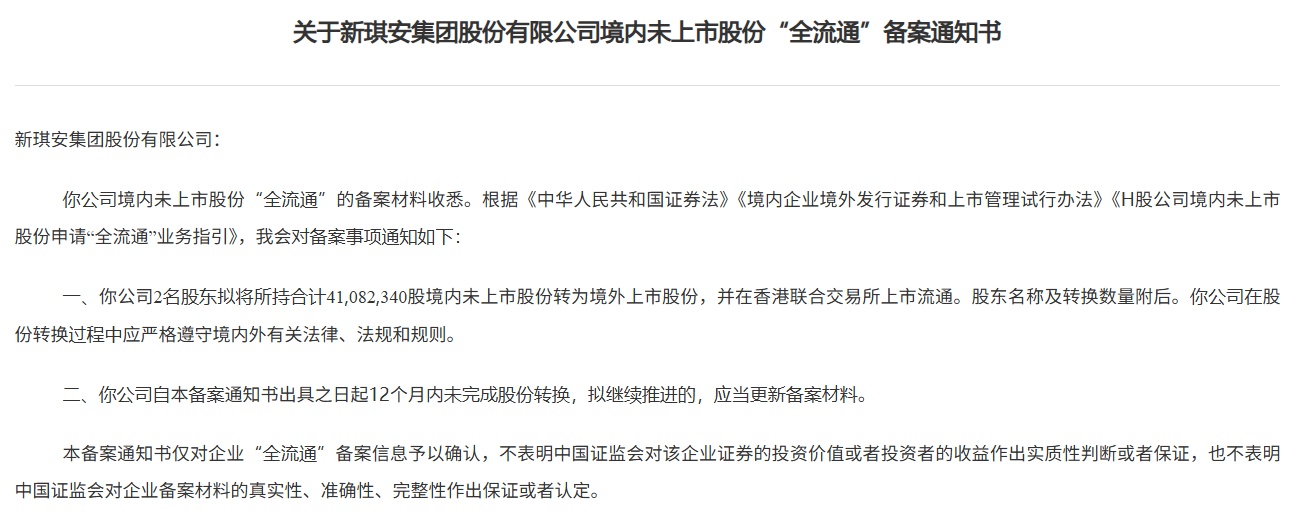
新琪安境内未上市股份“全流通”获中国证监会备案
Zhi Tong Cai Jing· 2026-01-28 06:11
Group 1 - The China Securities Regulatory Commission issued a notice regarding the conversion of unlisted shares of New Qian'an Group Co., Ltd. into listed shares for trading on the Hong Kong Stock Exchange [1] - Two shareholders of New Qian'an plan to convert a total of 41,082,340 shares from unlisted to listed status within 12 months of the notice issuance [1] - If the conversion is not completed within the specified timeframe, the shareholders must update their filing materials to continue the process [1] Group 2 - New Qian'an is a manufacturer of food-grade glycine and sucralose, primarily engaged in the production and sales of food-grade glycine, industrial-grade glycine, and sucralose [3] - During the reporting period, sucralose sales accounted for approximately 49.6%, 51.1%, and 41.8% of the company's total revenue, while food-grade glycine sales represented about 40.6%, 40.1%, and 42.0% [3] - Industrial-grade glycine sales contributed approximately 7.6%, 6.1%, and 11.7% to the total revenue during the same periods [3] Group 3 - The shareholders applying for the full circulation of shares include Wang Xiaoqiang with 5,923,286 shares and Shenzhen New Qian'an Industrial Development Co., Ltd. with 35,159,054 shares, totaling 41,082,340 shares [4]