电暖气

Search documents
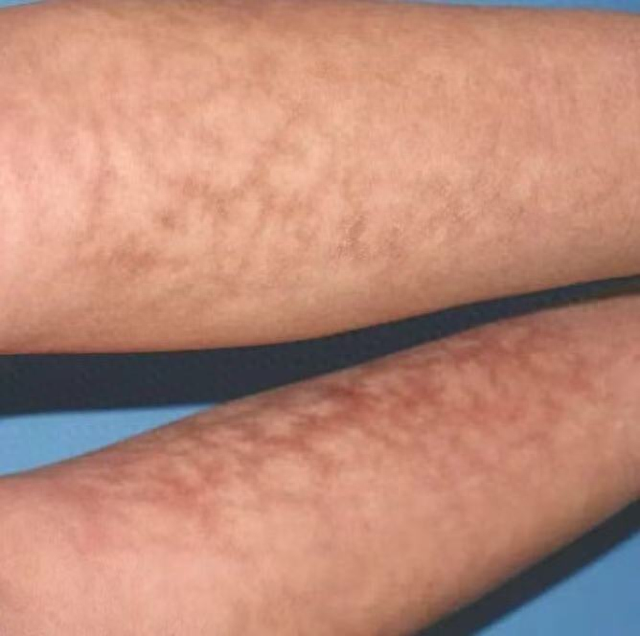
浙江小伙双腿长出“蟒蛇纹”!近期很多人这么做,尤其是睡觉……
Xin Lang Cai Jing· 2026-01-07 00:39
Core Viewpoint - The article highlights the increasing incidence of a skin condition known as "fire-induced dermatitis" or "fire-induced erythema" during winter, attributed to prolonged exposure to heating devices such as electric blankets and heaters [1][3]. Group 1: Condition Overview - Fire-induced erythema is characterized by persistent red spots and capillary expansion due to prolonged exposure to external heat sources, commonly seen in areas frequently in contact with these heat sources [1][3]. - Patients like Xiao Lin have reported symptoms including localized skin dryness, itching, and pain, with the condition being diagnosed by dermatologists [1][2]. Group 2: Medical Insights - Dr. Xu Gejiao explains that skin is highly sensitive to temperature, and exposure to heat sources at 45-50°C can lead to capillary expansion and subsequent pigment deposition in the skin, resulting in discoloration [3][4]. - The discoloration often appears as net-like or patchy brownish-purple spots, typically in areas that frequently contact heat sources, and may initially present with mild redness and capillary expansion [2][3]. Group 3: Recommendations - It is advised to maintain a safe distance from heating devices and to avoid direct skin contact, using towels or heat-resistant pads as barriers [4]. - Continuous use of heating devices should not exceed 30 minutes, and individuals experiencing unexplained skin discoloration related to heating device use should seek medical attention promptly [4].

冬季用火用电,小心防范这些安全隐患
Xin Hua She· 2025-12-17 11:06
Core Viewpoint - The article emphasizes the increased safety risks associated with the use of electricity, gas, and fire during the winter season in China, highlighting the importance of safety measures and awareness to prevent accidents and ensure safe usage of heating appliances and gas systems [1][2][3]. Group 1: Electrical Safety - The use of high-power electrical appliances like electric heaters and electric blankets increases during winter, raising fire risks, thus safety precautions must be prioritized [1]. - When purchasing heating devices, consumers should look for the "3C" mark, which indicates compliance with national safety standards, and ensure that products have essential safety features such as "overheat protection" and "automatic shut-off" [1]. - Past incidents have shown that placing flammable materials on electric heaters can lead to fires, underscoring the need for careful usage and distance from combustible items [1]. Group 2: Gas Safety - In winter, kitchens are often sealed, leading to insufficient oxygen supply, which can cause incomplete combustion of gas and result in carbon monoxide poisoning [2]. - The color of the flame from gas appliances can indicate safety; a blue flame signifies proper combustion, while yellow or red flames indicate incomplete burning, necessitating immediate ventilation [2]. - Many so-called energy-saving products may not be compatible with gas appliances, potentially causing damage or safety hazards, thus regular checks by gas companies are recommended [2]. Group 3: Fire Emergency Response - Winter is a peak season for fires, and in case of a fire, a systematic approach of "judge, report, extinguish, evacuate" should be followed [3]. - The first minute after a fire starts is critical for assessment; if the fire exceeds the size of an A4 paper or is not controlled within that time, evacuation and alerting authorities is essential [3]. - In case of a fire in a residential building, residents should rely on sensory cues like door temperature and smoke to determine safety, and if necessary, stay put and seal off the area while waiting for rescue [3].
岁末年初各部门加强安全防范工作 全力防控群众身边安全风险
Yang Shi Wang· 2025-12-17 08:17
Core Viewpoint - The Ministry of Emergency Management emphasizes the need for enhanced safety measures as the winter of 2025 is expected to experience significant temperature fluctuations and increased demand for heating and electricity, particularly during the year-end and New Year period [1][3][12]. Group 1: Safety Preparedness - As the year-end approaches, there is an increase in public gatherings and heightened risks associated with fire, electricity, and gas usage, necessitating collective safety precautions [3]. - The State Council's Work Safety Committee has initiated a major fire risk inspection and rectification action focusing on high-rise buildings, particularly those undergoing exterior renovations or internal modifications [5]. - The National Disaster Reduction and Relief Committee has mandated local authorities to enhance monitoring and emergency preparedness for winter disaster weather, especially during peak holiday periods [7][14]. Group 2: Weather Predictions - The winter of 2025 is predicted to have significant temperature swings, with frequent cold wave events and potential extreme cold occurrences due to the ongoing "La Niña" phenomenon [10][12]. - Specific regions, including central and western China, are expected to experience low temperatures and icy weather intermittently [12]. Group 3: Heating Safety - The use of various heating devices is expected to peak in winter, increasing fire risks; thus, proper selection and usage of heating equipment are critical [18]. - Guidelines for purchasing heating devices include ensuring they have the "3C" certification, focusing on core safety features, and avoiding unqualified products from informal vendors [20]. - Safety measures for using electric heating products include keeping them away from flammable materials, controlling usage time, and avoiding simultaneous charging and use [20]. Group 4: Carbon Monoxide Poisoning Risks - Winter activities such as indoor heating and prolonged idling of vehicles can lead to carbon monoxide poisoning, which is particularly dangerous due to the gas's colorless and odorless nature [21]. - Immediate actions in case of carbon monoxide exposure include ventilating the area, removing the affected person to fresh air, and seeking professional medical assistance if severe symptoms occur [21].
终端用能电气化,绿色中国有样本(这些新提法,写入“十五五”规划建议⑨)
Ren Min Ri Bao Hai Wai Ban· 2025-12-15 23:04
Core Viewpoint - The article discusses the increasing electrification of end-use energy in China, highlighting its significance in achieving carbon neutrality and enhancing industrial productivity. It emphasizes the transition from fossil fuels to electricity in various sectors, including residential and industrial applications [2][3][5]. Group 1: Electrification in Residential and Industrial Sectors - End-use electrification is characterized by the shift from traditional energy sources like coal and gas to electric appliances for heating, cooking, and industrial processes [3][5]. - The electrification rate in China reached 28.8% in 2024, indicating that nearly 30% of total energy consumption is now from electricity, which is higher than that of major developed economies [5][11]. - The transition to electric heating and electric machinery in industries such as steel and chemicals is crucial for reducing carbon footprints and enhancing competitiveness in global markets [5][6]. Group 2: Policy and Market Support - The Chinese government is promoting a dual control system for carbon emissions and is encouraging electrification across key industries, including steel, chemicals, and construction [8][10]. - The establishment of a unified electricity market and pricing mechanisms is essential for ensuring reliable electricity supply and supporting the electrification process [5][10]. - The development of renewable energy sources is projected to support the electrification process, with renewable energy generation expected to account for about 60% of total installed capacity by the end of the 14th Five-Year Plan [8][10]. Group 3: Case Studies and Practical Applications - The industrial electrification project in Shanxi Province serves as a model, where coal-fired furnaces were replaced with electric furnaces, resulting in significant environmental and economic benefits [6][7]. - The implementation of V2G (Vehicle-to-Grid) technology in Hebei Province demonstrates innovative approaches to integrating electric vehicles into the energy grid, enhancing local energy management [7]. - The establishment of green electricity service stations in Xiamen has facilitated substantial green electricity transactions, promoting the use of clean energy among local businesses [9][10]. Group 4: Future Projections - By 2030, China's electrification rate is expected to reach approximately 35%, significantly surpassing the OECD countries' rates [11]. - The anticipated increase in electricity consumption is projected to exceed 13 trillion kilowatt-hours, with an annual increase of about 600 billion kilowatt-hours during the 14th Five-Year Plan [11].
200%、100%!“暖”经济热风劲吹 取暖家电、轻纺企业产销两旺
Yang Shi Wang· 2025-10-26 05:23
Core Insights - The recent cold wave in northern China has significantly boosted the sales of heating and warming products across the country [1][6][8] Group 1: Sales Trends - In Beijing, sales of down jackets and wool products have surged, with custom quilt orders increasing in weight from 3-4 kg to 5-6 kg [3] - Overall sales in shopping malls have rebounded, with a 17% decline in early October compared to the same period in 2024, now reversing due to the cold wave [6] - Online platforms report over 200% year-on-year growth in sales of instant hot water dispensers and warm blankets, while electric hot pot orders have increased by over 14 times [8] Group 2: Regional Insights - In Yiwu, Zhejiang, sales of warm clothing and heating devices have peaked, with many customers placing additional orders [8][10] - The search volume for electric blankets and hot water bags has increased by 54% and 41% respectively in the past week [14] Group 3: Production and Supply Chain - Factories in Ningbo and other regions are operating at full capacity to meet the rising demand for heating appliances, producing around 4,000 oil heaters daily [20] - Textile companies are shifting focus from foreign markets to domestic sales of down products, with significant increases in orders due to the cold weather [22] - The price of raw materials like duck down has risen significantly due to increased demand, with production levels reaching 5-6 tons daily in some facilities [30][36] Group 4: Market Impact - The small home appliance sector in the A-share market has seen a notable increase, with leading stocks performing well amid heightened trading activity [38]