
畜禽粪污

Search documents
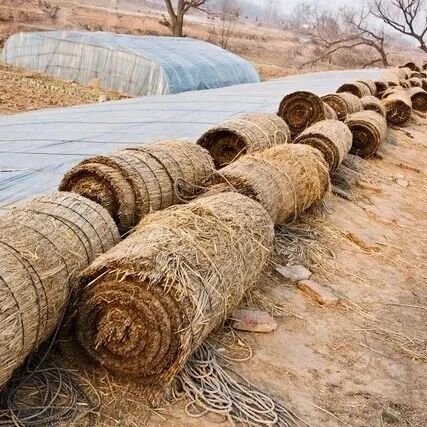
全国人大代表耿遵珠:应将农村秸秆与畜禽粪污变废为宝
经济观察报· 2026-03-10 11:50
Core Viewpoint - The article emphasizes the urgent need for improved management and utilization of agricultural waste, particularly vegetable straw and livestock manure, to promote sustainable agricultural practices and enhance rural living conditions [2][4]. Group 1: Issues in Agricultural Waste Management - Many villages focused on facility agriculture are facing significant challenges with the disposal of vegetable straw, leading to environmental pollution and safety hazards due to improper handling [2][4]. - The current utilization rates for livestock manure and straw are reported at 80.1% and over 88% respectively, indicating a need for better resource management despite existing frameworks [2]. - The improper disposal of agricultural waste not only affects the rural landscape but also poses risks of air and water pollution, hindering the green transformation of agriculture [4]. Group 2: Recommendations for Improvement - Establish dedicated subsidies for the collection, transportation, and processing of vegetable straw to encourage participation from individuals and enterprises, thereby reducing processing costs [5]. - Promote research and dissemination of energy utilization technologies for straw, focusing on practical and affordable methods for composting and organic fertilizer production [5]. - Integrate facility agricultural straw into existing comprehensive utilization policies, creating a supportive system that covers the entire waste management chain from collection to utilization [5]. Group 3: Livestock Manure Management Challenges - The increase in livestock farming has led to a rise in manure production, with many farmers opting for untreated manure to cut costs, resulting in environmental degradation and health risks [8][10]. - There is a lack of awareness among farmers regarding the importance of proper manure management, leading to inadequate infrastructure and low resource utilization rates [8][10]. Group 4: Solutions for Livestock Manure Issues - Develop a regulatory framework for livestock pollution management, ensuring clear responsibilities and regular inspections to enforce compliance [10]. - Accelerate the construction of manure collection and processing facilities, promoting the use of organic fertilizers to replace untreated manure [10]. - Increase policy support for manure resource utilization, including subsidies for organic fertilizer production and usage, to foster a sustainable agricultural model [10].

锐财经|固废综合治理能力再提升
Ren Min Ri Bao Hai Wai Ban· 2026-01-14 06:06
Core Viewpoint - The article discusses the release of the "Solid Waste Comprehensive Management Action Plan" by the State Council, which aims to strengthen solid waste management in China as part of the country's green transformation efforts. The plan emphasizes a comprehensive management system based on reduction, resource utilization, and harmless disposal of solid waste [1][2]. Group 1: Overall Strategy and Goals - The "Action Plan" outlines the overall strategy, work objectives, key tasks, and supporting measures for solid waste management in the coming years, addressing prominent issues in solid waste governance with systematic and integrated policy measures [2]. - By 2030, the plan aims for significant improvements in solid waste management, including controlling historical stockpiles, curbing illegal dumping, achieving a comprehensive utilization of 4.5 billion tons of major solid waste, and recycling 510 million tons of main renewable resources annually [2]. Group 2: Sector-Specific Management - In agriculture, the plan highlights the challenges of managing solid waste, with current utilization rates for livestock waste at 80.1%, straw at over 88%, and agricultural film disposal at over 85%. The Ministry of Agriculture will enhance guidance on the scientific use of agricultural film and promote resource utilization of livestock waste [4]. - In urban areas, the plan addresses the large amounts of construction waste generated by urbanization, with the Ministry of Housing and Urban-Rural Development focusing on promoting green construction and improving waste management practices [4]. - For industrial waste, the plan emphasizes controlling the generation and historical stockpiles of industrial solid waste, with the Ministry of Ecology and Environment aiming to explore new channels for large-scale utilization and gradually reduce both new and accumulated waste [5]. Group 3: Promoting Circular Economy - The "Action Plan" aims to enhance resource utilization levels and leverage market forces to promote the development of a circular economy, emphasizing the principles of reduction and resource utilization [6]. - Specific requirements are set for the source reduction, process control, and resource utilization of solid waste, encouraging sustainable business models [6]. - The plan also focuses on the extraction and utilization of valuable components from industrial and agricultural solid waste, promoting the recycling of various materials and the development of remanufacturing industries [6]. Group 4: Future Planning - The National Development and Reform Commission will lead the formulation of the "14th Five-Year Plan" for circular economy development, setting clear goals and tasks for key areas of recycling and utilization of solid waste [7].
江苏提前完成“十四五”化肥农药减量目标
Yang Zi Wan Bao Wang· 2026-01-07 05:04
Group 1 - Jiangsu Province is advancing agricultural green transformation and the construction of a beautiful Jiangsu, with significant reductions in fertilizer and pesticide usage by 5.9% and 8.5% respectively compared to 2020, achieving the "14th Five-Year" targets ahead of schedule [1] - By 2025, the comprehensive utilization rates of livestock manure and crop straw are expected to reach 95%, with a waste agricultural film recycling rate of 90% [1] Group 2 - The province has established 570 provincial-level fertilizer reduction demonstration zones and 800 provincial-level green and efficient fertilization technology integration promotion zones during the "14th Five-Year" period [2] - The coverage rate of green pest control for crops has reached 65.2%, supported by the establishment of 150 provincial-level green pest control technology demonstration zones [2] Group 3 - Jiangsu is promoting ecological circular agriculture with a focus on managing breeding areas, and has implemented standardized pond renovations covering 1.8 million acres since the beginning of the "14th Five-Year" period [3] - Over 300 breeding entities have received support for updating manure disposal facilities, and projects for resource utilization of livestock manure have been implemented in 17 counties [3] Group 4 - The province has initiated the construction of 3,000 livable and workable beautiful villages, with over 2.15 million rural toilets renovated since 2022 [3] - Future plans include promoting green varieties, technologies, equipment, and models while balancing food security and high-level ecological protection [4]
截至2024年四川化肥用量八连降,粮食产量却创新高 四川的“减肥术”
Si Chuan Ri Bao· 2025-07-07 00:55
Core Viewpoint - Sichuan province is under significant pressure to reduce fertilizer use while ensuring food security, as it is one of the 13 major grain-producing provinces in China and the largest producer of rapeseed [1][4]. Group 1: Agricultural Practices - Sichuan has initiated a green cycle agriculture pilot program focusing on organic materials for fertilizers, technological improvements for quality, and effective mechanisms for implementation [1][5]. - The province has successfully reduced chemical fertilizer usage by 2 pounds per acre compared to ten years ago, without affecting grain yields, which have consistently increased, reaching a historical high of 72.68 billion pounds last year [1][2]. Group 2: Challenges and Policies - The dual mission of promoting green agricultural development while ensuring food security presents a significant challenge for Sichuan, necessitating a balance between reducing fertilizer use and maintaining stable crop yields [3][4]. - National policies initiated in 2015 aimed at zero growth in fertilizer usage have placed additional pressure on provinces like Sichuan to meet environmental and agricultural standards [3][4]. Group 3: Innovative Approaches - The green cycle agriculture pilot program emphasizes the use of organic waste, such as livestock manure and straw, to enhance soil fertility and reduce reliance on chemical fertilizers [5][6]. - Technological innovations in fertilizer application, including new fertilization techniques and products, have been implemented in major grain-producing counties, leading to a zero growth in fertilizer usage for three consecutive years in some areas [6][8]. Group 4: Future Directions - Moving forward, Sichuan's agricultural strategy will focus on improving fertilizer efficiency rather than merely reducing quantities, with an emphasis on scientific fertilization practices [8][9]. - The province plans to enhance the utilization of organic fertilizers and expand the coverage of soil testing and tailored fertilization techniques to ensure sustainable agricultural practices [8][9].