
农业废弃物处理

Search documents
十二个新方法学发布 推动更多温室气体减排项目落地见效
Ke Ji Ri Bao· 2026-02-13 02:20
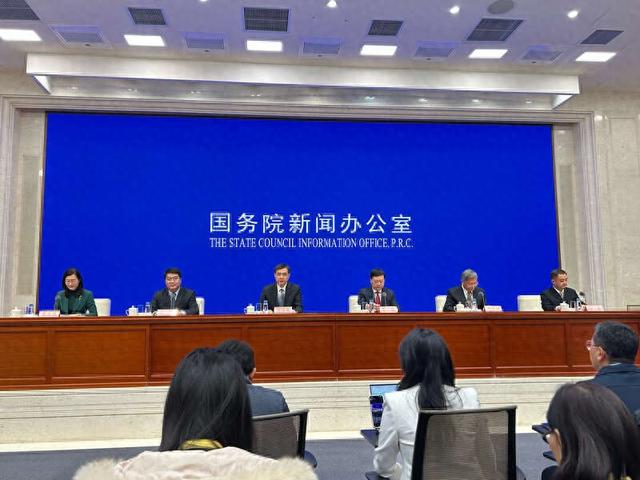
Core Insights - The CCER market in China is entering a new phase of rapid development with the release of 12 methodologies for voluntary greenhouse gas emission reduction projects, which will enhance the market's role in promoting carbon reduction and guiding green investments [1][3] Group 1: Methodology Development - A total of 18 methodologies for voluntary greenhouse gas emission reduction projects have been published in China, with 4 in 2023, 2 in 2024, and 12 planned for 2025 [2] - The 12 methodologies to be released in 2025 cover 7 out of 16 categories of greenhouse gas emission reduction projects, including renewable energy, energy demand, and agriculture [2][3] Group 2: Market Impact - The release of these methodologies represents a significant expansion of the CCER market's methodology system, enhancing its effectiveness in supporting national high-quality development and addressing key gaps in climate change strategies [3] - The methodologies provide a market incentive mechanism for achieving China's new round of national contributions across all greenhouse gases [3] Group 3: Project Implementation and Monitoring - The methodologies are designed to ensure the scientific validity of projects, which is crucial for the credibility and viability of the market [4] - The methodologies include requirements for project implementation, monitoring data management, and third-party verification to ensure high-quality carbon credits [4][8] Group 4: Industry Participation - To participate effectively in the CCER market, project owners and consulting firms must adhere strictly to the methodologies' requirements for project planning, management, and monitoring [7] - The methodologies are expected to increase project investment returns and stimulate investment enthusiasm in related industries [8] Group 5: Future Directions - The Ministry of Ecology and Environment plans to maintain the scientific, rational, and operable nature of the methodologies to encourage more industries to engage in greenhouse gas reduction actions [9] - The methodologies will serve as a guide for financial resources and social capital to flow into high-potential carbon reduction projects, promoting a comprehensive green transformation of the economy and society [8][9]
锐财经|固废综合治理能力再提升
Ren Min Ri Bao Hai Wai Ban· 2026-01-14 06:06
Core Viewpoint - The article discusses the release of the "Solid Waste Comprehensive Management Action Plan" by the State Council, which aims to strengthen solid waste management in China as part of the country's green transformation efforts. The plan emphasizes a comprehensive management system based on reduction, resource utilization, and harmless disposal of solid waste [1][2]. Group 1: Overall Strategy and Goals - The "Action Plan" outlines the overall strategy, work objectives, key tasks, and supporting measures for solid waste management in the coming years, addressing prominent issues in solid waste governance with systematic and integrated policy measures [2]. - By 2030, the plan aims for significant improvements in solid waste management, including controlling historical stockpiles, curbing illegal dumping, achieving a comprehensive utilization of 4.5 billion tons of major solid waste, and recycling 510 million tons of main renewable resources annually [2]. Group 2: Sector-Specific Management - In agriculture, the plan highlights the challenges of managing solid waste, with current utilization rates for livestock waste at 80.1%, straw at over 88%, and agricultural film disposal at over 85%. The Ministry of Agriculture will enhance guidance on the scientific use of agricultural film and promote resource utilization of livestock waste [4]. - In urban areas, the plan addresses the large amounts of construction waste generated by urbanization, with the Ministry of Housing and Urban-Rural Development focusing on promoting green construction and improving waste management practices [4]. - For industrial waste, the plan emphasizes controlling the generation and historical stockpiles of industrial solid waste, with the Ministry of Ecology and Environment aiming to explore new channels for large-scale utilization and gradually reduce both new and accumulated waste [5]. Group 3: Promoting Circular Economy - The "Action Plan" aims to enhance resource utilization levels and leverage market forces to promote the development of a circular economy, emphasizing the principles of reduction and resource utilization [6]. - Specific requirements are set for the source reduction, process control, and resource utilization of solid waste, encouraging sustainable business models [6]. - The plan also focuses on the extraction and utilization of valuable components from industrial and agricultural solid waste, promoting the recycling of various materials and the development of remanufacturing industries [6]. Group 4: Future Planning - The National Development and Reform Commission will lead the formulation of the "14th Five-Year Plan" for circular economy development, setting clear goals and tasks for key areas of recycling and utilization of solid waste [7].
我国秸秆综合利用率稳定在88%以上
Xin Lang Cai Jing· 2026-01-13 06:23
Group 1 - The comprehensive utilization rate of livestock and poultry manure in China has reached 80.1%, while the straw utilization rate remains stable at over 88%, and the disposal rate of agricultural films exceeds 85% [2] - The Ministry of Agriculture and Rural Affairs has made significant progress in promoting the resource utilization of agricultural waste, including livestock manure, crop straw, waste agricultural films, and pesticide packaging waste [2] - The State Council has released the "Comprehensive Solid Waste Management Action Plan," which outlines measures for the comprehensive management of agricultural and forestry solid waste, such as reducing waste generation and enhancing collection and transportation capabilities [2] Group 2 - The Ministry of Agriculture and Rural Affairs will focus on key areas and critical links, promoting a shift from "treatment" to "utilization" to accelerate green agricultural development [3] - Specific initiatives include strengthening guidance on the scientific use of agricultural films, promoting thicker and stronger films, and enhancing the recovery of pesticide packaging waste [3] - The ministry aims to break through key technical bottlenecks related to the scientific return of livestock manure, rapid decomposition of straw in low-temperature environments, and new film material processes [3]

CCER累计成交额6.5亿元,林业碳汇、新能源受青睐
2 1 Shi Ji Jing Ji Bao Dao· 2026-01-09 13:25
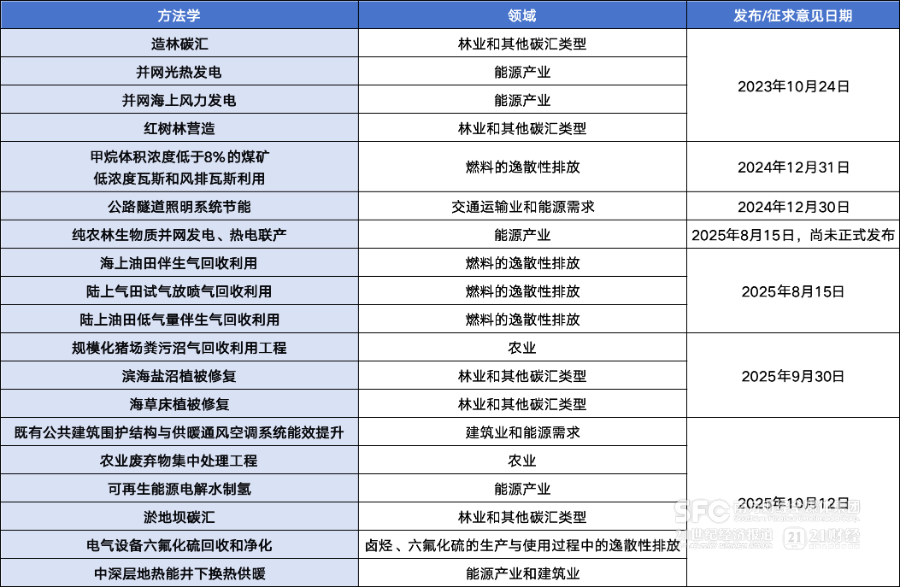
Core Viewpoint - The CCER methodology is undergoing significant expansion, with a total of 18 methodologies expected by the beginning of 2026, aimed at addressing key gaps in China's Nationally Determined Contributions (NDC) for greenhouse gas emissions reduction [1][4]. Group 1: Methodology Expansion - The Ministry of Ecology and Environment has introduced 12 new CCER methodologies in 2025, focusing on renewable energy utilization, energy efficiency improvements, agricultural waste resource utilization, ecosystem carbon sinks, and non-CO2 greenhouse gas reductions [1][4]. - The highest number of methodologies pertains to forestry carbon sinks (5), followed by the energy sector (4) and fugitive emissions [1]. Group 2: Market Development - Since its launch in January 2024, the voluntary greenhouse gas reduction trading market has seen over 5,700 accounts opened by various stakeholders, with a cumulative transaction volume of 921.94 million tons and a transaction value of 650 million yuan, averaging about 70 yuan per ton [3][7]. - The market is expected to facilitate the registration of projects that will achieve approximately 125 million tons of voluntary greenhouse gas reductions [3][7]. Group 3: New Fields and Incentives - The new methodologies incorporate six new fields into the voluntary reduction trading market, including oil and gas field recovery, ecosystem carbon sinks, agricultural waste resource utilization, renewable energy utilization, energy efficiency improvements, and sulfur hexafluoride reductions [4][5]. - The methodologies are designed to support green technologies and new business models, providing clear revenue expectations and reducing initial application costs for green technologies [5]. Group 4: Data Quality and Management - A comprehensive data quality management system is being established, ensuring reliable data acquisition, storage, and calculation, with mechanisms for cross-verification and internal management by project owners [6]. - The methodologies aim to focus on economically feasible projects, simplifying the development process and allowing for the bundling of smaller projects to reduce costs [6]. Group 5: Future Directions - The Ministry of Ecology and Environment aims to create a transparent, unified, and widely participatory voluntary greenhouse gas reduction trading market that aligns with international standards, contributing to carbon neutrality goals and the development of a green economy [8].
中农秸美“点绿成金”:重塑农业废弃物价值 开启产业新蓝海
Zheng Quan Ri Bao Wang· 2025-10-27 08:09
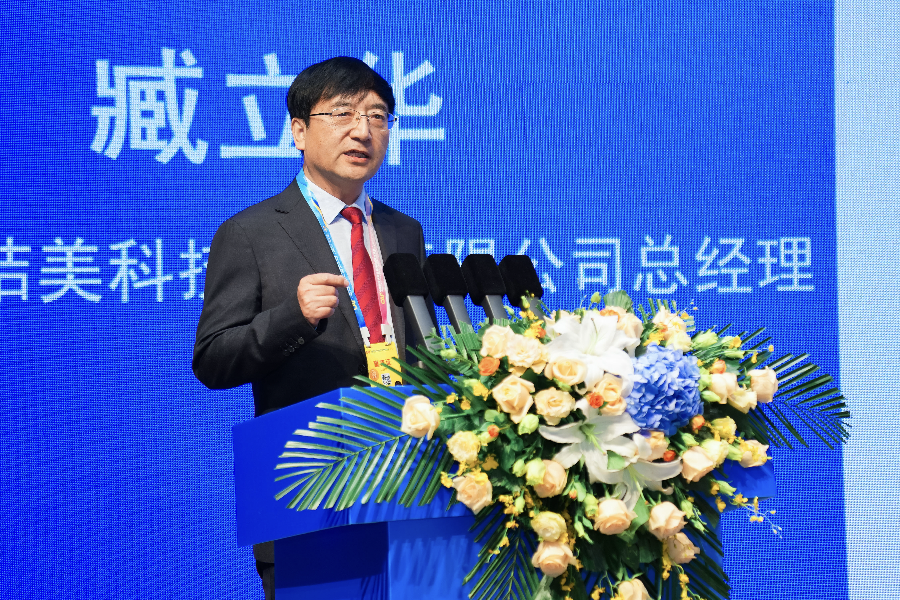
Core Viewpoint - The 32nd China Yangling Agricultural High-tech Achievements Expo showcases innovative agricultural solutions, with Shenzhen Zhongnong Qimei Technology Co., Ltd. presenting its unique straw waste treatment technology, highlighting its leadership in green utilization of agricultural waste [1][2]. Group 1: Technology and Innovation - Zhongnong Qimei's "Three-Component Separation" technology is the only one globally that efficiently separates and utilizes straw from nine types of crops, achieving zero waste and low energy consumption [3][4]. - The company has developed a complete technology chain covering enzyme preparation, equipment, and processes, creating a closed-loop system for straw resource utilization [2][4]. - The technology has been recognized as reaching international leading levels, with significant commercial and social value, marking a breakthrough in agricultural waste management [4][5]. Group 2: Market Potential and Economic Impact - The theoretical resource amount of straw in China is 977 million tons, with a collectible resource amount of 737 million tons, indicating a vast market potential for the "Three-Component Separation" technology [5]. - Traditional straw utilization methods are economically inefficient and environmentally damaging, while the new technology can reduce energy consumption by 70% and water usage by 80%, approaching a 100% straw utilization rate [5][6]. - The technology is expected to shift the industry from being policy-driven to market-driven, enhancing the economic viability of agricultural waste utilization [5][6]. Group 3: Future Outlook - Zhongnong Qimei's technology is set to redefine the value of agricultural waste, transforming millions of tons of waste into valuable resources, thus contributing to a green revolution in agriculture [6]. - The company aims to lead China's agricultural sector into a new phase of efficiency, sustainability, and environmental responsibility, providing a model for global agricultural green transformation [6].
一把合成生物“分子手术刀”,再造千亿秸秆新产业
2 1 Shi Ji Jing Ji Bao Dao· 2025-10-27 06:04
Core Viewpoint - The innovative enzyme hydrolysis technology developed by Zhongnong Qimei is positioned as a key solution for the effective utilization of agricultural waste, specifically straw, transforming it into high-value components and addressing environmental concerns [2][11]. Technology Breakthrough - Zhongnong Qimei's "three-component separation" technology allows for the complete decomposition of straw from nine major crops, achieving 100% conversion into high-value industrial products such as pulp fibers and soluble humic acid, thus realizing zero waste and low energy consumption [3][8]. - The technology has been recognized as internationally leading, with a significant reduction in energy consumption by 70% and water usage by 80% compared to traditional methods [5][10]. Market Potential - The global market for pulp molding products is rapidly growing, with a 2022 market size of $5.111 billion and significant potential for replacing plastic packaging, which has a penetration rate of only 3.5% [6][8]. - In China, the pulp molding market was valued at 15.4 billion yuan in 2022, with a low penetration rate of 4%, indicating vast opportunities for growth and market entry [6][8]. Environmental Benefits - The enzyme-based method developed by Zhongnong Qimei eliminates the pollution associated with traditional chemical pulping processes, which generate difficult-to-treat black liquor, thus providing a sustainable alternative [10][11]. - The technology not only addresses the pollution issues but also enhances the overall efficiency of straw utilization, with nearly 100% utilization rates [10][11]. Strategic Development - Zhongnong Qimei plans to establish multiple enzyme hydrolysis industrial bases across China during the 14th Five-Year Plan, aiming to process nearly 10 million tons of straw annually and create a green circular economy network [8][11]. - The company is also looking to expand internationally, promoting high-fiber plant cultivation and establishing smart production bases abroad, thereby enhancing domestic supply and reducing reliance on imports [11].

智冉医疗 A 轮融超 3 亿!君联、IDG 等一堆大佬抢着投! | 投资速递
Sou Hu Cai Jing· 2025-08-13 07:57
Domestic Investment - Daimeng Robotics completed a financing round of over 100 million yuan, focusing on high-resolution multi-modal tactile perception and intelligent solutions for various industries [1] - Zhirun Medical announced the completion of over 300 million yuan in Series A financing, aimed at advancing brain-machine interface technology for precise diagnosis of neurological diseases [2] - Leju Technology completed a B++ round of financing, with Kunlun Capital as the sole investor, marking the successful conclusion of its B round series [3][4] - Ronghe Yuanchu received B round financing from Guokun Investment, CIMC Group, and Yuanxin Fund, focusing on large-scale energy storage systems [5] - Feidu Technology completed several million yuan in strategic financing, developing a digital twin platform for various smart industries [6] - Xinghua Chip received an investment of 15 million yuan from Huitong Energy, increasing its registered capital [7] - Siweibo secured several million yuan in B round investment from Shenzhen Jiadao Green Low Carbon Investment Fund, focusing on agricultural biotechnology [8] - Guangdong Jianke went public on the Shenzhen Stock Exchange, raising 687 million yuan through the issuance of 105 million shares at 6.56 yuan each [9] - Ruimo Environmental completed a new round of financing led by Ingka Investments, focusing on recycled plastics [10] - Yongzhi Semiconductor received investment from Yida Capital to enhance its product development and capacity [11] - Lanyi Aviation completed several million yuan in Pre-A round financing, focusing on eVTOL aircraft development [12] Foreign Investment - HackQuest secured $4.1 million in Pre-A round financing, focusing on Web3 education [13] - HYLENR received $3 million in Pre-A round financing, developing low-energy nuclear reaction technology [14] - Chowdeck completed $9 million in Series A financing, focusing on local food delivery in Nigeria and Ghana [15] - FORT raised $18.9 million in Series B financing, developing a network security management platform [16] - Equillium announced up to $50 million in strategic investment for its autoimmune disease treatments [17] - Nanotein secured $3 million in strategic investment for its cell therapy products [18] - Tahoe Therapeutics completed $30 million in financing, focusing on AI-driven human cell models for drug design [19] - SetPoint Medical raised $115 million in Series D financing for its bioelectronic medicine platform [20] - August Health announced $29 million in Series B financing for its modern nursing care platform [21] IPO Queue - Jiaxin International submitted post-hearing materials for its tungsten mining project [22] - Koma Materials passed the review meeting, focusing on automotive clutch plate production [23] - Hongyuan Co. publicly offered shares, specializing in high-end transformer electromagnetic wire production [24]
变废为宝 北京大兴探索农业废弃物利用新模式
Xin Jing Bao· 2025-07-18 11:59
Core Viewpoint - The agricultural waste treatment center in Daxing District, Beijing, transforms agricultural waste into valuable resources through various processing methods, emphasizing the importance of resource utilization in line with green development principles [1][2]. Group 1: Agricultural Waste Processing - The agricultural waste treatment center processes straw, melon vine residues, and other agricultural waste into fuel, organic fertilizers, and raw materials for various additives [1]. - Since its establishment in August 2022, the center has increased its capacity to process over 40,000 tons of agricultural waste annually through the addition of new equipment [1]. Group 2: Collaboration and Technological Support - The Chinese Academy of Agricultural Sciences has established a close partnership with the Daxing District Agricultural and Rural Bureau to promote the resource utilization of agricultural waste through technology and monitoring [2]. - There is a growing demand among cooperatives and farmers for scientific treatment and comprehensive utilization technologies for agricultural waste, reflecting a consensus on green and low-carbon development [2]. Group 3: Utilization Rates and Achievements - In 2024, the collection of crop straw in Daxing District is projected to reach 85,900 tons, with a comprehensive utilization rate of 99.59%, achieving near-total utilization [2]. - The collection of melon vine residues is expected to be 189,700 tons (fresh weight), with a comprehensive utilization volume of 61,100 tons and a utilization rate of 32.2%, demonstrating significant progress [2].