
磷酸二氢锂

Search documents
川发龙蟒(002312) - 002312川发龙蟒投资者关系管理信息20260401
2026-04-01 08:56
Group 1: Company Overview and Strategic Initiatives - Sichuan Development Longmang Co., Ltd. is focused on its core business, major projects, mineral resources, strategic planning, and core advantages [2] - The company plans to invest CNY 120 million in the extension project of the northern section of the Baizhu Phosphate Mine, which will enhance the mine's service life and support sustainable development [3] - The total phosphate resource reserves of the company’s subsidiaries amount to approximately 130 million tons, with an annual production capacity of 4.1 million tons [3] Group 2: Cost Management and Market Response - The company faces increased cost pressures due to rising prices of raw materials like phosphate rock and sulfur, driven by macroeconomic factors and supply-demand changes [4] - To manage these pressures, the company optimizes internal cost control and adjusts operational strategies based on market conditions [4] Group 3: New Energy Materials Development - New energy materials are a key part of the company's strategic development, extending into lithium iron phosphate and lithium dihydrogen phosphate [5] - The company’s 60,000 tons/year lithium iron phosphate facility has achieved production, while a 100,000 tons/year lithium dihydrogen phosphate project is progressing smoothly [5] Group 4: Market Dynamics and Product Pricing - The market for industrial-grade monoammonium phosphate is growing due to demand from the new energy sector, with the current average market price around CNY 6,859 per ton [6] - The company benefits from an integrated supply chain and strong product quality control, positioning it well in a competitive market [6] Group 5: Export Policies and Market Adaptability - The company adheres to legal regulations and industry standards in its export operations, demonstrating strong market adaptability [7] - It can adjust product structures and sales strategies in response to domestic and international market changes [7]

【金牌纪要库】津巴布韦锂矿出口政策全面收紧,2026年或减少8-10万吨碳酸锂产量进入中国,碳酸锂期货价格有望上行至18-20万元/吨
财联社· 2026-03-27 15:42
Group 1 - Zimbabwe's lithium export policy is tightening, which is expected to drive lithium carbonate futures prices up to 180,000-200,000 yuan per ton, benefiting companies with increasing lithium carbonate production by 2026 [1] - Each 1GW of energy storage capacity requires approximately 600-800 tons of copper, indicating that the significant rise in energy storage demand may enhance the performance of copper foil companies [1] - The fifth generation of high-voltage lithium iron phosphate has achieved mass production, primarily utilizing lithium dihydrogen phosphate and lithium carbonate, with both companies having already put their lithium dihydrogen phosphate production capacity into operation [1]


重视一季度的磷酸铁锂
2026-03-26 13:20
Summary of Lithium Iron Phosphate Industry Conference Call Industry Overview - The conference call focused on the lithium iron phosphate (LFP) industry, specifically discussing the performance and expectations for Q1 2026 [1][2]. Key Points and Arguments - **Price Increase in Q1 2026**: The LFP industry experienced price increases during the traditionally slow season due to limited oversupply of high-quality production capacity (third generation and above) and the inability of smaller manufacturers to fill the market gaps left by major companies undergoing maintenance [1][2]. - **Product Generation Stratification**: There is a significant stratification in product generations, with only 8-10 companies capable of stably supplying high-quality third-generation products and ≤2 companies for fourth-generation and above [1][3]. - **Cost Pressures**: Rising costs driven by increases in sulfur and iron phosphate prices have led to a cost increase of up to thousands of yuan for companies purchasing iron phosphate, providing a basis for further price increases in Q2-Q3 [1][3]. - **Impact of Lithium Carbonate Prices**: The rise in lithium carbonate prices has positively impacted the gross margins of companies like Hunan Youneng and Defang Nano, as the pricing mechanism allows for significant margin enhancement due to the time lag between current pricing and previous inventory costs [1][4]. - **Fulin Precision's Unique Position**: Fulin Precision's business model is less affected by lithium price fluctuations due to its use of lithium dihydrogen phosphate as a raw material, which has less price volatility. The company benefits from its fourth-generation products' scarcity and market leadership, leading to sustained price increases [1][5]. Additional Important Insights - **Operational Improvements**: Despite some companies undergoing maintenance in Q1, the overall demand did not decline as sharply as expected, indicating a robust operational environment [2]. - **Future Price Trends**: The cost pressures and supply-demand dynamics suggest that price increases will likely continue, especially for high-end products in the upcoming peak seasons [3][4]. - **Accounting and Inventory Management**: The accounting treatment of inventory and the timing of cost recognition play a crucial role in the gross margin fluctuations for LFP producers, particularly during periods of price volatility [4]. This summary encapsulates the critical insights from the conference call regarding the LFP industry, highlighting the factors influencing performance and future expectations.
川发龙蟒(002312) - 002312川发龙蟒投资者关系管理信息20260206
2026-02-06 09:16
Group 1: Company Overview - Sichuan Development Longmang Co., Ltd. introduced its main business, recent major projects, mineral resources, strategic planning, and core advantages during the investor relations activity [2][3]. Group 2: Product Pricing and Market Conditions - The current market price for 73% industrial-grade monoammonium phosphate is approximately ¥6,500 per ton, while feed-grade dicalcium phosphate is around ¥3,900 per ton [3]. - The company faces increased cost pressure due to rising sulfur prices, which are influenced by supply-demand dynamics [3]. Group 3: Phosphate Resource and Production Capacity - The company has a total phosphate resource reserve of approximately 1.3 billion tons, with an annual production capacity of 4.1 million tons [3]. - The price of 30% grade phosphate rock is expected to maintain a high level, with a projected average price of ¥1,016 per ton in 2025 [3]. Group 4: Strategic Asset Acquisition - The company acquired a 10% stake in Tian Sheng Mining, a subsidiary of its controlling shareholder, which includes a phosphate mine with an estimated resource of approximately 1 billion tons and a designed production capacity of 4.55 million tons per year [3]. - The company is also involved in the Tiger Cave phosphate mine, which has a resource reserve of about 0.75 billion tons and a designed capacity of 3.75 million tons per year [3]. Group 5: Lithium and New Energy Projects - The company is investing ¥366 million in a 100,000 tons/year lithium dihydrogen phosphate project to enhance its new energy materials business [4]. - The company has successfully launched a 60,000 tons/year lithium iron phosphate facility and is collaborating on a 175,000 tons/year high-density lithium iron phosphate project [4]. Group 6: Lithium Resource Development - The company is focusing on securing lithium resources, with ongoing exploration at the Simaozuo lithium spodumene mine, which has an estimated Li2O resource of 14,927 tons [4].
磷化工为何在磷酸铁锂赛道卷土重来
高工锂电· 2026-02-04 10:46
Core Viewpoint - The article discusses the importance of resource integration versus technological innovation in the lithium iron phosphate (LFP) industry, highlighting a shift in the business model from merely selling materials to focusing on processing capabilities and stable delivery [1][12]. Group 1: Price Trends and Market Dynamics - In January 2026, lithium iron phosphate was included in the National Bureau of Statistics' monitoring of 50 important production materials, with prices increasing by 11.3% month-on-month in early January and an additional 5.9% later in the month, reaching 57,337 yuan per ton [1]. - Phosphate chemical companies are increasingly investing in the lithium iron phosphate supply chain, with traditional phosphate enterprises like Xingfa Group and Chuanheng Co. being evaluated alongside LFP producers [2][19]. Group 2: Lessons from Previous Cross-Industry Ventures - The previous wave of titanium dioxide companies entering the lithium iron phosphate market was driven by the potential to utilize by-products like ferrous sulfate, but many projects faced significant challenges, leading to low operational rates and project terminations [4][5]. - The failure of these cross-industry ventures was attributed to the industrial nature of material delivery, where consistency in product quality is crucial for securing contracts with leading battery manufacturers [6][7]. Group 3: Current Industry Innovations - A notable innovation in the current phosphate chemical industry is the adoption of contract processing agreements, exemplified by Xingfa Group's deal with Qinghai Fudi Industrial to process 80,000 tons of lithium iron phosphate annually [11][12]. - This shift towards a processing fee model allows companies to stabilize cash flow and operational rates without solely relying on material prices, contrasting with previous strategies that focused on high material sales [13][15]. Group 4: Resource Integration and Competitive Landscape - Phosphate chemical companies have a natural advantage in the lithium iron phosphate market due to their established resource networks, which include access to phosphate rock and related processing capabilities [16][17]. - The industry's competitive dynamics are evolving, with traditional lithium iron phosphate producers facing pressure to integrate resources and engineering capabilities to remain competitive, leading to a potential consolidation of the market into a few comprehensive platforms [19][23].






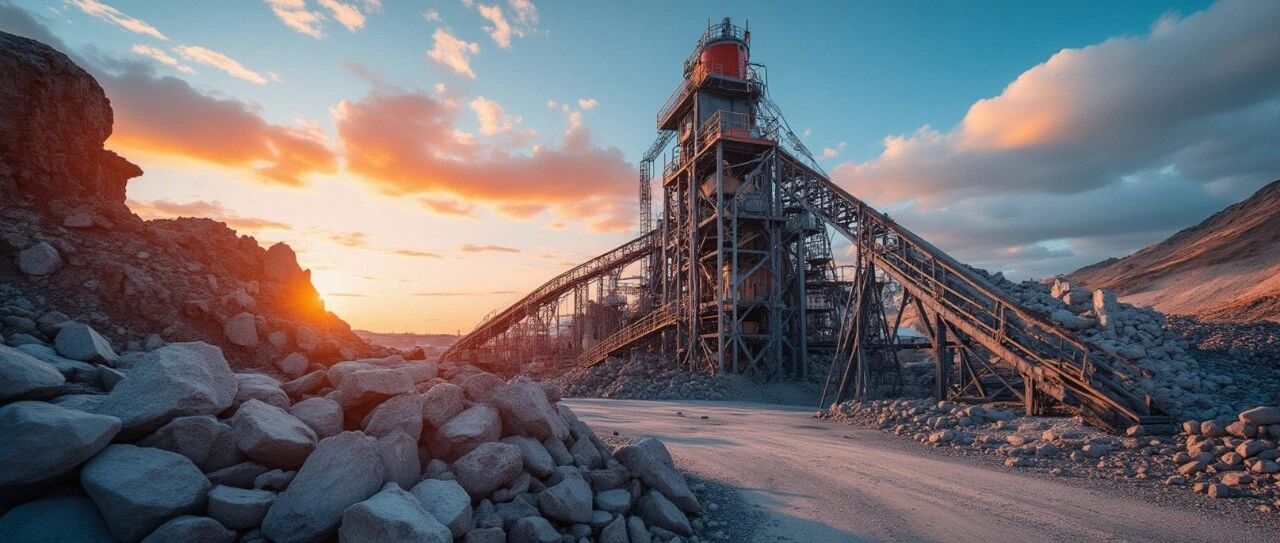
萃华珠宝:控股子公司思特瑞锂业参股的湖北磷氟锂业有限公司建有10万吨/年磷酸二氢锂产能
Mei Ri Jing Ji Xin Wen· 2026-01-27 04:47
萃华珠宝(002731.SZ)1月27日在投资者互动平台表示,公司控股子公司思特瑞锂业参股的湖北磷氟锂 业有限公司建有10万吨/年磷酸二氢锂产能,为目前国内磷酸二氢锂的主要供应企业。 (文章来源:每日经济新闻) 每经AI快讯,有投资者在投资者互动平台提问:公司控股思特瑞锂业旗下湖北磷氟锂业的磷酸二氢锂 产能达10万吨/年,请问该产能是否为全球第一? ...

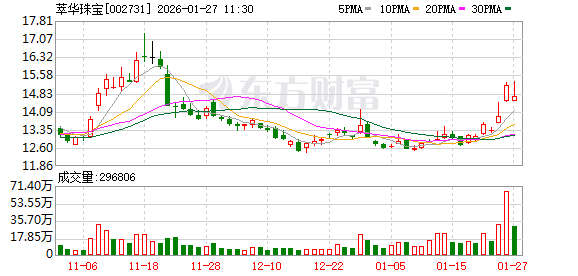
萃华珠宝:公司生产的磷酸二氢锂目前已作为正极材料的原料已在较大范围内应用
Mei Ri Jing Ji Xin Wen· 2026-01-20 04:30
Group 1 - The company produces lithium carbonate and lithium hydroxide, which are high-purity battery-grade lithium products [2] - The company's lithium dihydrogen phosphate is widely used as a raw material for cathode materials, particularly in the fourth and fifth generation of lithium iron phosphate [2] - The application of the company's products in cathode materials depends on the process routes required by battery manufacturers [2]
赣锋锂业20260112
2026-01-13 01:10
Summary of Ganfeng Lithium's Conference Call Company Overview - Ganfeng Lithium has approximately 50 million tons of lithium carbonate equivalent resources and plans to achieve a production capacity of 600,000 tons by 2030. The company is also actively expanding into potassium and phosphorus resources for integrated development. The downstream battery business is expected to enter a boom cycle by 2025 [2][3]. Key Points on Lithium Market Dynamics - Recent increases in lithium carbonate prices have exceeded expectations, driven by demand growth and supply uncertainties. Short-term tax rebate news may stimulate demand, while the long-term outlook suggests a rising industry bottom, although risks from non-market price controls should be monitored [2][4]. - Despite rising lithium prices, the willingness for capital expenditure in the industry has not significantly increased, primarily due to geopolitical factors affecting overseas resource uncertainties. New projects are expected to take time to impact supply and demand, likely not until 2027-2028 [2][6]. Investment Strategy - Ganfeng Lithium adopts an exclusionary approach for overseas investments, focusing on regions like South America (Argentina, Chile) and Africa (Zimbabwe, Nigeria, Mali), considering geopolitical risks and policy balance [2][7]. - The company maintains its target of 600,000 tons of production capacity, with a self-sufficiency rate stable at 70%-80%. The hedging strategy is cautious to avoid naked short positions, and pricing strategies respect market dynamics [2][9]. Inventory and Supply Chain Management - Current inventory levels are stable, maintaining around one month of spot inventory. The company has routine maintenance scheduled during the Spring Festival, which may contribute to supply tightness in the first quarter [2][10]. New Business Developments - Ganfeng Lithium is actively developing new businesses in lithium dihydrogen phosphate and potassium fertilizer, with a potassium fertilizer project planned to produce 2 million tons annually by 2027. This diversification is expected to enhance overall profit stability [2][11][13]. - The company is also expanding its presence in the energy storage sector, with strong supply capabilities anticipated to mitigate potential shortages in 2026 [2][14]. Solid-State Battery Initiatives - Ganfeng Lithium has made comprehensive advancements in solid-state battery technologies, including various types of solid and semi-solid batteries. The company sees significant potential in applications beyond automotive, particularly in low-altitude economies and robotics [2][16]. Conclusion - Ganfeng Lithium is strategically positioned in the lithium market with a focus on integrated resource development and diversification into new business areas. The company is navigating geopolitical challenges while maintaining a cautious approach to capital expenditure and pricing strategies, ensuring long-term stability and growth in a dynamic market environment [2][3][4][6][7][11][14][16].

兴发集团20260107
2026-01-08 02:07
Summary of Xingfa Group's Conference Call Company Overview - **Company**: Xingfa Group - **Industry**: Phosphate and Specialty Chemicals Key Points Phosphate Mining and Production - Xingfa Group plans to enhance phosphate rock production capacity to 10 million tons through acquiring mining rights from Qiaogou Mining and purchasing the remaining 30% stake in Bai Shui He Phosphate Mine, ensuring future phosphate resource supply [2][3] - Qiaogou Mining is expected to start construction in Q2 2026, with a mining rights certificate for 2.8 million tons anticipated by March 2026 [3] Specialty Chemicals Segment - The specialty chemicals segment focuses on phosphates, with high-value products like "Xinf A" and ethyl mercaptan contributing to profit growth [2] - In 2026, the specialty segment is expected to launch new products including BCD series phosphate additives and battery-grade pentasulfide, further enhancing profitability [2][3] New Energy Sector - The new energy segment is projected to achieve a profit of 200 million yuan in 2026, adding 150,000 tons of iron phosphate capacity [2] - Collaboration with BYD for contract manufacturing and controlling Linfu Lithium to supply battery-grade lithium dihydrogen phosphate to CATL [2][3] Organic Silicon Industry - The organic silicon industry is experiencing price recovery due to coordinated production cuts, with prices expected to rise to 15,000-16,000 yuan/ton post-Chinese New Year [2][5] - A price fluctuation of 1,000 yuan/ton impacts the company's profit by 200-300 million yuan [2][5] Collaboration with CATL - Deepening cooperation with CATL in lithium dihydrogen phosphate, with a monthly supply of no less than 6,000 tons and plans to expand capacity to 150,000 tons post-Chinese New Year [2][8] Black Phosphorus Research - Significant breakthroughs in black phosphorus research for applications in aerospace materials and catalysts, with ongoing collaborations with companies like Huawei [4][12] Agricultural Chemicals - The glyphosate sector faces uncertainty, with current prices around 23,000-24,000 yuan, while the company aims to secure export quotas [5][13] Price Control and Market Dynamics - The company is actively engaging with other firms for price control measures to enhance profitability, especially in the glyphosate market [14][22] Future Market Outlook - The demand for lithium iron phosphate is expected to increase by 100,000-150,000 tons in 2026, with ongoing partnerships with BYD and CATL to meet this demand [15][18] - The phosphate rock resource reserves are projected to double in the next 3-5 years, ensuring ample development potential [19] Fertilizer Sector Challenges - The fertilizer sector is impacted by reduced export quotas and rising sulfur prices, which could lead to increased domestic fertilizer prices [20][22] New Product Developments - Introduction of new high-value products in specialty chemicals, including sodium hypophosphite and sodium ethyl mercaptan, with significant profit margins [23][24] Downstream Demand - Strong downstream demand for specialty chemicals, particularly from mining sectors, is driving price increases for key products [25] Mining Rights and Capacity Expansion - The company has made progress in obtaining mining rights, with total equity capacity reaching 640,000 tons [26] Overall Performance Outlook - The company maintains a positive outlook for 2026, with expected growth across various segments, particularly in black phosphorus, specialty chemicals, new energy, and organic silicon [5][28]
川发龙蟒(002312.SZ):目前未进行电解液材料相关布局或项目
Ge Long Hui· 2025-12-29 11:02
Core Viewpoint - The company has not yet engaged in the layout or projects related to electrolyte materials, but will adhere to information disclosure regulations if such business is initiated [1] Group 1: Current Operations - The company is primarily focused on new energy materials, specifically projects involving iron phosphate and lithium iron phosphate [1] - The wholly-owned subsidiary, Deyang Chuanfa Longmang, has completed and put into operation a 60,000 tons/year lithium iron phosphate facility [1] - A 100,000 tons/year iron phosphate facility is currently undergoing trial production [1] Group 2: Future Projects - Deyang Chuanfa Longmang plans to invest in a 100,000 tons/year lithium dihydrogen phosphate project, which will provide raw materials for high-pressure dense lithium iron phosphate production using the ferrous oxalate route [1] - This project is expected to leverage the company's advantages in phosphoric chemicals and new materials, optimizing product structure and enhancing the company's market influence and core competitiveness [1]