
神经控制假肢技术

Search documents
六小龙的乌镇信号:AI创业从拼模型进入拼场景时代
3 6 Ke· 2025-11-25 09:54
Core Insights - The "Six Little Dragons" of Hangzhou, representing six innovative companies, showcased their collective vision at the World Internet Conference, emphasizing the shift from data accumulation to cognitive construction in the AI era [1][11][12] - The AI core industry in Zhejiang Province achieved a revenue of 494.4 billion yuan, marking a 22% year-on-year growth, with R&D expenses reaching 39 billion yuan, up 14% [1][11] Company Highlights - Yushutech exemplifies the rise of embodied intelligence, growing from 3 to over 1,000 employees since its inception in 2016, with a 29.5% year-on-year revenue increase in the robotics sector [2][3] - Qiangnao Technology focuses on brain-computer interface technology, aiding individuals with disabilities, and plans to expand into sleep products [3][4] - Qunkua Technology sees spatial intelligence as a crucial area for future development, essential for managing robots in physical environments [4][8] - Yundongchu Technology has transitioned from creating robotic dogs to developing humanoid robots for hazardous environments [5][8] - Game Science, led by CEO Feng Ji, highlights China's dominance in the gaming market, with four of the top ten highest-grossing games globally developed by Chinese teams [5][6] Industry Trends - The AI investment landscape is shifting, with embodied intelligence surpassing large models in attracting funding, indicating a preference for companies with revenue and production capabilities [7][8] - The focus is moving from isolated technological advancements to collaborative ecosystem building, as seen in the strategies of various companies [7][8] - The concept of "world models" is emerging, emphasizing the need for AI to understand and interact with the physical world rather than just processing text [11][12][13] Future Outlook - The AI industry is transitioning from a focus on model size to a deeper understanding of the world, with the next decade expected to prioritize spatial intelligence and real-world interactions [11][12][13] - The collective efforts of the "Six Little Dragons" signify a natural evolution in the AI sector, driven by Hangzhou's robust manufacturing capabilities and engineering culture [12][13]

三个可喜的变化
Sou Hu Cai Jing· 2025-11-08 22:23
Group 1 - The article highlights the significant innovations emerging from the "Wuzhen Summit," particularly in the robotics sector, showcasing advancements like mind-controlled prosthetics that assist disabled individuals in performing intricate tasks [3][4][5] - The summit has attracted notable leaders and entrepreneurs, with figures like Liu Qiangdong predicting substantial advancements in the logistics industry over the next five years, potentially surpassing the progress made in the last decade [11][12] - Companies like Tencent and ZTE have been recognized for their contributions, with Tencent receiving multiple awards and emphasizing its commitment to innovation-driven development [14][15][16] Group 2 - The article emphasizes the growing confidence among Chinese entrepreneurs and scientists, reflecting a more self-assured China that is actively engaging in global innovation [19][21] - The global innovation index indicates that China is one of the fastest-growing countries in terms of innovation, with a notable integration of technology, media, and culture [22] - Huang Renxun, CEO of NVIDIA, remarked on China's competitive edge in the generative AI race, highlighting the vast workforce dedicated to this field [24]




乌镇同台聚首 杭州“六小龙”共话未来科技图景
Zhong Guo Xin Wen Wang· 2025-11-08 15:31
Core Insights - The article highlights the rapid rise of Chinese tech startups, particularly in the field of AI, with a focus on the "Six Little Dragons" from Hangzhou, who are gaining significant attention in the industry [1] Group 1: AI and Embodied Intelligence - The concept of "embodied intelligence" has been recognized as a key area in AI, with applications extending from industrial sectors to daily life, healthcare, and disaster relief [1] - The term "embodied intelligence" was first included in the government work report for 2025, indicating its growing importance [1] - Companies like Yushutech are optimistic about the future of embodied intelligence, believing it will serve as a crucial engine for the robotics industry [2] Group 2: Challenges in Development - The development of embodied intelligence faces challenges primarily related to high-quality data and model algorithms, with a need for improved data utilization [2] - Despite these challenges, industry leaders remain optimistic about advancements in the robotics sector over the next two years [2] Group 3: Innovations in Robotics - Companies like Yushutech and Cloud Deep Technology are focusing on practical applications of robotics, such as using robotic dogs for power inspections and emergency firefighting [2] - The emergence of humanoid robots is also being pursued, with the aim of replacing human labor in hazardous environments [2] Group 4: Future Vision - Industry leaders envision a future where robots will significantly populate work environments, necessitating unified management and command of these machines through spatial intelligence technology [2] - The transition from automation to intelligence in robotics is seen as a gradual process that will not take long [2] Group 5: Brain-Computer Interface Technology - Brain-computer interface technology is transitioning from experimental stages to real-world applications, such as neuro-controlled prosthetics that allow disabled individuals to perform intricate tasks [3] - This technology is moving closer to making previously fictional scenarios a reality, enhancing human capabilities [3] Group 6: Awareness of Risks - Industry representatives emphasize the importance of risk awareness regarding the potential long-term impacts of AI, including job displacement and the concentration of technological advantages among a few companies [4] - The balance between AI's capabilities and the anxiety it may cause in the workforce is highlighted as a critical issue for future consideration [4]
“六小龙乌镇对话” 他们如何思考AI和未来
Xin Hua She· 2025-11-07 18:21
Core Insights - The "Six Little Dragons" of Hangzhou, representing cutting-edge AI companies, have garnered global attention for China's rapid AI development [1][2] - Open-source collaboration is a key theme, with companies emphasizing the importance of shared innovation in advancing AI technology [1][2] - The rapid growth of the internet in China has created a solid foundation for AI development, providing vast amounts of user data for training AI models [3] Group 1: Open-source and Collaboration - Open-source is highlighted as a collaborative innovation model that can enhance AI development and cooperation among tech developers [1] - DeepSeek's commitment to open-source has facilitated meaningful feedback from the community, driving its growth towards achieving AGI (Artificial General Intelligence) [1] - The open-source algorithms in the robotics industry have significantly contributed to its rapid advancement, supported by global collaboration among top laboratories and universities [2] Group 2: Foundation for AI Development - The rapid development of the internet in China over the past decade has accumulated a massive amount of user data, which is crucial for training AI models [3] - The supportive entrepreneurial environment in China has fostered innovation, allowing startups to thrive and contribute to the AI ecosystem [3] Group 3: Challenges in Robotics and AI - Despite advancements in robotics, challenges remain in data collection and standardization, which hinder the development of embodied intelligence [5][6] - The industry is still exploring effective data collection methods and training techniques for robots, as the current data scale is insufficient compared to large language models [6] Group 4: Emerging Technologies - Brain-machine interface technology is being developed to enable individuals with disabilities to control prosthetics through thought, showcasing the potential of AI in enhancing human capabilities [7] - The application of brain-machine interfaces is also being explored for treating neurological conditions, despite challenges in data processing and system stability [7] Group 5: Future Outlook and Risks - Companies recognize the importance of technology regulation and the potential negative impacts of AI, such as the concentration of technological advantages [9] - There is a consensus that while AI can enhance productivity in the short term, it may lead to job displacement in the long term, necessitating a responsible approach from tech companies [9] - The overall sentiment among the "Six Little Dragons" is optimistic about the future of AI, emphasizing the need for collaboration between innovation and regulation to ensure safety [9]
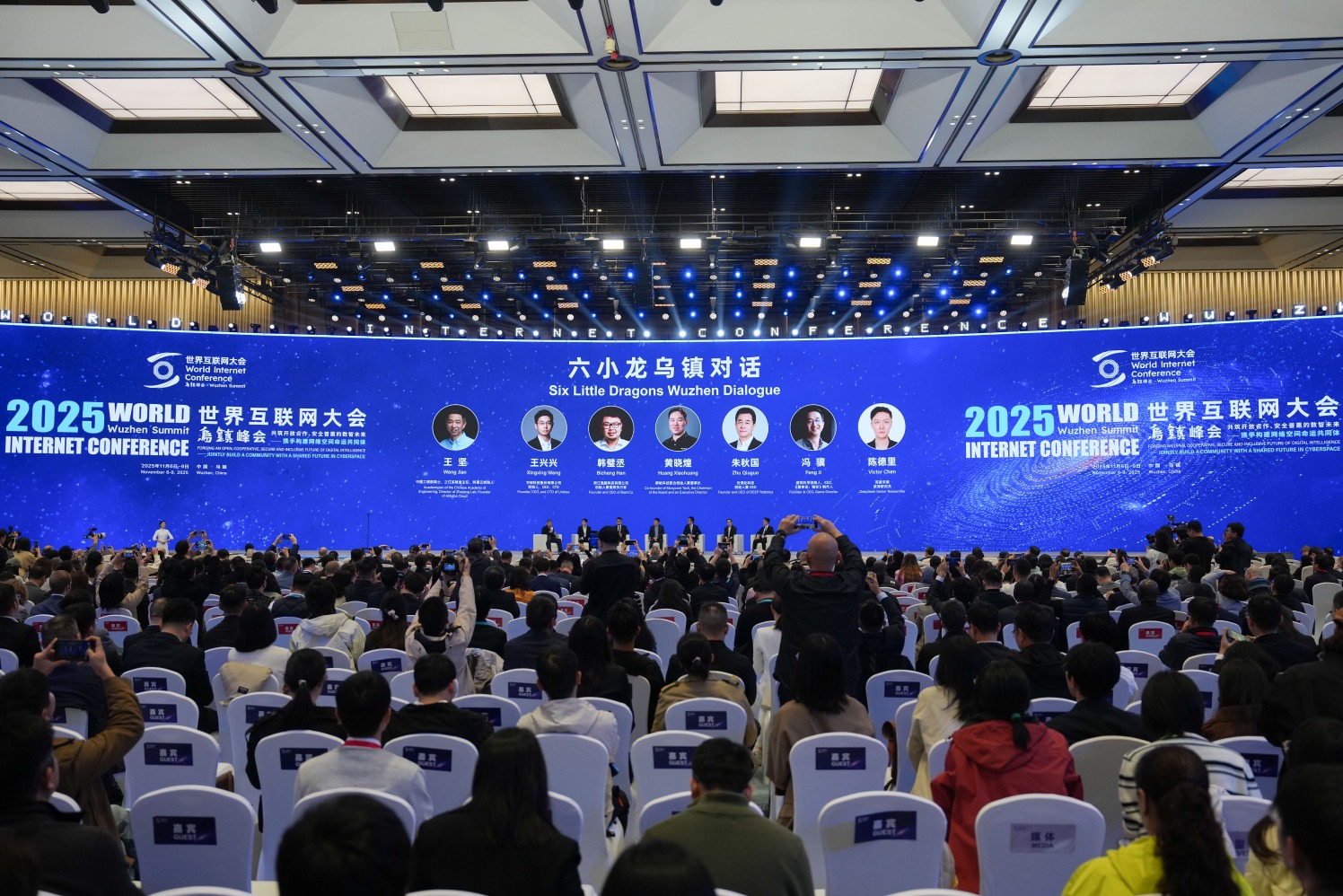
财经聚焦丨“六小龙乌镇对话”,他们如何思考AI和未来
Xin Hua Wang· 2025-11-07 16:35
Core Insights - The "Six Little Dragons" of Hangzhou are gaining global attention for their rapid advancements in artificial intelligence (AI) [1][2] - The dialogue at the World Internet Conference in Wuzhen focuses on the collaborative and open-source approach to AI development [3][4] Group 1: Open Source Collaboration - Open source is a key theme in the discussions, with companies like DeepSeek emphasizing its importance for achieving Artificial General Intelligence (AGI) [3] - Companies such as Qunke Technology have benefited from open-sourcing their spatial datasets, which has facilitated their growth in the spatial intelligence sector [3] - The rapid development of the robotics industry is attributed to open-source algorithms, enabling collaboration among top laboratories and universities [3] Group 2: Internet Development Foundation - The rapid growth of the Chinese internet over the past decade has created a vast user base and data pool, essential for training AI models [5] - The supportive entrepreneurial environment in China has fostered innovation, allowing startups to transition from technology exploration to product implementation [5] - Companies are making significant strides in developing practical applications, such as humanoid robots designed to assist in hazardous situations [5] Group 3: Challenges in Embodied Intelligence - Despite advancements, embodied intelligence faces challenges related to data collection and standardization, which hinder industry progress [6] - The industry lacks consensus on fundamental issues like camera placement for data collection, impacting the development of effective models [6] - The exploration of data collection methods and training techniques is still ongoing, indicating a need for further research and development [6] Group 4: Emerging Technologies - Brain-computer interfaces are opening new dimensions in perception, with applications such as neuro-controlled prosthetics that allow users to perform intricate tasks [7] - The technology is advancing from experimental stages to practical applications, with potential benefits for individuals with disabilities [7] - Despite challenges in data processing and system stability, brain-computer interfaces hold promise for treating neurological conditions [7] Group 5: Responsible AI Development - Companies recognize the importance of establishing technical standards and being aware of potential negative impacts of AI advancements [8] - The dual nature of AI's impact is highlighted, where it can empower individuals while also posing risks of concentrated technological advantages [8] - The industry expresses confidence in the future of AI, emphasizing the need for collaboration between innovation and regulation to ensure safety [8]