
科技创新成果

Search documents
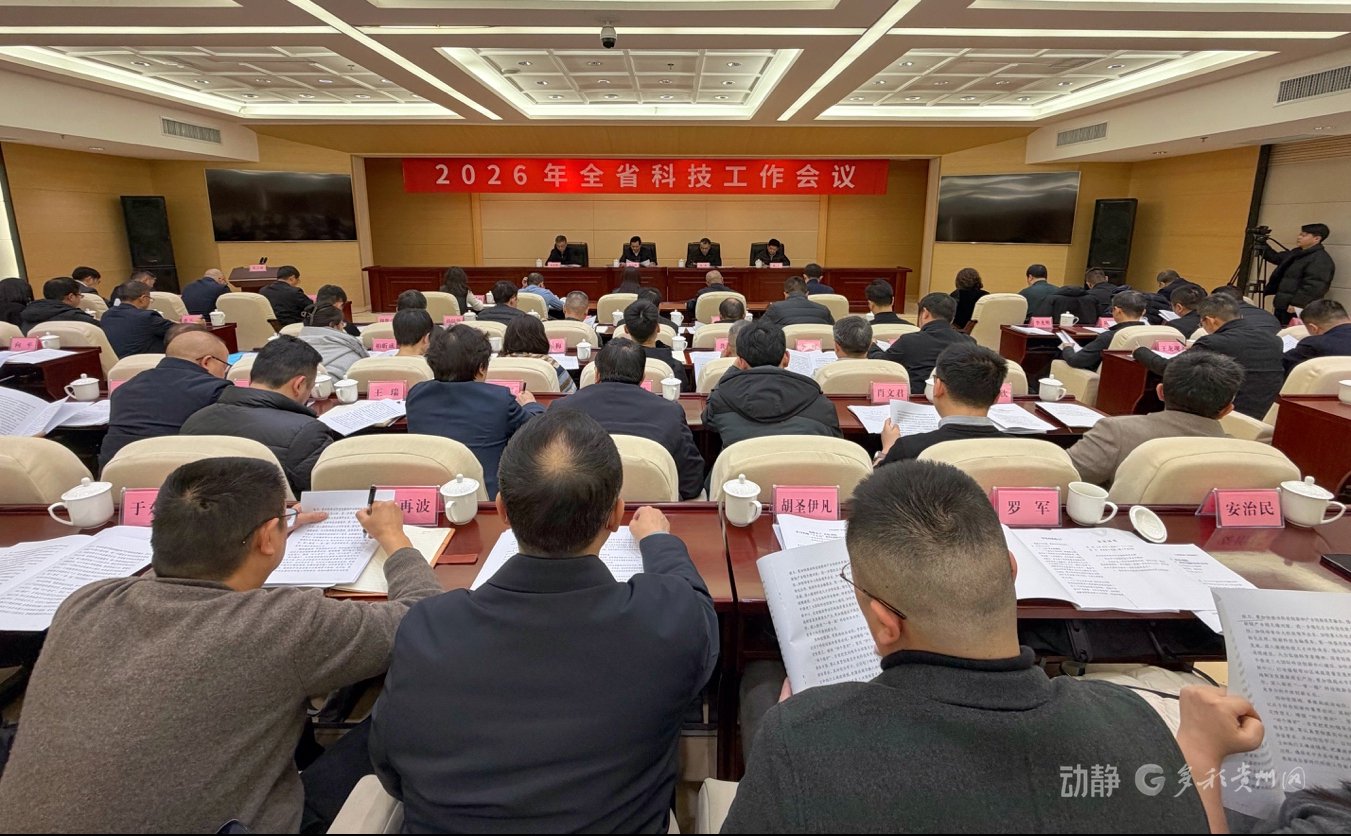
科技创新引领贵州高质量发展!2026年全省科技工作会议在贵阳举行
Xin Lang Cai Jing· 2026-02-11 08:24
Core Insights - In 2025, the Guizhou province's technology system significantly advanced the integration of technological innovation and industrial innovation, achieving notable results [2][3] Group 1: R&D Investment and Policy Initiatives - The overall R&D expenditure intensity in Guizhou increased, supported by the implementation of several policy documents aimed at enhancing R&D funding and nurturing technology-based enterprises [3] - Guizhou's comprehensive technological innovation index ranked 24th nationally, placing it in the second tier of provinces [3] Group 2: Innovation Platforms and Key Projects - New national key laboratories were approved, focusing on the utilization of phosphate resources, traditional Chinese medicine, and mineral resource prediction, alongside the establishment of provincial laboratories in intelligent equipment and artificial intelligence [3] - A total of 22 national major science and technology projects were approved, with Guizhou leading 2 of these major projects, and 668 national natural science fund projects were granted, marking a historical high in both project quantity and funding [3] Group 3: Strengthening Enterprise Innovation - The implementation of the "Three 80%" policy has been effective, with over 80% of provincial technology innovation funds directed towards six major industrial clusters, and a similar percentage for technology innovation platforms and projects led by enterprises [4] - The proportion of industrial enterprises engaged in R&D activities rose to 30.8%, and the high-tech industry index improved to 17th nationally [4] Group 4: Policy Framework and Future Focus - The technology innovation policy framework was enhanced with revisions to the provincial science and technology progress regulations and the science and technology award measures, establishing a "1+N" policy system to support innovation [4] - In 2026, Guizhou's technology sector will focus on implementing technology innovation planning, building strategic scientific capabilities, organized research and results transformation, regional innovation system development, and enhancing innovation support capabilities [4]

新型移动出行未来产业科技园正式开园
Huan Qiu Wang Zi Xun· 2025-12-26 01:05
本次开放日还集中展示了中山大学在低空经济、人工智能、新一代信息技术等领域的200余项具有产业 化前景的科技成果。 新型移动出行未来产业科技园临近中山大学广州校区东校园,位于广州大学城核心区,面积约2万平方 米。作为中山大学国家大学科技园的重要组成部分,新型移动出行未来产业科技园将加速引入和培育一 批面向未来的科技创新项目与人才,深化产学研用融合,构建深度融合、高效协同、开放共赢的创新创 业新生态,服务学校一体推进教育改革发展、科技创新和人才培养,为区域高质量发展贡献力量。 同日,新型移动出行未来产业科技园开放日暨中山大学知识产权成果对接会举办。本次活动吸引到了67 个科研团队、科技企业及服务机构参与。 中山大学软件工程学院郑子彬教授团队等科研团队围绕成果应用转化开展项目路演,并与参会企业现场 对接,洽谈合作,深度赋能番禺低空经济、人工智能等未来产业新赛道。 来源:科技日报 科技日报记者 叶青 近日,新型移动出行未来产业科技园在广州大学城正式开园。该科技园由中山大学与广州市番禺区人民 政府共建,聚焦新型移动出行、超算与智算等方向,是科技部、教育部全国首批10家未来产业科技园建 设试点之一。 ...
若不出意外,中国一半人口或将涌入到这4个城市,房价或将回升
Sou Hu Cai Jing· 2025-11-29 17:15
Core Insights - The urbanization process in China is transitioning from scale expansion to quality enhancement, leading to profound changes in resource allocation logic, which significantly impacts urban development [1] - Major cities like Chongqing, Shanghai, Beijing, and Chengdu are experiencing population growth, each surpassing 20 million residents, showcasing their robust development vitality and strong attraction [3][5] - The competitive advantage of these mega cities is not solely based on scale but is supported by a multi-dimensional framework including industrial ecology, public services, and development space [5][7] Urban Development Dynamics - Core cities and key urban clusters are increasingly demonstrating agglomeration effects, forming a new ecosystem of urban development characterized by clear hierarchies and collaborative competition [3] - The Pearl River Delta cities attract a large influx of population due to their complete industrial clusters, becoming significant gathering places for individuals seeking opportunities [3][9] - The employment market in these mega cities is diverse and comprehensive, providing high-end job opportunities and platforms for skilled talent [7] Economic and Industrial Insights - Chongqing and Chengdu are emerging as core destinations for population inflow in the western region, leveraging their unique geographical advantages and complementary industrial layouts [7][9] - The Pearl River Delta cities have established a robust industrial matrix covering high-tech, trade logistics, and various manufacturing sectors, fostering a collaborative and complementary industrial ecosystem [9][11] - Shenzhen has become a hub for top tech talent, driven by leading companies like Huawei and Tencent, which have created a complete high-tech industrial chain [11] Emerging City Competitiveness - New first-tier cities like Hangzhou and Chengdu are rising strongly, injecting new vitality into the urban competition landscape by balancing industrial upgrades and living quality [13][15] - The real estate market is witnessing structural differentiation, with cities like Hangzhou and Chengdu stabilizing prices and improving market conditions driven by demand for better living conditions [17] - The shift in young people's city selection logic is moving towards rational decision-making based on industrial depth, living costs, and public services [19][21] Future Urban Trends - The construction of transportation networks, such as the Chengdu-Chongqing high-speed rail, is enhancing connectivity and supporting a dual-core development model [21] - The urbanization process in China is entering a high-quality development phase, with a clear trend of population and capital concentrating in core cities and urban clusters [23][25] - Sustainable urban development relies on optimizing living costs, enhancing public service levels, and establishing differentiated competitive advantages [25][26]
长三角G60科创走廊科技成果转化大会首落临平
Xin Lang Cai Jing· 2025-06-24 13:16
Core Viewpoint - The G60 Science and Technology Innovation Corridor in the Yangtze River Delta is a key platform for regional collaboration and high-quality development, connecting nine cities and fostering innovation-driven growth [1][4][10]. Group 1: Development and Collaboration - The G60 Science and Technology Innovation Corridor has been established as a significant carrier for accelerating collaborative development in the Yangtze River Delta, promoting a new path of high-quality development led by technological innovation [4][6]. - The corridor has seen the establishment of three major alliances aimed at enhancing collaborative development: the Major Science and Technology Platform Alliance, the Enterprise Overseas Service Alliance, and the Low-altitude Economy Collaborative Innovation Alliance [6][8]. - The corridor has become a vital practice area for promoting high-quality development in the Yangtze River Delta, with the nine cities forming a dynamic urban cluster with high levels of openness and innovation capabilities [8][10]. Group 2: Achievements and Indices - Over 60 major technological innovation achievements were presented at the conference, covering strategic emerging fields such as high-end equipment, green energy, biomedicine, new materials, and smart IoT, with many reaching international leading levels [8][10]. - The G60 Corridor Collaborative Innovation Index for 2024 reached 170 points, reflecting an annual growth rate of over 9% since 2018, with R&D funding increasing by 82.4% [8][10]. - The number of high-tech enterprises in the region surged from 16,000 to 59,000, marking a growth of 280% [8][10]. Group 3: Local Initiatives and Infrastructure - The Hangzhou Linping District is enhancing transportation connectivity and aims to be the "first station" for integration with Shanghai, with a focus on multi-modal transport hubs [10][11]. - Linping is developing a robust industrial ecosystem with a focus on advanced manufacturing, having established several key industrial platforms and a significant number of listed companies [10][11]. - The district is also prioritizing the transformation of scientific and technological achievements, with a strong emphasis on collaborative innovation and the establishment of a science and technology base [10][11].
全国第二场、江苏首场创新成果播种行动落地常熟
Su Zhou Ri Bao· 2025-04-23 22:16
昨天(4月23日),全国第二场、江苏首场创新成果播种行动落地常熟。该活动是首次在县级城市 举办。 创新成果播种行动,以科技创新成果转化为切入点,是一次完善"选种、育苗、培优"全周期培育体 系、探索科技创新和产业创新深度融合的创新举措。本次活动开展4次座谈,组织10次调研,摸排120家 企业需求。 近年来,常熟聚焦新质生产力发展,梯度培育专精特新企业。今年初,"育林参天"行动在常熟启 幕,致力打造促进专精特新企业发展壮大的良好生态环境。目前,389家省级以上专精特新企业贡献了 常熟市40%的工业产值、50%的税收、60%的科创投入和70%的高价值专利。龙腾特钢、亨通华海、聚 复科技等一批行业领头羊在细分领域开疆拓土,铸就"常熟智造"的金字招牌。 万事俱备,以何培育?"金种子"将在"1+N"服务模式的呵护下开花结果。"1"是中国中小企业服务网 核心服务平台,"N"则涵盖科研院所、金融机构、地方政府等多元主体。创新成果播种行动,将通过线 上中国中小企业服务网的大模型,精准匹配企业技术创新和成果转化需求,并为科技成果转化全生命周 期提供政策、资金、渠道等服务保障。 创新成果的落地生根,离不开多方协同聚力。专家学者发挥 ...