
稀土期货合约

Search documents
报道:特朗普拟用AI定关键矿产参考价,锗、镓、锑、钨首批纳入
Sou Hu Cai Jing· 2026-02-24 16:38
Group 1 - The Trump administration plans to utilize the Pentagon's AI project to establish reference prices for critical minerals, supporting the creation of a global metal trading group [1][4] - The reference prices will be developed by the U.S. Department of Defense's OPEN AI metal project, initially focusing on germanium, gallium, antimony, and tungsten, with plans to expand coverage [1][4] - The implementation timeline for the reference prices remains unclear, as the Trump administration must first persuade numerous allied countries to join the trading group to ensure the mechanism's effectiveness [1] Group 2 - The OPEN project, initiated in 2023, aims to incorporate labor, processing, and other costs into metal pricing calculations, focusing on metals with low liquidity or no public market [4] - The project is expected to be transferred to the non-profit Critical Minerals Forum (CMF) next year, which will conduct AI model stress tests and support commercially viable mining projects [4] Group 3 - The combination of reference prices and adjustable tariffs presents multiple unresolved issues regarding its operational mechanics, including whether prices will fluctuate with the market or remain fixed [5] - There are uncertainties about the scope of tariffs, particularly whether they will apply to all end products containing critical minerals, as manufacturers typically prefer to source raw materials at the lowest prices [5] Group 4 - U.S. mining companies generally support the reference price and tariff proposal, provided it helps them achieve profitability, with specific demands for reference prices to be above production costs [6] - There is increasing attention on price transparency in the mineral market, with reports of CME Group planning to launch the first global rare earth futures contract [6]

明明手上没稀土,还敢搞稀土期货和中国对冲,美国到底在想什么?
Sou Hu Cai Jing· 2026-02-15 13:08
Core Viewpoint - The Chicago Mercantile Exchange (CME) is preparing to launch the world's first rare earth futures contract, despite the U.S. lacking significant rare earth production and stockpiles. This move aims to provide Western companies with a hedging tool against price volatility and to challenge China's dominance in the rare earth market [1][4][5]. Group 1: CME's Strategic Intent - CME's initiative is designed to address the financing challenges faced by Western rare earth mining companies, which are deterred by unpredictable price fluctuations. By offering futures contracts, CME hopes to enable banks to lend to these companies, thereby stimulating the rare earth supply chain in the West [4][10]. - The futures contract aims to establish a pricing benchmark independent of the Chinese market, which currently controls approximately 70% of global rare earth production and over 90% of refining capacity. This would allow Western companies to reference CME prices instead of relying on Chinese market prices [5][7]. Group 2: Market Dynamics and Challenges - The price of neodymium-praseodymium oxide, a key material for high-performance magnets, has experienced extreme volatility, with a 50% drop followed by a 41% increase within a short period. This volatility exemplifies the risks that deter Western banks from financing new rare earth projects [3][4]. - Analysts express skepticism about the viability of the CME's futures contract due to potential delivery issues, regulatory risks, and the limited time frame for establishing a functional market. The U.S. currently produces only 12% to 15% of global rare earths, heavily relying on China for processing [8][10]. Group 3: China's Response and Market Control - China is likely to respond to CME's plans, as it holds significant leverage over the rare earth market. The Chinese government can manipulate export quotas or tighten environmental regulations to disrupt supply, undermining the effectiveness of any new futures contracts [7][10]. - The potential for CME's futures market to become illiquid is high if Chinese producers do not participate, which could render the contract ineffective for price discovery [7][10].

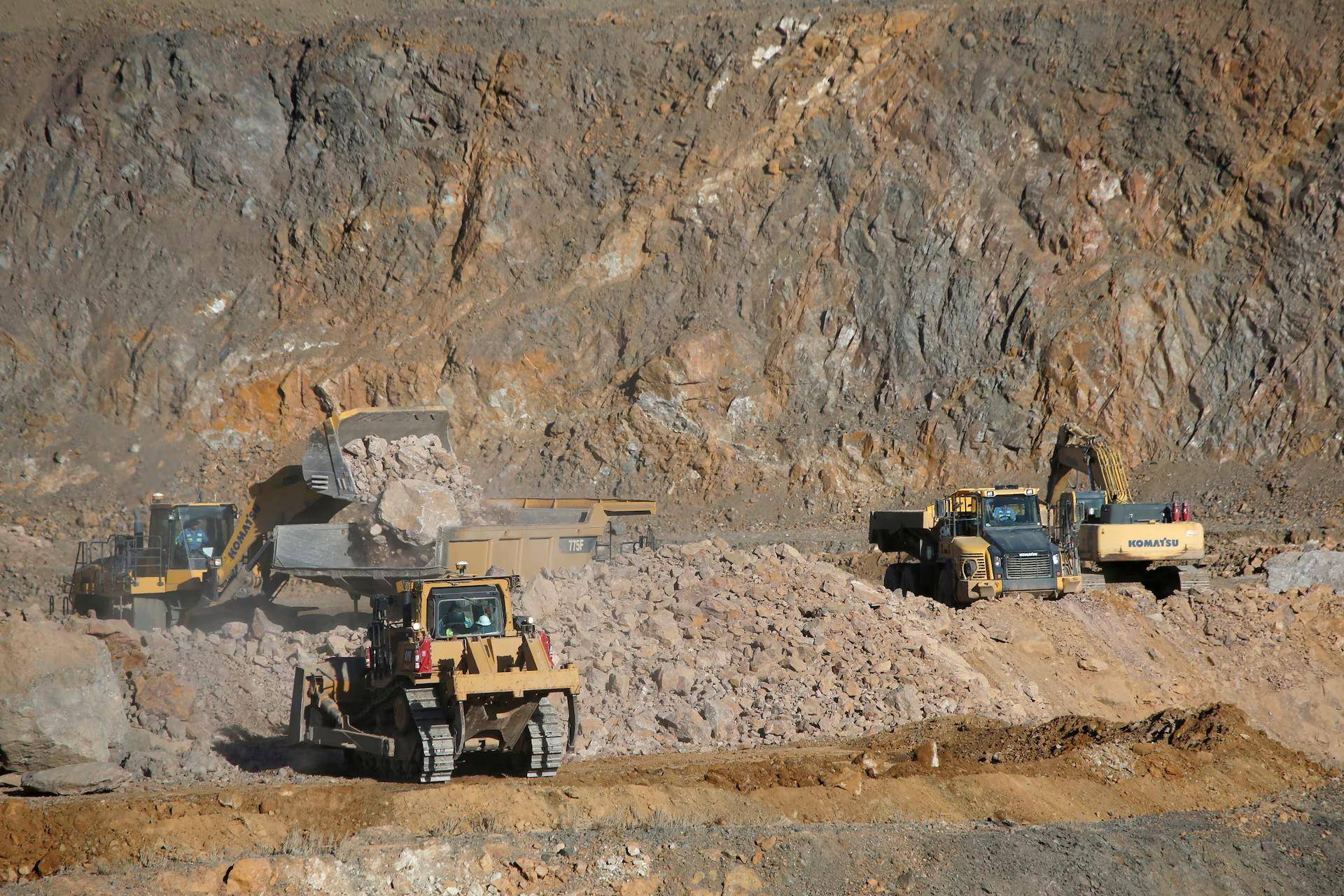
芝商所拟推出全球首个稀土期货合约,稀土ETF嘉实(516150)备受资金关注
Xin Lang Cai Jing· 2026-02-12 02:55
Core Viewpoint - The rare earth market is experiencing significant price increases, driven by tight supply and strong downstream demand, with a focus on investment opportunities in the sector [1][2]. Group 1: Market Performance - The three major indices opened slightly lower, while the China Rare Earth Industry Index rose by 2.17%, with key stocks like Shenghe Resources up by 8.16% and Yunlu Co. up by 7.83% [1]. - The China Rare Earth Price Index reached 265.43, reflecting an 11.37% increase over the past two weeks, with praseodymium and neodymium oxide prices rising by 12.64% [1]. Group 2: Investment Opportunities - Guoyuan Securities suggests focusing on investment opportunities that combine "resources and high elasticity," particularly in light of potential supply disruptions from major overseas resource countries and the recovery of domestic demand [1]. - China Chengxin International forecasts that the non-ferrous metals industry will maintain high prosperity in 2026, driven by investments in power grids, renewable energy, and AI-related sectors, which will also benefit strategic metals like rare earths [2]. Group 3: ETF and Investment Tools - The Jiashi Rare Earth ETF (516150) closely tracks the China Rare Earth Industry Index, providing a convenient tool for investors to gain exposure to the domestic rare earth industry chain [3]. - Investors can also utilize the Jiashi Rare Earth ETF linked fund (011036) to capitalize on rare earth investment opportunities [4].
资讯早班车-2026-02-12-20260212
Bao Cheng Qi Huo· 2026-02-12 02:10
I. Industry Investment Rating No information provided in the report. II. Core Views - The global economic outlook shows some resilience but also increased uncertainties. The domestic economic situation is generally positive, with inflation showing positive changes. The monetary policy will continue to be moderately loose, and the RMB internationalization process may speed up. In the commodity market, there are various trends in different sectors, such as potential price increases in nickel and silver, and changes in energy and agricultural product markets. In the financial market, the bond market shows a "warm but restrained" trend, and the stock market has different performances in A - shares and Hong Kong stocks [35][36]. III. Summary by Directory 1. Macro Data - GDP in Q4 2025 grew 4.5% year - on - year, lower than the previous quarter and the same period last year. The manufacturing PMI in January 2026 was 49.3%, and the non - manufacturing PMI: business activity was 49.4%. Social financing scale in December 2025 was 22075 billion yuan, lower than the previous month and the same period last year. CPI in January 2026 was 0.2% year - on - year, and PPI was - 1.4% year - on - year [1]. 2. Commodity Investment Reference Comprehensive - In January, CPI rose 0.2% month - on - month and 0.2% year - on - year, and core CPI rose 0.8% year - on - year. PPI rose 0.4% month - on - month, with the decline narrowing year - on - year. The CME is exploring the launch of the first rare earth futures contract. There are differences in the basis of domestic commodities, with some having positive and some negative basis [2][3]. Metals - On February 11, London base metals rose across the board, with LME nickel up over 3%. Indonesia plans to cut nickel ore production quotas. Silver prices soared, and the silver market is expected to have a supply gap for the sixth consecutive year. Global silver demand is expected to be stable in 2026, with retail investment growth offsetting some losses in other sectors [4][5][6]. Coal, Coke, Steel and Minerals - Trump said coal is a reliable energy source, and coal power generation will increase by about 25 - 30% this year. Ukrainian steel production in January fell 16.3% [9][10]. Energy and Chemicals - The State Council issued an opinion on improving the national unified power market system, aiming to build a unified, efficient and safe power market by 2030 and fully complete it by 2035. OPEC maintained its forecast for global oil demand growth in 2026 and 2027. US EIA crude inventory increased last week, and the US expects Venezuela's oil, gas and power production to increase significantly [11][12][13]. Agricultural Products - The National Development and Reform Commission took measures to ensure the supply and price stability of important livelihood commodities. Jordan plans to buy up to 120,000 tons of wheat. The Indonesian palm oil association expects the production of CPO to increase by 2% - 3% in 2026, but land rectification may affect production [14][15]. 3. Financial News Compilation Open Market - On February 11, the central bank conducted 785 billion yuan of 7 - day reverse repurchase operations and 4000 billion yuan of 14 - day reverse repurchase operations, with a net investment of 4035 billion yuan [16]. Important News - In January, China's CPI and PPI showed certain trends. The US non - farm payrolls in January were strong, and the Fed's interest - rate cut expectations were postponed. The State Council promoted AI development, and the government took measures in various fields such as rare earth, agricultural product supply, and capital project opening. There were also news about trade disputes, antitrust, and the automotive industry [17][18][19]. Bond Market Summary - The inter - bank bond market showed a warm trend, with yields of some long - term interest - rate bonds falling. The exchange bond market had mixed performances, and the convertible bond market also had ups and downs. Different interest - rate indicators showed various trends, and there were changes in bond issuance and yields in domestic and foreign markets [28][29][30]. Foreign Exchange Market - The on - shore RMB against the US dollar rose 14 points, and the RMB central parity rate against the US dollar was adjusted up 20 points. The US dollar index rose slightly, and non - US currencies had different performances [33]. Research Report Highlights - Fixed - income + funds had a turning point in 2025, and future strategies need to focus on asset allocation. The RMB internationalization process may speed up. Different institutions gave comments on the economic situation, monetary policy, and exchange - rate trends. The spread of urban investment bonds is expected to remain low in 2026 [34][35][36]. Today's Reminder - On February 12, a large number of bonds will be listed, issued, paid, and have principal and interest repaid [38]. 4. Stock Market News - On Wednesday, the A - share market was narrowly sorted, with some cyclical stocks rising and hot - topic sectors adjusting. The Hong Kong stock market rose, with gold and auto stocks performing actively. The pre - Spring Festival dividend of listed companies in 2025 - 2026 reached a new high [39].