空客A320neo

Search documents
C919撼动全球航空霸权?空客CEO首次正面回应,三足鼎立时代要来了!
Sou Hu Cai Jing· 2026-02-13 03:23
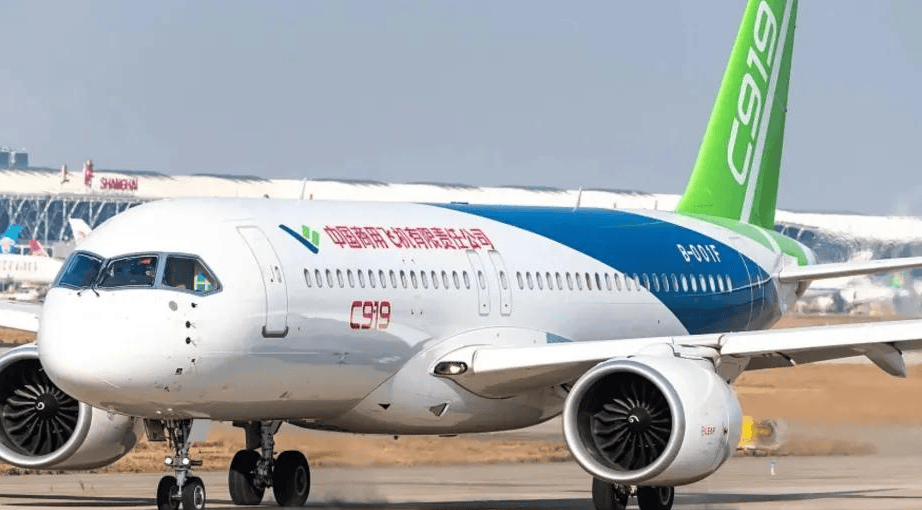
Core Viewpoint - The emergence of China's C919 aircraft is poised to disrupt the global aviation market, potentially shifting it from a Boeing-Airbus duopoly to a triopoly, as acknowledged by Airbus CEO Guillaume Faury [1][4]. Group 1: Market Potential - China's domestic aviation market is projected to surpass the U.S. by 2043, with Boeing estimating a need for over 8,800 new aircraft in the next 20 years, representing one-fifth of global demand [2]. - The C919 has secured over 1,200 orders, including 100 each from China's three major airlines, and has begun domestic operations, carrying over 1 million passengers, demonstrating its safety and reliability [2]. Group 2: Airbus's Response - Airbus's leadership has shifted from initially dismissing COMAC as a threat to recognizing it as a significant competitor, with Christian Scherer noting its importance as early as 2024 [4]. - Faury's recent comments highlight that COMAC is more likely to succeed due to state support, rapid technological advancements, and a global demand for a third option in the market [4]. Group 3: Challenges Ahead - The C919 faces two main hurdles: obtaining certification from European and U.S. aviation authorities, and increasing its domestic production rate, which currently stands at about 60% [7]. - Key components like engines and avionics still rely on Western suppliers, but COMAC is making progress through joint ventures and technological development, such as advancements in the Changjiang engine series [7]. Group 4: Industry Dynamics - The resurgence of global air travel has created strong demand for new, more fuel-efficient aircraft, with the C919 competing directly with the Airbus A320neo in terms of fuel economy and passenger comfort, while also offering a price advantage [9]. - The rise of COMAC may drive innovation within the industry, similar to how Airbus challenged Boeing in the past, with new avenues like hydrogen aviation being explored [9]. - Although the C919 may not immediately disrupt the European and U.S. markets, its growing presence in the Asia-Pacific and Middle Eastern regions is already altering competitive dynamics [10].

国际市场快速修复,行业运行稳中提质—2025年航空运输行业回顾及展望
Sou Hu Cai Jing· 2025-12-28 10:29
Core Insights - The aviation transportation industry in China showed steady improvement in 2025, with domestic passenger and cargo markets growing steadily, international operations recovering rapidly, and policies guiding the industry towards standardized development [1][2][3] Industry Fundamentals - The macroeconomic environment in China has been stable, with GDP growth of 5.2% year-on-year in the first three quarters of 2025, and a similar increase in disposable income, providing a solid foundation for the aviation sector [5][6] - The aviation industry is cyclical and closely correlated with GDP growth, with a historical trend showing that as income levels rise, the growth rate of the aviation sector can be 1.5 to 2 times that of GDP [5] Industry Policy and Regulatory Environment - Policies since 2025 have focused on enhancing operational efficiency and expanding international markets, including revisions to international passenger rights allocation rules and the promotion of the "Belt and Road" initiative [6][7] - The "Self-Regulatory Convention for Air Passenger Transport" was introduced to curb unhealthy competition and promote high-quality service and operational standards [7] Industry Performance - In the first three quarters of 2025, the total transport turnover reached 1,220.3 billion ton-kilometers, a year-on-year increase of 10.3% [10] - Passenger turnover reached 10,536.5 billion passenger-kilometers, up 8.1%, with international routes growing by 23.5%, surpassing pre-pandemic levels [10][11] - Cargo turnover was 298.9 billion ton-kilometers, a 16.5% increase, driven by cross-border e-commerce and high-end manufacturing exports [11] Financial Health of Companies - Sample airlines reported overall profitability in 2025, with operating cash flow remaining positive, and major airlines like China Eastern Airlines turning net profits from losses [28][33] - The debt burden remains significant, but the structure is primarily long-term, with bond financing increasing by 114.17% year-on-year [43][44] Operational Efficiency - Airlines have improved operational efficiency, with daily aircraft utilization increasing to 9.2 hours and passenger load factors rising to 84.9% [28] - The introduction of new aircraft models like the Airbus A320neo and C919 has contributed to operational improvements, while older, less efficient models are being phased out [24] Sustainability Initiatives - Airlines are increasingly focusing on green operations, with efforts to reduce fuel consumption and carbon emissions through fleet upgrades and the adoption of sustainable aviation fuel (SAF) [39][40] - The implementation of SAF regulations in Europe is expected to raise operational costs, as SAF is currently 2 to 5 times more expensive than traditional jet fuel [20]







印度波音 787 坠机,和孩子一起聊聊波音飞机背后的故事|Knock Knock 世界
声动活泼· 2025-06-19 10:46
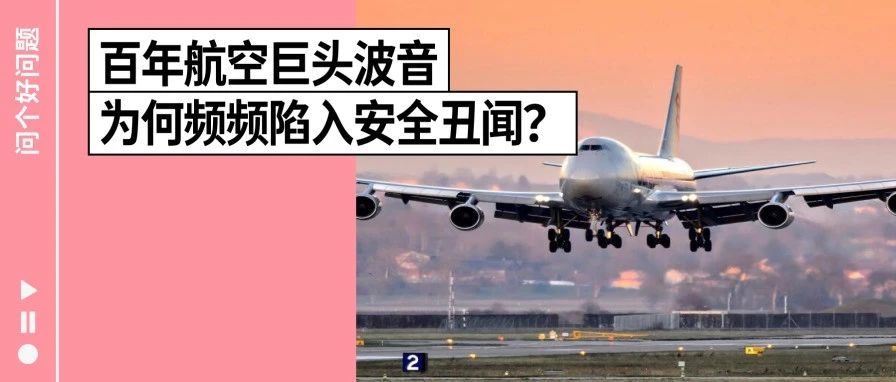
Core Viewpoint - The article discusses the recent challenges faced by Boeing, particularly focusing on safety issues, declining orders, and the impact of a recent plane crash, highlighting the company's struggle to maintain its reputation and market position in the aviation industry [1][3][18]. Group 1: Recent Incidents and Impact - On June 12, 2025, an Indian Airlines Boeing 787 crashed shortly after takeoff, resulting in 241 fatalities and only one survivor, marking it as one of the worst aviation disasters in a decade [1]. - Following the crash, India's aviation regulatory body ordered inspections of all Boeing 787 aircraft and is considering grounding the model [1]. - The crash has intensified scrutiny on Boeing, contributing to a significant trust crisis and damaging the company's brand image [3]. Group 2: Boeing's Historical Context - Boeing, established in 1916, was once a dominant force in the aviation industry, producing iconic aircraft like the Boeing 707 and 747, which significantly shaped commercial aviation [4][6]. - The Boeing 747, known for its four engines and dual-deck design, was a technological pinnacle for the company, capturing over 60% of the global commercial aviation market at its peak [6]. Group 3: Financial Performance and Order Decline - Boeing's new aircraft orders plummeted by approximately 60% last year, reflecting a severe downturn in demand [3]. - The company has faced continuous losses since 2019, accumulating a net loss of $36 billion (approximately 260 billion RMB) over six years, marking the longest period of losses in its history [9]. Group 4: Cultural and Operational Changes - The decline in Boeing's engineering culture began after its acquisition of McDonnell Douglas in 1997, shifting the focus from safety and quality to profit maximization [10]. - Boeing's decision to outsource critical components led to quality control issues, exemplified by the delayed production of the 787 Dreamliner, which was three years behind schedule due to unusable parts from suppliers [11]. Group 5: Safety Issues and Regulatory Scrutiny - The 737 MAX crisis, resulting from rushed upgrades to compete with Airbus, led to two fatal crashes and revealed significant flaws in Boeing's safety management systems [13][14]. - Investigations uncovered 27 issues within Boeing's safety management, including poor communication and lack of effective reporting channels [14]. Group 6: Future Outlook and Market Position - Despite its challenges, Boeing is unlikely to face bankruptcy due to its dominant position in the commercial aircraft market, which is primarily shared with Airbus [18]. - The company is working with the FAA to implement a new safety management system to address quality and safety concerns, aiming to restore public trust [20].

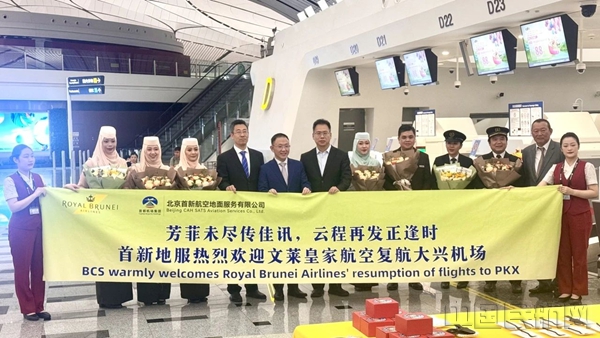
首新地服全力保障文莱皇家航空复航大兴机场
Zhong Guo Min Hang Wang· 2025-05-07 03:10
Group 1 - The direct flight route from Bandar Seri Begawan to Beijing Daxing, operated by Royal Brunei Airlines, has officially resumed operations [1][2] - Beijing Shouxin Aviation Ground Services Co., Ltd. (Shouxin Ground Services) successfully completed the resumption support tasks with professional and international service standards [1][2] - A pre-flight coordination meeting was held between Shouxin Ground Services and Royal Brunei Airlines to ensure smooth resumption, with a dedicated team formed to address key operational aspects [2] Group 2 - The resumption ceremony took place at Daxing Airport, attended by executives from Royal Brunei Airlines and Shouxin Ground Services, celebrating the restart of the route [2] - The route is operated by an Airbus A320neo with two flights per week, enhancing trade and tourism connections between the two countries [2] - Shouxin Ground Services aims to continuously optimize its international flight support system through intelligent service upgrades and collaborative mechanism innovations [2]