
红宝石

Search documents
新的税收计算方法将为宝石进口商减负
Shang Wu Bu Wang Zhan· 2026-01-21 11:45
Core Viewpoint - The National Gem and Jewelry Authority (NGJA) of Sri Lanka has announced significant reforms to the taxation system for gemstone imports, which will substantially reduce the tax burden on importers and potentially impact the gemstone export market negatively [1] Tax Reform Details - Starting from January 1, 2024, gemstone importers will be required to pay an 18% VAT and a 2.5% SSCL based on the actual value of the gemstone packages, leading to a significant decrease in import volumes for 2024 and 2025 compared to 2023 [1] - To address the heavy tax burden, a simplified and more favorable tax calculation system has been introduced, where the value of precious gemstones such as rubies, sapphires, and emeralds is estimated at $900 per kilogram for tax purposes [1] - For semi-precious stones like amethyst, topaz, and garnet, the estimated value is set at $50 per kilogram, resulting in a VAT and SSCL payment of $10.25, approximately 3,200 Sri Lankan Rupees [1] Industry Development Goals - The reform aims to encourage young entrepreneurs to enter the gemstone industry, particularly in areas such as importation, cutting, polishing, and re-exporting, to further develop Sri Lanka's gemstone and jewelry sector [1]
北京:2025七彩云南缤纷绚烂彩宝嘉年华开幕
Xin Lang Cai Jing· 2025-12-20 13:56
Core Viewpoint - The "Earth's Treasures, Human Colors - 2025 Colorful Yunnan Color Gem Carnival" opened in Beijing on December 20, showcasing over 200 rare colored gemstones and jewelry art pieces, including rubies, sapphires, and emeralds, over a 9-day exhibition period [2][4][5][7] Group 1 - The event features a diverse collection of gemstones, allowing the public to appreciate the beauty and craftsmanship of these rare items [2][4][5] - The exhibition includes opportunities for attendees to try on jewelry pieces, enhancing the interactive experience [5][7] - The carnival aims to promote the cultural significance and artistic value of colored gemstones from Yunnan [2][4]

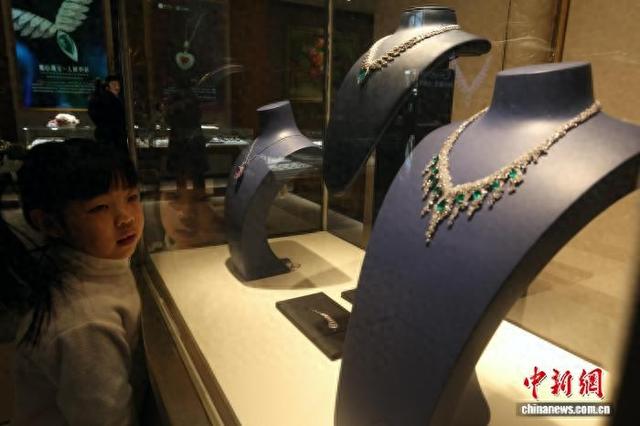
宝石与光的奇幻恋歌,远不止火彩
Qi Lu Wan Bao· 2025-12-19 17:18
Core Viewpoint - The article explores various optical phenomena in gemstones, highlighting their unique visual effects and the science behind them. Group 1: Color Change Effect - The color change effect is described as the "color magician" of gemstones, where the surface displays varying colors and shades depending on the light source and viewing angle [1] - Opal is identified as a typical representative of the color change effect, particularly the Australian Lightning Ridge opal, which showcases a spectrum of colors when rotated [1] - The unique visual effect of opal is attributed to the regular arrangement of tiny silica spheres inside, which diffract and interfere with light [1] Group 2: Cat's Eye Effect - The cat's eye effect is characterized by a bright band of light appearing on the surface of certain gemstones when cut into a cabochon shape [2] - The golden cat's eye stone is noted as a prime example, with a famous specimen found in an ancient mine in Sri Lanka, displaying a golden light band [2] - The effect is caused by numerous parallel needle-like inclusions within the gemstone that reflect light [2] Group 3: Star Effect - The star effect is likened to stars shining in the night sky, where gemstones containing multiple sets of parallel inclusions or fibers exhibit intersecting bright lines under light [2] - Rubies and sapphires are highlighted for their "six-ray star effect," with a notable large ruby discovered in Myanmar displaying six bright star lines [2] Group 4: Fluorescence and Phosphorescence - Phosphorescence and fluorescence are categorized under photonic effects in gemstones, where internal electrons shift to produce light [2] - Phosphorescence allows gemstones to continue glowing after the external energy source is removed, exemplified by "night pearls" like fluorite [2] - Fluorescence occurs only while the gemstone is under a specific light source, with diamonds, rubies, and amber being notable examples, serving as important identification information in gemology [2]

百年骗局告破!中国县城冲击全球市场,820 万降至9.9元,巨头破产
Sou Hu Cai Jing· 2025-12-17 19:01
Core Viewpoint - The traditional diamond market is facing significant disruption due to the rise of synthetic diamonds, particularly from Chinese counties, which are changing the pricing dynamics and market structure of the gemstone industry [1][16][20]. Group 1: Historical Context of Diamonds - Diamonds were historically rare and expensive, primarily sourced from India and Brazil until the discovery of large mines in South Africa in 1871, which led to a surplus and declining prices [1]. - In response to market saturation, companies formed De Beers in 1888 to control supply and maintain high prices through production limits and marketing strategies [3][5]. - De Beers successfully linked diamonds to romantic symbolism through extensive advertising campaigns starting in the 1930s, creating a perception of diamonds as essential for engagements [3][5]. Group 2: Rise of Synthetic Diamonds - Chinese counties, particularly Zhecheng in Henan, have emerged as leaders in synthetic diamond production since the 1980s, utilizing high-pressure, high-temperature methods to create artificial diamonds [7][9]. - By 2023, Zhecheng produced 22 million carats of synthetic diamonds, capturing over 50% of the global market share, with significant increases in production and export values [9][16]. - The cost of synthetic diamonds is significantly lower than natural diamonds, with prices ranging from 2,000 to 4,500 yuan per carat, making them accessible to a broader consumer base [9][18]. Group 3: Market Dynamics and Impact - The traditional diamond market is experiencing a decline, with De Beers' revenue projected to drop from $4.3 billion in 2023 to $3.3 billion in 2024, a 23% decrease [18][20]. - The competition from synthetic diamonds has led to a decrease in De Beers' rough diamond sales, with a 28% drop in volume to 17.9 million carats [18][20]. - The shift in consumer preferences towards synthetic options is reshaping the industry, with traditional high-priced diamonds losing their appeal as consumers seek more affordable alternatives [16][26]. Group 4: Broader Economic Implications - The rise of synthetic diamonds is indicative of a larger trend where traditional luxury goods are becoming more accessible, as seen with the declining prices of caviar and truffles due to increased production [22][26]. - The global supply chain is adjusting, with Chinese products increasingly exported to Southeast Asia and beyond, reflecting a significant shift in market dynamics [16][26]. - The traditional marketing myths surrounding luxury goods are being challenged, leading to a more democratized market where consumers have more choices and lower prices [16][26].
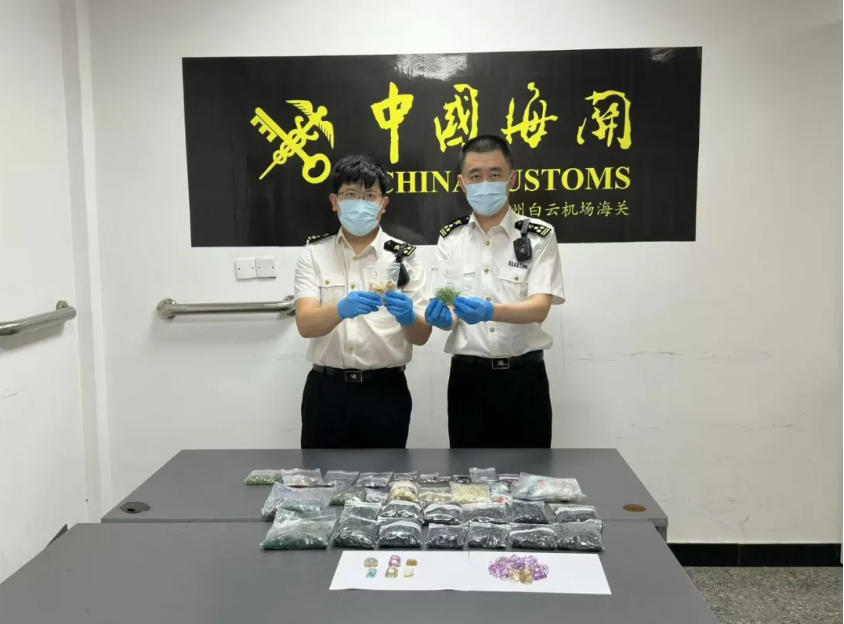
1名旅客携带10973颗宝石进境 广州海关现场查获
Zhong Guo Xin Wen Wang· 2025-11-14 02:02
Core Points - A traveler was caught by Guangzhou Customs attempting to bring in 10,973 gemstones, valued at approximately 1.51 million RMB [1][3][6] Group 1: Incident Details - The Guangzhou Customs discovered the violation at Baiyun Airport when the traveler chose the "no declaration channel" and the baggage inspection revealed anomalies [3][6] - The gemstones included various types such as emeralds, rubies, sapphires, opals, garnets, and tourmalines, totaling 30 categories and weighing 7.7 kilograms [3][6] Group 2: Traveler's Intent - The traveler stated the intention to process the gemstones domestically and then sell them abroad for profit [6]
缅甸总理纽梭:中国—东盟博览会持续强化区域各国投资合作
Zhong Guo Xin Wen Wang· 2025-09-17 12:59
Core Points - The China-ASEAN Expo aims to strengthen cooperation between ASEAN member countries and China in trade, economy, and industrial supply chains, promoting sustainable development and mutual benefits [1] - The theme of the 22nd China-ASEAN Expo is "Digital Intelligence Empowering Development, Innovation Leading the Future," reflecting China's commitment to deepen investment and cooperation with ASEAN countries [1] - Myanmar, as the theme country, showcases various products including rice, beans, corn, sesame, food, tea, coffee, handicrafts, and gemstones, while also highlighting achievements in the digital sector [1] Industry Insights - Myanmar's commercial sectors are beginning to adopt artificial intelligence (AI) technologies, with telecommunications companies integrating IT education with AI to expand their businesses [2] - The banking sector in Myanmar has started using AI credit scoring solutions, indicating a growing trend in the application of AI across various industries [2] - The global trade and economic landscape is facing significant challenges and transformations, presenting valuable opportunities for regional economic partnerships [2]
珀莱雅: 珀莱雅化妆品股份有限公司关于2025年第二季度主要经营数据的公告
Zheng Quan Zhi Xing· 2025-08-26 16:24
Core Viewpoint - The announcement provides key operational data for Proya Cosmetics Co., Ltd. for the second quarter of 2025, highlighting production, sales, and revenue figures, as well as price changes for major products and raw materials [1]. Group 1: Operational Data - In Q2 2025, the production volume for skincare products reached 6,550,198 units, while sales for beauty makeup products were 5,090,893 units, generating revenue of approximately 461.70 million yuan [1]. - The sales volume for skincare products was 2,217,463 units, and beauty makeup products sold 1,836,268 units, with revenue from beauty makeup totaling around 207.79 million yuan [1]. Group 2: Price Changes - The average selling price for skincare products in Q2 2025 was 98.73 yuan per unit, while beauty makeup products averaged 93.63 yuan, reflecting a year-on-year decrease of 8.14% and a month-on-month decrease of 3.14% for beauty makeup [1]. - The average selling price for skincare products increased by 5.72% year-on-year and 20.70% month-on-month, attributed to a higher sales proportion of premium items like serums and creams during promotional periods [1]. - The average selling price for hair care products was 107.04 yuan, showing a year-on-year increase, driven by a higher sales proportion of high-priced items [1]. Group 3: Raw Material Price Fluctuations - The average procurement price for major raw materials decreased by 46.91 yuan per kg year-on-year, with an overall decline of 8.80% in Q2 2025, indicating improved bargaining power due to increased production of high-efficacy products [1].
