红树林碳汇

Search documents
广东首单红树林“蓝碳+司法”认购签约
Zhong Guo Zi Ran Zi Yuan Bao· 2026-02-10 06:03
Core Viewpoint - The event in Zhuhai marks the launch of a new "blue carbon + judicial" mechanism for mangrove conservation, integrating ecological restoration with market mechanisms and legal accountability [1] Group 1: Event Overview - The World Wetlands Day theme event took place on February 2 in Zhuhai, Guangdong, at the Qiao Ao-Dan Gan Island Provincial Nature Reserve [1] - The signing of the first "blue carbon + judicial" subscription in Guangdong represents a new chapter in ecological protection and value realization [1] Group 2: Mechanism and Innovation - The "blue carbon + judicial" subscription mechanism allows responsible parties to purchase scientifically certified local mangrove carbon credits to fulfill ecological restoration responsibilities when environmental damage occurs [1] - This innovative approach connects judicial practice, ecological restoration, and market mechanisms, providing new ideas for ecological protection [1] Group 3: Future Prospects - The signing is just the beginning of exploring the transformation of mangroves from resources to assets and from protection to value [1] - Zhuhai aims to lead in the exploration of wetland protection and ecological value realization through innovative practices [1] - The wetlands, which silently protect the city, are experiencing a revival [1]
以正义之锚守护壮阔蔚蓝
Xin Lang Cai Jing· 2026-01-28 00:15
Core Viewpoint - The article emphasizes the importance of marine law enforcement and judicial protection in promoting high-quality development of China's marine economy, aligning with national strategies for maritime security and ecological sustainability [6][9][20]. Group 1: Marine Law Enforcement and Judicial Collaboration - The Supreme People's Procuratorate has initiated collaborative efforts with marine law enforcement agencies to enhance legal supervision and ensure marine safety, resource protection, and ecological conservation [6][9]. - A comprehensive cooperation mechanism has been established between coastal procuratorial agencies and maritime law enforcement, facilitating information sharing and joint investigations [9][10]. - The collaboration has proven effective in handling complex maritime cases, such as smuggling and illegal fishing, by ensuring timely intervention and coordinated legal actions [10][11]. Group 2: Marine Resource Protection Initiatives - The article highlights the annual release of 350,000 juvenile clams in Fujian as part of ongoing efforts to protect marine biodiversity and restore overfished species [12][13]. - A comprehensive protection system has been developed to combat illegal fishing and enhance public awareness, resulting in the release of over 2 million clam seedlings since 2021 [13]. - Cross-regional cooperation has been initiated to address illegal fishing and aquaculture, leading to the dismantling of over 800 acres of illegal facilities and the resolution of 22 fishing violations [14]. Group 3: Ecological Restoration and Sustainable Practices - The article discusses innovative ecological restoration methods, including the introduction of carbon credit mechanisms to fund marine ecosystem recovery efforts [15][19]. - The protection of the endangered Chinese white dolphin has been prioritized, with collaborative efforts among multiple provinces to enhance biodiversity conservation [16][19]. - The establishment of a judicial alliance for mangrove protection signifies a shift towards collaborative governance in ecological restoration, integrating legal accountability with environmental sustainability [19]. Group 4: Support for Marine Economic Development - The article outlines the role of coastal procuratorial agencies in supporting the development of the marine economy through legal services and risk prevention strategies for marine enterprises [20][21]. - Initiatives have been launched to regulate the burgeoning marine tourism industry, addressing safety concerns and illegal operations to ensure orderly development [21][22]. - The establishment of marine equipment inspection service stations aims to provide comprehensive legal support for the marine industry, enhancing its international competitiveness [21][22].


生态损害异地替代修复很给力
Xin Lang Cai Jing· 2026-01-11 23:23
Group 1 - The core viewpoint emphasizes the role of the procuratorial organs in supporting high-quality development in Guangdong, particularly through ecological restoration initiatives in the Qianhai Shekou Free Trade Zone [2] - The Qianhai Shekou Free Trade Zone Procuratorate has established the first ecological restoration demonstration base themed on mangroves in the Greater Bay Area, in collaboration with the Qianhai Management Bureau [2][3] - The base aims to achieve compensatory ecological restoration through various methods, including the release of fish fry, replanting, and purchasing blue carbon, thereby restoring ecological functions [2] Group 2 - The initiative aligns with the 20th National Congress of the Communist Party's call for coordinated advancement of ecological environment damage compensation [3] - The procuratorial approach has shifted from "punishing the past" to "restoring the future," providing substantial and scientific compensation for public interests affected by ecological damage [3] - The Qianhai Shekou Free Trade Zone Procuratorate is actively working to include the demonstration base in Shenzhen's blue carbon monitoring scope, enhancing practical scenarios for future blue carbon restoration efforts [2]

向蓝减碳:海洋经济绿色转型助力广东高质量发展
2 1 Shi Ji Jing Ji Bao Dao· 2025-10-10 22:49
Core Insights - Climate governance and marine governance are closely linked, with the green transformation of the marine economy being a key pathway to achieving carbon neutrality goals [1] - Guangdong's marine GDP is projected to exceed 2 trillion yuan in 2024, maintaining its position as the top province in China for 30 consecutive years [1] - The province's offshore wind power and new energy industries are expected to generate a total output value of 1.1 trillion yuan [1] Group 1: Marine Energy Development - Guangdong views the ocean as a "three-dimensional energy reservoir," leveraging abundant offshore wind, solar resources, and deep-sea energy advantages through technological innovation [2] - The cumulative installed capacity of offshore wind power in Guangdong is expected to reach 12.51 million kilowatts in 2024, ranking first in the country [2] - The world's first offshore wind power project utilizing ±500 kV flexible DC transmission technology is set to begin construction in 2025 [2] Group 2: Carbon Capture and Utilization - Guangdong's first offshore carbon capture and storage project was launched in June 2023, with an annual CO2 storage capacity exceeding 40 million cubic meters [2] - New CO2 utilization projects are expected to be operational by May 2025, focusing on "carbon-driven oil and oil-solidified carbon" for marine energy recycling [2] Group 3: Blue Carbon Initiatives - The development of blue carbon is a key focus for Guangdong, with initiatives for blue carbon product development and trading [3] - The province has established a methodology for mangrove carbon credits, with Shenzhen releasing the first carbon credit methodology aimed at biodiversity protection in 2023 [3] - Guangdong's Zhanjiang mangrove afforestation project became the first blue carbon project in China to meet certification standards [3] Group 4: Policy and Financial Support - Guangdong has established a "legal + financial" system to support the green low-carbon development of the marine economy [4] - The "Guangdong Province Promotion of High-Quality Marine Economic Development Regulations" was passed on May 28, 2025, promoting offshore wind power technology innovation and ecological carbon sink value transformation [4] - The issuance of blue bonds and the establishment of carbon credit index insurance for mangroves are examples of financial innovations supporting marine projects [4]
青绿不只此 “两山”韵悠长
Zhong Guo Zi Ran Zi Yuan Bao· 2025-08-15 03:53
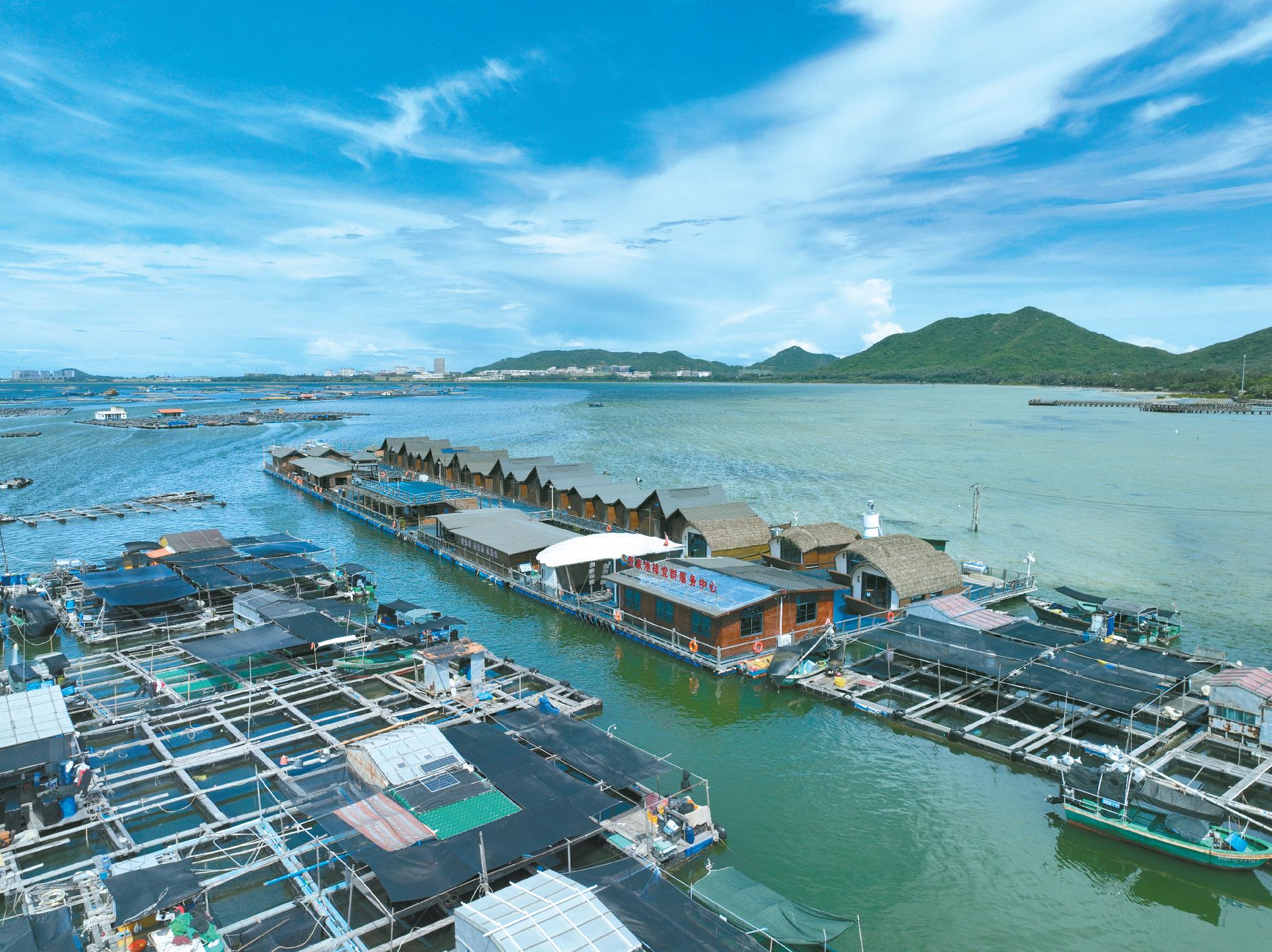
Core Viewpoint - The article highlights the successful integration of ecological restoration and tourism development in Hainan's Lingshui County, showcasing how traditional fishing communities are transforming their livelihoods through sustainable practices and cultural tourism [3][20][21]. Group 1: Ecological Restoration Efforts - Hainan has initiated 13 central and 16 provincial marine protection and restoration projects from 2018 to June 2025, investing a total of 2.6397 billion yuan, restoring 152.33 kilometers of coastal areas and 1,225.94 hectares of mangroves [4][25]. - The ecological environment in Hainan has improved significantly, with over 98% of the water in Lian'an Lagoon reaching Class I water quality, and over 90% in New Village Lagoon reaching Class II standards [6][22]. - The restoration efforts have led to a 50% increase in fish and shellfish resources in restored areas compared to non-restored areas, indicating a successful recovery of marine biodiversity [6][12]. Group 2: Economic Impact and Tourism Development - The tourism sector in Lingshui has flourished, with 1.6557 million visitors and a total tourism revenue of 956 million yuan in 2024, driven by unique cultural experiences and ecological attractions [20][22]. - The local fishing community has seen an increase in average annual income from 36,200 yuan in 2019 to 43,300 yuan in 2022, reflecting the economic benefits of sustainable practices [20][24]. - The establishment of a community benefit-sharing mechanism has allowed local residents to earn income from ecological resources, enhancing their motivation for environmental protection [21][24]. Group 3: Community Involvement and Cultural Integration - The integration of traditional fishing culture with modern ecological tourism has created a sustainable cycle of protection, development, and cultural heritage [19][21]. - Local fishermen have transitioned into roles such as "marine forest guardians" and "ecological tour guides," showcasing the community's active participation in ecological restoration [22][24]. - The establishment of the Hainan Mangrove Museum and various cultural tourism projects has attracted visitors and promoted awareness of the unique marine culture of the fishing communities [20][21].