
红鱼

Search documents
“红渔姑”网上“打鱼”记
Hai Nan Ri Bao· 2026-02-08 03:24
Core Viewpoint - The story highlights the transformation of traditional fish selling in Danzhou through live streaming, showcasing how a new generation of fish sellers, represented by Wu Manhua, is leveraging digital platforms to significantly increase sales and reach a broader customer base. Group 1: Business Transformation - The traditional method of selling red fish in Danzhou has been revitalized by live streaming, allowing sellers to connect with customers nationwide rather than being limited to local sales [4][6]. - Wu Manhua, a former nurse, transitioned to becoming a professional live streamer, significantly increasing her sales from her mother's previous monthly average of 10,000 yuan to over 100,000 yuan in a month [2][3]. Group 2: Training and Support - The "Danzhou Fisherwoman" labor brand provided professional training to Wu Manhua, helping her evolve from a novice to a skilled live streamer within two months [6][7]. - The training included guidance on camera techniques, speech delivery, and product presentation, which contributed to her success in live streaming [6]. Group 3: Sales Performance - Wu Manhua's first short video achieved over 300,000 views, and her live streaming sales surpassed her mother's monthly sales in just one session [7]. - During a live stream, she successfully sold 20 fish to a customer from Shanghai, demonstrating the potential for reaching customers far beyond local markets [8]. Group 4: Community Impact - Wu Manhua aims to not only sell more fish but also to empower other fisherwomen in the community, indicating a broader impact on local livelihoods [10].
对话挪威海产局中国区总监毕思明:中国消费市场将蓬勃发展
2 1 Shi Ji Jing Ji Bao Dao· 2025-08-29 12:16
Core Insights - The 19th Shanghai International Fisheries Expo showcased over 3,000 brands from more than 30 countries, highlighting China's growing consumer market for seafood [1] - Norway's salmon exports to China have surged, with a 122% increase in volume and a 64% increase in export value in the first seven months of 2025 [1] - China has become the sixth largest global market for Atlantic salmon, with the highest growth rate among the top ten markets [1] Group 1 - Norway's salmon exports to China reached 52,069 tons, valued at 4.673 billion Norwegian Krone, indicating significant market potential [1] - China's Atlantic salmon consumption is now the largest in Asia, approximately double that of Japan, yet per capita consumption remains low at 0.09 kg [1] - The market for Norwegian Arctic sweet shrimp in China has seen a staggering 603% increase in export volume, making it the largest export market for this product [2] Group 2 - Greenland halibut and red fish have also shown strong export performance to China, with respective increases of 45% and 82% in export value [2] - E-commerce platforms in China have significantly enhanced the accessibility of imported seafood, surpassing convenience levels found in Europe [2] - Norway's seafood exports to China are projected to continue growing, with expectations of becoming the second largest export market globally by 2025 [2]
挪威海产局:中国是挪威海产出口增长最快市场 将持续加大投入
Zhong Guo Xin Wen Wang· 2025-08-29 09:14
Core Insights - Norway's salmon exports to China have seen remarkable growth, with a 122% increase in volume to 52,069 tons and a 64% increase in export value [1] - The Chinese market for Atlantic salmon has become the largest in Asia, with consumption levels twice that of Japan [1] - Norway's seafood industry plans to increase its marketing budget for China by 70% next year to capitalize on market growth [1] Group 1: Market Growth - The Chinese salmon market is exhibiting strong growth and resilience, driven by changing consumer habits and diversified market channels [3] - China has become Norway's second-largest seafood export market as of July this year, up from eighth place in 2023 [4] - The overall growth of the Chinese salmon market has exceeded 40% this year [4] Group 2: Product Performance - Norway's Arctic shrimp exports to China have surged, with a 603% increase in volume to 4,952 tons and a 630% increase in export value to 258 million Norwegian kroner [3] - Greenland halibut and redfish have also shown strong performance in exports to China, with significant year-on-year growth [3][4] Group 3: Strategic Initiatives - Norway Seafood Council aims to deepen cooperation with Chinese partners to promote high-quality seafood products [3] - The participation in the Shanghai International Fisheries Expo is part of Norway's strategy to connect with new customers and explore opportunities in the Chinese market [5] - The council emphasizes the importance of collaboration with Chinese importers and wholesalers to achieve mutual benefits [4]

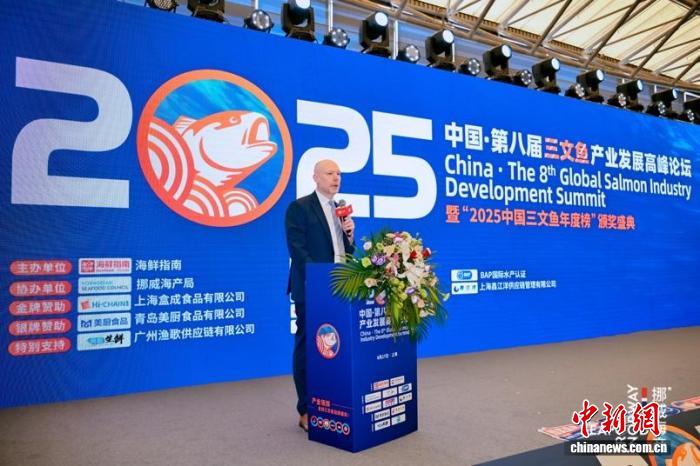
中国成挪威海产第二大出口市场,大西洋三文鱼消费规模亚洲第一
Bei Ke Cai Jing· 2025-08-27 15:05
Core Insights - Norway's seafood industry is actively promoting its products, including Atlantic salmon, Arctic sweet shrimp, Greenland halibut, and redfish, at the 19th Shanghai International Fisheries Expo, highlighting China's significance as a key export market [1][8] - The global production of Atlantic salmon is projected to reach 3.075 million tons by 2025, with Norway contributing 62% of this growth [2] - The Chinese salmon market is experiencing unprecedented potential due to the popularity of sushi and sashimi, with Norwegian salmon exports to China increasing by 122% in volume and 64% in value in the first half of 2025 [5][8] Market Dynamics - China has become the largest market for Atlantic salmon in Asia, with consumption levels approximately double that of Japan [6] - Despite the growth, there is significant room for development in per capita consumption in mainland China, which stands at 0.09 kg compared to 2.19 kg in Hong Kong [6] - The Norwegian Seafood Council expresses confidence in the Chinese market's growth potential, attributing it to changing consumer habits and diversified market channels [7] Export Performance - In the first half of 2025, Norway's salmon exports to China reached 52,100 tons, with a total export value of 4.673 billion Norwegian kroner [5] - China has emerged as the largest export market for Norwegian Arctic sweet shrimp and has seen significant growth in exports of Greenland halibut and redfish, with increases of 45% and 82% respectively [8] - In July 2025, Norway's seafood exports to China saw an 88% year-on-year increase, solidifying China's position as Norway's second-largest seafood export market globally [8]

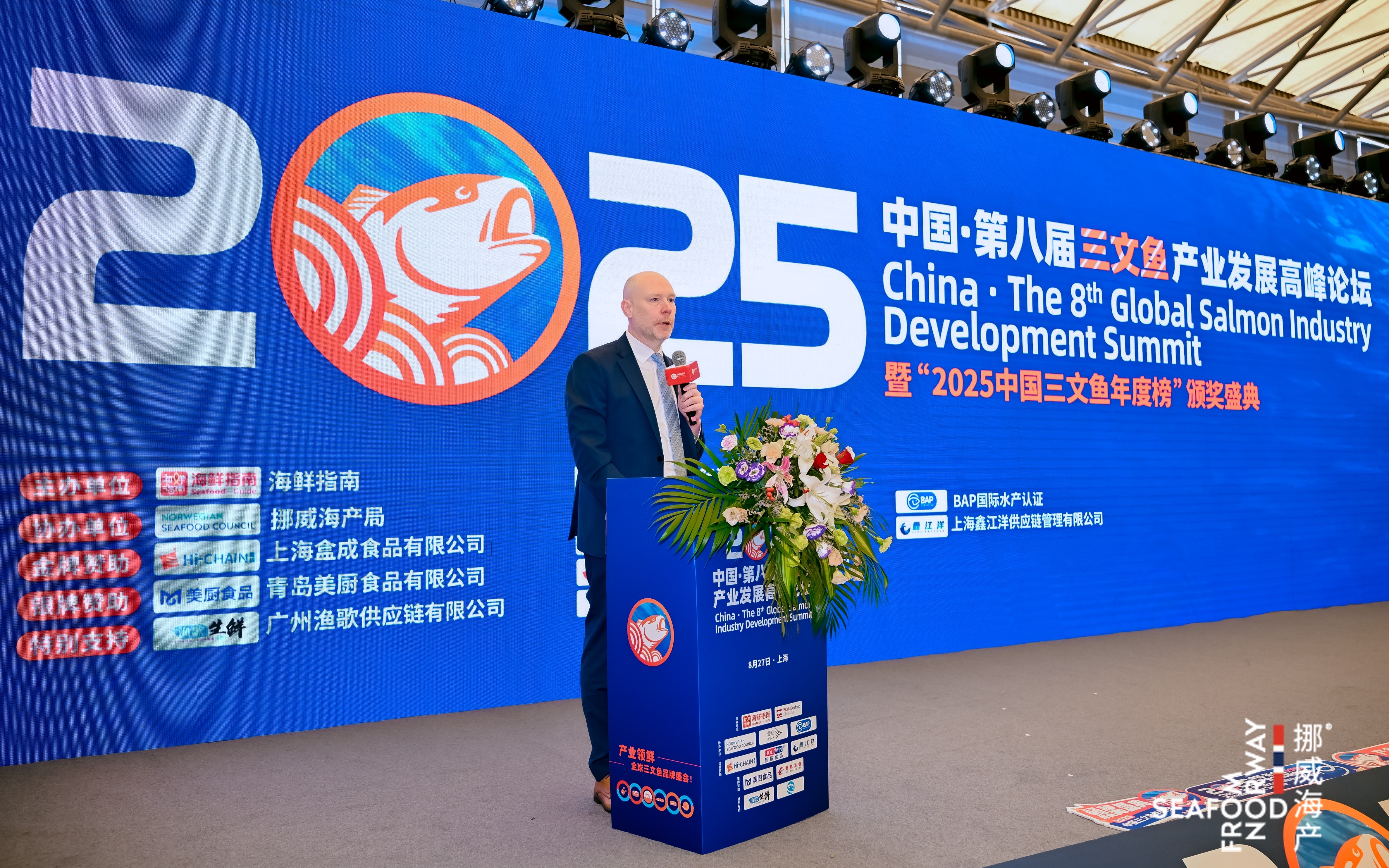
挪威海产局携挪威企业亮相上海国际渔博会
Zhong Guo Jing Ji Wang· 2025-08-27 09:01
Core Insights - The Norwegian Seafood Council, along with eight Norwegian seafood companies, showcased high-quality seafood at the 19th Shanghai International Fisheries Expo, emphasizing the importance of collaboration with Chinese industry partners [1] - The global Atlantic salmon market is projected to grow significantly, with a forecasted production of 3.075 million tons by 2025, representing a 9% increase, with Norway contributing 62% of this growth [1] - Norway's salmon exports to China reached 52,069 tons from January to July 2025, marking a 122% increase year-on-year, with export value hitting 4.673 billion Norwegian Krone, a 64% increase [1] - China has become the sixth largest global export market for Atlantic salmon, showing the highest growth among the top ten markets, while its consumption of Atlantic salmon has become the largest in Asia, indicating substantial growth potential [1] Industry Trends - The Chinese salmon market demonstrates strong growth and resilience, driven by changing consumer habits and diversified market channels, leading to increased confidence in future prospects [2] - Norway's seafood exports to China are on the rise, with a reported increase of 613 million Norwegian Krone in July 2025, an 88% year-on-year growth, making China the second largest export market for Norwegian seafood globally [2] - Other Norwegian seafood products, such as Arctic shrimp, Greenland halibut, and redfish, are also performing well in the Chinese market, with Arctic shrimp becoming the largest export product, and Greenland halibut and redfish ranking second and third respectively, with year-on-year growth rates of 45% and 82% [2]